
Mealybugs on flower buds are a terrible sight destroying the garden beauties. You must be wondering how to get rid of these pests of the tender buds, without destroying them. And we’ve got all the right solutions right here.
Explore our comprehensive guide to gain a deep understanding of mealybugs, enabling you to promptly identify and efficiently manage these pests using organic methods!
How To Identify Mealybugs on Your Flowers
Mealybugs damage plants by feeding on them, injecting toxins, and transmitting plant pathogens. They are incredibly small too, typically measuring just a few millimeters, and are covered in a cottony or waxy secretion, giving them a white, fibery appearance on plants.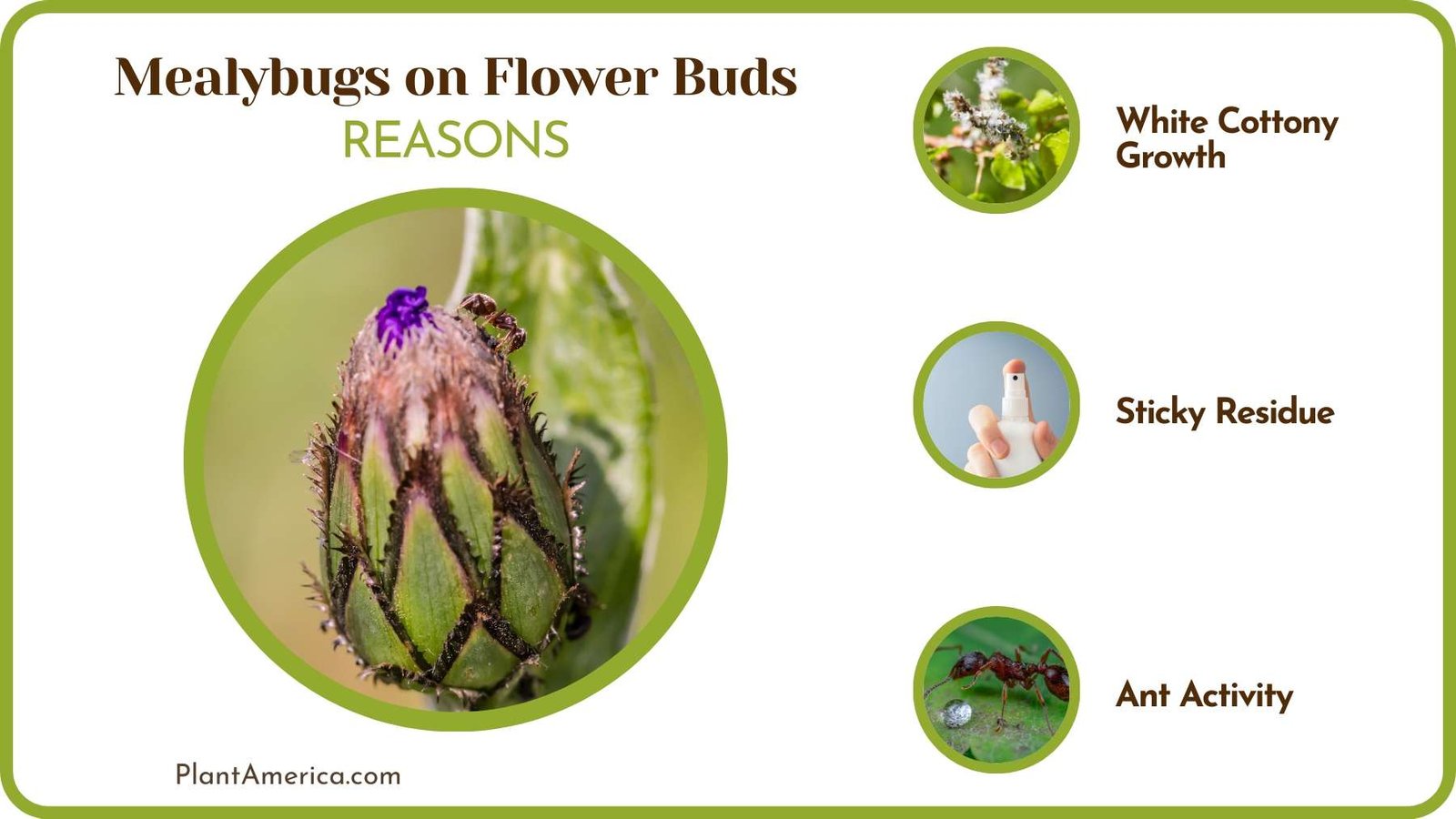
They generally have an oval body shape and may or may not produce wax filaments along their margins.
In outdoor settings, mealybugs have one or two synchronized generations per season. Indoors, there may be continuous, overlapping generations.
To fight mealybug infestations, consider purchasing mealybug-free plants, as mealybugs can be challenging to eliminate once established — especially on tender, flowering plants!
The life cycle of mealybugs varies by species too! Female mealybugs go through four developmental stages and can lay up to 600 eggs as adults, usually sheltered beneath a cottony ovisac.
These eggs hatch in a week or two, and the crawler stage (the most vulnerable stage) disperses to find feeding sites. Once they start feeding, they become mostly immobile.
It’s this life phase that they will be most easy to deal with. So let’s see how to identify them!
– White Cottony Growth
To spot mealybugs on your flowers, keep an eye out for their unique cotton-like colonies. Identifying these formations is essential for taking quick action.
These clusters look like small, white, cottony patches and often hide in concealed areas of the plant.
To catch them early in their development, make it a routine to inspect your plants regularly. Gently run your fingers along the joints of stems and in places where stems meet the soil.
– Sticky Residue
One telltale sign that alerts gardeners to the presence of mealybugs is the discovery of a sticky substance adorning the plants. This substance, known as honeydew, essentially consists of unprocessed plant sap.
Honeydew provides an ideal breeding ground for sooty mold, a type of fungus. This sticky residue offers the perfect surface for the mold to attach to, proliferate on, and envelop various parts of the plant, including leaves, branches, and even blossoms!
– Ant Activity?
Ants are often lured by the sweet honeydew produced by mealybugs. This sugary substance serves as a preferred source of nourishment for ants.
In their quest for honeydew, ants may not only gather around mealybug colonies but might also actively tend to these pests, protecting them from natural predators.
If you spot an unusually high level of ant activity surrounding your flower buds, it strongly indicates the potential presence of mealybugs.
This association between ants and mealybugs acts as a clear signal, prompting you to conduct a closer inspection and implement mealybug prevention measures!
Speaking of which, let’s see what they are.
How To Get Rid of Mealybugs on Your Flowers Effectively
As mealybugs find a favorable environment on your cherished flowers, they exploit their unique structure, which provides numerous hidden crevices for these pests.

However, there are several strategies available to control mealybugs.
From traditional water-based solutions to biological control methods, like enlisting the help of natural predators, let’s explore these prevention techniques and take determined action!
– Wash Them Away
To safeguard your flowers from mealybugs, utilize a practical approach involving a garden hose or plain tap water! Opt for the high-pressure setting to create a strong stream of water that can dislodge these unwanted pests, or gently rinse them off under a faucet.
Be cautious with the water pressure to avoid harming the delicate flower buds, as they may easily fall off.
After the spraying session, ensure the leaves have sufficient time to thoroughly air-dry. Repeat this process in the evening and maintain this daily routine until the pests have been successfully eradicated.
It’s advisable to continue this regimen until every single mealybug has been eliminated.
– Rubbing Alcohol
When faced with a mild infestation, you can opt for a practical solution involving cotton swabs soaked in alcohol.
Gently apply these swabs to the visible adult bugs and their colonies, aiming to delicately remove and eliminate them.
If your plants are heavily plagued by infestations, consider complementing this method with pruning the affected areas for a comprehensive approach.
Alternatively, you can create a diluted solution of isopropyl alcohol by mixing it with water. Transfer this concoction to a spray bottle for convenient application, and thoroughly spray the entire plant, ensuring comprehensive coverage.
This approach is highly effective in eradicating mealybugs and similar pests from their various hiding spots and significantly diminishes the likelihood of their resurgence.
– Insecticidal Soaps
These sprays are particularly well-suited for addressing significant numbers of soft-bodied insects, such as aphids and mealy bugs, all while ensuring the safety of your plants, other creatures, and your family!

Apply the soap in the morning and continue until you begin to see a reduction in the infestation. It’s important to exercise patience, as visible results may take up to two weeks to fully manifest.
While it’s worth noting that the efficacy of insecticidal soaps may not match that of chemical alternatives, they provide a more natural and safe approach!
– Neem Oil
Neem tree oil is a versatile natural substance with multiple properties. Beyond its role as a repellent, it disrupts the feeding habits of mealybugs on flowers.
Neem oil works by effectively suffocating pests that cling stubbornly to your plant’s surface. However, it’s important to be aware that it may have unintended consequences on other smaller beneficial insects like ladybugs.
To prepare a neem solution, mix two to four tablespoons of the oil with one gallon of water in a spray bottle. Apply the solution away from direct sunlight to avoid potential leaf burns.
After application, move your plant to a shaded area for drying. In the case of outdoor plants, aim to carry out this process during a time when direct sunlight is minimal!
– Natural Predators
Feel like boosting your mealybug battle plan? Meet your secret allies — ladybugs and ladybirds. They’re like tiny mealybug terminators, swiftly decimating these plant pests.

While they might resemble your friendly neighborhood ladybugs, these mealybug ladybirds come with a twist.
They’re a tad smaller and dress more modestly, sporting brown wings and a humble tan head instead of the classic red wings with black spots.
You can recruit these predatory insects through garden centers or online sources, providing you with a savvy and long-lasting strategy to keep mealybug populations in check. It’s like having your own bug-fighting squad!
– Homemade Solution
Elevate your flower defense game with a specialized soapy spray that’s like kryptonite for even the toughest, hard-shelled scale insects.
Mix a few teaspoons of peppermint oil with water and soap and create a potent foliage spray.
Look to apply this solution in the early morning or evening, and let them work their magic for no more than two hours. If those persistent pests still stick around, you can even try something stronger.
Consider boiling up some water and toss in some hot peppers. Garlic and onions can also do the trick. Your flowers will thank you for this spicy defense!
– Chemical Pesticide
Resorting to chemical pesticides should always be the last resort, and it’s a move that requires careful consideration.
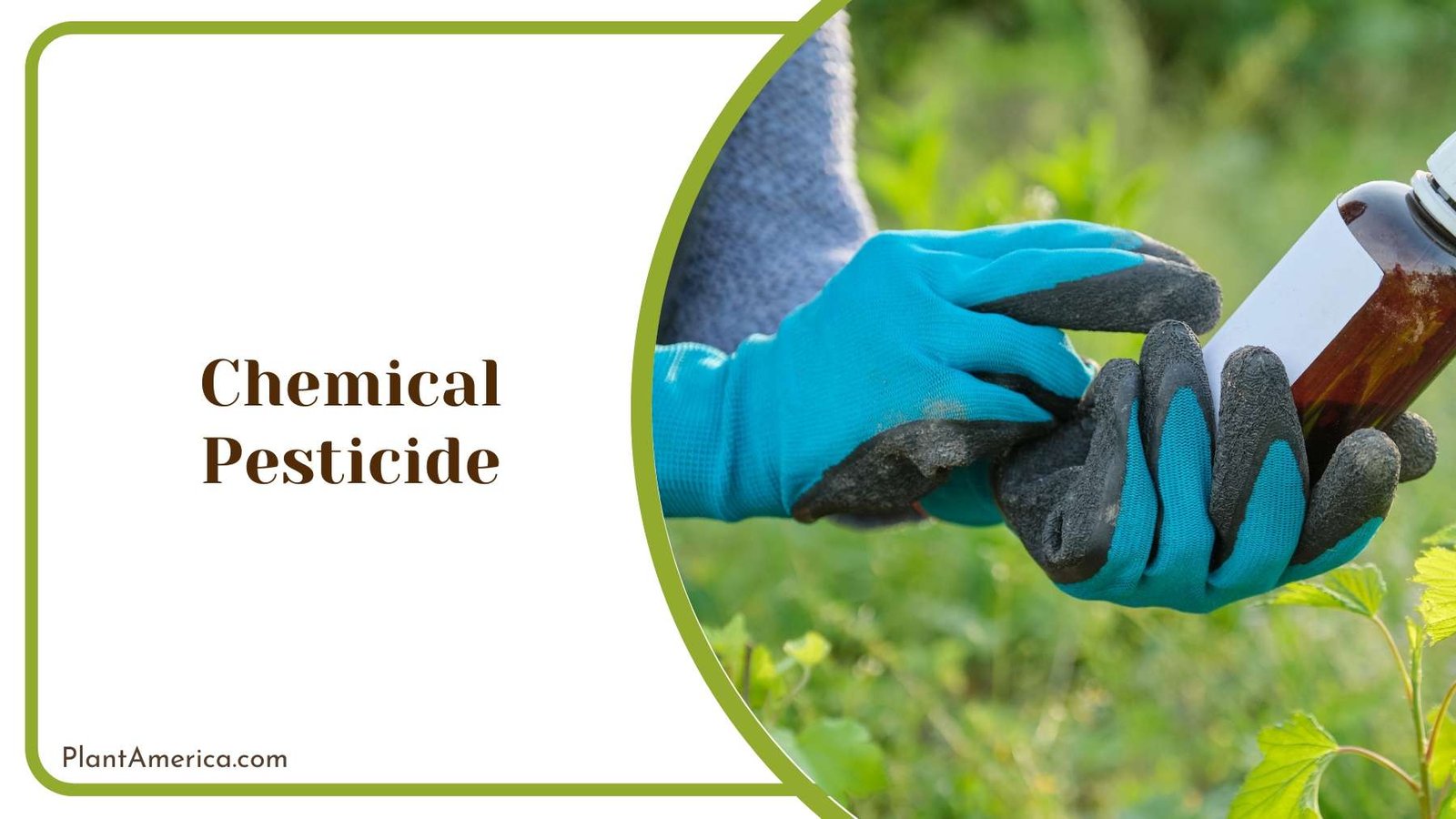
These pesticides don’t discriminate — they’ll take out mealybugs and spider mites, but they won’t spare the good guys. Plus, they often contain substances that could pose risks to humans.
If you find yourself at this point, opt for a pesticide specifically designed and approved for dealing with mealybugs.
Indoor plant treatment will require something labeled as such, and as long as you follow the instructions on the label you should be safe.
In case those stubborn mealybugs just won’t give up, don’t forget to check the label for directions on any necessary follow-up applications. Your goal is to get rid of the problem while keeping your plant, and yourself, safe.
– Employ Preventive Practices
The secret to keeping those pesky mealybugs at bay lies in nurturing robust, flourishing plants.
First, create the perfect environment. Ensure your plants get the right dose of sunlight, maintain the ideal temperature, water them judiciously, and serve up a buffet of nutrients. Think of it as the ultimate plant spa day.
Boost your soil’s health with organic matter. Keep the little critters in your soil happy and well-fed. A thriving underground ecosystem means fewer unwelcome guests above ground.
Trimming and pruning are not just for aesthetics — they’re an addition to plant self-care. Snip those affected leaves and branches to give your plant a fighting chance. Fewer mealybugs to contend with and a happier, healthier plant.
Diversity is key. Imagine your garden as a bustling city. The more diverse the residents, the more balanced the ecosystem.
Mealybugs have preferences, and you can disrupt their dining habits by introducing a mix of herbs and plants.
Mealybugs are fans of high-nitrogen, fresh growth. So, don’t overdo it with the fertilizer and water. You don’t want to send out a mealybug buffet invitation.
Now, for your indoor flowering buddies, a little temperature trick. Drop those evening temperatures to around 60 degrees Fahrenheit. It’s like giving mealybugs a chilly eviction notice!

Conclusion
The battle against mealybugs invading your delicate flower buds is a challenge every gardener faces. These tiny, destructive pests can wreak havoc, but fear not! We’ve armed you with a comprehensive guide to not only identify these garden foes but also combat them effectively and organically.
- Look out for their distinctive cotton colonies on your flowers. Regular inspections, running your fingers along stems and soil intersections, can help you catch them in their early stages. Be vigilant for the telltale sign of sticky honeydew, a sugary residue mealybugs leave behind, which can lead to sooty mold infestations.
- To get rid of mealybugs effectively, consider some proven organic methods. Use a garden hose or tap water to dislodge mealybugs gently. Be mindful of water pressure to avoid damaging your flowers. For mild infestations, apply alcohol-soaked cotton swabs to adult mealybugs and their colonies. Pruning affected areas can complement this method.
- Insecticide soaps are effective against soft-bodied insects like mealybugs while keeping your plants and the environment safe. Neem tree oil is a natural substance that disrupts mealybug feeding habits. Ladybugs and mealybug ladybirds are natural allies. They’ll swiftly decimate mealybug populations and keep your garden in check.
- Prevention is the ultimate key. Nurture strong, healthy plants by providing them with the right environment, amending your soil with organic matter, and pruning to eliminate hiding spots. Encourage diversity in your garden, reduce nitrogen levels, and consider temperature adjustments for indoor plants.
By following these tips and staying vigilant, you can safeguard your beloved flowers from mealybug invasions, ensuring they thrive and flourish as nature intended. Happy gardening!