
Mealybugs on coleus plants are definitely headaches for many gardeners. The great thing is that removing them and keeping them away is pretty simple as long as you know how!

Let’s discover why the mealy bugs are in your plants and how to prevent mealybugs from coming back!
Why Are There Mealybugs on Your Coleus Plants?
There are mealybugs on your coleus plants due to the warm and humid environment they provide, along with factors like overwatering, poor air circulation, and the absence of natural predators. Plus, bringing in infected plant material or neglecting proper care practices can weaken plants, making them susceptible to mealybug populations.
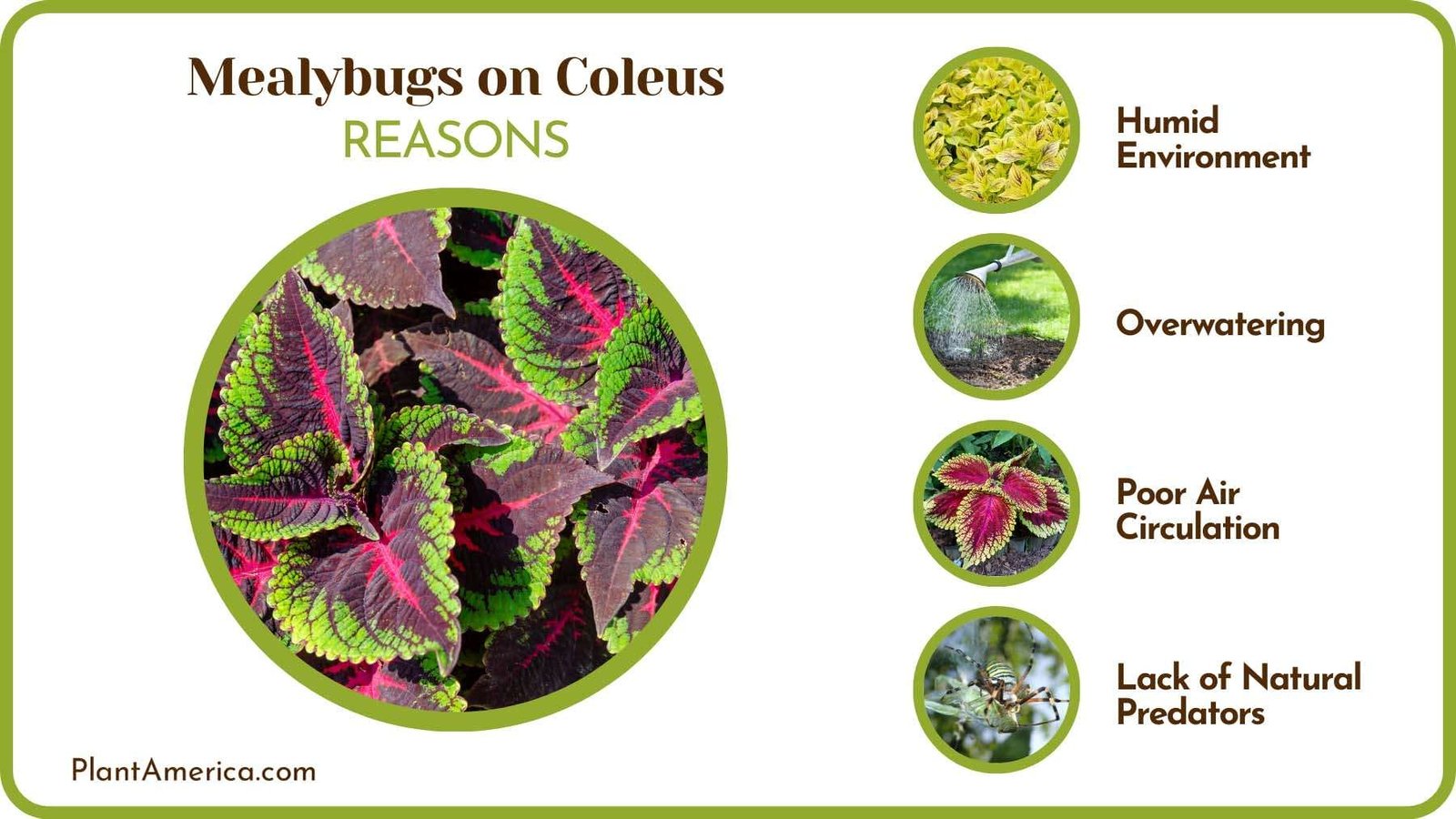
– Warm and Humid Environment
A warm and humid environment provides an ideal habitat for the proliferation of mealy bugs on coleus plants. These pests thrive in conditions where temperatures are consistently on the higher side and the air is saturated with moisture.
The moisture in the air makes the plant’s tissues soft, allowing mealy bugs to feed easily on sap and hide in leaf folds. The warmth and humidity not only help mealy bugs reproduce but also prevent natural control methods from keeping their numbers low.
– Overwatering
When coleus plants are consistently overwatered, their growth becomes soft and tender, creating a favorable environment for mealy bugs to thrive. The excess moisture weakens the plant’s defenses, making it easier for pests to attack.
Mealy bugs are particularly attracted to the plant’s soft tissue, thriving in such conditions. When you overwater the coleus plant, its weakened state becomes a perfect home for mealy bugs to feed and multiply.
– Poor Air Circulation
When air doesn’t flow freely between leaves and stems, humidity levels can rise, creating a damp and stagnant environment that mealy bugs find favorable. These pests thrive in humid conditions. When air doesn’t circulate well, plants struggle to defend against pests. Mealy bugs take advantage of this and infestations become likely.
– Lack of Natural Predators
In a balanced ecosystem, various insects and organisms play the role of natural predators, helping to regulate pest populations. In situations where coleus plants are cultivated in settings with low biodiversity or without their natural predators, mealy bugs can multiply without any constraints.
Mealy bugs are typically kept in check by beneficial insects like ladybugs, lacewings, and parasitic wasps, which feed on them. In the absence of these predators, mealy bugs can reproduce quickly, leading to extensive infestations on coleus plants.
– Infected Plant Material
Bringing in new coleus plants or cuttings without conducting a thorough inspection can introduce mealy bugs to your garden ecosystem. Mealy bugs can easily hide in the nooks and crannies of leaves, stems, and soil, often evading immediate detection.
Even apparently healthy plants might hide infestations. When new plants are added without quarantine and evaluation, existing ones can become susceptible to mealy bug infestations.
– Neglecting Plant Health
When coleus plants are not maintained properly, they become more vulnerable to various issues, including mealy bug infestations. Improper care weakens plants and makes them vulnerable to pests like mealy bugs.
Insufficient watering, wrong fertilization, and neglecting the pruning stress the coleus out, hindering its ability to fend off pests. Neglected plants struggle to rebound from infestations too.
– Lack of Maintenance
When coleus plants are not provided with adequate care, they can become stressed and weakened. Weak plants are more susceptible to pest attacks, and mealy bugs are quick to take advantage of such situations.
Insufficient nutrients, improper watering, and wrong fertilization can harm plants. Also, if you don’t check for pests often, it lets mealy bugs grow unchecked. Detecting them early helps stop their spread.
How To Get Rid of Mealybugs on Your Coleus Plants?
To get rid of mealybugs on your coleus plants, start by isolating infested plants to prevent spread. Use methods, such as manual removal, neem sprays or insecticidal soap sprays, and introduce beneficial insects, while considering systemic insecticides as a last resort for severe infestations.
– Manual Removal
This method involves physically removing mealybugs from coleus plants. Gently wipe the leaves and stems using a soft brush, cloth, or even a cotton swab dipped in a mixture of water and mild dish soap. The soap aids in breaking down the waxy coating on mealy bugs, making them simpler to eliminate.
Another option is to dip a cotton swab in rubbing alcohol and gently remove each mealy bug. Be meticulous, addressing both the visible bugs and their concealed groups. Keep checking the plants for fresh infestations, and persist in manual removal until the situation improves.
Dispose of the collected mealy bugs properly to prevent re-infestation. Don’t forget to pay attention to leaf undersides and stem joints, common hiding spots for mealy bugs.
– Isolate Infested Plants
When you detect mealy bugs on your coleus plants, swift action is essential to prevent the infestation from spreading. Begin by carefully separating the infested plant from your other garden vegetation. Isolate the affected coleus in a quarantine spot. This could be a separate room or a secluded garden area. This stops mealy bugs from moving to other healthy plants.
– Prune and Dispose
One effective method to combat mealybug infestations on coleus plants is through careful pruning and disposal. Begin by inspecting the coleus thoroughly to identify the areas heavily infested by mealy bugs. These pests tend to gather in clusters, often on the undersides of leaves, leaf nodes, and plant stems.
To address this issue, use clean and sharp scissors or pruning shears. Carefully trim the affected plant parts, cutting a few inches below the infested area to ensure complete removal of mealy bugs.
As you prune, place the infested material in a sealable plastic bag. This prevents mealy bugs from dropping onto the soil or spreading via the wind. Seal the bag securely and dispose of it with your household trash to halt further bug spread.
After pruning, closely inspect the remaining coleus parts for lingering mealy bugs. Isolated pests can be manually removed using a soft brush or cloth dipped in a mix of water and mild soap. Gently wipe the affected areas to dislodge pests and hinder future infestations.
– Neem Spray
Neem oil is an effective and natural solution for tackling mealybug infestations on coleus plants. It contains compounds that disrupt the growth, feeding, and reproduction of these pests. To make a neem spray, follow the product label instructions.
Usually, you’ll need one to two tablespoons of oil per gallon of water. Mix it and add a bit of dish soap to help it stick to plants. Before using the spray, do a patch test on a small part of the coleus plant to ensure no bad reactions. Once safe, use a spray bottle to cover coleus leaves with the neem solution.
Focus on spots with lots of mealybugs. For best results, apply the spray early morning or evening to avoid sunburn on leaves. Use it every seven to fourteen days or as the label says. This breaks the mealybugs’ life cycle and removes them.
– Insecticidal Soap
Insecticidal soap is a natural and effective solution for eliminating mealybugs from coleus plants. It works by disrupting the mealybugs’ protective wax coating, causing them to dehydrate and eventually die. Start by ensuring your coleus plant is well-watered and not stressed.
Choose a plant-friendly insecticidal soap and follow the provided instructions for mixing. Typically, you’ll combine the soap with water in the recommended ratio. Once mixed, transfer the solution to a spray bottle.
Thoroughly cover the affected areas of the coleus, including the undersides of leaves where mealy bugs hide. Let the soap sit on the plant for a few hours, then gently rinse the treated spots with water to prevent soap buildup.
Apply the soap every few days or as directed on the label until the mealy bug situation improves. Insecticidal soap won’t harm most plants and leaves no damaging residues. Still, it’s wise to test a small part of the plant before wider application.
– Rubbing Alcohol Spray
Using a rubbing alcohol spray is an effective method to combat mealy bug infestations on coleus plants. To create the solution, mix equal parts of rubbing alcohol and water in a spray bottle. Gently shake the mixture for thorough blending. Locate where mealy bugs gather on coleus leaves and stems.
Use a soft cloth or cotton swab to gently pat the affected spots using the rubbing alcohol solution. The alcohol disrupts mealy bugs’ wax covering, causing dehydration and elimination. Be cautious not to oversaturate the plant as excess moisture can damage the coleus.
Watch the plant post-treatment for positive signs. Reapply every few days or as needed until mealy bug numbers drop. This approach works well for smaller infestations and pairs with other natural methods for fuller pest control.
– Beneficial Insects
Introducing natural predators, such as ladybugs, lacewings, and parasitic wasps, to your coleus garden can be an effective biological control against mealy bug infestations. Ladybugs love to eat mealy bugs and their eggs. Lacewings are also fans of munching on soft-bodied pests, including mealy bugs.
There are parasitic wasps that lay eggs inside mealy bugs, which eventually kill mealybugs. You can buy these helpful insects from stores or online. When you release them in the evening, make sure it’s cooler, and the pests are more active.
To keep them happy, give them pollen, nectar, or honey water. This will make them want to stick around and build a group. Don’t use chemical pesticides where you’ve put these helpful bugs, as that could hurt the very bugs you want to help you with the mealy bugs.
– Horticultural Oil
These oils are effective organic solutions for controlling mealybug infestations on coleus plants. These oils, derived from mineral or plant sources, work by suffocating and disrupting the pests’ protective waxy coating. Follow the manufacturer’s guidelines to dilute the oil.
Apply this diluted mixture to the plant’s leaves, making sure all areas are covered. It’s good to know that these oils work well with most plants, but testing a small patch first is a wise step. Applying the oil during cooler temperatures is also crucial to avoid harming the plant.
Conclusion
We’ve covered a lot, so now let’s take a quick moment to recap everything:
- Regularly inspect plants for signs of infestation to catch mealy bugs before they multiply.
- Prioritize natural remedies like manual removal, beneficial insects, neem sprays, horticultural products, and insecticidal soap before resorting to chemical treatments.
- Isolate infested plants to prevent the spread of mealy bugs to other plants.
- Maintain plant health through proper watering, sunlight, and hygiene practices to reduce vulnerability to infestations.
- If you’re going for systemic insecticides, choose the best insecticide for mealybugs as a last resort.
Use these techniques to keep mealy bugs away and disinvite them from your garden forever!