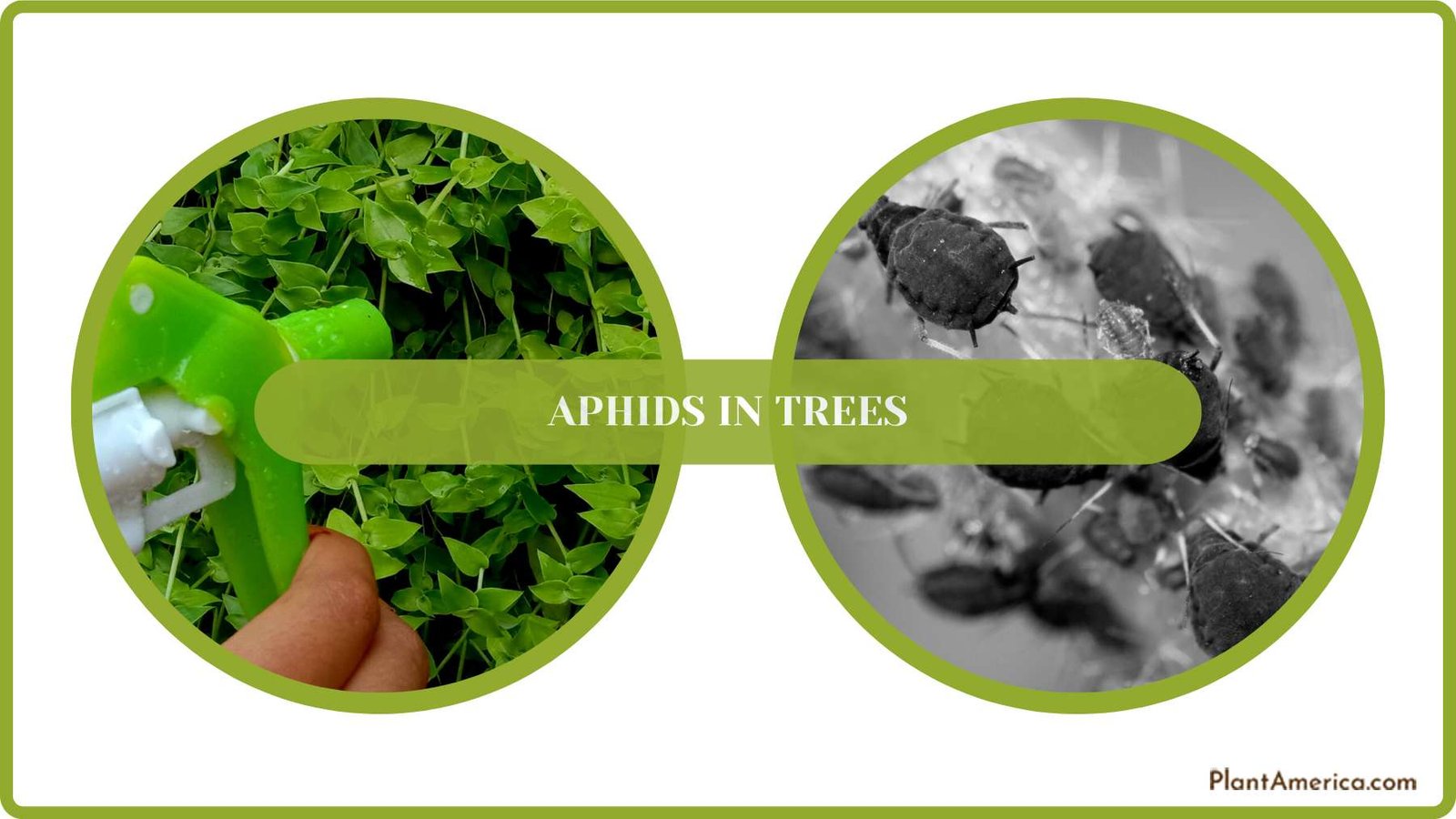
Aphids in trees are one of the most common insect pests that bother gardeners all over the world. These insects appear in green, yellow, brown, and sometimes black patches on the underside of leaves.

Aphids threaten your trees in two ways, either through excessive feeding thanks to large numbers or by infecting your plant as vectors. They multiply very quickly, so you need to catch them even quicker. Our tree care guide is here to help!
Why Are There Aphids in Trees?
There are aphids in trees because they are breeding freely or because your garden has poor maintenance around it. In addition, aphids can also increase in number because of the surrounding drought and if the soil in your garden has poor conditioning.
Aphid infestations occur when the pear-shaped, soft-bodied insects, about two to four millimeters long, start growing in your trees, although some species tend to be bigger. The mature ones usually have wings, while others are wingless and crawl onto your plant’s soil, stems, and leaves.
They also come in various colors, including green, black, red, yellow, brown, and gray. But do not let the pretty colors and cute sizes fool you; these bugs can do much more damage to your tree in a single day.

– Freely Breeding
Be assured that there is never just one insect, and when you see one, know that a colony is either on the way or has already arrived. They tend to breed on plants that provide the food and nutrition they need during breeding and for the younger ones after they hatch. Just as they hatch, they would increase freely and infest your trees.
They have large consuming power, and the population certainly does not help. Once the eggs hatch, they come out and access the readily available food, which, in this case, is your tree.
– Poor Garden Maintenance
As a certified arborist, there is much more to caring for trees than pruning and giving them water. From time to time, proper garden maintenance is needed to protect your trees and control aphids, soil mites, fruit flies, spider mites, and other insect pests.
When you do not care for your trees, these pests can creep in and make a home in them. If proper care is not taken, these pests, just like mealybugs, will begin to go from a minor disturbance to a full-blown infestation.
– Drought
Adult aphids do not like hot temperatures or environments, so when growing your trees in a location with high temperatures, insect pests like aphids creep into your garden to seek refuge. These nefarious insect pests will hang around and feed on your plant, swarm around the soil, and lay eggs.
Although they have a short life cycle, they multiply quickly and form colonies on the underside of your plants and around the base of your tree trunks, where they enjoy the shade and nutrients your plant offers. The drought around the plant is what triggers their growth, and with ease they find shelter around the tree.
– Poor Soil Conditions
Every garden has its fair share of insect pests in trees, which usually do not cause much harm. The ecosystem around the tree works well to regulate their numbers and ensure they don’t get out of hand.
However, when soil conditions are very poor, these pests take it upon themselves to become even harsher as they grow. Under such conditions, they can reproduce quickly and greatly; with such numbers, they can suck out the life of your orchid plant.
How To Get Rid of Aphids in Trees?
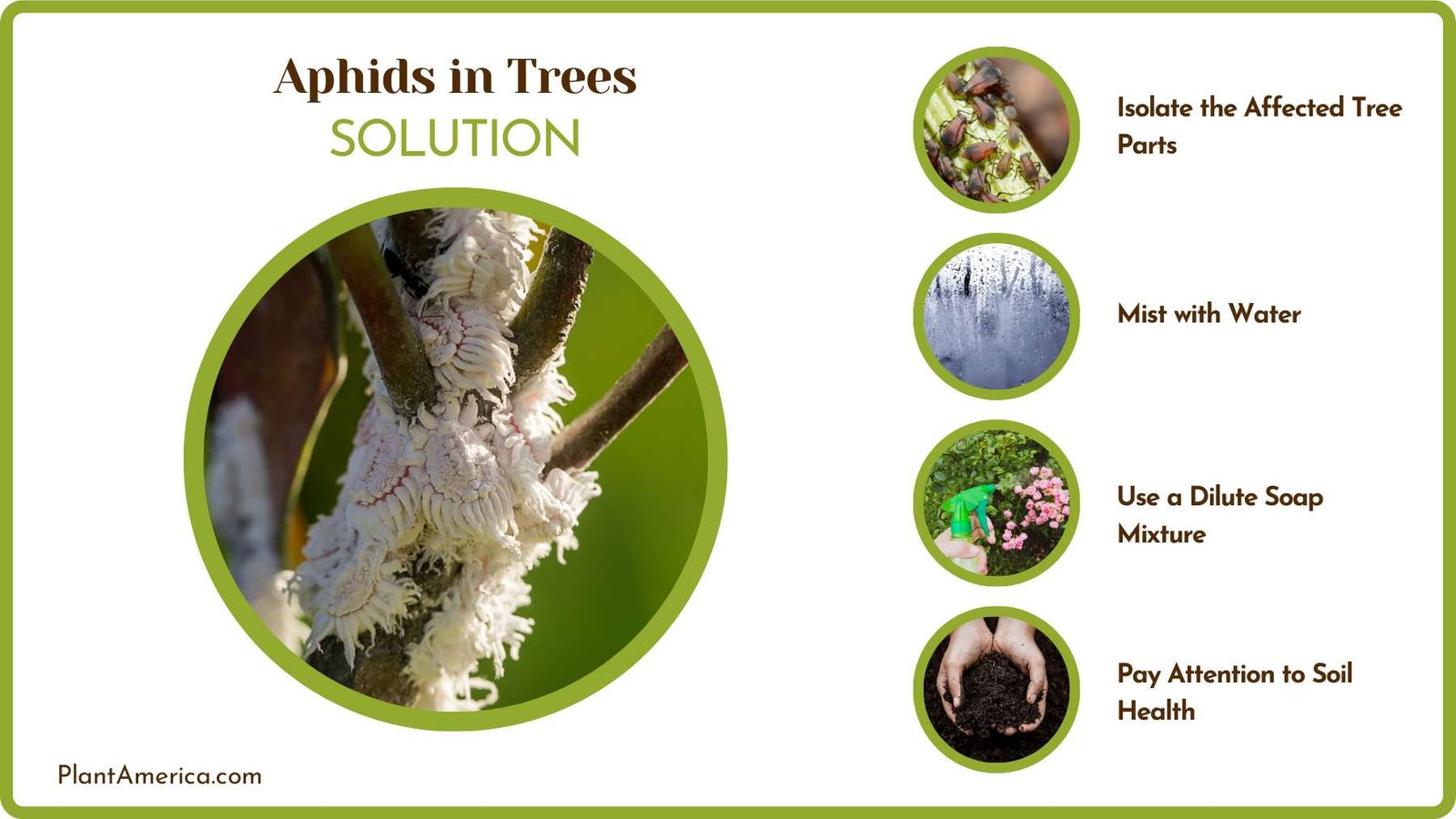
To get rid of aphids in trees, isolate the tree, mist some water on them, make sure that you use a diluted soap mixture on them, and start paying attention to the health of the soil. Use some neem oil, fungicides, and prune the tree and the weeds.
When you check the underside of the leaves and around the base of the trunks, you see an extensive black covering so thin that barely any part of the green leaves show. These natural enemies of your trees are so tiny that picking them off your plant one after the other is almost impossible and less effective.
Regardless of whether you have a full-blown infestation, aphids can ruin the life and health of your trees. If they do not have the numbers to feed on your plants overnight, rest assured that they have all they need to infest them with pathogens. You can get rid of them with proper garden maintenance, regular pruning, and application of insecticides.
– Isolate the Affected Tree Parts
This method should only be an option when the infestation has gotten so bad that the tree is beyond help. In such cases, saving the other trees in the garden becomes a priority so the infestation does not worsen and you don’t lose more trees. Once they have a tree that you are going to plant in your garden within their grip, they never stop there but begin to move from one plant to another, and before you know it, your entire garden is suffering from the infestation.
As a result, you should first observe the plants and identify the grossly infected parts. Unlike pruning, where you only trim off some parts, this method might have you cutting down on whole parts of the tree to save the tree and others in the garden.
– Mist with Water
Check for areas with aphid pests in clusters, and prepare your spray bottle. You can then spray them off the leaves and stems of your plants. This method is more effective for smaller aphids yet to attain maturity.
A little rainstorm is enough to kick them off your plant, but it contributes a fair share to the loss of essential nutrients needed for your tree’s growth if it is growing outside. You can use a stronger stream of water to get the adult bugs off. These soft-bodied pests will wash off and rarely climb back onto your tree. Use this when you have a mild infection on your hands.
Avoid adding strong chemicals to the mix, like insect repellents, as these can leave residue on your tree’s leaves and cause much damage long after the pests are gone. You would also notice that while the black aphids might be annoying, please resist the urge to spray them with concentrated chemical insecticides if you care about your tree’s health and fruiting ability.
– Use a Diluted Soap Mixture
You can get rid of these bugs on your trees with a simple, dilute mixture of a few drops of soap and water. A liquid-based soap works best for this application, as it will mix well with water and get diluted enough to leave no residue on your plant.
A simple dish or hand soap packs the right strength to kick these pests off your plants. Unlike water, which scares them off, a soap and water mixture kills the pests.
However, it is vital to pay attention to the label requirements. Before spraying off all insects from your tree, consider their pollination needs and ensure you are also not kicking out the beneficial insects like the lady beetle from your tree.
This mixture can also kill them, so only apply it to the black bugs. When you have a stronger infestation, a one-time application will only do a little, and you might need to mist your plant with this mixture from time to time by targeting the soil surface, the base and trunks of the tree, and the underside of the leaves. You can purchase insecticidal soap for aphid treatment.
– Pay Attention to Soil Health
Most insect pests that attack trees tend to lay their eggs in the soil. When these insects hatch, they crawl up to your tree, further adding to the population and making the infestation more severe.
Even after you have removed the old ones from your plant, the new ones hatch just as quickly and take over the territory again. Observe the soil around your tree and spray with fungicides to remove the eggs before they hatch.
– Horticultural Neem Oil
If you are looking for a low-budget, environmentally friendly option to get rid of aphids on trees naturally, applying horticultural neem oils will more than do the trick. However, proper care should be taken with this method depending on the tree planted as it can affect the pH levels, translating to its fruiting ability. When you have fruit trees, they can be especially sensitive and experience plant stress and discoloration, which can do much more harm to your plant.
Nonetheless, using horticultural oils is a low-risk option compared to most others and is very effective in getting rid of these insects. These bugs cannot stand the strong scent of horticultural oils, which will ward them off faster than they can reproduce on your trees.
This is why, if you want a more effective treatment option, you can dab the tree parts with horticultural oil diluted with two parts water and one part dish soap. Although trees have better resistance than shrubs and other smaller garden plants, ensure that you never use the oils on your tree in their concentrated form and only dilute them with chemicals.
– Regular Weeding and Pruning
Observing routine farm or garden maintenance is critical, and regular weeding and pruning is a great place to start. Black bugs often creep into your garden and onto your trees via weeds from other areas.
They can travel from one tree to another in search of new territory and start reproducing until they have established a colony on the new trees, and when you go ahead and aim for regular pruning, it helps keep these pests at bay.
You might also need to prune off some affected parts of the tree, including the branches, leaves, and, in some cases, the trunks. Sometimes, the infestation is on a particular part of the plant, and effective routine maintenance and pruning are all you need to get rid of them for good.
– Using Fungicides
This method should only be used as white aphids on trees treatment when you have a full-blown infestation and the other friendlier methods cannot handle the situation. Ensure to only use organic fungicides with no strong chemicals that can upset the pH balance.
You can try rubbing alcohol on the underside of leaves, where you will find many of them. In cases like these, the black bugs feed on the plants and leave honeydew, which fosters the growth of sooty mold.
Once black mold and aphids reside on your trees, drastic measures must be taken to save the plant. A simple Epsom salt, hydrogen peroxide, and water solution will do the trick for a homemade fungicide option, especially for severe black mold infestation problems; make sure that it isn’t fully concentrated but diluted.