
Marble queen pothos plants of the Araceae family are one of the most beautiful pothos varieties as they have fancy, heavily variegated leaves that are jade and cream in color. The climber plant ascends high on a moss pole and is perfect for home gardens that receive indirect light.
Grow this hardy Epipremnum genus plant if you want greenery and have less time to spend in maintaining it. With our complete guide, you will be able to grow this beautiful plant with ease.
JUMP TO TOPIC
- Quick Overview
- What Is Marble Queen Pothos?
- Marble Queen Pothos Care
- Light Requirements
- Water Requirements
- Temperature Requirements
- Soil Requirements
- Humidity Requirements
- Fertilizer Requirements
- Pruning
- Propagate
- Problems
- Benefits of Marble Queen Pothos
- Similar Plants
- Other Important Information
- – Is Marble Queen Pothos Rare?
- – Why Are the Leaves of My Marble Queen Pothos Drooping?
- – How Often Should I Mist My Marble Queen Pothos?
- – Why Is the Growth of My Marble Queen Pothos Stunted?
- – Why Shouldn’t We Use Terracotta Pots for Marble Queen Pothos?
- – Why Are the Leaves of My Marble Queen Pothos Becoming Leggy?
- – Why Does the Marble Queen Pothos Require a Tropical Condition To Grow Well?
- – What Will Happen to My Marble Queen Pothos if It Is Placed in Direct Sunlight?
- – What Can I Do To Make My Marble Queen Pothos Grow Fast?
- – What Are the Necessary Steps One Should Take Before Repotting Marble Queen Pothos?
- – How Big Can My Marble Queen Pothos Get?
- – Why Do the Roots of the Marble Queen Rot?
- – Why Are the Leaves of My Marble Queen Pothos Becoming Dark Green?
- – Why Do the Leaves of My Marble Queen Pothos Have Holes on Them?
- – Why Do the Leaves of Marble Queen Pothos Become Black?
- – Which Type of Soil Is Best To Grow Marble Queen Pothos?
- – What Makes the Marble Queen Pothos Great for Indoors?
- – Can I Revive My Dying Marble Queen Pothos Plant?
- – Why Is It Advised To Give More Fertilizer to Your Plant if They Are Growing in Water?
- – Why Is It Necessary To Add Organic Matter to the Potting Mix?
- – Why Do the Leaves of My Marble Queen Pothos Have Black Patches?
- – Can My Marble Queen Pothos Live in Water?
Quick Overview
Here is an overview of the Marble queen pothos’ care requirements:

| Requirements | Marble Queen Pothos |
| Light | Loves bright, indirect sunlight |
| Water | Overwatering kills it; Water once a week |
| Soil | Well-draining |
| Temperature | Between 65-75 degrees Fahrenheit |
| Fertilizer | Balanced fertilizer during the growing season |
What Is Marble Queen Pothos?
The Marble queen pothos is a vine with heavily variegated jade and cream leaves that are native to the tropical environment of French Polynesia, Southeast Asia and Australia. The scientific name of the Marble queen pothos is Epipremnum aureum. The plant is also known as Devil’s ivy because it is known to be difficult to kill.
- Genus: Pothos
- Scientific Family: Araceae
The Araceae family consists of a wide variety of beautiful household plants.
Marble Queen Pothos Care
Taking care of the White marble pothos plant is very straightforward and our guide will make it easy to follow. First, let us learn more about this evergreen plant.
 Light Requirements
Marble queen plants need bright, indirect sunlight. The plant can tolerate medium to low light but loses its heavy variegation in low light.
If a sufficient amount of natural light is unavailable, you can use grow lights. The best place to keep your plant is near an eastern-facing window.
 Water Requirements
Water your Marble queen pothos when the top inches of the potting mix is dry. Give water to your plant after every 7 to 10 days. Overwatering your plant might cause root rot.
Water your pothos more in summers than in winters, but many other factors determine when to water your Marble queen pothos.

These factors are:
- Pot size
- Temperature
- Type of pot
- Humidity
- Amount of light
These factors indicate how quickly water will evaporate and how often the soil gets dried.
 Temperature Requirements
The Marble queen pothos growth rate remains best at temperatures ranging from 65 to 75 degrees Fahrenheit. Average room temperature is ideal for this plant’s growth. Fluctuations in temperature is harmful to the plant.
 Soil Requirements
The Marble queen pothos soil must be well-draining. Add peat moss, coco coir and perlite to the potting mix. Perlite is good for drainage, and peat moss keeps the moisture in the soil. The best type of potting mix is the one that allows the water to drain fast.
 Humidity Requirements
The Marble queen pothos grows well when the humidity levels are between 40 to 60 percent. Average indoor humidity is good for the plant.
To ensure proper humidity levels, use the following methods:
- Mist the leaves
- Place the plant on a pebble tray
- Wipe the leaves
- Use a humidifier
- Place the plant in the bathroom or the kitchen
– Potting
To grow Marble queen pothos in pots, keep the following points in mind:
- Use a well-drained potting mix.
- Add perlite to the potting mix for better drainage.
- Pot your plant in a container with drainage holes at the bottom.
- The potting mix should not contain heavy clay because this type of soil becomes waterlogged and causes the roots to rot.
Repot your Marble queen pothos after 2 to 3 years. If your plant becomes root-bound, repot your plant immediately. Repot your plant in a pot one size bigger than your current pot and make sure it has good drainage.
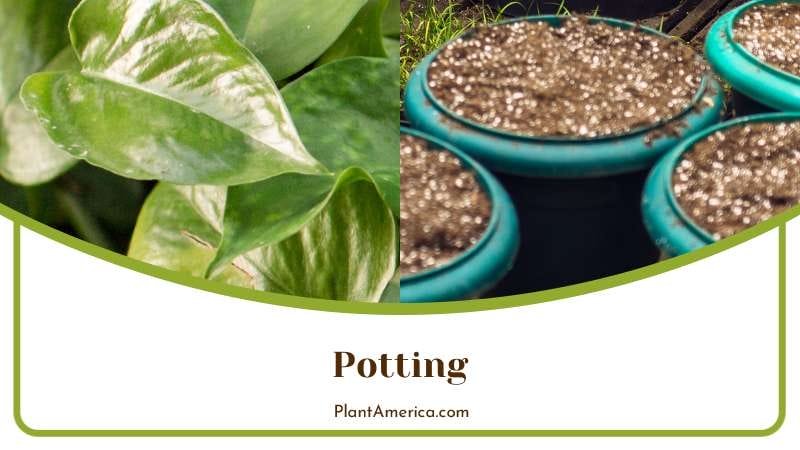
Spring and summer months are ideal for repotting your Marble queen pothos.
 Fertilizer Requirements
Marble queen pothos plants do not need a lot of fertilizer. To feed your plant, give appropriately diluted fertilizers because they wash away extra minerals from the soil.
Fertilize your plant in the growing season, which is spring and summer. Adding more fertilizer can hurt your Marble queen pothos.
 Pruning
Prune your plant if the heavy vines are hanging down from the pot or the basket. Prune the plant with the help of a clean pair of scissors.
Pruning helps to get a fuller and bushier look of the plant. Cut the leggy, dry, yellow, damaged or dying leaves from your plant in early spring because it promotes more bushy growth.
– Growth
Marble queen pothos plants are slow growers.

They can grow into large-sized vines. However, proper light, temperature, watering and regular feeding of the plant might allow the plant to grow fast.
– Toxicity
Marble queen pothos plants are toxic to pets and humans. They contain soluble calcium oxalate crystals, which are highly poisonous. Chewing or biting the leaves or stem of this plant causes tissue penetration, vomiting, drooling, irritation in the mouth and gastrointestinal system and lack of appetite.
Keep this plant out of the reach of children and pets.
– Air Purification
The Marble queen pothos can purify the air from the harmful toxins around us. These harmful toxins include formaldehyde, acetone, benzene, trichloroethylene and xylene.
– The Versatility of Marble Queen Pothos
The plant looks beautiful in hanging baskets where the vines cascade down, giving a decorative look to the plant. Keep the vines from tangling when it’s placed in a hanging basket.
The plant usually trails, and the horizontal growth of the plant makes it a trailing, vining plant. You can train your marble queen pothos to climb up a pole or trellis.
– Flowering
Marble queen pothos plants do not flower indoors. Outdoors, in the wild, they may produce flowers on stalks with a cream spathe.
Propagate
There are different methods of propagation for Marble queen pothos. The following guide will show a step-by-step process.

Steps before propagation:
- Make sure the plant is healthy.
- Choose a vine with multiple nodes.
- Take a clean and sterilized pair of scissors.
– Propagation in Water
Propagation of Marble queen pothos plants can be done in water. You can leave Marble queen pothos in water permanently.
- Take a pair of scissors and cut the stem below a node with some leaves present. The node is where the roots, leaves and aerial roots grow from stems.
- Place the cutting in a jar that you have filled with water at room temperature.
- Make sure the node is under the water.
- Place the jar in a spot where it will get bright indirect sunlight.
- Refill the jar when the water evaporates.
- Change the water once a week. This will keep the water clean.
- When the roots grow after 1 to 2 weeks, place the cutting in a permanent pot.
- Water your plant carefully.
– Propagation in Soil
Propagate your plant in soil or potting mix using two different methods.
Let us look at the first method:
- Take a pair of clean scissors and cut a stem with at least one node attached.
- New roots will sprout from the nodes.
- Put your cutting in a small container with well-drained potting mix.
- Bury that one node carefully in the potting mix.
- Place the container in a location where your plant will get bright indirect sunlight.
- Put a plastic bag over your plant to maintain humidity levels. Make sure to remove the plastic bag daily to let the plant get fresh air.
- Mist the potting mix.
- After a few weeks or a month, you can observe new roots forming in your plant.
Here is another effective method for you to try:
- Use a clean pair of scissors and cut a vine with a few leaves attached.
- Put the cutting in a new potting mix.
- Place the container in a position where the plant will get bright indirect sunlight.
- Put a plastic bag around the plant to maintain humidity levels.
- Mist your potting mix regularly.
- In this method of propagation, new roots will develop from each node.
Problems
Like all other plants, this beautiful specimen can also attract some pests or show signs of illnesses.
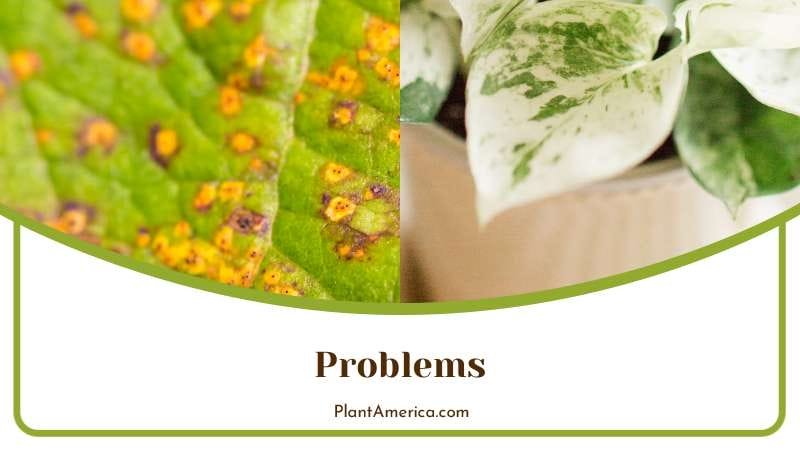
Don’t worry, we have got you covered. Follow this guide to identify problems and find their solutions.
– Pests
The Marble Queen Pothos is not susceptible to pests, but some might attack the plant. These common pests include spider mites, thrips, fungus gnats, mealybugs and scales.
Mealybugs will cause small, cotton-like growth on the stems and leaves of your marble queen pothos.
Solution
To get rid of these pests, you can use neem oil spray, insecticidal soaps and fungicides. The best way to get rid of these pests is to clean the leaves with a cotton swab dipped in alcohol.
– Phytophthora Root Rot
This is the most common disease of the marble queen pothos. This infection starts from the roots, spreads to the leaves, and damages the whole plant.
Solution
Overwatering is the cause of root rot in the plant. Avoid excessively watering Marble queen pothos plant.
– Brown and Crispy Leaves
The leaves of marble queen pothos become brown and crisp because of different factors, including:
- Low humidity
- Excessive or inadequate water
- Too much fertilizer
- Direct sunlight
Solution
To avoid browning of your plant’s leaves, you should maintain the humidity level by using a humidifier or placing your plant on a pebble tray filled with water. Water your plant carefully.
Over and underwatering can damage your plant. Do not place your plant in direct sunlight for a long time. Over-fertilizing can also be detrimental to the plant.
– Yellow Leaves
Marble queen pothos yellow leaves might be caused by:
- Underwatering
- Too much or too little light
- Rotten roots
Solution
To resolve this problem, you have to water your plant carefully. Place your plant in a place where it will get indirect bright light. Too much or too little light can damage the leaves of the plant. Remove the yellow leaves with a pair of clean scissors.
– Leggy Vines
The plant can have leggy vines because of too little light.
Solution
Always keep the plant in a spot where it can receive the right amount of indirect bright sunlight. Prune the leggy vines to avoid the unpleasant look of the plant.
– Green Leaves
The proper amount of sunlight is necessary for your Marble queen pothos plant. If the plant does not get bright sunlight, it loses its variegation and becomes dark green.
Solution
Make sure you place your plant in a location where it will get plenty of indirect bright sunlight.
– Leaf Spot Disease
Dark spots and yellow halos on the leaves of marble queen pothos indicate that the plant is suffering from a bacterial infection.

Solution
Keep the leaves dry. Excessive moisture causes the roots to rot and die.
– Brown Leaf Tips
If you notice the tips of the leaves becoming brown, it indicates that the plant is not receiving the required amount of humidity.
Solution
To maintain the required humidity level for the plant, you should mist the plant regularly or use a humidifier.
We hope that our troubleshooting guide helped you.
Benefits of Marble Queen Pothos
The marble queen pothos has many benefits and advantages.
Some of those include:
- The plant is low maintenance. They grow without needing intensive care.
- The marble queen plant is easy to propagate through water or soil.
- The plant can tolerate low light.
- It is a good air purifier and can absorb pollutants from the air.
- This plant increases the humidity in the surrounding area. Humidity is good for us because it helps hydrate our skin and protects us from influenza and cold.
- Marble queen pothos is an ornamental plant and adds beauty to your room.
- It can give a soothing feeling to your eyes.
Similar Plants
– Snow Queen Pothos
Marble queen pothos are very much similar to the snow queen pothos.
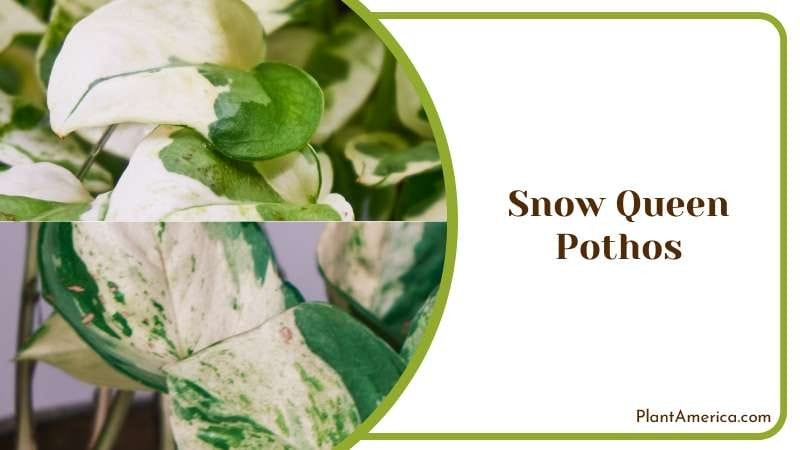
The leaves of both plants have the same shape, but the colors of the leaves are different.
– Manjula Pothos
Marble queen pothos are also similar to Manjula pothos. The shapes of the leaves of both plants are different, and Manjula pothos have three-dimensional leaves.
Other Important Information
– Is Marble Queen Pothos Rare?
Yes, Marble queen pothos plants are hard to find. It is usually not available at your neighborhood nursery. You can buy it from a collector.
– Why Are the Leaves of My Marble Queen Pothos Drooping?
Droopy leaves of the Marble queen pothos indicate that the plant needs water.
– How Often Should I Mist My Marble Queen Pothos?
Marble queen pothos require high humidity, so mist the plant every day to provide a higher humidity level.
– Why Is the Growth of My Marble Queen Pothos Stunted?
When the plant’s growth slows down or has stunted, it means that the plant is heavily root-bound.
– Why Shouldn’t We Use Terracotta Pots for Marble Queen Pothos?
Use plastic and ceramic pots because terracotta pots hold more moisture, which is bad for this plant.
– Why Are the Leaves of My Marble Queen Pothos Becoming Leggy?
The leaves of the Marble queen pothos become leggy because of a lack of sufficient light. Legginess takes place when vining plants reach out towards the light.
– Why Does the Marble Queen Pothos Require a Tropical Condition To Grow Well?
Marble queen pothos are inhabitants of the rainforest, so they require tropical conditions to flourish.
– What Will Happen to My Marble Queen Pothos if It Is Placed in Direct Sunlight?
Protect this plant from getting direct sunlight with the help of a curtain because too much bright light can scorch the foliage and lead to discoloration.

– What Can I Do To Make My Marble Queen Pothos Grow Fast?
One can encourage the speedier growth of this plant if it is provided with proper nutrients, bright indirect sunlight, and a larger pot.
– What Are the Necessary Steps One Should Take Before Repotting Marble Queen Pothos?
Detangle the roots and check for root rot or any other signs of disease before attempting to repot the plant. After that, trim the roots and stems then refresh the potting mix and add nutrients to encourage faster growth.
– How Big Can My Marble Queen Pothos Get?
The Marble queen pothos can grow up to 20 feet outdoors, while indoors the plant can grow up to 3 to 5 feet in height.
– Why Do the Roots of the Marble Queen Rot?
The main reason behind root rot in the pothos is overwatering. When the roots remain in the waterlogged or poorly drained soil for long, it causes the roots to rot.
– Why Are the Leaves of My Marble Queen Pothos Becoming Dark Green?
When the plant is not getting enough light, the variegation on the leaves becomes dark. When you place the plant where sunlight falls, the variegation will revive.
– Why Do the Leaves of My Marble Queen Pothos Have Holes on Them?
The presence of holes on the leaves of the Marble queen pothos indicates that the plant is not getting proper nutrients and humidity. To resolve this issue, trim the affected area of the plant. Feed the plant properly during summer and spring and maintain proper humidity levels for the plant.
– Why Do the Leaves of Marble Queen Pothos Become Black?
Black leaves of marble queen pothos show that the plant is being overwatered.
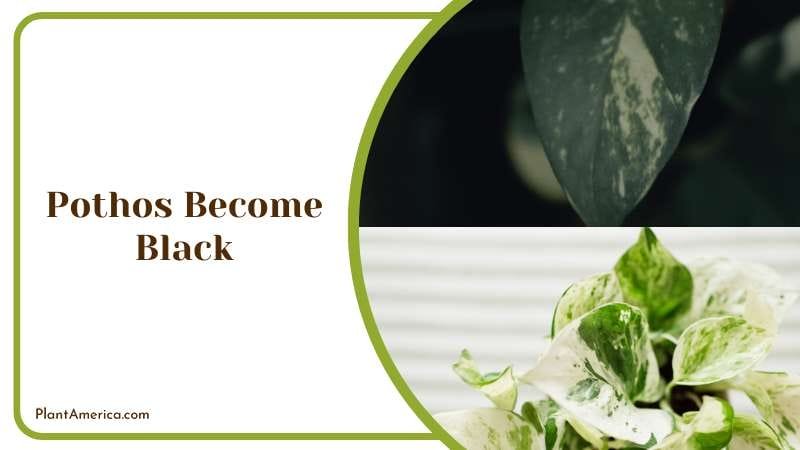
When the leaves become bright yellow, the plant wants water.
– Which Type of Soil Is Best To Grow Marble Queen Pothos?
Use well-aerated and well-drained soil to grow marble queen pothos. If the soil is heavy, it does not allow the water to drain quickly. Add sand to your potting mix for better results.
– What Makes the Marble Queen Pothos Great for Indoors?
The Marble queen pothos is a low-light tolerant plant, and the air purification property makes the plant ideal for indoor setups such as bedrooms or offices.
– Can I Revive My Dying Marble Queen Pothos Plant?
Yes, you can revive a dying plant. To revive or save your plant from dying, you can:
- Repot your plant in a bigger pot
- Feed the plant properly
- Add organically rich potting mix
- Trim the roots if they are rotten or damaged
- Repot the plant to save it if the roots are bound
– Why Is It Advised To Give More Fertilizer to Your Plant if They Are Growing in Water?
If the marble queen pothos is growing in water, more fertilizer should be added to the plant because of the absence of soil nutrients in the water. Fewer nutrients might cause stunted growth.
– Why Is It Necessary To Add Organic Matter to the Potting Mix?
The ideal potting mix contains organic matter because it retains the right amount of moisture in the soil.
– Why Do the Leaves of My Marble Queen Pothos Have Black Patches?
Black patches on the leaves indicate that the plant is staying in low temperatures. Avoid keeping your plant at a low temperature for too long because it can damage the plant.
– Can My Marble Queen Pothos Live in Water?
Yes, the marble queen pothos plant can live in water. The plant will grow and thrive in water if it gets adequate care and balanced nutrients.