
Numerous easy-care and hardy plants come to mind while looking for a plant for your brown thumb.
Sansevieria of the Asparagaceae family, or snake plant, is one such plant. Although the snake plant checks off many of the “plant grim reaper” boxes, you may have a few questions: How fast do snake plants grow?
How Fast Do Snake Plants Grow?
⚡️ Snake plants grow 4 to 12 inches per year. Growth rates for other varieties vary greatly and can range anywhere from one to two feet up to even seven feet per year! The snake plant has a slow growth rate in moderate or indoor light on average.


However, the extra push might allow the snake plant to grow fast if cultivated in a decent amount of sunshine. The final height and width are determined by the Sansevieria kind you have planted.
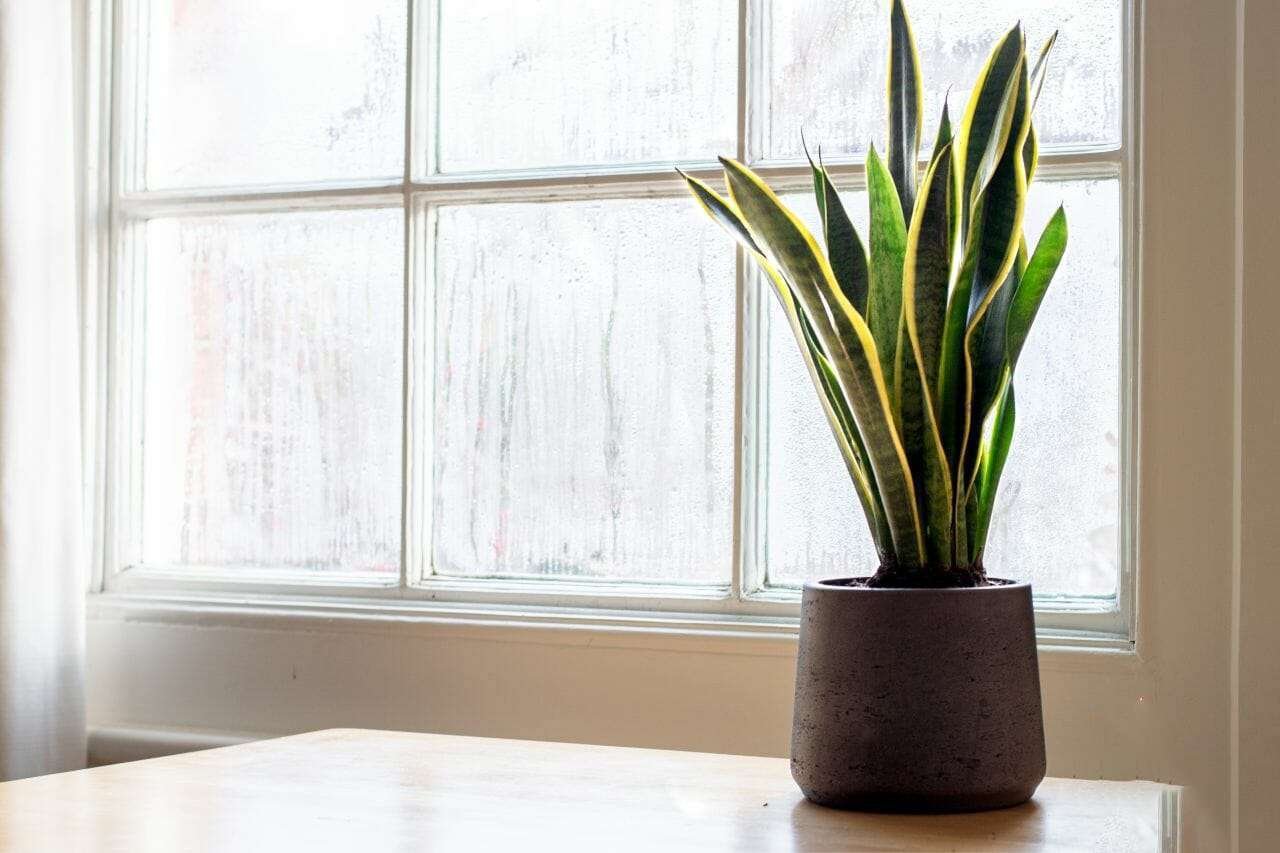
S Trifasciata Laurentii, often known as Mother-in-Law’s Tongue, is a household name. The straight, tall, and pointed leaves that extend from the soil and roots are responsible for this.
How Large Do They Grow?
While it does not flower often, it can produce a fast-growing stalk of little white bunches of sweet-smelling flowers. Depending on the conditions, this snake plant can grow one to two feet tall, with some reaching three feet. Nonetheless, it has even been observed to grow up to five feet tall!
The Sansevieria Trifasciata is another common snake plant species. This species is quite similar to S Trifasciata Laurentii, except for the Laurentii. No yellow lines are running down the sides of this snake plant’s leaves, just a lot of green “snakeskin.” This snake plant also grows in the same manner as S Trifasciata Laurentii.
The Mother-in-Law’s Tongue variety is the most well-known when it comes to snake plants. The leaf is variegated, having a “snakeskin” green center and yellow lines up either side.
– S. Trifaciata: Another Variety
While the S. trifaciata/S. trifasciata laurentii (see on amazon) can reach over three feet on rare occasions; the S. Cylindrica can get around seven feet if it is given the right care!
The S. trifasciata “Hanhii” variety is on the smaller end of the scale. This Sansevieria develops to be only four to eight inches tall and never more than a foot tall, over their life time.
One of the most “exotic” kinds is the S Cylindrica, which are slow in growing as well, they are also referred to as the Spear Sansevieria.
Once fully matured, S Cylindrica leaves are circular and likely to break if bent. The leaves grow outward and upward in a pattern resembling a fan and they grow up to four to six feet long over a period of a year or more.
Some nurseries make use of the fact that the leaves are relatively easy to bend while fresh. They tie or plait the snake plant’s leaves together, similar to how “lucky bamboo” or “money tree” leaves are braided.
A notable distinction between S. trifasciata/S. trifasciata laurentii and S. cylindrica, aside from leaf morphology, are the Spear Sansevieria’s sheer size. Similar to S. trifasciata laurentii, it has yellow stripes and a green snakeskin on the inside.
This S. trifasciata cultivar is a dwarf variety; therefore, it stays small. Because of this and its slow growth, it is widely found in terrariums.
Repotting Snake Plants

Snake plants grow slowly and require little repotting to make them grow faster (they actually grow better when pot-bound). Low-light plants may need to be repotted every five to 10 years so that they would grow faster and healthier.
Expect to transfer snake plants in stronger light every three to six years. Many people simply wait until their plants spread and their pots crack before repotting.
Short and porous planters make the best snake plant pot (think terra-cotta). Snake plants do not have deep roots and instead spread out as they mature. You risk having a considerable soil volume that stays too wet if you use a deep pot, making it simpler to overwater.
If you’re repotting indoor plants that have outgrown their present pot, go up one pot size only if the clump isn’t divided. If it’s in a four-inch pot, the next size is a six-inch pot (they usually increase by even numbers). If you’re separating a congested cluster, one of the divisions can be replanted into the first pot.
Plants should be planted at the same depth in the potting soil as previously. Fill up the plants’ gaps with the new soil mix you made and lightly push it down. Dribble a small quantity of water into the soil to aid plant settlement, but wait a week before giving it a thorough soak. Now, your plant will start to prosper even faster and you’ll see it growing up to four to six feet!
How To Prosper a Fast Growth
If undesirable external growth occurs, divide the plant and remove the unwanted leaves.
If you want to keep several plants, you can divide them and place them in separate pots. They can divide easily since they have a rhizome root system. A rhizome is a horizontal root structure that permits new shoots or leaves to emerge from the soil.
Cutting the rhizome between shoots allows for two different plants from the two portions. The rhizome of the Spear Snake plant grows in a basal rosette, which causes the leaves to grow near to the center, giving it its fan-like splay of leaves.
If there is unwanted upward growth, simply trim the leaf at the desired height. The leaf will eventually stop growing. After that, the sliced parts can be thrown. You can also grow new snake plants from the cut pieces. Cut the leaves into smaller pieces, roughly two to three inches, to accomplish this.
After that, the chopped leaves must dry for a day or two until the margins are no longer moist. You can then replicate them by pushing them into the soil in a new pot. Make sure the leaf in the new pot faces the same way it did in the old one, i.e., the end facing the roots is now in the dirt. New roots will emerge very soon.
– S. Trifasciata Laurentii’s Growth
If you do this with S. Trifasciata Laurentii, the yellow stripes down the sides of the leaves will most certainly disappear. It will revert to the S. trifasciata variety’s appearance, complete “snakeskin” green with no yellow. The only method to maintain the yellow sides of the S. trifasciata Laurentii is to divide it.
You can force your Snake plant to bloom if you control upward and outward growth. The snake plant will try to reproduce elsewhere if it can’t grow. Although the Snake plant does not bloom frequently, this is a plausible approach to encourage relatively minor stress on the plant.
The plant will most likely stop growing new leaves after blooming. The snake plant has numerous advantages that make it an excellent choice for beginners in the care it receives. Though it is difficult to kill, taking good care of it and following the care recommendations will result in a happy and healthy plant.
Growing Snake Plants Outdoors
Snake plants flourish in hot, dry climates. For the summer, consider placing potted ones in the bright shade outside. Snake plants can be grown outdoors in containers or in areas with no frost or snow. Growing tall, spear-leaved kinds in spherical pots add a vertical element to outdoor living areas.
In rainy areas, be cautious when growing snake plants outside. These plants prefer dry soil, and lengthy periods of rain can cause root rot.
In hotter climates, the tall mother-in-law’s tongue snake plant is commonly used as a small hedge around paths, driveways, and patios. Check with local nurseries to ensure snake plants aren’t invasive before planting them in your landscape.
Snake Plant Care for Faster Growth
– Watering Requirements
The most essential part of producing a snake plant is this care step. Remember that these hardy plants are succulents with thick leaves and roots that absorb and hold on to water. They thrive on being ignored. Only water these plants when the soil is almost dry.
Overwatering is the fastest way of killing a snake plant. Inspect the soil with your fingers before you decide to water it. You can still wait a day or two before watering if it feels dry. Wait before watering your houseplants if you have a habit of overwatering them.
– Light Requirements

Snake plants are very adaptable, particularly when it comes to light requirements. These hardy plants flourish in a wide range of light conditions, from low to high. They usually grow faster in a greater light, but direct sunshine damages the leaves, especially outside. Indoor, roughly 10 feet away from a west or south window.
When purchasing snake plants, pay attention to the pot tags. Some kinds, particularly variegated types, require a specific light level to maintain their brightest leaf color.
– Optimal Soil Condition

Use professional soil for indoor plants blended half and half with a cactus and succulent mix when potting snake plants. A scattering of fir bark, perlite, pumice, or clay pebbles can also be added.
Prepare a loose, fast-draining soil with plenty of air pockets, which is excellent for snake plant roots. Overwatering is also reduced with this soil mix.
– Fertilizer Requirements
These slow-growing plants rarely require feeding. Once in the spring and in the summer, give snake plants a dose of any houseplant food. Alternatively, apply worm compost to the soil in a thin layer once a year.
Final note:
If it’s in a clay container, it can even split or break the pot with its roots. Some gardeners may wait for the Snake plant to break the pot before replanting. However, depending on the sort of unwanted growth, there are various treatment options available.