
Brown tips on liriope are mainly caused by environmental stress, watering problems, fungal diseases, pests, soil quality, or nutrient deficiencies. This flowering plant might be hardy, yet it shows these brown marks as a warning that you must take action to restore the plant’s health.
 With our gardening tips, you can see your monkey grass growing and blooming, so let’s read more about the causes and solutions to this problem.
Why Do You See Brown Tips On Lirope?
You see brown tips on Lirope because of stress due to extreme temperatures or humidity, following an inadequate watering schedule, ignoring diseases and pest infestations, and not feeding the plant regularly. When left neglected, this hardy plant won’t be able to make it.
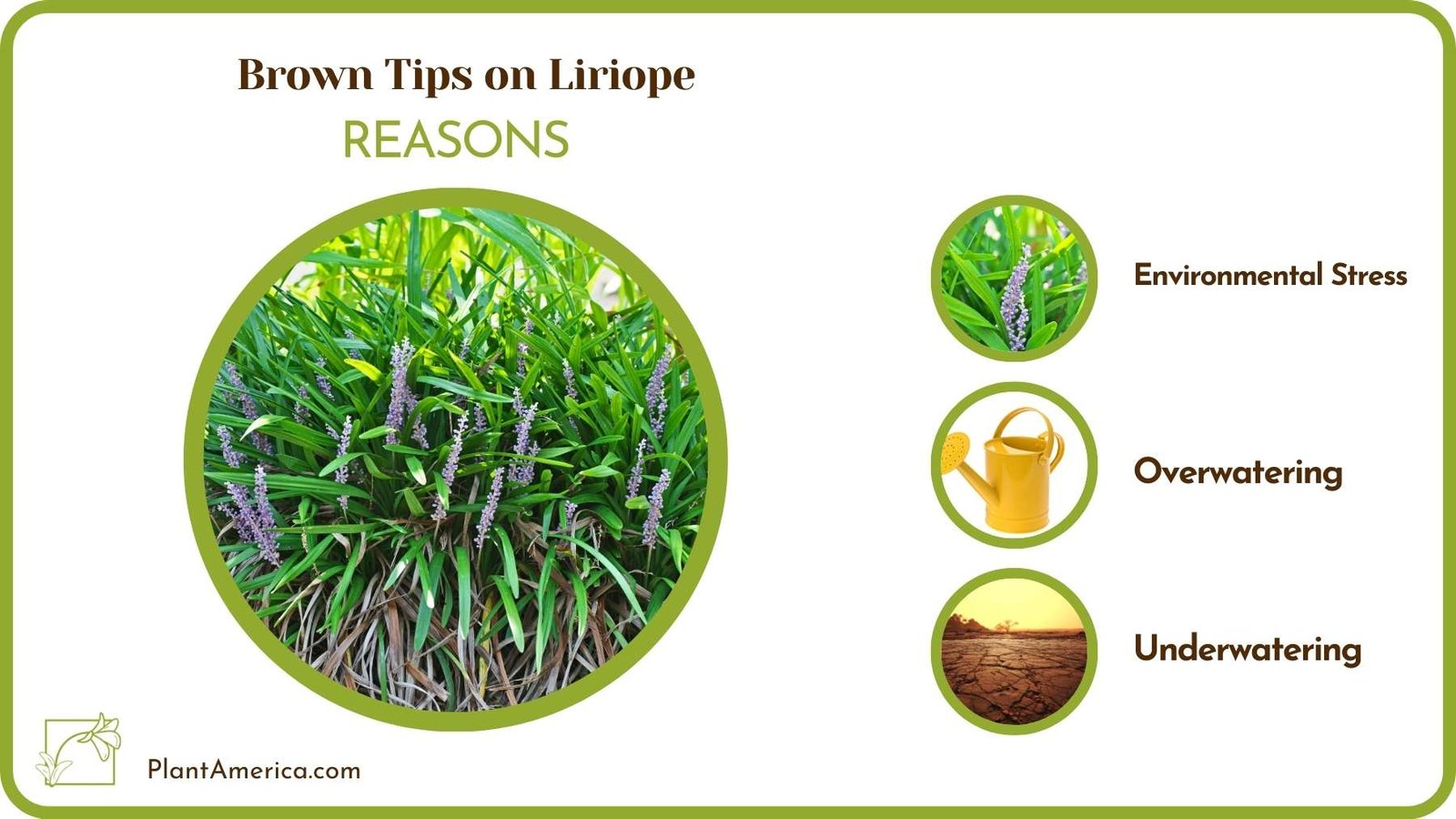
– Environmental Stress
Liriope spicata experiences brown tips due to environmental stress factors. Extreme temperatures, inadequate sunlight, and humidity levels can induce stress in the plant.
Determining variegated liriope sun or shade preferences isn’t challenging. Liriope thrives in partial to full shade, and when planted in direct, intense sunlight, the leaves become scorched, dry, and crispy, with browning spreading along the edges.
Additionally, harsh winter conditions or sudden temperature fluctuations can stress the plant, leading to browning of the foliage. The lack of sunlight causes brown spotting on the liriope variegated perennial live shrubs.
The most tell-tale sign that you’re growing your plant in the wrong conditions is the discoloration that spreads from the leaf tips of the classy groundcovers liriope. The entire plant may appear weaker, with stunted growth.
In extreme cases of sunburn or exposure to cold temperatures, the leaves can turn completely brown and die back. Stress also makes this plant less resistant to pest attacks and infections.
– Overwatering
If you wonder how to plant liriope as a border, you probably wonder how often you should water this drought-tolerant flowering perennial plant.
Overwatering happens when the plant’s roots are suffocated due to excessive or frequent watering. Liriope prefers moist, well-drained soil, and overwatering can disrupt this balance. The roots cannot absorb oxygen or food, and they become mushy.
Leaf discoloration shows that your monkey grass is overwatered. You’ll also notice a foul odor that you can smell when you near the plant.
Over time, the entire plant may appear weak, and root rot can set in in severe cases. This plant won’t be able to grow flowers, and eventually, it will die because of water saturation.
– Underwatering
As a drought-tolerant member of the asparagus family, underwatering is less common than overwatering when growing liriope as a landscape plant. Yet, this is quite common among newbie farmers and those who don’t know how to care for this plant properly.
Underwatering can lead to brown tips on liriope because the plant doesn’t receive enough moisture. The plant gets nutrients by absorbing them from the soil so it won’t grow without water.
Leaves that suffer from insufficient water may develop brown tips and become dry or crispy. The leaves of the creeping liriope will curl to reduce transpiration and retain more moisture.
But that’s not all, you’ll notice that the plant isn’t experiencing any new growth because it’s trying to use all its energy to protect the old foliage. The whole plant will look like it’s wilting or dying. Some pests can also attack your plant in the driest conditions.
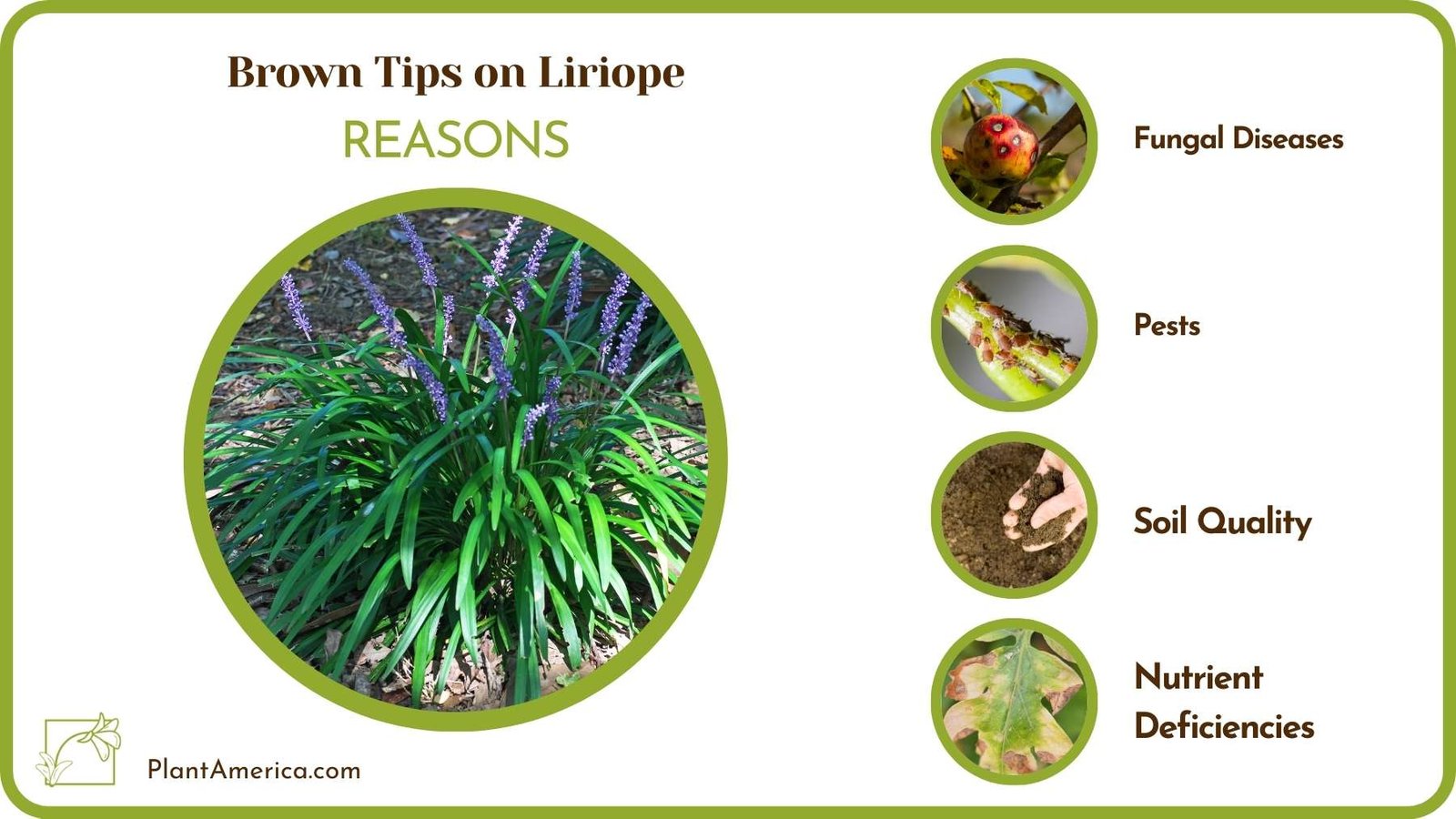
– Fungal Diseases
Fungal diseases, including anthracnose and leaf spot, can infect liriope and contribute to developing brown tips and other issues. These diseases thrive in moist conditions, so they’re triggered by overwatering. You might notice the reddish-brown spots when it rains frequently or when you use overhead irrigation to water your plant.
Infected liriope plants show brown or black spots on their leaves, often with a yellowing or wilting effect. The affected leaves may have browning at the tips as the disease progresses, and the browning will spread until it covers the whole leaf.
Unfortunately, fungal diseases can spread to different parts of the plant and infect nearby plants if you don’t do anything about them.
– Pests
Pests like spider mites, slugs, and snails can damage liriope by feeding on its leaves. Their feeding activity can lead to the development of brown tips.
Scale insects leave honeydew on the leaves, promoting sooty mold growth. Other pests will suck the sap of the leaves and dig tunnels in the leaves, damaging the look of plants. Over time, you’ll notice that your leaves have yellow or brown marks.
Spider mites leave silky webbing on the leaves and between the branches. They give your Emerald Goddess liriope muscari live plants a dusty look and cause browning on the Liriope requires well-draining soil to thrive.
– Soil Quality
You can grow your creeping liriope outside or as an indoor plant. In both cases, soil quality is paramount. If the soil lacks proper drainage, the plant’s roots can become waterlogged, leading to brown tips on the leaves. Although this plant can survive in different soil conditions, it won’t tolerate boggy soil, and brown spots will appear on the plant leaves.

It’s pretty standard to notice the signs of root rot when your soil is compact. As the roots struggle with excess moisture, the plant’s growth may be stunted, and it won’t flower.
– Nutrient Deficiencies
Nutrient deficiencies can lead to brown tips on liriope leaves. These deficiencies can arise due to imbalanced soil conditions or poor fertilization practices.
Nitrogen is crucial for photosynthesis, and without it, the plant won’t be able to grow flowers, and brown spots will appear on the foliage. The leaves will look pale, and the whole plant will experience stunted growth.
But that’s not all, the lack of nutrients will make you prone to fungal and viral diseases. Some of these diseases can be fatal and will kill your plant no matter what you do.
Easy Solutions To Cure Brown Tips On Liriope
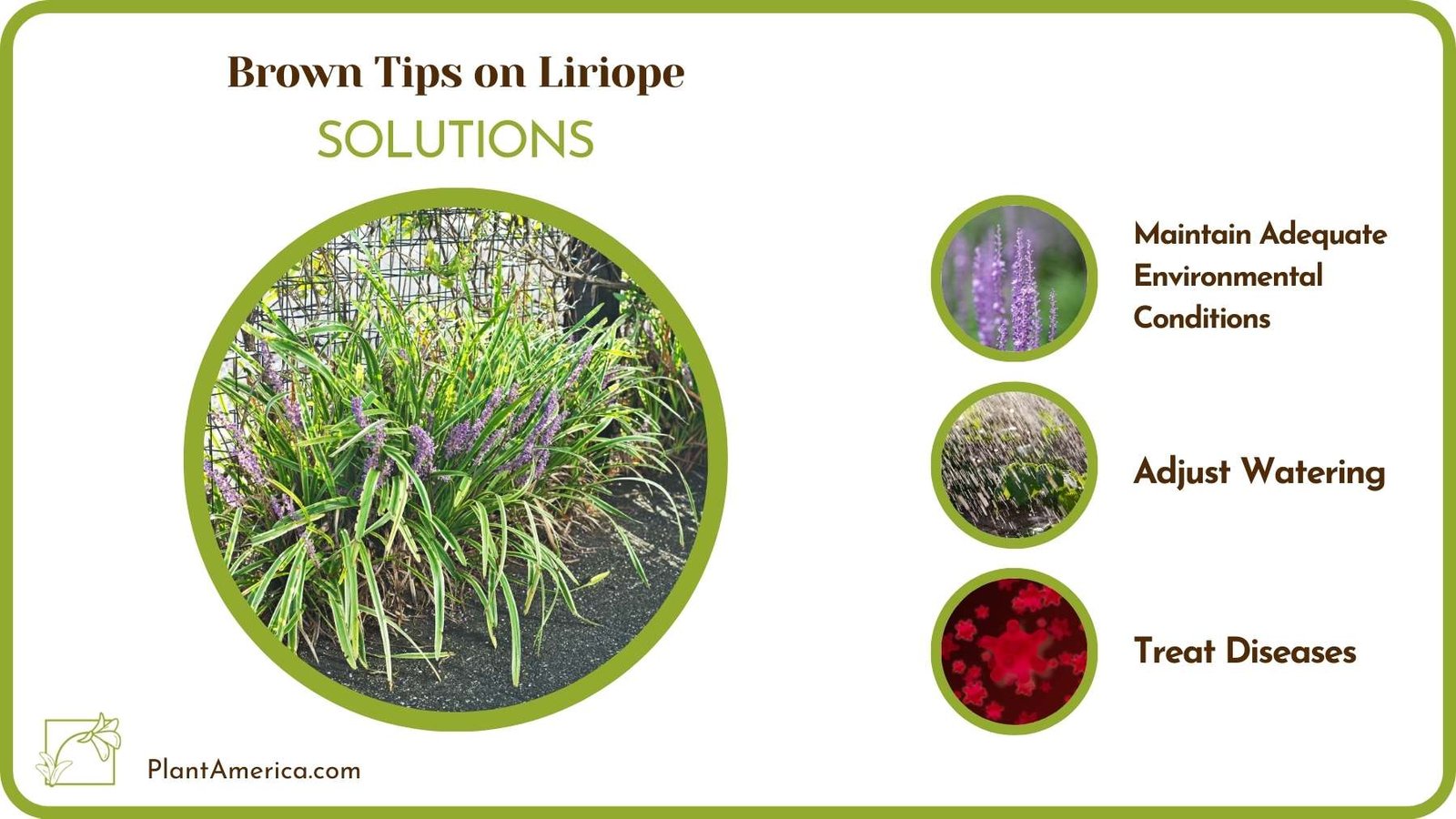
– Maintain Adequate Environmental Conditions
It’s essential to know how to treat brown tips on liriope. The only way to fight off environmental stress is to mimic the plant’s ideal growing conditions in its natural habitat. The liriope plant thrives in partial shade, making it suitable for areas with indirect sunlight or dappled shade. As a matter of fact, it’s one of the best groundcovers for shady locations.
Providing protection during the hottest parts of the day or cold snaps will protect this plant. You can add a row cover if the sun is scorching or mulch the base of the plant to regulate soil temperatures and maintain moisture levels.
By paying attention to these environmental factors, you can significantly reduce the risk of brown tips on creeping liriope and promote healthier growth.
– Adjust Watering
Liriope needs regular watering during its first growing stage. After the plant gets established, you should wait longer between watering to prevent water damage.
Ensure the soil around your liriope has proper drainage, and if you grow this plant in a pot, keep it in a container with enough drainage holes.
When the first inch of the soil is dry, water the plant thoroughly and allow the top 2 inches to dry out before the next watering. This prevents waterlogged conditions that can lead to root rot and brown tips.
Regularly check moisture levels using a reliable moisture meter and adjust your watering schedule according to the weather conditions. So, you might need to water your plant more often in hot weather.
Liriope might suffer from underwatering symptoms if you don’t follow a consistent watering routine. Learn how to revive liriope plants by watering them thoroughly and applying the water to their roots.
– Treat Diseases
Fungal diseases usually affect the plant due to poor hygiene when you touch it. So, you might use dirty gardening tools when you prune this plant and accidentally make it sick. Some pathogens can also be triggered by environmental stress and improper watering.
Pests carry some of these pathogens and spread them around as they move from one plant to another. This is why trimming the infected parts is crucial to prevent the fungal spores from spreading around.
Learning how to treat anthracnose on liriope is crucial. So, apply a fungicide that is labeled for use on liriope, following the manufacturer’s instructions closely.
Remember that too much moisture can trigger fungal infections and brown tips on Liriope muscari, so improve air circulation around the plants by pruning or thinning them if they are overcrowded and spacing plant pots.
Unfortunately, viral diseases aren’t that easy to deal with. So, does Liriope muscari spread diseases to healthy plants?
Yes, and this is why you need to dig out the plant and burn it so the infection doesn’t spread to other plants. While dealing with a sick plant, you should wear your gardening gloves and carefully sanitize your gardening tools to control the disease.
– Eliminate Pests
Dealing with pests is more accessible than diseases, but you must act promptly to avoid substantial damage that takes longer to control. Some pests, like snails and slugs, can be hand-picked, and you can follow by applying a neem oil spray or insecticidal soap.
Applying these treatments in the morning or evening is crucial because they can burn the leaves when you leave the plant in the sun. You should also correctly dilute neem oil because it can be too harsh on the foliage.
For other pests like scale insects and aphids, introduce natural predators like ladybugs and lacewings. These beneficial bugs will help control the population of pests in your garden.
– Improve Soil Quality
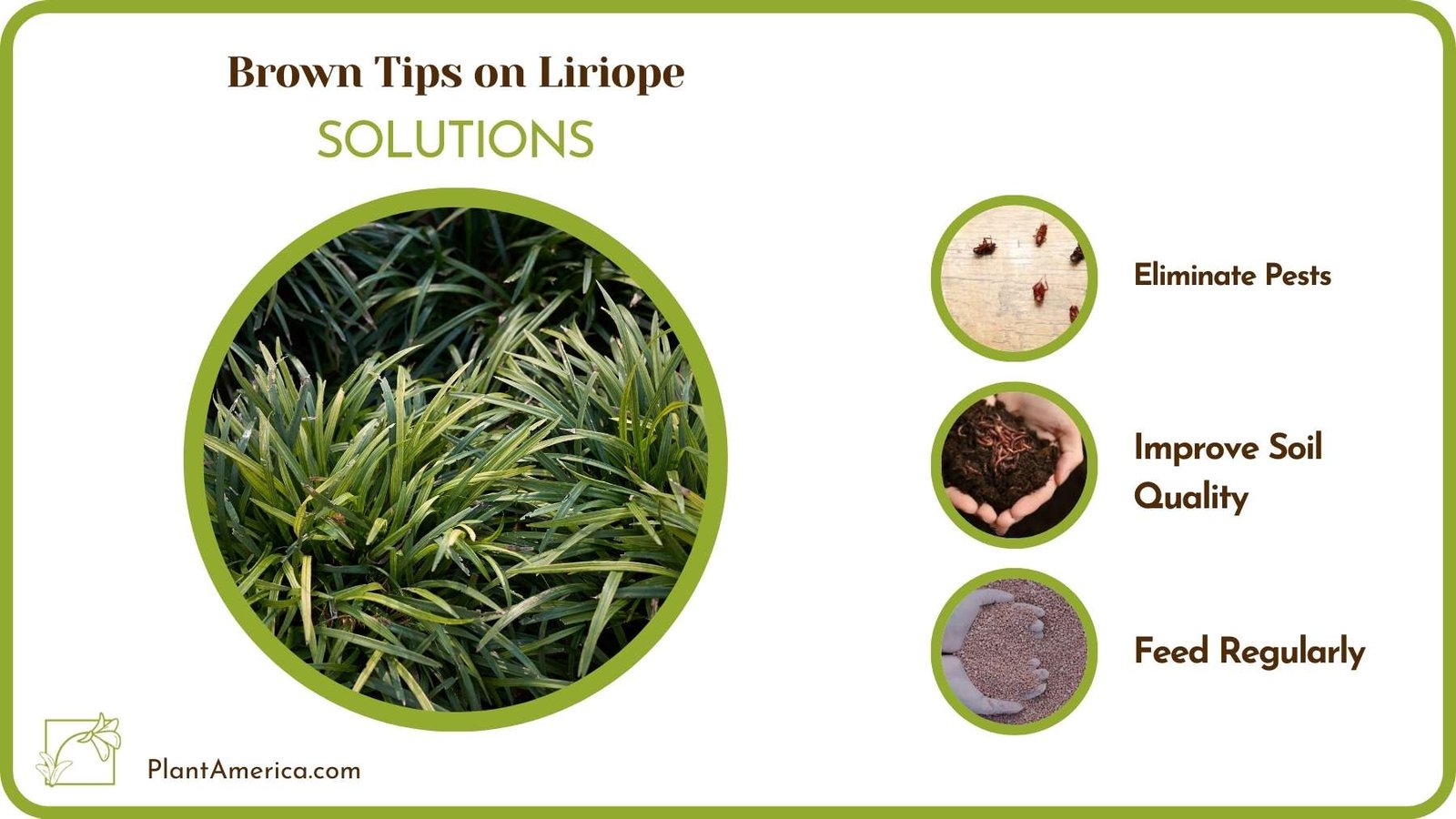
Improving soil quality is vital to prevent brown tips. Plant your liriope in well-draining soil, and consider adding organic matter to enhance soil structure.
Well-rotted manure won’t only increase the level of nutrients, but it will also increase the pH level.
You can elevate the planting site by amending the soil or creating raised beds to promote proper drainage. You can add some shredded leaves or compost, which also improves feeding.
– Feed Regularly
Although Liriope plants aren’t heavy feeders, they particularly benefit from using a nitrogen-rich fertilizer. Nitrogen is crucial in promoting flowering, so these plants can greatly suffer in nitrogen-deficient soil.
You should test the soil to detect the missing nutrients and apply them accordingly. Using a slow-release formula will be better, as you guarantee that your plant doesn’t receive too much nitrogen, which might cause the plant to become legged, where it grows taller but thinner.
If you don’t want to use a chemical fertilizer, you can regularly apply compost to encourage plant growth. During the growing season, apply a 10-10-10 to ensure a balanced boost of nutrients. Monitor the plant’s response to adjust your feeding schedule.
Conclusion
Liriope is the perfect choice for many landscapes, but seeing brown tips indicates that you might not be paying attention to this hardy plant. Here’s what you can do about this problem.
- Water your plant regularly to avoid having an over- or underwater liriope, and reduce environmental stress by maintaining consistent temperature and humidity levels.
- Treat diseases and deal with pests as soon as you notice the symptoms.
- Improve soil quality by increasing acidity and drainage.
- Feed regularly to make sure your plant is receiving enough nutrients.
The brown tips on liriope care tips on the creeping liriope aren’t the end of the world, so follow our tips to save your plant.