
Dumb Cane yellow leaves are a concerning sight that gardeners have to deal with when they don’t water the plant correctly or maintain unsuitable lighting conditions. The good news is that you can stop the yellowing with simple care tips.

So, please don’t go anywhere; stick around to learn what they are and how to do it!
Why Do Dumb Cane Leaves Turn Yellow?
Dumb Cane leaves turn yellow due to improper watering and incorrect lighting conditions. Poor soil health can also be the reason behind the yellowing, as it harms the root system. Other causes include nitrogen deficiency, temperature stress, and pest infestation.
– Inconsistent or Irregular Watering
Dumb Cane or Dieffenbachia plants crave stability when it comes to moisture. Their roots stay the happiest when they get the water at the expected times. However, the inconsistent watering disrupts their equilibrium. When this happens, you’ll see yellow leaves on the plant.
So, never pour lots of water one day and then forget your plants for days. Doing this can also lead to overwatering, which can create many problems. First, it can restrict the airflow toward the root tissues.
When this happens, the cane roots can’t function. Also, roots that stay in water for a long time can start to rot and get infected by diseases like leaf spots. Both suffocation and rotting will lead to Dumb Cane yellow leaves at bottom. So, keep adding sufficient moisture when the soil becomes partially dry.

– Bad Soil Health: One of the Common Problems
When your Dieffenbachia is stuck in a pot with poor soil, it can get stressed. Note that the soil that’s too compacted or doesn’t drain well suffocates the roots. Now, you know that when roots can’t breathe, they get unhappy. As a result, those leaves turn yellow, often starting at the bottom of the plant.
Also, if you’re growing plants in “nutrient-deficient” soil, root bound problems can occur. It’s a condition in which roots try to escape the soil. Furthermore, if you smell a rotting smell coming from the root zone, chances are the soil has been infected by disease-causing pathogens.
– Incorrect Lighting Conditions
If you’ve placed your Dieffenbachia plant in a spot with harsh, direct sunlight, don’t be surprised if you see yellow leaves. The intense rays can scorch the leaves, turning them yellow and brown.
Similarly, leaves can’t perform photosynthesis if you place your Dieffenbachia in a low-light or dark spot. When this happens, the plant won’t have the food and energy to stay green. As a result, you’ll see dieffenbachia leaves turning brown and yellow.
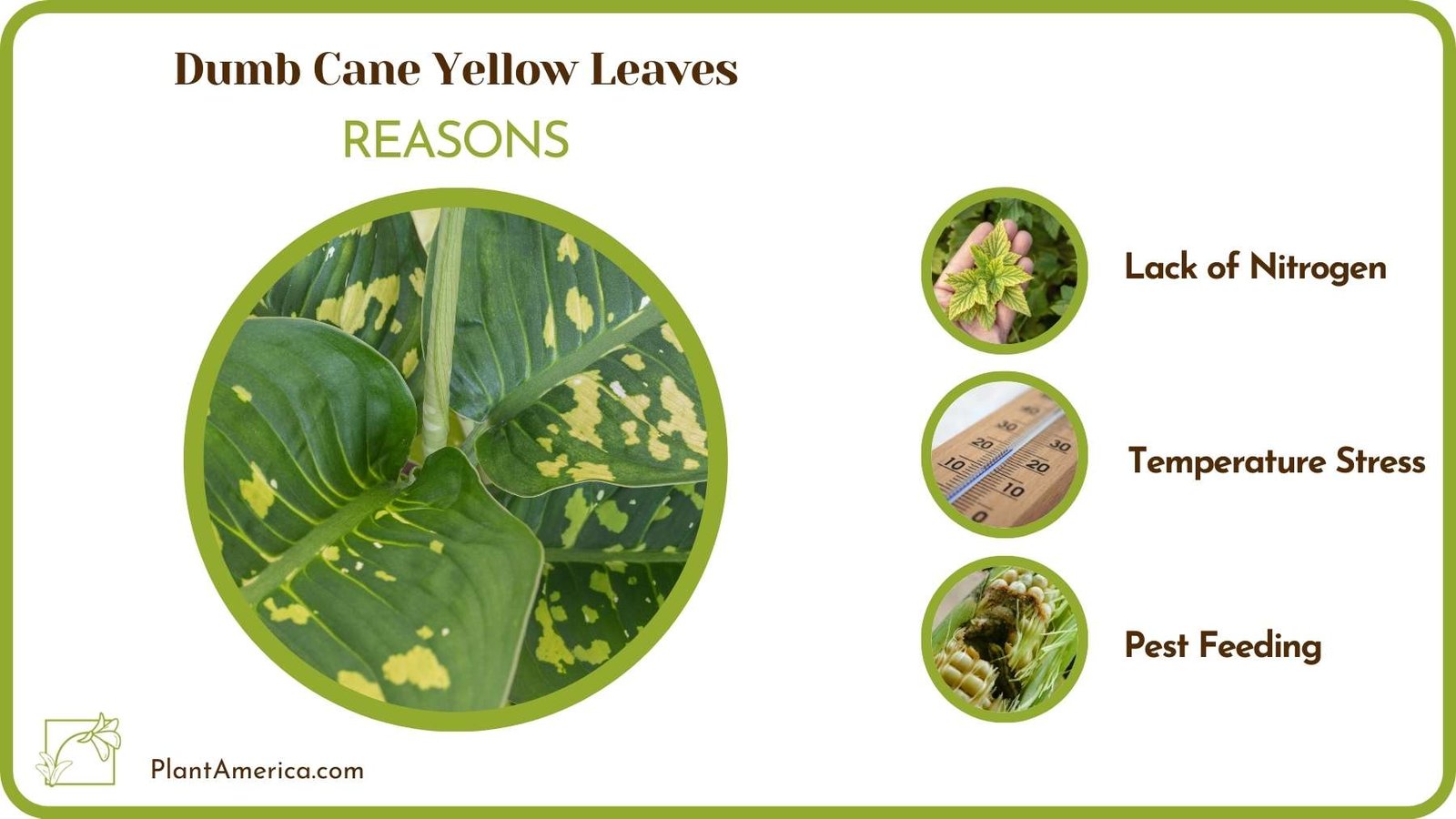
– Lack of Nitrogen: Nutrient Deficiency
Nitrogen is critical for the chlorophyll production process in the plants. Note that this chlorophyll gives leaves a green color. So, when it isn’t enough, yellow patches start to appear.
To confirm that nitrogen deficiency in the soil is causing your Dumb Cane yellow leaves turning brown, consider performing a soil test. This test will reveal the nutrient levels in your soil. If nitrogen is running low, it’s time to provide your plant with a nitrogen-rich fertilizer.
– Temperature Stress: Another Big Reason Behind Yellowing Leaves
Extreme temperatures can shock your Dumb Cane plants. When it’s exposed to cold drafts or heat stress, it’s common to see discoloration. During the winter, the chilly temperature can stop the internal processes. The plants then get energy-deficient and start to turn yellow to brown.
On the flip side, excessive heat can also be a problem. If your Cane or Dieffenbachia is placed in a location with scorching sunlight or near a heating source, it can experience heat stress. When this happens, water starts to get released from the leaves. A time will come when the cane plant will become dehydrated and turn yellow.
– Pest Feeding
Now, talk about tiny intruders that can wreak havoc on your Dieffenbachia’s leaves – spider mites. They are notorious for their ability to infest plants and feed on the leaves, which can lead to discoloration. In case of severe infestation, you may also see dieffenbachia leaves drooping.
To confirm that spider mites are responsible for the Dumb Cane leaves turning yellow and brown, inspect the undersides of the leaves. If you spot tiny, web-like structures or the mites themselves, you’ve identified the culprits.
Now, you know the main causes that lead to yellowing. It’s now to learn about dieffenbachia plant care that stops this from happening.
What to Do When Dumb Cane Leaves Turn Yellow
When Dumb Cane leaves turn yellow, prune the discolored or dead parts. When you do this, the plant can respond better to treatments like watering, suitable lighting, etc. If spider mites have attacked Dieffenbachia, you can use neem oil to eradicate them.
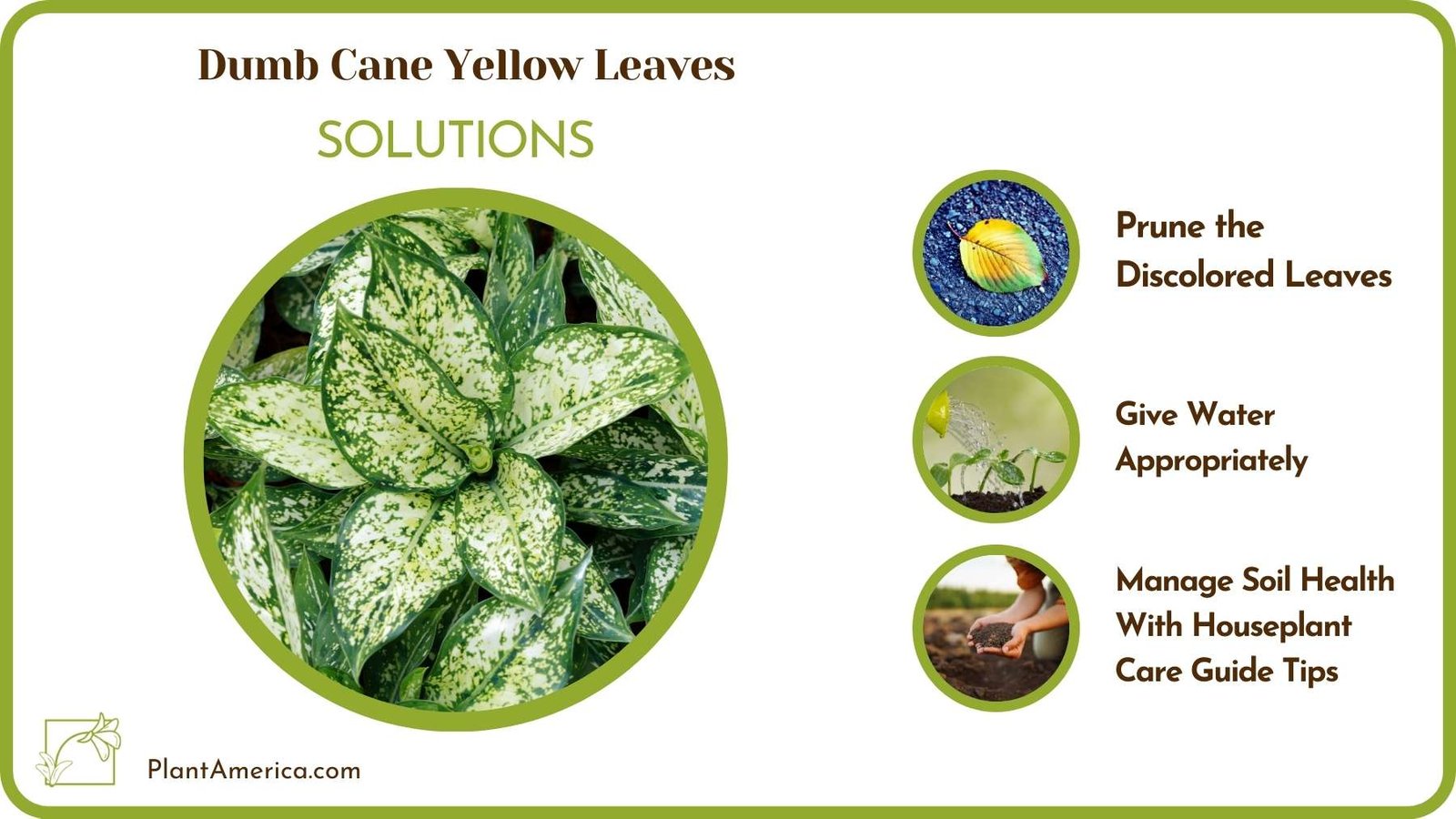
– Prune the Discolored Leaves
One of the first steps you can take to protect the plant’s health is pruning. Doing this allows Dieffenbachia to redirect the energy into growing healthy and green leaves. However, incorrect pruning can worsen the yellowing, so you must do it the right way.
Here’s how to cut yellow leaves off Dumb Cane:
- Examine the Leaves: Carefully inspect your Dumb Cane plant to identify the Dieffenbachia yellow leaves. Look for leaves that are entirely yellow or have extensive yellowing. These are the ones you’ll want to remove.
- Choose a Cutting Point: Identify a cutting point on the affected leaf. Ideally, you want to cut the leaf stem (petiole) as close to the main stem as possible. This ensures a clean cut and minimizes any unsightly stubs.
- Cut at an Angle: Hold the pruning shears or scissors at a slight angle and make a clean, precise cut through the petiole. Avoid tearing or damaging the healthy parts of the plant while cutting.
- Please dispose of the Removed Leaves: After you’ve pruned the yellow leaves, dispose of them in your compost bin or trash. Please do not leave them around the plant, as decaying leaves can attract pests or diseases.
It’s that simple to help your Dieffenbachia recover and regain its vibrant appearance with pruning.
– Give Water Appropriately
Proper watering is crucial to nurse your Dieffenbachia back to health after those pesky yellow leaves. But don’t worry, it’s not rocket science; it’s more like finding the right “moisture” balance.
Here’s how to water:
Check the Soil: Always check the soil’s moisture level before watering. Stick your finger or a wooden stick about an inch into the soil near the plant’s base. If it feels dry to the touch, it’s time to water.
Use the Right Technique: When it’s time to water, do it evenly and thoroughly. Water the soil around the plant, not directly onto the leaves, to avoid potential leaf rot. For Dieffenbachia, it’s often best to use the “soak and dry” method. Here’s how it works:
- Place your plant in the sink or on a surface where excess water can escape.
- Water thoroughly until you see water draining from the bottom of the pot.
- Allow the excess water to drain completely.
- Put the plant back in its usual spot.
Drainage is Key: Ensure your pot has proper drainage holes. Excess water should be able to escape, preventing root rot and waterlogged soil.
– Manage Soil Health With Houseplant Care Guide Tips
Your Dieffenbachia can’t have green leaves until the soil condition is bad. Therefore, if you smell a foul odor, a crust appearance, or poor drainage, we suggest you improve soil health.
Here’s what to do:
- Repot: When the growing medium becomes unsuitable, repot the Dieffenbachia into a slightly larger container with fresh potting mix.
- Fertilize Wisely: Use a balanced, water-soluble fertilizer during the spring to provide essential nutrients to the soil.
- Monitor Soil pH: Check the soil’s pH occasionally to ensure it’s in the preferred range for Dieffenbachia, which is slightly acidic to neutral. You can use a pH testing kit for this purpose.
- Avoid Salt Buildup: Over time, mineral salts from fertilizers can accumulate in the soil. To prevent this, occasionally flush the soil by thoroughly watering the plant.
- Keep it Clean: Remove fallen leaves and debris from the soil’s surface. This prevents mold growth and helps maintain soil health.
That’s it. Don’t hesitate; give your plant the best soil care it deserves!
– Ensure the Lighting Stays Ideal
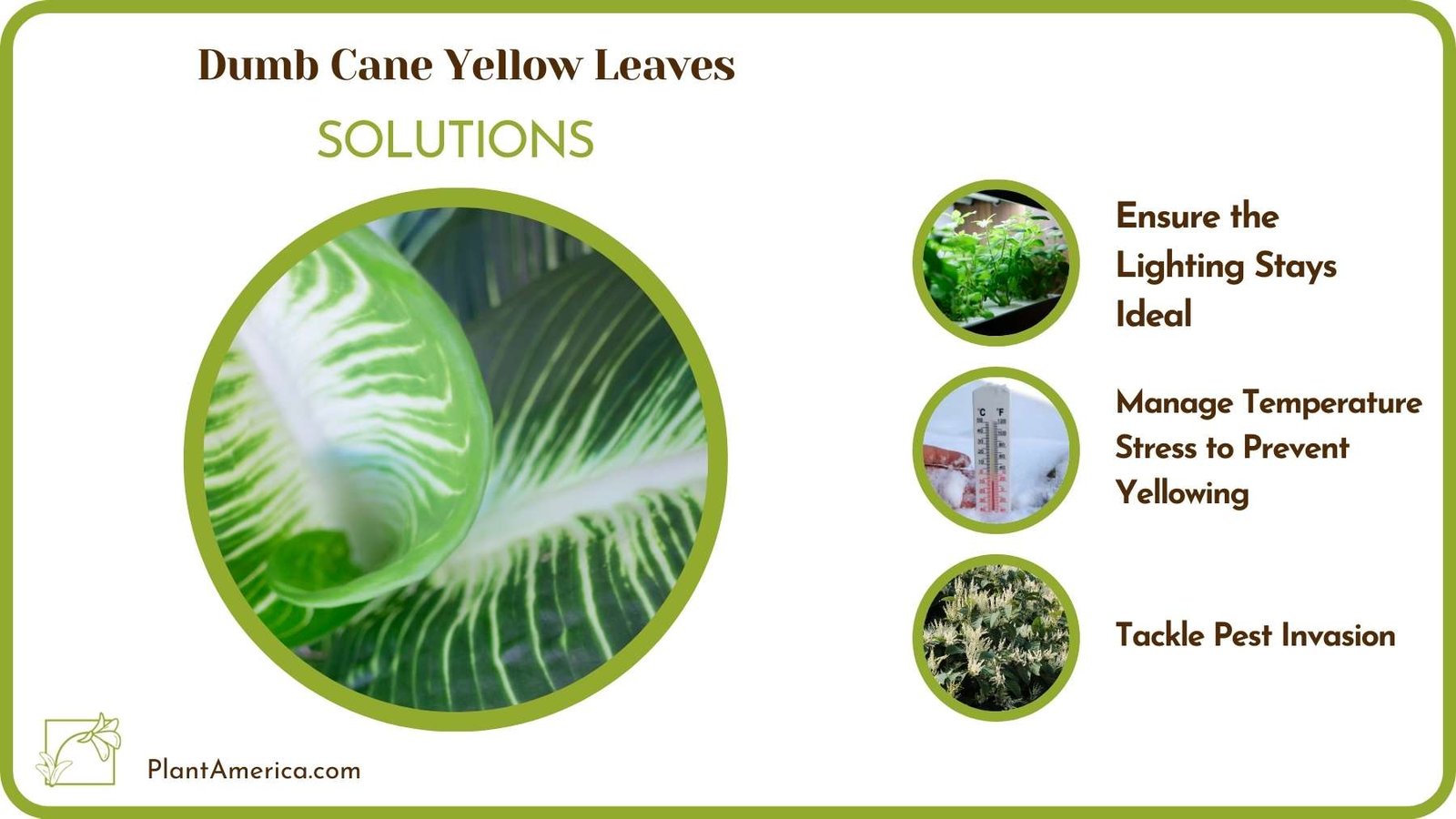
We suggest placing your Dieffenbachia in a location with plenty of bright, indirect light. Such light will help the leaves with photosynthesis, ultimately keeping them green.
In addition to putting the cane plant in the right location, it’s also essential to follow these points:
- Rotate the Plant: To ensure even growth, rotate your plant periodically. This prevents one side from receiving more light than the other, which can lead to uneven coloration.
- Use Curtains or Blinds: If your plant is near a window with strong sunlight, use curtains or blinds to filter the light. This creates the perfect balance of brightness without harsh rays.
- Artificial Lighting: In low-light conditions, consider supplementing with artificial lighting. Grow lights, especially those designed for indoor plants, can provide the necessary light for healthy growth.
- Monitor Seasonal Changes: Be aware that the intensity and duration of sunlight can change with the seasons. Adjust your plant’s placement as needed to maintain consistent lighting conditions.
- Watch for Warning Signs: Keep an eye on your Dieffenbachia leaves. If you notice them leaning towards the light or becoming leggy, it’s a sign they’re not getting enough. Move the plant closer to the light source.
Keep your plant’s lighting just right, and it will reward you with its vibrant beauty.
– Manage Temperature Stress to Prevent Yellowing
Dieffenbachia thrives when the temperature is between 65 to 75 degrees Fahrenheit. If you maintain it, all the internal processes will occur smoothly. It means you won’t ever have to deal with the yellowing again.
Here’s what to do:
- Watch for Drafts: Protect your plant from drafty windows, doors, or air conditioning vents. Cold drafts can quickly lead to leaf yellowing.
- Maintain Consistency: Try to keep the room temperature relatively stable. Avoid placing your Dieffenbachia near heaters or radiators, which can create temperature fluctuations.
- Provide Protection: If your area experiences chilly winters, consider using a humidity tray or a plant cover to shield your Dieffenbachia from cold drafts while providing adequate airflow.
- Avoid Hot Spots: Similarly, keep your plant away from sources of excessive heat, such as heaters, radiators, or south-facing windows, as this can cause heat stress and yellowing.
- Monitor for Stress Signs: Regularly check your Dieffenbachia for signs of temperature stress, such as drooping leaves or yellowing. If you notice these symptoms, adjust its placement to a more temperature-friendly spot.
– Tackle Pest Invasion
Dealing with unwanted guests like spider mites on your Dieffenbachia is super essential to stop the discoloration. If you let the pests feast, they can turn every leaf in the garden yellow. The reason is that almost every female insect lays eggs in dozens, which can hatch in a few days.
Here are the best ways to tackle pest populations effectively:
- Early Detection: Regularly inspect your Dieffenbachia or Cane for signs of pests. Look for tiny webs, discolored or speckled leaves, and any visible pests like spider mites.
- Prune Affected Parts: Trim and remove the leaves or sections with visible pest damage. Be sure to dispose of them away from your other plants.
- Wash the Plant: Gently wash the leaves with a mild soap and water solution. This can help dislodge and remove pests like spider mites.
- Use Neem Oil: Neem seed oil is a natural pesticide that can be effective against spider mites. Dilute neem oil according to the package instructions and apply it to the plant, ensuring you cover both sides of the leaves.
- Increase Air Moisture Levels: Spider mites thrive in dry conditions. Increasing humidity around your plant by misting its leaves or using a humidity tray can deter these pests.
- Monitor and Repeat: Keep a close eye on your Dumb Cane to ensure the pests are completely gone. Repeat treatments if necessary until your plant is pest-free.
Remember that giving your plant a stress-free environment lets it thrive and maintain its vibrant green appearance.
Conclusion
In summary, Dumb Cane leaves can turn yellow due to various causes like inconsistent watering, bad soil health, etc. Here, we explained the reasons and offered easy solutions to these problems in detail.
- Prune Discolored Leaves: Regularly trim yellow leaves to promote new growth.
- Give Water Appropriately: Follow a “soak and dry” method, ensuring the right amount of moisture.
- Manage Soil Health: Use well-draining soil, repot when needed, and avoid over-fertilization.
- Ensure Ideal Lighting: Place your plant in bright, indirect sunlight, and watch for seasonal changes.
- Tackle Pests: Control mite attacks by washing the plant with a soapy solution and neem oil spray.
Stick to these practices, and your plant will thrive, showcasing its healthy, green foliage. Here’s to your Dumb Cane’s bright future!