
Calathea zebrina from the Zingiberales order, also known as zebra plant, is a favorite Calathea type among gardeners due to its stunning appearance. It has lush foliage and stunning ovate leaves at the end of slender stalks that are super attractive.
The smooth, velvety texture and eye-catching patterns of shades of green give it the look of the stripes of a zebra. The contrasting purple undersides of the leaves add more interest.
Calathea zebrina from the Calathea genus needs proper attention and care when it comes to growing as a houseplant. Zebra plants love to grow indoors and will tolerate bright light and continue to grow healthy and robust with the right care.

JUMP TO TOPIC
- How To Care for Calathea Zebrina: A Step-by-Step Guide
- Soil Requirements
- Light Requirements
- Water Requirements
- Temperature Requirements
- Humidity Requirements
- Propagation of the Calathea Zebrina
- Calathea Zebrina Pruning
- Common Calathea Zebrina Problems
- – Calathea Zebrina Leaves Are Drooping
- – Calathea Zebrina Is Dying
- – Calathea Zebrina Leaves Are Turning Yellow
- – Calathea Zebrina Leaves Are Twisting and Curling
- – Calathea Zebrina Stems Are Getting Weaker
- – The Zebra Plant Leaves Look Faded and Discolored
- – There Is a Gray Mold on the Calathea Zebrina Plants
How To Care for Calathea Zebrina: A Step-by-Step Guide
 Soil Requirements
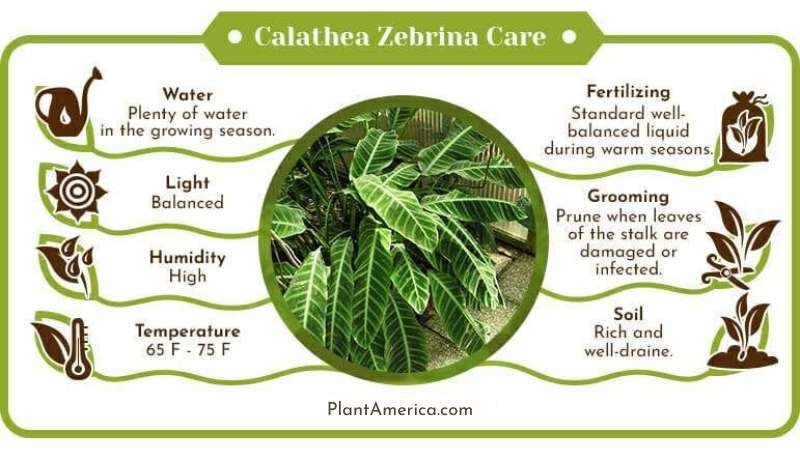
Calathea zebrina needs rich well-drained soil. Peat moss is the best potting mix for your zebra plants. It holds moisture and also drains water well. You can improve the drainage by mixing 2 parts of peat moss with 1 part perlite.
If you want to buy a ready-made potting mixture then you can look for an African violet potting mixture. Making your mixture of soil is more rewarding. Another method you can use is to add equal parts of garden soil, perlite, or sand, with peat moss or coir. Isn’t it simple?
The pot must have good drainage holes. You can drill some extra holes if needed.
 Light Requirements
Calathea zebrina is a tropical plant so it needs balanced light. Too much or too little light will destroy the plant. The perfect spot for your Calathea zebrina plants is where it can get a bit of both bright and indirect light.
Look for a spot that gets filtered light, perhaps through a curtain. But keep in mind to shield the plant from direct strong light wherever you plant it. This is because direct light will scorch the leaves of Calathea zebrina plants and make the hues fade away.
 Water Requirements
Calathea zebrina needs plenty of water in the growing season. The moisture-loving plant grows beautifully in moist soil that also drains well. It must not sit in water, or the root rot will kill it.
Slow down watering in winter and let the soil dry between watering. The soil must be well-drained, and the pot must have drainage holes. Water must be at room temperature.
Remember that cold or saline water can make your plants sick. You can use distilled water from air conditioning or even rainwater. Calathea zebrina likes moist soil, but wet soil will encourage health issues with the plant. Creating a perfect soil mixture and maintaining a watering pattern will solve the problem and help the plant thrive.
 Temperature Requirements
Zebra plants thrive best at average room temperatures that range from 65 degrees Fahrenheit to 75 degrees Fahrenheit. Consequently, avoid placing the plant in temperatures below 60 degrees Fahrenheit.
Another thing to be mindful of is to protect your Calathea zebrina from sudden temperature drops and cold drafts. You can protect your plant from drying and overheating by keeping it away from heating vents.
 Humidity Requirements
One of the essential tricks to care for your Calathea zebrina is to maintain its moisture levels. Many gardeners fail at growing Calathea zebrina only because they don’t get this right.
Calathea zebrina needs high humid conditions to grow. If the plant gets that, you will see the wonderfully healthy plant in a pot. In case you live in drier regions, here are a few things that you can do.
- Install a humidifier
- Use a mister to humidify the plants
- Place a pebble tray to increase moisture
- Group plants together for more humidity
- Calathea Zebrina Fertilizer Requirements
Calathea zebrina will not need plenty of fertilizer. Use the standard well-balanced liquid feed to treat your plants during the growing season. Zebra plants will enjoy weekly or bimonthly feed that has been diluted with water. Always fertilize your plants after watering them, and do not fertilize in winter.
-
How To Propagate Calathea Zebrina
Propagating Calathea zebrina is effortless. You can propagate the plant using leaf cuttings or through the baby plants that grow around the stems. The young plants are pulled gently apart and planted in new pots. Roots begin to grow in about four to six weeks. Before we share a detailed propagating guide, let us learn about its growing habits.
-
Growth
Calathea zebrina grows fast in the right kind of soil and in perfect lighting conditions. For robust growth, lightly fertilize your plants weekly in the growing season. Calathea zebrina will grow fast but will not spread much in containers.
The plant can grow as tall as 3.28 feet or a little bigger, while leaves will grow as big as 15 inches or more. The stems clump together and interestingly thrive in small pots too.
-
Potting
Repot Calathea zebrina only when needed. It grows fast and you may have to change the pots each year. Repot your plants when the plant outgrows the container or when you want to multiply your plants.
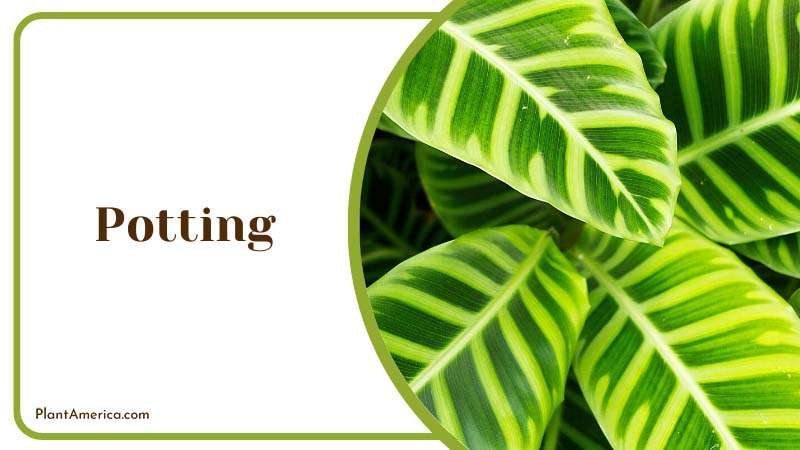
In both cases, remember the following points.
- The plant must be well watered before repotting
- Transplant during the growing season and never in winter
- Water well after moving your plants
- In case you a moving it to a bigger pot then make sure the pot is at least two inches big
- Too much extra soil will encourage more water to stay in the pot and lead to root rot
- Move your plants as fast as possible without disturbing the roots too much
- Always transplant in the late afternoon or evening to reduce the shock of the plant
- While having these basic points in mind, let us now explore the propagation methods for Calathea zebrina.
Propagation of the Calathea Zebrina
Calathea zebrina is easy to propagate. Always propagate your Calathea zebrina plants in the growing season which is between mid-spring to late fall. Propagation done during this time gives good results.
Have the following things ready before you begin repotting your plants:
- Prepare good quality soil mix
- Have your pot ready too
- Have a sterilized cutter by your side
- Get a watering can
– Propagation of the Calathea Zebrina by Division Method
Calathea zebrina propagates well by the division method. The newly formed plants at the base of the stems can be separated and replanted. Soon they grow into big plants. The roots are gently pulled apart to separate the plants. Here is a simple step-by-step guide for you to follow.
- Tilt the pot and tap gently to bring the root ball out from the pot without breaking it
- Start with smaller plants growing around the stem and gently pull them apart
- Next, pull the bigger shoots apart
- Repot each new plant into separate pots that place the soil firmly around the plant
- Make sure the roots do not break while separating the two plants
- Water quickly after transplanting
Pots can be plastic or terracotta containers with enough drainage holes. Keep the plants in warm, sheltered, and humid locations. New shoots and roots begin to grow in about a month.
– Propagation of the Calathea Zebrina Through Seeds
Calathea zebrina seeds are also used for propagation. But it is a difficult method. In case you feel motivated to try, follow these simple steps.
- Sow seeds in a pot filled with peat moss
- Lightly cover the seeds with soil
- Water your seeds using a gentle shower
- Place it in indirect light and a warm place to grow
- In a couple of weeks, the seeds will sprout
- Once they are large enough to handle, transplant them into containers
 Calathea Zebrina Pruning
Calathea zebrina can be pruned when the leaves of the stalk are damaged or infected. The healthy leaves and stems should not be pruned. Clean the leaves weekly and maintain their health. This way, you won’t need to prune.
Common Calathea Zebrina Problems
Calathea zebrina comes with its set of diseases and problems that can be avoided if you know what is wrong with your plants. We have answered some most common problems that gardeners face.
– Calathea Zebrina Leaves Are Drooping
Calathea zebrina leaves begin to droop when the temperatures are too cold or the growing conditions are too dry. Dry hot air may also cause dropping leaves of Calathea zebrina. It is a sign that your plant needs more moisture.
If the problem persists, it can kill the plant. Take action as soon as you see drooping leaves. If the temperatures are too cold then bring the plant into a warmer location. In case there is drought or hot weather, then use a humidifier, mister, or shower to quickly treat your plant.
– Calathea Zebrina Is Dying
Calathea zebrina dies when it is ignored or placed under too much or too little light. Give it the right growing conditions by following the guide above. Use a well-drained soil mixture, filtered light, and good moisture for robust growth
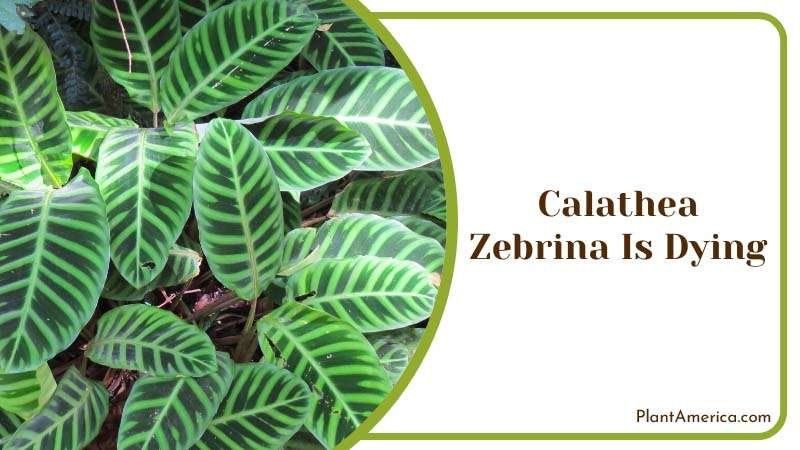
If you fail to take care of your plants then they will drop leaves, look dull, lose their hues, have weak roots, or scorched leaves. All the symptoms can kill the plant. If there is a pest problem, then we suggest applying neem oil on your Calathea’s leaves.
– Calathea Zebrina Leaves Are Turning Yellow
Calathea zebrina leaves turn yellow when they don’t get enough water. Make sure the soil is moistened in the growing season and not over-watered in winter. Use a self-watering container to help maintain the moisture. Having the right kind of potting mix also helps.
– Calathea Zebrina Leaves Are Twisting and Curling
Calathea zebrina leaf curls when the plant is underwatered. Make sure the gap between your waterings is not long. Follow the above solution for resolving the problem.
– Calathea Zebrina Stems Are Getting Weaker
Calathea zebrina stems look weak when they are over-watered during the cold months. Excess water in the roots will make the stems weak and soft. Water only when the soil dries in winter.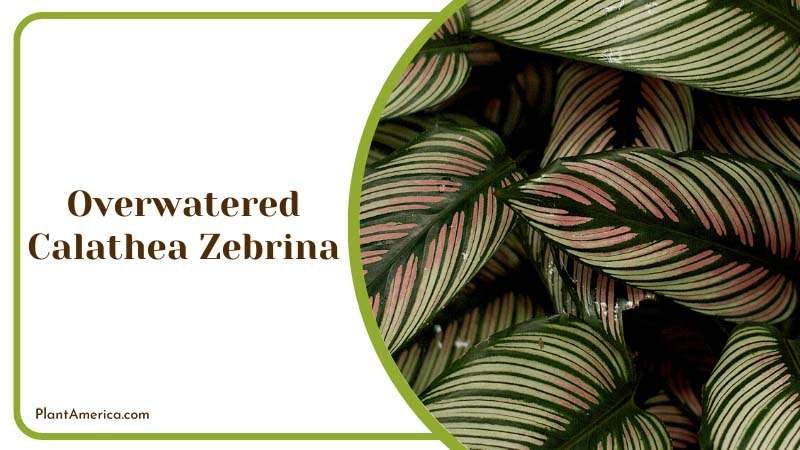
If the situation worsens, then the stems are removed to save the plant as well. The plant may also die if not treated.
– The Zebra Plant Leaves Look Faded and Discolored
Zebra plant leaves lose color and appear faded when they do not get the right amount of light. Too much and too little light can decolor the foliage. Direct exposure to sunlight will make it lose its beautiful pattern.
Consider relocating the plants for improved lighting conditions.
– There Is a Gray Mold on the Calathea Zebrina Plants
When Calathea zebrina is kept in extremely high humid conditions, it may develop patches of gray mold. To resolve the problem, remove the parts of the leaves that point down or the ones that are infected. Make sure the plants are placed where there is good ventilation.