
Blue ground cover flowers are a beautiful way to fill in spots of your garden with vibrant color and minimal maintenance. When we talk about blue ground cover flowers, we’re referring to low-growing perennial flowers that stay relatively short and spread easily to create a carpet of color.

In this article, we’ll cover some of the best blue ground cover flowers you can grow to beautify your outdoor space. Whether you want something low-fuss that thrives in part shade or bright blue blooms to brighten a sunny corner, we have flower ideas and growing tips to help you create a gorgeous garden carpet.
19 Blue Ground Cover Flowers for Stunning Spring Blooms
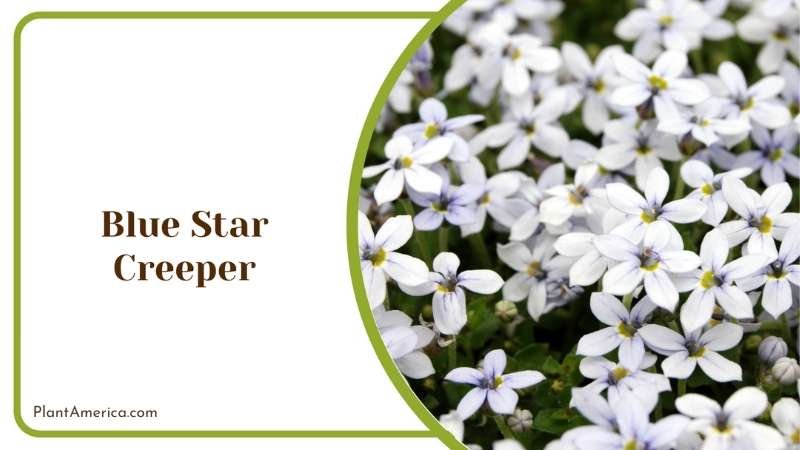
1. Blue Star Creeper
- Growing Season: Spring, Summer, Fall
- Leaf Shape: Oval, Round
- Specific Needs: Part-shade, Moist, Well-drained soil
- Common Pests: Aphids, Spider mites
Blue star creeper (Isotoma fluviatilis) is a beautiful ground cover perennial native to Australia. The bright blue star-shaped flowers bloom from spring through fall, covering the low-growing foliage in color. Blue star creeper thrives in partial shade and moist, well-drained soil.
The creeping stems root as they spread to form a dense mat that works as an effective ground cover in shady garden areas. This lovely plant is truly low maintenance, being both deer-resistant and drought-tolerant once established. It’s a wonderful choice for shady borders, woodland gardens, or filling under trees to create a gorgeous, low-maintenance garden.
Pruning blue star creeper after it finishes flowering in fall will encourage fresh new growth and more flowers the following spring. Divide clumps in spring every few years to maintain plant health and vigor
2. Baby’s Blue Eyes

- Growing Season: Spring, Summer, Annual
- Leaf Shape: Rounded, Lobed
- Specific Needs: Full Sun, Well-drained Soil
- Common Pests: Leaf Miners, Aphids
Baby’s blue eyes (Nemophila menziesii) are an easy-to-grow groundcover producing cheerful spring and summer blue flowers. The rounded leaves have five to seven lobes and grow on a loose mat. The plant spreads rapidly via self-seeding to form extensive patches. Baby’s blue eyes thrive in full sun and well-drained soil. They are drought-tolerant once established and require little care after the first year.
The bright blue, star-shaped blooms resembling a baby’s eyes appear in spring and continue sporadically into summer. Deadheading spent flowers prolongs the bloom time. Slugs and snails can drill holes in the foliage, especially in moist conditions. Control pest populations by hand removing pests and applying diatomaceous earth.
Baby’s blue eyes spread quickly from self-sown seed to cover large areas with their low-growing carpet of foliage and colorful flowers. Plant baby’s blue eyes en masse between stepping stones, in rock gardens, or spread over slopes and banks for a resilient flowering ground cover that requires little effort. The cheerful blooms add beauty in spring and early summer.
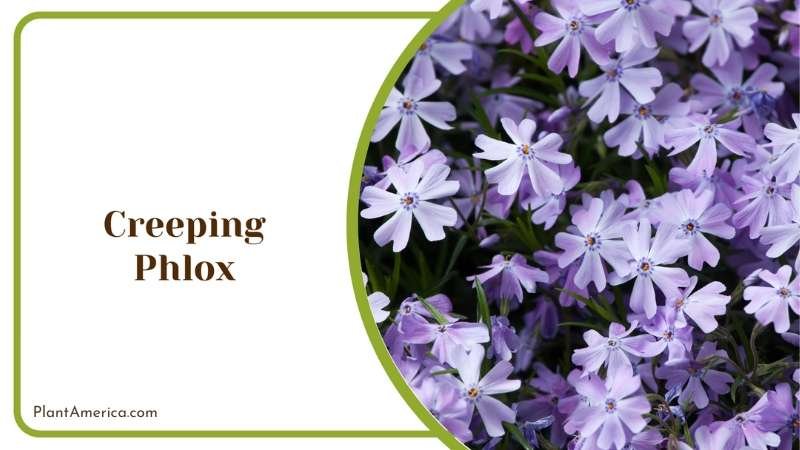
3. Creeping Phlox
- Growing Season: Spring, Summer, Perennial
- Leaf Shape: Linear, Narrow
- Specific Needs: Full Sun, Well-drained Soil
- Common Pests: Aphids, Japanese Beetles, Spider Mites
Creeping phlox (Phlox subulata) forms a dense mat of slender evergreen leaves. Spring produces cheerful clusters of pink, purple, red, or white bell-shaped flowers. Creeping phlox thrives in full sun and free-draining acidic soil.
It is drought-tolerant once established and needs little care after the first year. Pruning immediately after flowering encourages a flush of new growth. Remove any damaged or crossing stems to maintain a neat, compact shape.
Watch for aphids, Japanese beetles, and spider mites, which can damage creeping phlox. Spray the plant with water to dislodge soft-bodied insects. The dense mat of foliage and colorful blossoms spread quickly to cover large areas with minimal effort. Plant creeping phlox between pavers, in rock gardens, or at the front of flower borders. The ultra-low-growing habit works well paired with taller perennials.
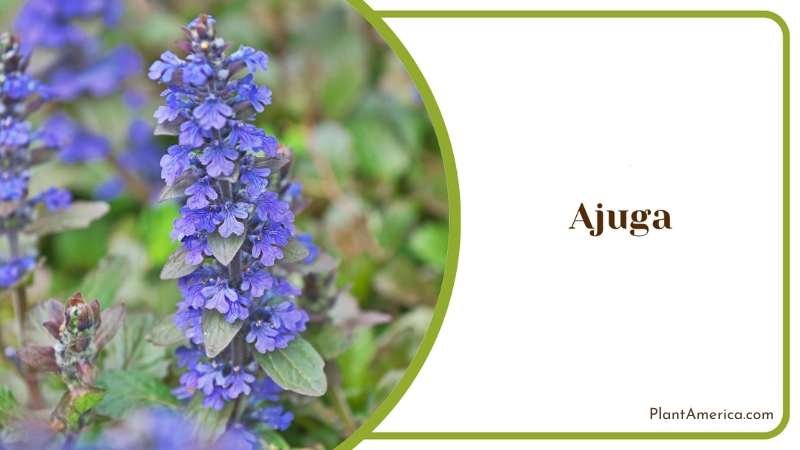
4. Ajuga
- Growing Season: Spring, Summer, Perennial
- Leaf Shape: Ovate, Rounded, Wavy-edged
- Specific Needs: Part Sun, Moist, Well-drained Soil
- Common Pests: Leaf Miners, Spider Mites
Ajuga reptans, called bugleweed or bird’s-foot trefoil, is a perennial groundcover prized for its colorful spring flowers and attractive glossy foliage. Ajuga spreads quickly via stolons to form mats or turfs of rounded leaves and spikes of small purple, blue, or white flowers. Ajuga grows well in shade or partial shade with consistently moist, well-drained soil.
Prune ajuga after flowering to keep the plant neat and encourage reblooming. Divide established plants in spring every three to four years to promote vigor and spreading. Leaf miners and spider mites can cause damage to Ajuga. Remove infested leaves and prune back the entire plant. Apply neem oil spray or insecticidal soap for control.
Ajuga makes an attractive, long-blooming ground cover with its eye-catching flowers and glossy foliage for shady gardens. The creeping habit rapidly spreads to fill large areas, quickly forming a colorful, low-maintenance groundcover.
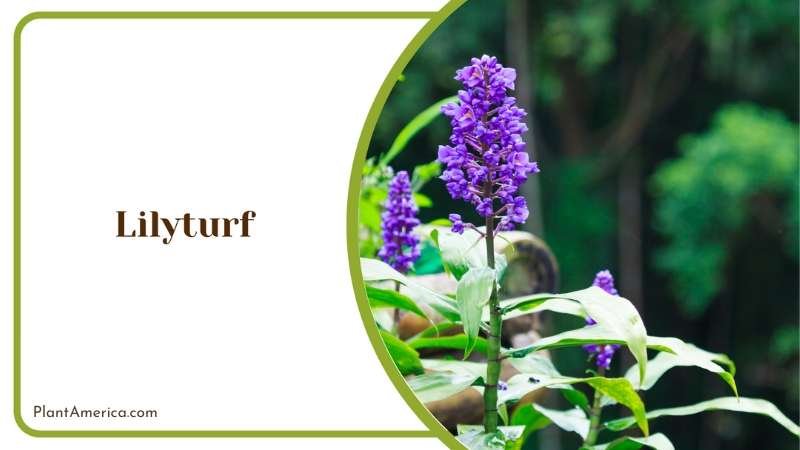
5. Lilyturf
- Growing Season: Summer, Fall, Perennial
- Leaf Shape: Linear, Grass-like
- Specific Needs: Part shade, Moist soil
- Common Pests: Slugs, Snails
Lilyturf (Liriope muscari) is an attractive clumping perennial. The slender leaves form dense clumps. Lilyturf grows in full sun to partial shade with moist, well-drained soil. Divide plants in spring every three to four years to maintain vigor and encourage spreading. Prune back foliage at any time to maintain a neat appearance.
Pull weeds by hand to control unwanted growth. Apply a mulch layer. Lilyturf makes an elegant, low-maintenance groundcover. Plant lilyturf in groups in beds, between stepping stones, or in containers for an attractive ornamental grass alternative. Lilyturf (Liriope muscari) forms dense clumps of grassy leaves with upright purple flower spikes in late summer.
Slugs and snails can chew holes in new leaves, especially after rain. Scouting for pests and hand-removing them helps control populations. Split established clumps in spring every few years to maintain plant health and encourage spreading.
Trim faded flower stalks to tidy the appearance. Lilyturf works as an edging plant, filling open areas around trees or spilling over retaining walls. The purple-blue flowers attract butterflies and bees. Growing conditions for lilyturf are flexible as they tolerate sun or shade with average to moist soil. Once established, they are drought tolerant. Lilyturf remains attractive year-round as an evergreen groundcover with minimal care needed.
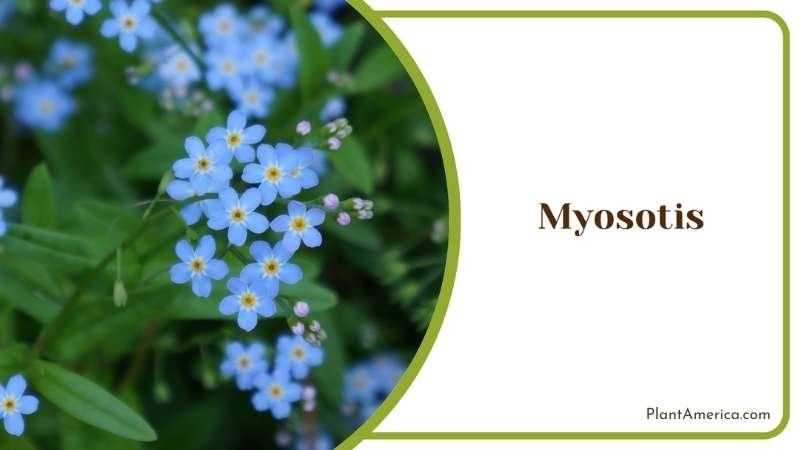
6. Myosotis
- Growing Season: Summer, Spring, Perennial
- Leaf Shape: Partial shade, Moist, Well-drained soil.
- Specific Needs: Part shade, Moist soil, Well-drained soil
- Common Pests: Leaf miners, Aphids
Myosotis, commonly known as forget-me-not, produces clusters of small blue flowers in spring and summer. The flowers and foliage form a mat that works well as a low-growing ground cover. Forget-me-nots spread quickly via reseeding to cover large areas. The fine, hair-like leaves are linear and grow in a loose mound.
The plants thrive in moist, well-drained soil and partial shade. Forget-me-nots produce the most flowers in full sun but require more frequent watering. The plants are drought-tolerant once established. Pruning back after the first bloom encourages a second flush of flowers later in the season.
The bright blue flowers of forget-me-not add cheerful color when blooming en masse. They provide a source of nectar for beneficial insects. As the name suggests, plant forget-me-nots where their cherry bloom will be noticed. Use as a ground cover beneath shrubs, between paving stones, or in rock gardens. Plant in drifts for maximum visual impact.
Common pests of forget-me-not include leaf miners and aphids. Removing damaged leaves and spraying infested plants with water helps control populations. The flowers attract beneficial insects that keep pests in check.
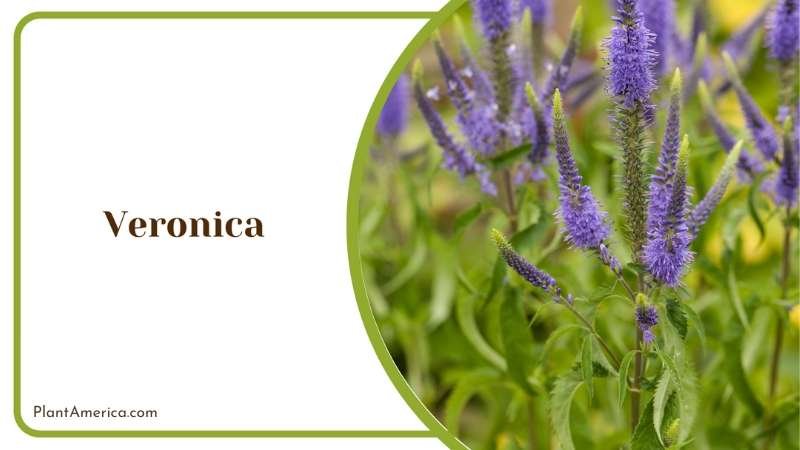
7. Veronica
- Growing Season: Summer, Spring, Perennial
- Leaf Shape: Linear, Narrow
- Specific Needs: Full sun, Moist, Well-drained soil
- Common Pests: Aphids, Leaf miners
Veronicas, commonly called speedwells, produce gorgeous mats of fine foliage and spikes of colorful flowers that work well as groundcovers. The flowers of veronica appear on upright spikes above the basal foliage in shades of blue, purple, pink, and white. The narrow, lance-shaped leaves spread by stolons to form low-growing mats.
Veronicas grow best in full sun with moist, well-drained soil. They thrive in poor soil and are drought-tolerant once established. Prune back after the first bloom to encourage a flush of new growth. Divide clumps of mature plants in spring every two to three years. This promotes vigor and encourages the plants to fill in bare areas. Remove any dead or damaged foliage to maintain an attractive shape.
Common pests like aphids and leaf miners can damage veronicas. Spraying plants with water helps control these pests. Pruning back heavily infested growth also limits damage. Use veronicas to fill empty spaces in borders, spill over walls, cascade down slopes, or emerge between pavers. The fine foliage and colorful flowers produce a tapestry of visual texture. Veronicas pair well with taller perennials and shrubs.
8. Globe Thistle

- Growing Season: Summer, Perennial
- Leaf Shape: Round, Basal rosette
- Specific Needs: Full sun, Dry, Well-drained soil
- Common Pests: Few problems, Deer resistant
Globe thistle (Echinops ritro) produces architectural silvery-gray globes of spiny foliage. In summer, Globe Thistle sends up tall stems topped with large blue or white flower heads. The spherical basal foliage of Globe thistle forms a dense clump and gradually spreads via roots and underground rhizomes. The thick, spiny leaves are gray-green and remain attractive all season.
Globe thistle thrives in full sun with average to dry, well-drained soil. Once established, the plant is drought tolerant. Deadhead spent flowers to encourage additional bloom. Divide clumps in spring. Prune back all top growth to ground level before new foliage emerges.
Globe thistles typically have few pest problems. The spiky foliage helps deter deer browsing. Use Globe Thistle to add height, sculptural interest, and a tropical vibe to the garden. The plants serve as an attractive backdrop. The silvery-gray foliage balls provide year-round interest, especially when backlit. Globe thistles offer an architectural alternative as a blue ground cover to contrast with other colorful perennials.
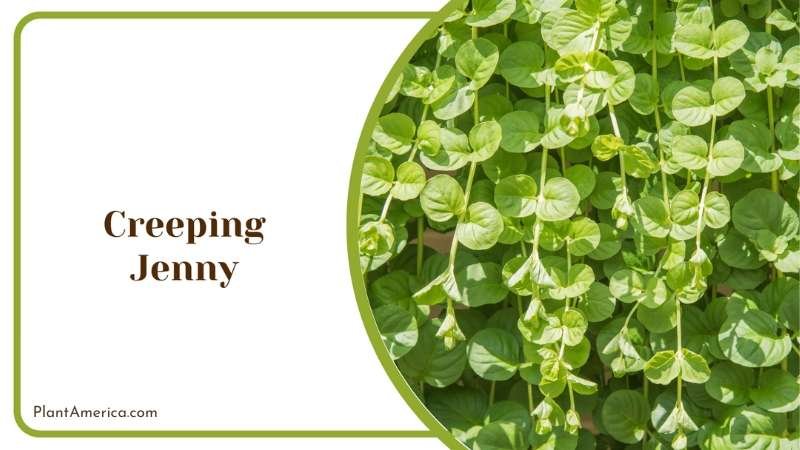
9. Creeping Jenny
- Growing Season: Spring, Summer, Perennial
- Leaf Shape: Round, Oval
- Specific Needs: Full sun to partial shade, Moist, Well-drained soil
- Common Pests: Aphids, Spider mites
Creeping jenny (Lysimachia nummularia) forms a dense mat of dark green oval leaves. The foliage spreads via stems that root where they touch the ground. In late spring, creeping jenny produces rounded yellow flowers that attract bees and other pollinators. The flowers are followed by fruit capsules that add winter interest.
Creeping jenny thrives in full sun to partial shade with moist, well-drained soil. The mat-forming habit helps suppress weeds. Once established, creeping jenny is drought tolerant. Remove spent flowers to encourage more bloom. Divide established plants in spring every few years. This helps promote vigor and maintain a compact shape.
Common pests of creeping jenny include aphids and spider mites. Spraying down stems and leaves with water helps control populations. Remove severely infested growth as needed. Use creeping jenny to cover ground quickly, stabilize bare soil, and suppress weeds; plant between stepping stones, in rock gardens, and among taller perennials. The evergreen foliage provides year-round interest. You can easily propagate your creeping jenny too.
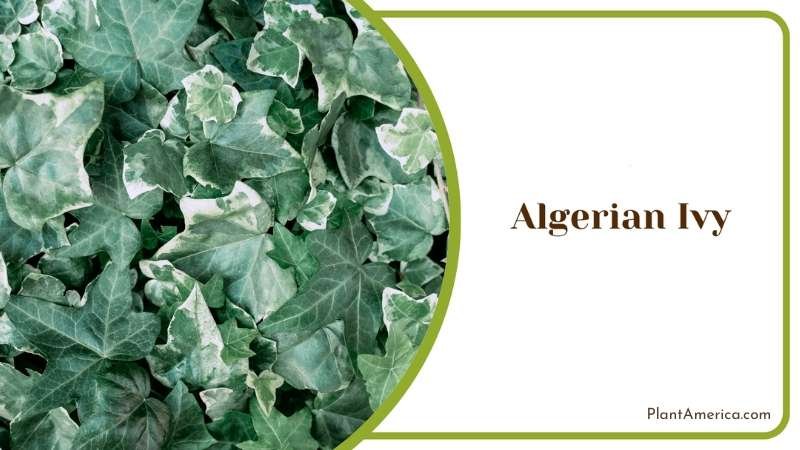
10. Algerian Ivy
- Growing Season: Evergreen
- Leaf Shape: Rounded, Three-lobed shape.
- Specific Needs: Full sun to partial shade, Average well-drained soil
- Common Pests: Aphids, Spider mites
The mat-forming habit of Algerian ivy makes it ideal for covering banks, walls, or any space requiring a fast-growing ground cover. The glossy evergreen foliage provides year-round interest.
Algerian ivy (Hedera canariensis) forms a dense mat of three-lobed rounded evergreen leaves. As the Latin name suggests, this ivy originates from the Canary Islands. Algerian ivy thrives in full sun to partial shade with average soil that drains well. Once established, the plant is drought-tolerant and winter-hardy.
The mat-forming habit of Algerian ivy makes it an excellent groundcover. Fine, wiry stems root wherever they contact the soil, allowing the plant to fill large spaces quickly. Algerian ivy is relatively pest-free and needs little care once established. Prune to maintain a desirable shape or remove dead or damaged foliage.
Use Algerian ivy to cover banks, hillsides, walls, or any space requiring a quick groundcover solution. The evergreen foliage provides year-round interest with minimal effort. Algerian ivy thrives in hot, dry climates and urban environments.
The dense mats of glossy leaves and ease of growth make Algerian ivy ideal for quick groundcover in full sun to partial shade. The low maintenance requirements allow these ivy to flourish with minimal inputs.
11. Siberian Bugloss
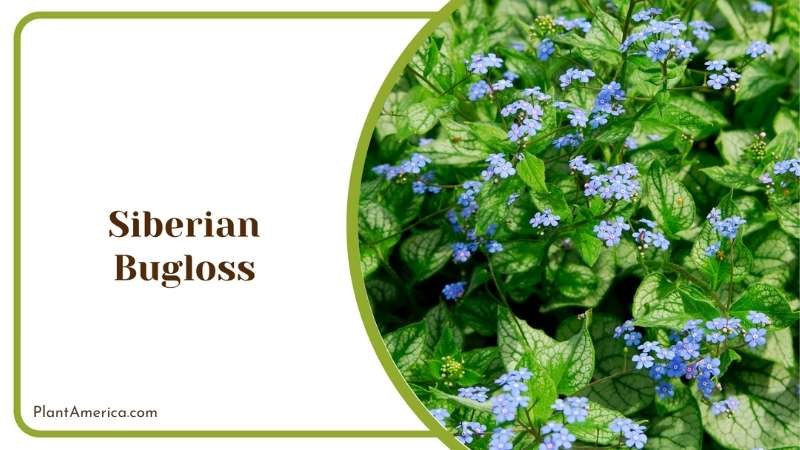
- Growing Season: Spring, Summer, Perennial
- Leaf Shape: Rounded, Heart-shape.
- Specific Needs: Organic-rich, Moist, Well-drained soil.
- Common Pests: Aphids, Spider mites
The attractive heart-shaped leaves form dense clumps, providing beautiful foliage texture all season. Prune back foliage after bloom to maintain a compact shape. Use Siberian bugloss to add shade-tolerant colorful foliage to woodland gardens, and plant in groups for maximum visual impact.
The glossy leaves and forget-me-not blooms add lovely texture and color to areas under trees or among other shade plants. Siberian bugloss grows reliably with minimal care requirements.
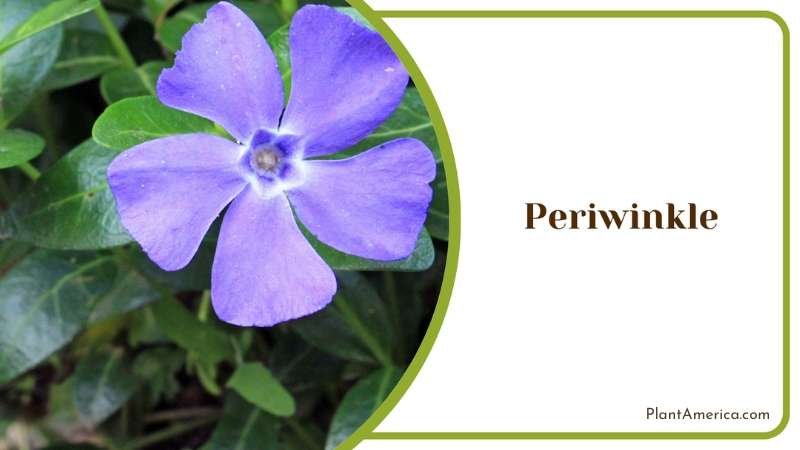
12. Periwinkle
- Growing Season: Spring, Summer, Perennial
- Leaf Shape: Elliptic, Oblong
- Specific Needs: Part shade, Moist, Well-drained soil
- Common Pests: Japanese Beetles, Spider Mites
Common periwinkle or Vinca minor produces rounded blue or violet flowers above mats of dark green leaves. The oblong leaves spread outward, forming dense mats that are effective groundcovers. Periwinkle thrives in partial shade and moist, well-drained, acidic soil.
Once established, periwinkle is drought tolerant and will self-sow to expand coverage. Pruning after flowering promotes more blooms and keeps plants compact. Japanese beetles and spider mites sometimes damage foliage. Remove infected foliage and spray down the plants thoroughly to control pests.
Use periwinkle to fill spaces in mass plantings, suppress weeds along pathways, and cover banks, pair periwinkle with hostas, ferns, and epimediums for an attractive, low-maintenance woodland garden.
The mounding foliage and cheerful spring flowers make periwinkle worth including in partly shaded gardens. As a tough evergreen groundcover, periwinkle provides reliable beauty and year-round interest with minimal effort.
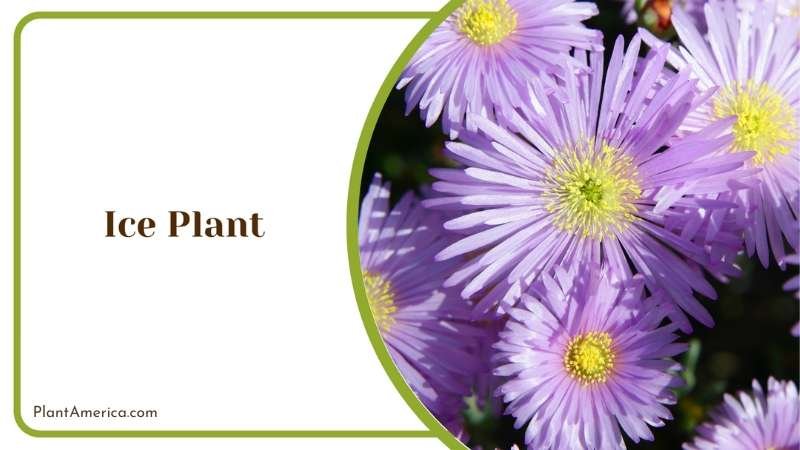
13. Ice Plant
- Growing Season: Spring, Summer, Perennial
- Leaf Shape: Round, Fleshy, Succulent
- Specific Needs: Full sun, Dry, Well-drained soil
- Common Pests: None
Ice plants form attractive mats of succulent foliage and colorful blooms that work well as groundcovers in hot, dry climates. The fleshy round leaves form a dense rosette from which branched flower stalks arise in summer. The flowers appear in shades of pink, purple and white.
Ice plants thrive in sunny, hot locations with free-draining soil. The succulent leaves store water, allowing the plants to withstand drought, heat, and neglect once established. Prune back spent flower stalks to maintain a compact shape. Divide overgrown clumps in spring.
The adaptability and toughness of ice plants make them well-suited for challenging locations. They require little care once established and are highly drought tolerant. Ice plants cover slopes, banks, walls, and spaces in full-sun gardens.
The mat-forming habit spreads quickly to fill large areas with minimal effort. The colorful flowers provide nectar for pollinators. The architectural foliage and profusion of flowers in hot weather make ice plants a valuable addition to any sunny, xeric landscape.
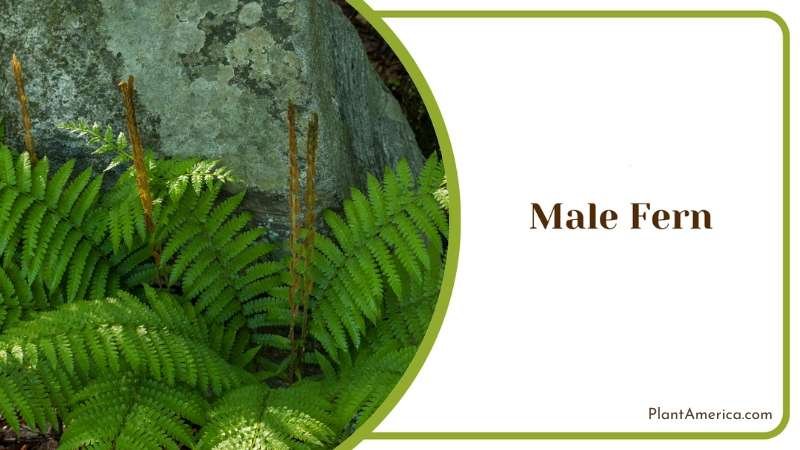
14. Male Fern
- Growing Season: Spring, Summer, Perennial
- Leaf Shape: Pinnate, Compound
- Specific Needs: Part shade, Moist, Well-drained soil
- Common Pests: Aphids, Scale insects
Male fern (Dryopteris filix-mas) forms dense clumps of delicate, gracefully-arching fronds that make excellent ground cover. The leathery, shiny fronds are pinnately compounded with elliptic leaflets with toothed edges. Male ferns grow best in part shade with consistently moist, well-drained, acidic soil.
Grow male ferns where their fronds can gracefully arch over walls, cascade down slopes, or emerge among ornamental grasses. The delicate leaves provide lovely texture and movement. Divide established clumps in spring every three to four years. This promotes vigor and encourages spreading.
Monitor for aphids and scale insects, which can climb onto male fern fronds. Spraying down the plant thoroughly with water helps reduce pest populations. The graceful, arching form and finely cut foliage of male fern make it an excellent groundcover for shady gardens and woodland areas, and plant male fern in groups for maximum visual impact.
15. Pachysandra
- Growing Season: Spring, Summer, Perennial
- Leaf Shape: Oval, Opposite
- Specific Needs: Part shade, Moist, Well-drained soil
- Common Pests: None
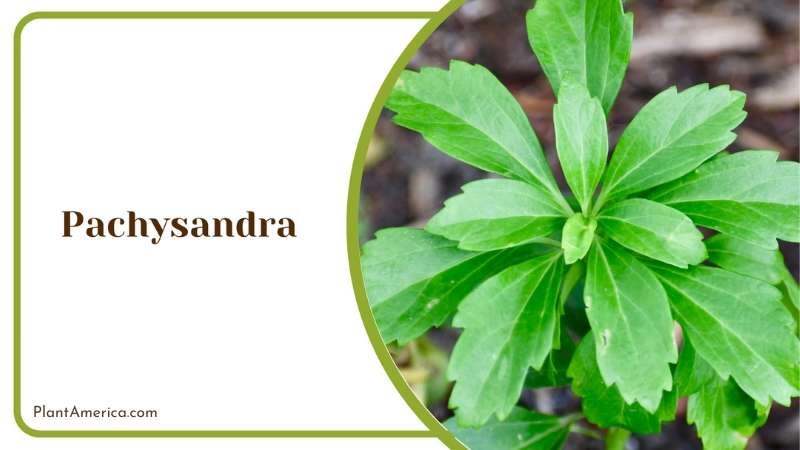
Pachysandra terminalis, commonly called Japanese pachysandra, forms dense mats of oval, leathery evergreen leaves. In spring, upright stalks bear clusters of white bottlebrush flowers. Pachysandra grows in loose mats that spread via underground stems. The oval leaves are arranged in opposite pairs on the creeping stems.
Pachysandra prefers partial shade and consistently moist, well-drained, acidic soil. The dense mats help suppress weeds. Once established, pachysandra is drought tolerant. Divide overgrown clumps in spring every few years. Apply two to four inches of mulch to help retain soil moisture and maintain a uniform shape. Pachysandra has few problems when grown in proper conditions. Deer and rabbits generally avoid the plant.
Use pachysandra to form a lush living carpet under trees or between shrubs; pair pachysandra with ferns, hosta, and heuchera for an attractive, low-maintenance shade ground cover. The dense mats of evergreen foliage, easy care, and toughness make pachysandra a valuable addition to shady landscapes. Even in summer dormancy, the leathery leaves provide attractive foliage texture.
16. Bear’s Foot

- Growing Season: Summer, Perennial
- Leaf Shape: Palmate, Compound
- Specific Needs: Full sun, Dry, Well-drained soil
- Common Pests: Japanese beetles, Aphids
Bear’s foot hellebore (Petasites japonicus) produces bold leaves with a palate shape on long petitioned stems. In late spring, upright stems bear clusters of greenish-white bottlebrush flowers.
The palmate compound leaves open broad, flat with three to seven deeply divided lobes. The deeply cut foliage forms a dense clump. Bear’s Foot prefers full sun and well-drained soil. The deeply divided leaves are quite drought-tolerant once established. Prune stems to the ground in late winter. Divide plants in spring every three to five years to maintain vigor.
Bear’s Foot typically has few insect problems though the flowers may attract beetles. Rabbits and Deer tend to avoid this hellebore. Plant bear’s Foot where the bold foliage will be noticed. Use as an accent or understory plant with ornamental grasses.
The architectural foliage provides all-season interest. Though short-lived, Bear’s Foot offers a distinctive ground cover alternative to full-sun perennial gardens. The large, textured leaves provide valuable foliage interest.
17. Snow-in-Summer
- Growing Season: Summer, Spring, Perennial
- Leaf Shape: Elliptic, Lobed
- Specific Needs: Full sun, Well-drained soil
- Common Pests: Japanese beetles, Aphids
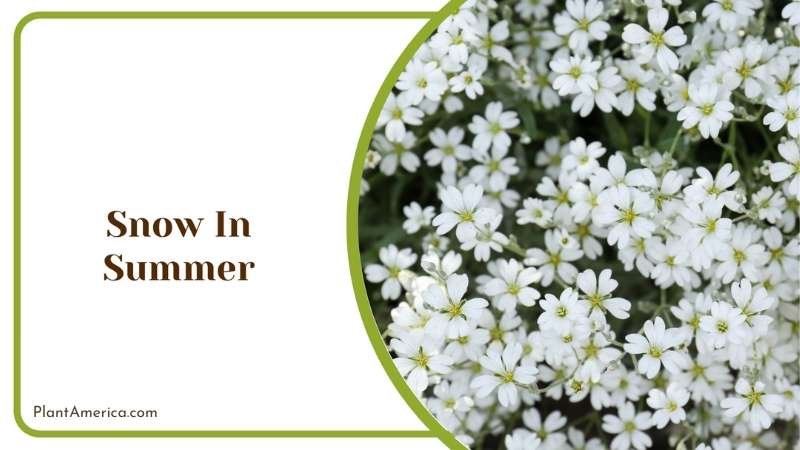
Snow-in-summer (Cerastium tomentosum) produces mats of silvery-white tomentose foliage and clusters of tiny white star-like flowers. The elliptic, lobed gray-green leaves covered in fine hairs give rise to the common name. In summer, upright stems bear masses of small white flowers. Snow-in-summer thrives in full sun and dry, well-drained soil. The tomentose foliage reflects heat and sunlight, making the plant drought-tolerant.
Prune back spent flowering stems to basal foliage. Divide overgrown clumps in early spring every three to four years. Snow-in-summer has few pest or disease problems. The wooly foliage deters most insect feeding. Rabbits and Deer also tend to avoid this ground cover.
Use snow-in-summer to soften hardscapes and fill spaces in rock gardens. The silver foliage provides color and texture all season. The drought tolerance, toughness, and ease of care make snow in summer a valuable ground cover for hot, sunny gardens. Plant en masse for maximum visual effect.
18. Lily of the Valley
- Growing Season: Spring, Perennial
- Leaf Shape: Linear, Lanceolate
- Specific Needs: Part shade, Moist, Well-drained soil
- Common Pests: Aphids, Nematodes
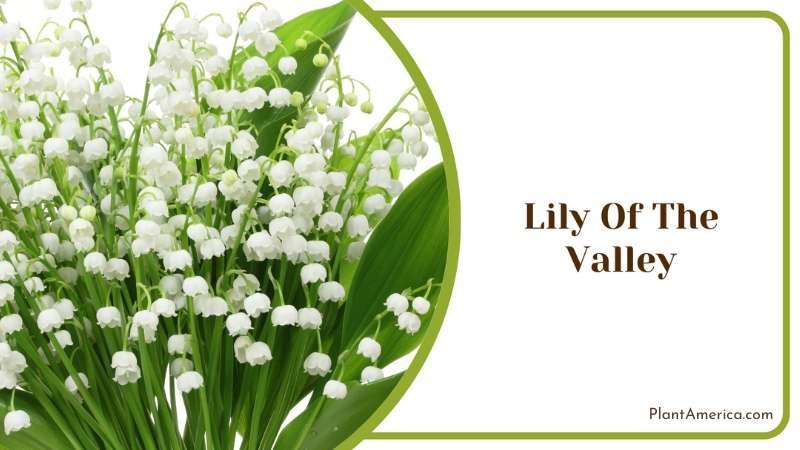
Lily of the Valley (Convallaria majalis) produces arching spears of lance-shaped leaves and nodding clusters of fragrant white bell-shaped flowers. The arching stems bear linear, lance-shaped evergreen leaves with parallel veins. In spring, sweetly scented white flowers dangle from the leaf axils.
Lily of the valley grows best in part shade with consistently moist, rich,well-drained soil. The dense clumps can become overcrowded over time. Divide established clumps in early spring every three to five years. This rejuvenates the plants and keeps them under control. Monitor for aphids and nematodes, which cause root damage. Improve soil drainage to help reduce pest pressure.
Use lily of the valley to cascade down slopes or emerge from under taller perennials. The arching foliage and dangling white blossoms provide lovely textural contrast. The sweetly scented flowers and trifoliate evergreen foliage make the lily of the valley a valuable ground cover for partly shaded gardens; plant large colonies for maximum effect.
19. Sedum
- Growing Season: Summer, Fall, Perennial
- Leaf Shape: Round, Fleshy, Succulent
- Specific Needs: Full sun, Dry, Well-drained soil
- Common Pests: Leaf miners, Spider mites
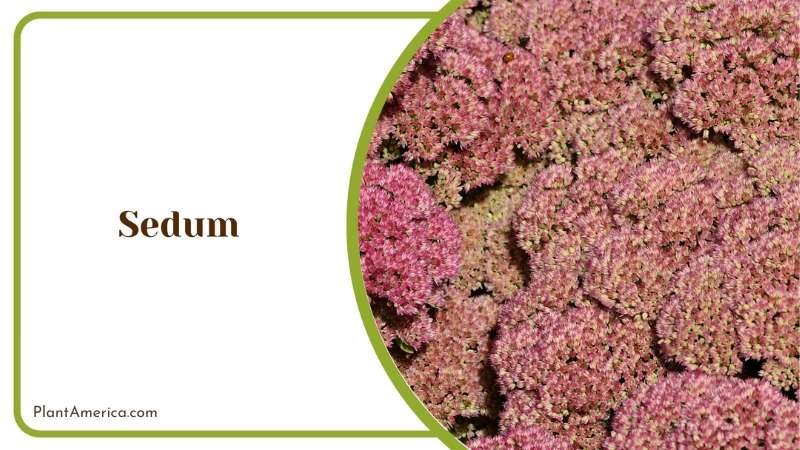
Sedums are prized for their colorful flowers, fleshy foliage, and ease of care. The plump, rounded leaves form tight basal rosettes from which slender flower stalks arise. The leaves vary from narrow to spoon-shaped, depending on the species. Sedums generally prefer full sun and little water once established. The succulent leaves store moisture enabling sedums to withstand drought.
In late summer, sedums produce starry flowers in pink, red, yellow, and white hues. The seed heads provide interest and food for wildlife. They are easily controlled by cutting off spent flower stalks. Divide overgrown clumps in spring every few years to maintain smaller, bushier plants and promote foliage growth.
While generally carefree, leaf miners and spider mites can damage sedum foliage. Increase airflow and spray down the entire plant with water to control populations. Use sedums to cover ground quickly, stabilize bare soil, and suppress weeds. Plant sedums between pavers, on banks, or in rock gardens for a carefree, colorful groundcover option. The architectural foliage provides all-season interest with little effort.
The adaptability, toughness, and ease of growth make sedums valuable additions to any Xeric or full-sun landscape. The succulent leaves reflect sunlight, withstanding heat, drought, and neglect once established.
Conclusion
Here are the top takeaways from the 20 blue ground covers mentioned in this article:
- Forget-me-nots, creeping Jenny, and myosotis form dense mats of glossy foliage and spread rapidly via reseeding
- Cerastium and veronicas pair beautifully with ornamental grasses and taller perennials
- Succulents like ice plant and stonecrop offer colorful blooms and architectural, drought-tolerant foliage
With the right blue ground covers in your garden, you can relax and enjoy the peaceful beauty these flowers provide. Your garden will require less of your time and energy as the blue covers spread and flourish on their own. So go ahead, and transform your outdoor space into a serene low-maintenance oasis with the help of these gorgeous blue ground cover flowers.