
Bird of Paradise brown edges can be disheartening for plant enthusiasts. These brown edges, often a signal of underlying problems, might be due to water stress, improper temperature, or pesky pest invasions.

As a beloved decorative plant, addressing these issues promptly is crucial (which you’ll learn here). Stick around to explore the easy solutions that you can do right now!
What Are the Reasons Behind Bird of Paradise Brown Edges?
The reasons behind the brown edges of Bird of Paradise include water stress, pest infestations, and reduced air moisture. Unsuitable temperatures and root-bound situations are also common reasons behind browning. Sometimes, salt buildup and polluted air quality can lead to brown spots.
– Water Stress
When you see the leaf margins of the Paradise getting brown, chances are the plant is facing watering issues. Both overwatering and underwatering pose challenges.
If the plant gets too much water, the roots might rot, depriving the plant of necessary nutrients. On the other hand, too little water can lead the plant to dehydrate.
Another aspect of water stress is impure water. If the water contains high amounts of minerals or chemicals, it might cause toxicity, leading to the discoloration of the leaf edges.
To confirm whether water stress is the cause behind your Bird of Paradise turning brown, check the moisture content of the soil. It might be the culprit if it’s too dry or soggy.

Similarly, if you’ve recently changed the source of your water or are aware of any impurities in it, this could point towards poor water quality being the reason.
– Pest Invasion
Pests can be a silent menace, especially for the Bird of Paradise plants. When they feed on the plant, they often cause the leaves to turn brown at the edges or spots to appear on the leaves.
Often, with a severe infestation, the damage isn’t just limited to the browning of the edges but can also extend to the entire leaf.
To determine if pests are the cause of the browning edges, inspect the underside of the leaves. Pests often hide there. Furthermore, look for small moving dots, webbing, or pests. Additionally, sticky residue or honeydew on the leaves can be a telltale sign of a pest problem.
– Less Moisture in the Air
Dry air isn’t a friend to many houseplants, especially not the Bird of Paradise. This plant likes humidity as it’s a tropical plant. When there’s not enough moisture in the environment, it can cause “Bird of Paradise leaves brown and crispy” problems.
If your home is dry or you’re using heaters during colder months, the moisture in the air could be decreasing, causing this issue.
– Unsuitable Temperature
Temperature plays a significant role in how plants grow. Too hot or too cold, and they might start showing signs of stress, like brown marks. But that’s not the only symptom. Sometimes, if the temperature isn’t right, you’ll see Bird of Paradise brown edges turning yellow as well.
By sticking a thermometer into the soil, you can confirm whether browning is caused by temperature stress. If it shows a below 55 or above 75 reading, you know the reason for discoloration.
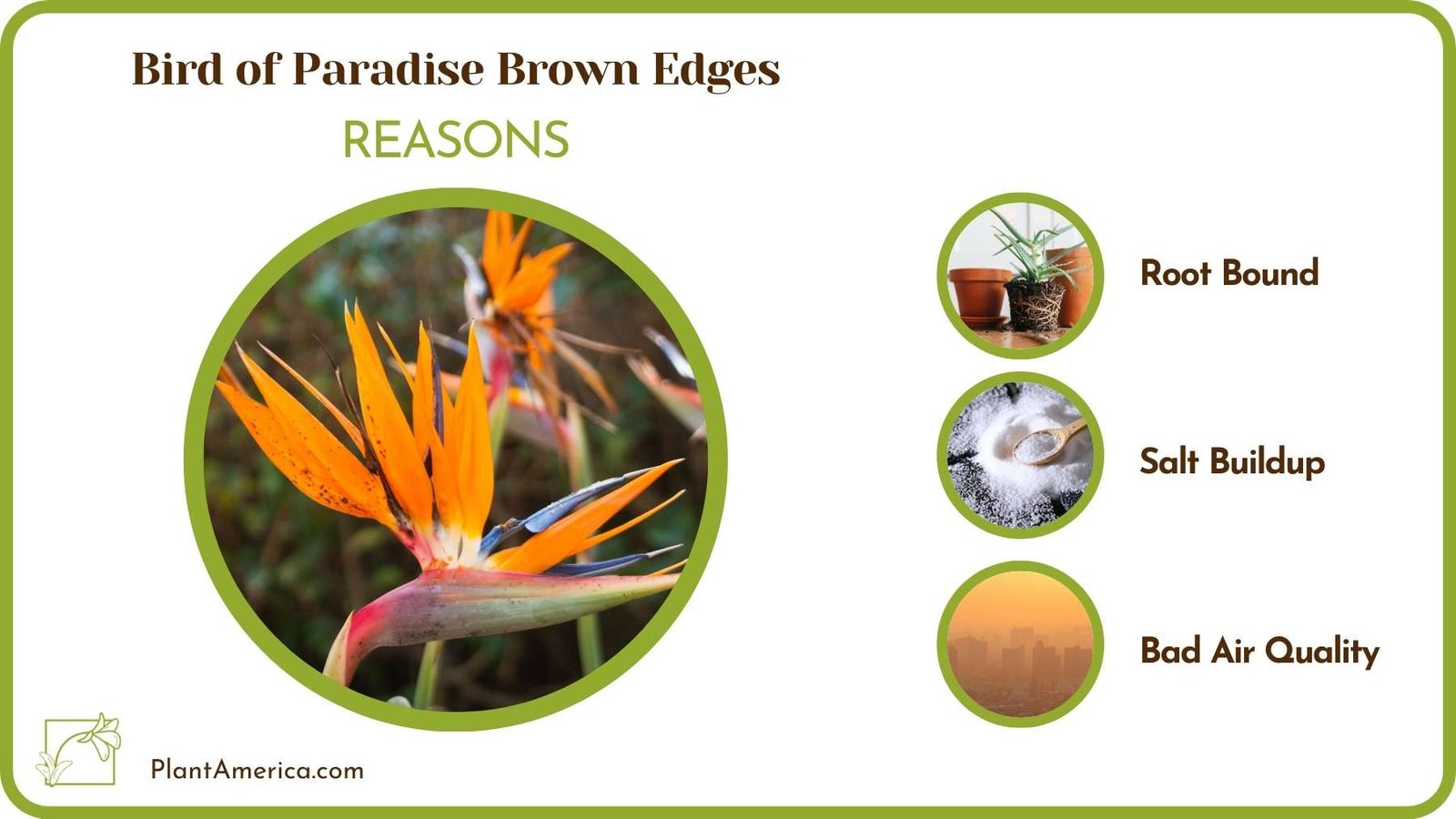
– Root Bound: A Common Root Issue
Another common problem with matured potted plants is root stress. When a plant becomes root-bound, its roots fill the pot, and there’s almost no room left for them to grow. As a result, they can’t absorb water and nutrients as efficiently.
This stress can cause symptoms like a Bird of Paradise leaves turning brown and curling. Here’s why: When the roots can’t spread out or go deeper, the plant might not get the necessary water, even if you regularly water it.
Over time, the constrained roots can also affect the health of the leaves, leading to curling and browning symptoms.
– Salt Buildup
Over time, using tap water or over-fertilizing can cause salt buildup. These salts can draw or soak moisture out of the plant, leading to dehydration. When this happens, the edges of the leaves might start to turn brown, and the plant’s growth can become stunted.
Salt buildup can be sneaky. At first, it might appear as a white crust on the soil’s surface. But underneath, it can cause significant harm to the plant’s roots. So, examine the plant soil regularly and look for salt buildup signs to detect the problem early.
– Bad Air Quality
Tobacco smoke, certain household cleaners, or even nearby construction can release particles that plants might find hard to process. Over time, this can manifest as spots or blemishes on the leaves.
It’s essential to ensure that the room where your Bird of Paradise resides has clean, fresh air. Regularly opening windows or using air purifiers can help improve indoor air quality. But there are many more fixes to do if you want your plants to stay healthy (which we’re now discussing)).
How to Fix Bird of Paradise Brown Edges: A Complete Guide
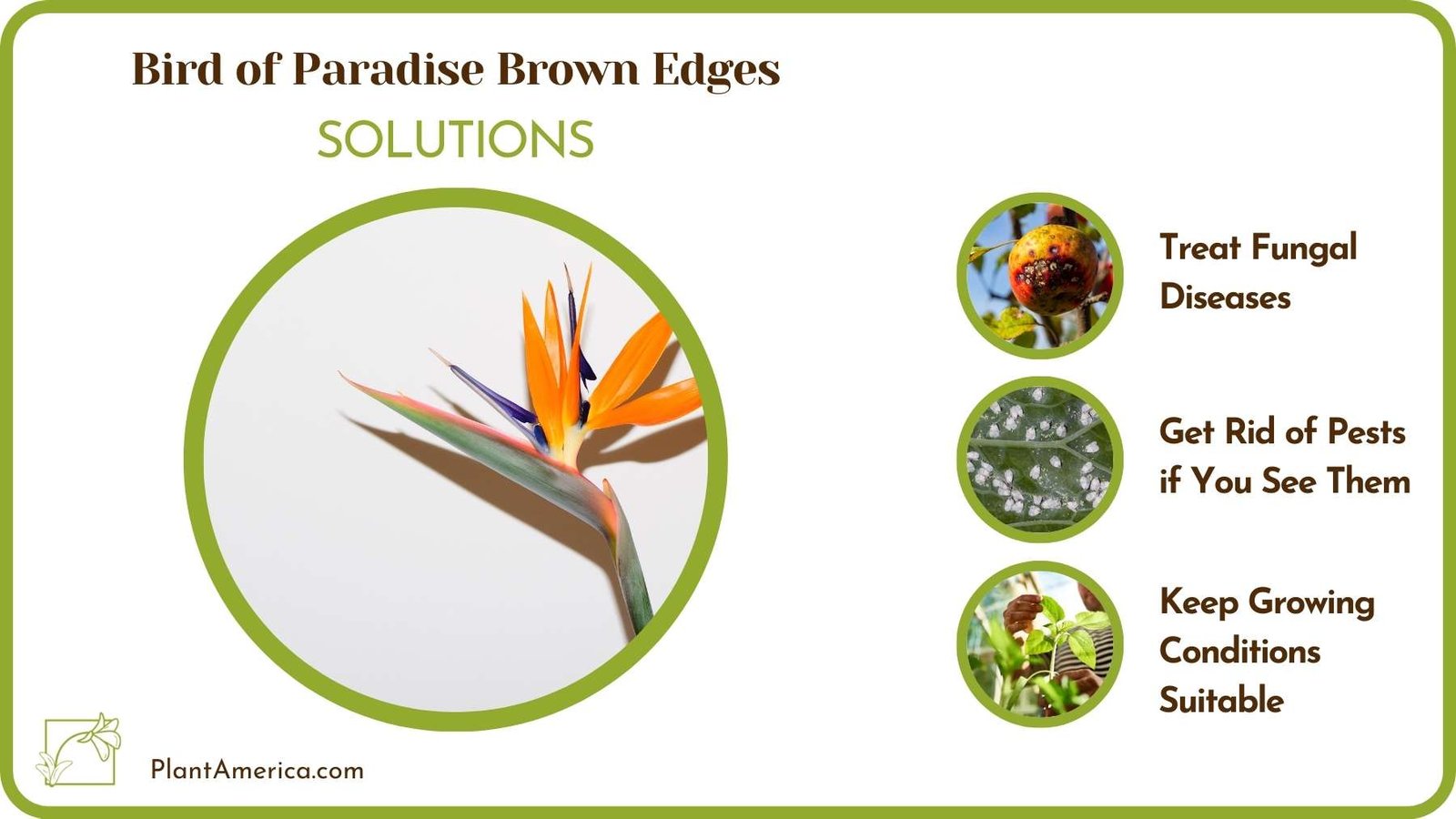
To fix Bird of Paradise brown edges, ensure proper watering routines, and maintain optimal soil moisture. It’s also critical to treat fungal diseases and use techniques like pruning. In addition, keeping the growing conditions suitable and keeping your space pest-free can also significantly help.
– Prune Brown Leaves First
Before diving into any remedy, giving your Bird of Paradise plant a fresh start is essential. One common query among plant enthusiasts is, should I cut off brown leaves on Bird of Paradise? The answer is yes! By pruning the dead leaves, you’re not only improving the plant’s appearance but also allowing it to redirect its energy to newer, healthier leaves.
Pruning is a simple process. Using clean, sharp scissors or pruning shears, carefully cut the browned parts of the leaves or remove the entire leaf if it’s severely damaged. Ensure you make clean cuts to prevent any further harm to the plant.
Remember to wash and sanitize your tools after each use to prevent any potential spread of diseases.

– Focus on Better Watering When Leaves Turn Brown
Watering may seem straightforward, but there’s a bit more to it, especially when catering to the specific needs of the Bird of Paradise plant. The key is to maintain consistent soil moisture without overwatering.
First, use your finger or a moisture detector instrument to check the soil’s moisture level for proper plant care. If the top 1-2 inches feel dry, it’s time to water. Ensure you water thoroughly when watering, allowing the excess to drain from the bottom. This method ensures that the roots, even those at the bottom, receive enough moisture.
Additionally, make sure your pot has good drainage. Using pots without drainage holes or insufficient drainage can trap water, leading to overly soggy soil and potentially causing root rot.
– Flush Soil in Case of Salt Buildup
When you notice a white crust on the soil surface, the salts have built up in the soil. One effective solution to this soil problem is flushing.
Here’s how to do it:
- Move the Plant: Start by placing your plant where it can quickly drain. A sink, bathtub, or even outdoors are suitable places.
- Water Generously: Using distilled or rainwater, water the plant thoroughly. This will push the salt buildup through the drainage holes.
- Repeat: Continue to water until clear water comes from the bottom. This may require several gallons of water.
- Let it Drain: Once done, let the plant drain entirely before returning it to its regular spot.
This flushing process removes excess salts and refreshes the soil, ensuring your Bird of Paradise remains healthy and vibrant.
– Take Measures to Improve Root Health
Healthy roots ensure the plant receives adequate nutrients and water, keeping it thriving.
We suggest you do the following to keep them strong:
- Repotting: One common reason for compromised root health is the plant outgrowing its pot. If the plant is root-bound, with roots tightly wound at the bottom, it’s time to repot. Choose a pot that’s slightly larger than the current one. This gives the roots room to
- Provide Good Drainage: Ensure the pot has adequate drainage holes. Roots sitting in stagnant water can rot, affecting the plant’s health. Mix perlite or sand with the potting mix to improve drainage.
- Check for Pests: Occasionally, pests like root mealybugs or nematodes can attack the roots. Regularly inspect the roots for any signs of infestation and treat them accordingly.
- Feed the Roots: Using a balanced, water-soluble fertilizer can help replenish nutrients in the soil. However, avoid over-fertilizing, as this can harm the plant.
By focusing on root health, you ensure that your Bird of Paradise remains robust from the ground up, reflecting its health through lush leaves.
– Treat Fungal Diseases
If your plant’s leaves have an unusual discoloration or a moldy appearance, it might be due to a fungal infection, like Paradise leaf spot. This can result in various issues, including those dreaded brown edges.
To combat the diseases:
- Repot the Plant: If you suspect a disease attack, immediately remove the plant from its current soil. Then, trim away the affected roots using sterilized scissors.
- Choose the Right Soil: Opt for a well-draining potting mix. This prevents the roots from staying too damp, which can encourage fungal growth.
- Limit Watering: Only water when the top few inches of the soil are dry. Overwatering can exacerbate fungal problems.
Regular inspections and prompt action can help prevent brown edges and other signs of fungal diseases in your Bird of Paradise.
– Get Rid of Pests if You See Them
Your Paradise care guide will often highlight the importance of regular inspections. The reason is that pests like aphids, mealybugs, or spider mites are sneaky and can lead to brown leaves before you know it.
Here’s what to do:
- Natural Remedies: Neem oil is an excellent natural remedy. It can help deter various pests, ensuring your outdoor bird and white bird (or strelitzia nicolai) stay free from infestations.
- Physical Removal: For larger pests, you can pick them off manually. Gently wipe the leaves using a soft cloth, towel, or sponge.
- Maintain Good Air Circulation: This helps prevent pests, as many thrive in stagnant, humid conditions.
With vigilance and regular care, you can ensure your Bird of Paradise remains pest-free.
– Keep Growing Conditions Suitable
To see your Bird of Paradise bloom and flourish, keeping the growing conditions optimal is essential.
Remember these points:
- Location is Key: For the Bird of Paradise brown edges care, ensure your plant receives bright, indirect light. Direct sunlight can be harsh, especially for indoor plants, leading to brown or yellowed edges.
- Temperature and Humidity: Bird of Paradise brown edges indoors often arise due to unsuitable temperature or low humidity. Maintaining a temperature range of 65-70 degrees Fahrenheit and providing ample humidity can promote healthy growth.
- Avoid Drafts: Keep your plant away from drafty windows or air conditioners. Sudden temperature changes can stress the plant, leading to issues like browning edges.
It’s that easy to ensure your Bird of Paradise thrives!
Conclusion
The Bird of Paradise can display brown edges due to various factors like water stress, pest infestations, etc. Here, we explored solutions to this problem, which anyone can do easily. Here are the key takeaways:
- Ensure regular and consistent watering based on the plant’s needs.
- Adjust environmental conditions like humidity and temperature to keep plants healthy.
- Address any pest or disease issues promptly.
- Pay attention to the quality of water and soil conditions.
- Occasionally check for root health and possible salt buildup.
Remember that your Bird of Paradise will continue flourishing by diligently monitoring and adjusting care routines.