
Aphids on Rose of Sharon plants can cause concern when observing your flowering beauties. These pests have a rapid spread rate, sapping the essential vitality from our garden’s exquisite treasures, especially when they’re most vulnerable.
 Detecting their presence in its initial stages and launching a counterattack is indeed possible. In this guide, we will give you comprehensive solutions for these buggers.
How To Recognize Aphids on Rose of Sharon?
To recognize aphids on Rose of Sharon, be aware of any deformities on your plant. A sticky residue and tiny clusters on the buds are also good indicators of an infestation. Aphids are small insects with soft bodies, sustaining themselves by extracting nutrients from plant tissues.
The reproductive pace of aphids is swift, with the potential for extensive devastation throughout gardens when infestations are substantial.
These creatures exhibit a range of colors and love to get to the tender plants with soft skin, such as your hibiscus and others! Typically, they possess elongated antennae and two cornicles extending from their rear, with the majority lacking wings. Yet, within sizable populations, some develop wings to migrate to neighboring plants.
Diverse aphid species exist, including notable ones like the black bean aphid (Aphis fabae), green peach aphid (Brevicoryne brassicae), and melon woolly aphid (Aphis gossypii), all of which can target Rose of Sharon plants.

Regardless of the species, you can successfully fight them off if you learn to look for the early signs of infestation.
– Plant Deformities
Aphids’ reproductive speed leads to swift population growth. These tiny creatures tend to gather beneath leaves, along stems, and in the vicinity of buds and blooms.
Underestimating aphids is ill-advised, particularly when your plant’s strength wanes, as they exploit such vulnerabilities for shelter and infestation. Their rapid multiplication presents a genuine threat, especially to a weakened Rose of Sharon.
This concern multiplies when they take the vital nutrients crucial for the plant’s prosperity, causing misshapen, yellow, and curled leaves. If the infestation gets progressively worse, the plant will begin to drop flowers too!
– Sticky Residue
Aphids discharge a viscous substance known as honeydew, which coats the plant’s leaves and stems. This secretion creates an optimal setting for the proliferation of molds and various fungal ailments. The most notorious, sooty mold and powdery mildew manifest as ebony, powdery layers on the foliage and stems.

Conduct a meticulous assessment for any indications of stickiness or powdery residue. Be particularly thorough when inspecting the leaf undersides and stem tips, as aphids have a tendency to gather in these regions.
Ants are acknowledged for “farming” aphids, overseeing their well-being, and gathering the precious honeydew. Therefore, if you frequently observe ants crawling on the plant’s surface or forming trails to and from it, this strongly suggests the presence of aphids.
– Tiny Clusters on Buds
Directly identifying aphids requires no specialized tools — these minuscule creatures sport supple bodies and display an array of hues. Carefully examine the leaf undersides, neighboring buds, and the plant’s stems. It’s within these regions that clusters of these diminutive critters may be found, discreetly causing turmoil amidst your cherished Rose of Sharon.
Navigating their life cycle, they cast off their exoskeletons, which are left behind as petite, pale remnants on the plant’s leaves and stems. These discarded shells provide a tangible hint of their presence, prompting them to seek refuge beneath leaves and within the plant when predators loom.
Also referred to as green peach aphids or melon aphids, these vexing garden intruders hold a common status. Though they measure no larger than an eighth of an inch, their impact is anything but minor.
Effective Ways To Get Rid of Aphids From Rose of Sharon
Should your Rose of Sharon fall under aphid invasion, there’s no need for undue concern, as dealing with them is a straightforward process. You can effectively address and manage aphids in your garden through a combination of natural and chemical techniques.
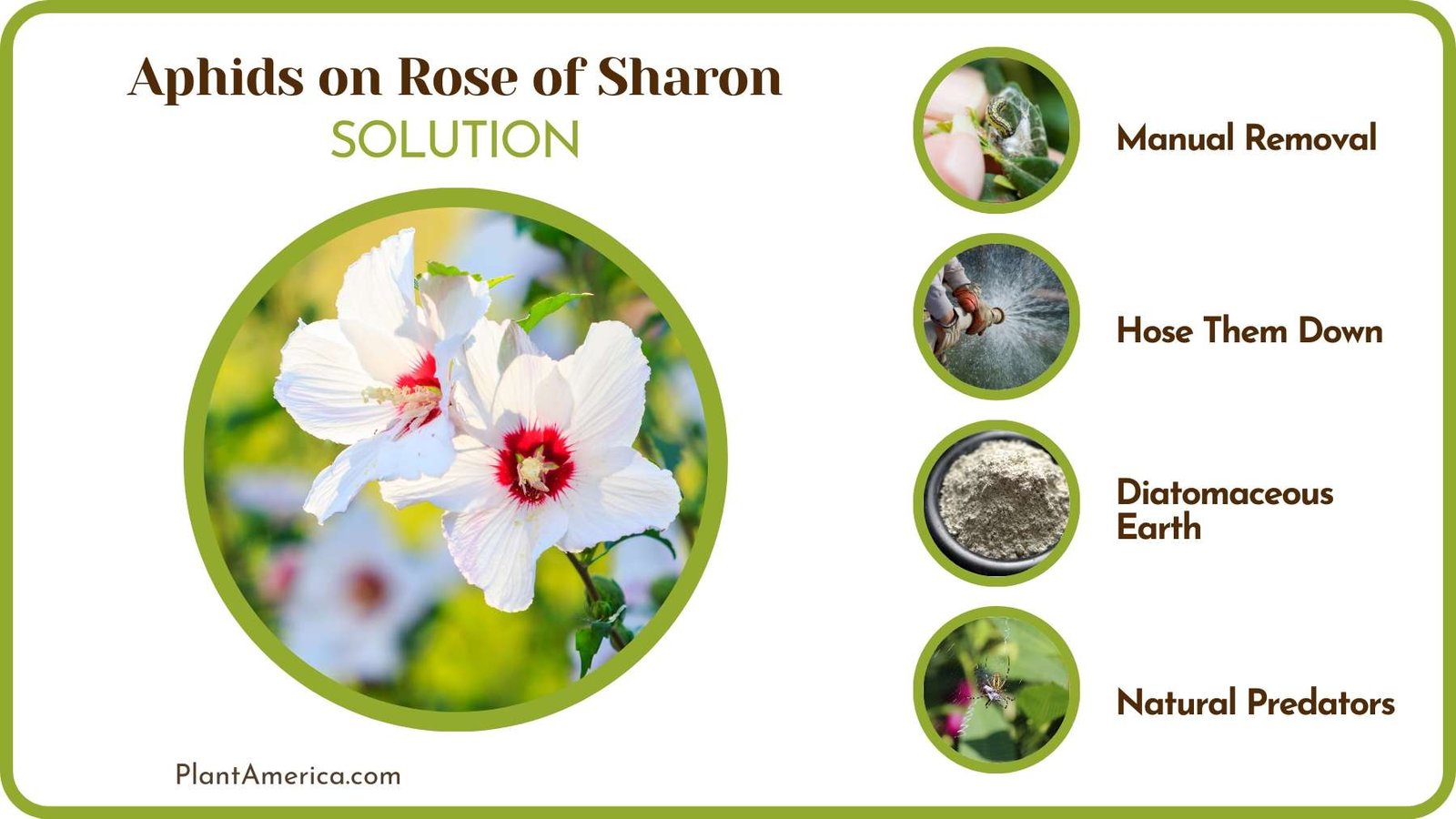
– Manual Removal
If the aphid count is less than a dozen, you can simply employ a dry paper towel to pluck them off individual leaves, gently squashing them as you do. Dispose of diseased aphids in a trash bag, as leaving potentially live ones can trigger a resurgence.
Post-removal, thoroughly examine your Rose of Sharon’s leaves to ensure aphids are entirely eradicated. Use a damp paper towel to wipe away any sap or residue from the leaves, safeguarding against possible aphid or ant attacks.
Avoid brushing the dead aphid bodies onto the grass, as some aphids possess wings and others crawl rapidly. This prevents re-infestation and the spread to other plants.
– Hose Them Down
In the morning, utilize the robust setting on your hose to spray the underside of your Rose of Sharon leaves, ensuring the forceful water flow dislodges them. A gentler flow or simple watering won’t effectively eliminate the pests.
Allow the leaves to thoroughly dry afterward. In the evening, hose the entire plant once again, maintaining this process until the aphids are dislodged. It’s advisable to repeat these steps daily until the aphids are entirely eradicated.
– Diatomaceous Earth
Diatomaceous earth has been recognized for its potency as an insecticide, proving effective against not only aphids but also a roster of other garden intruders like spider mites and Japanese beetles. To harness its potential, simply distribute the powder directly onto the areas that aphids have infested.

Witness its efficacy as it ushers these pests away from your cherished rose of Sharon bushes. Exercise caution by wearing gloves to shield your hands from direct contact during application.
Following the application of this powdered marvel, the time for tidying arrives. Employ a gentle touch, using a soft cotton cloth or gloves to delicately remove both aphids and any residual substrate clinging to the plants. Always strive to leave your Rose of Sharon bushes in a state of immaculate health and cleanliness.
– Natural Predators
When it comes to these, two notable champions lead the fray — the green lacewings and ladybugs. These heroes engage in a covert conflict with aphids, even during their larval phase.
To call these beneficial insects to your garden, sow the seeds of their preferred plants. Dill, fennel, mint, Queen Anne’s lace, thyme, and yarrow rank high on their list of favorites. By cultivating these botanical allies, you create an enticing milieu where green lacewings and ladybugs can establish residence, poised to launch their assault on the aphid population.
These diligent partners will usher equilibrium back to your green haven. Foster an environment brimming with their preferred flora, and watch as these natural antagonists weave their magic.
– Chemical Solutions
Should the persistence of aphids prove unyielding, embrace the application of a systemic pesticide containing Imidacloprid during the early morning hours. This commercial compound bears no harm to humans or beneficial pollinators while proving fatal to malevolent insects such as aphids.
Engage in a repetitive cycle of pesticide application until the aphids meet their demise. The complete extermination of an aphid infestation may take up to a few weeks.
– Insecticidal Soap
When your Rose of Sharon is beset by a substantial aphid population, soap sprays come as effective measures.

Derived from centuries-old practices of gardeners and farmers, these remain a low-toxic solution composed of potassium and fatty acids. The efficacy of these lies in their ability to eliminate significant quantities of soft-bodied insects like aphids while leaving your plants, animals, and humans unharmed.
Crafting your own insecticidal water soap is also an option. This involves blending one cup of oil (peanut, vegetable, corn, or other) with one tablespoon of dish soap in a gallon of water. However, it’s imperative to avoid using bleach in this mixture.
Similar to conventional pesticides, administer this solution in the morning until the aphid infestation abates. However, bear in mind that achieving results might span up to two weeks, and the efficacy might not match that of chemical counterparts.
It’s worth noting that while organic pesticides are generally safe for you, children, and pets, they often fall short in comparison to commercial products in terms of effectiveness.
– Do a Cut Back
In the scenario where aphids have infested the entirety of your Rose of Sharon, a more assertive approach might be necessary. This entails the removal of entire sections of leaves or branches from the plant.
Start eliminating individual leaves as a starting point. Allow a day to transpire and assess whether aphids persist. Should they endure, consider the removal of a few more branches. Be cautious with this method and don’t extract more than a third of the plant’s branches, as exceeding this limit could jeopardize its survival.
Dispose of the affected leaves or branches in a garbage bin. Prevent their proximity to other plants, which could facilitate aphid spread, and refrain from composting them.
– Stop Growing Certain Species
Cease cultivating the plants surrounding your Rose of Sharon that serve as aphid magnets. This action not only eradicates aphids but also prevents their resurgence. Some plants like asparagus, beans, corn, or lettuce often boast expansive leaves that create a hospitable haven for aphids to feast upon.
Other poor neighbors include peppers, potatoes, brussels sprouts, or broccoli. If maintaining the growth of these plants remains a priority, consider relocating them to a different section of your yard. This strategy aids in curtailing the aphid’s reach to your Rose of Sharon.
– Neem Oil
Though crafting your homemade organic neem solution is an option, it’s advisable to blend commercial oil with water using a garden sprayer. This mixture can be applied to all your fruit and vegetable trees during the mid to late winter period, right before the final frost of the season.
It’s important to note that commercial neem tree oil is just as safe as the homemade one. To effectively combat aphids, multiple applications onto your Rose of Sharon will be necessary before spring arrives.
Know that this oil won’t harm insect pests with sturdy exoskeletons!
– Keep Your Plants Healthy
Healthy plants are naturally more resilient and better equipped to fend off pests. Here’s how you can ensure the vitality of your Rose of Sharon:
Adequate and consistent watering is essential. Make sure your Rose of Sharon receives sufficient moisture without becoming waterlogged. Water at the base of the plant to prevent fungal issues that could attract aphids.

Your plants should receive the right amount of sunlight — Rose of Sharon typically thrives in full to partial sunlight. Also plant the flowers in well-draining soil to prevent waterlogged roots and fungal growth.
Allow sufficient space between plants to promote air circulation, which reduces the likelihood of fungal diseases that aphids might be attracted to. Apply a balanced, slow-release fertilizer during the growing season to provide the necessary nutrients for robust growth.
Spread some organic mulch around the base of your plants. Mulch helps retain moisture, regulate soil temperature, and discourage weed growth that could compete with your Rose of Sharon.
By implementing these practices, you create an environment in which Rose of Sharon is more likely to thrive, making it less susceptible to aphid infestations.
– Destroy Ant Colonies
Most of the pesticides discussed previously will prove effective when combating ants while minimizing any adverse impact on beneficial insects and the ecosystem.
However, even after successfully eliminating ants and aphids, remnants of honeydew can linger, attracting further attention. By meticulously cleansing your Rose of Sharon, you effectively erase any allure that might otherwise invite a resurgence of infestation or the introduction of new ant colonies.

Conclusion
Aphids on your Rose of Sharon plants can be a cause for concern, as these pests have the ability to rapidly spread and drain the vitality from your beautiful garden treasures. Detecting their presence early and taking action can help you effectively combat and manage these troublesome insects.
- Recognizing the signs of aphids, such as plant deformities, sticky residue, and tiny clusters on buds, is crucial for early detection. Swift action is key to preventing further damage to your plants and ensuring their overall health and beauty.
- From manual removal and hosing down the plants to using diatomaceous earth, introducing natural predators, and considering chemical solutions like systemic pesticides and soapy insecticides, each approach offers a unique way to combat these pests based on the severity of the infestation.
- Maintaining the health of your Rose of Sharon plants is also a crucial aspect of aphid prevention. Adequate sunlight, proper watering, well-draining soil, regular pruning, and balanced fertilization all contribute to the overall resilience of your plants against aphids and other pests.
- Addressing ant colonies is essential in preventing future aphid infestations. By using the various methods discussed, you can effectively eliminate ants while also ensuring that your Rose of Sharon remains a less attractive target for these pests.
Remember that proactive prevention, early intervention, and a combination of techniques are your allies in the battle against aphids on your cherished Rose of Sharon plants.