
Plants with no leaves are actual plants you can enjoy growing like the normal ones with stems, and branches. Leaves are tasked with the mighty work of making plant food to keep it healthy.
So, if a plant has no leaves, it uses other cooking techniques, like roots and stems. Many plants without leaves, as shown below, fall into either of these categories’ cactus plants, bryophytes, and parasitic plants.
A Complete List of Plants With No Leaves
1. Algae

| Characteristics |
|
| Where it grows |
|
| Feeding |
|
| Benefits |
|
Algae is that green slime-like element you find on streambeds and can be unattractive to look at or touch. However, it is a vital part of the stream ecosystems. In short, this is one of the simplest of aquatic green plants, and it is formed of different ways, as some are single-celled and can only be seen through a microscope, they can have a range of colors such as green, red, or blue-green.
The primary type of algae commonly found in streams is green algae. They are ones that would grow in water but do not have true roots, stems, or leaves. Generally grows in places with plenty of moisture—under rocks, rivers, and streams.
This is a plant that contains chlorophyll, which makes it easy to enable its growth to make its food, and this would be accomplished through performing the photosynthesis process. It benefits others by producing oxygen and
2. Saguaro Cactus

| Characteristics |
|
| Where it grows |
|
| Feeding |
|
| Benefits |
|
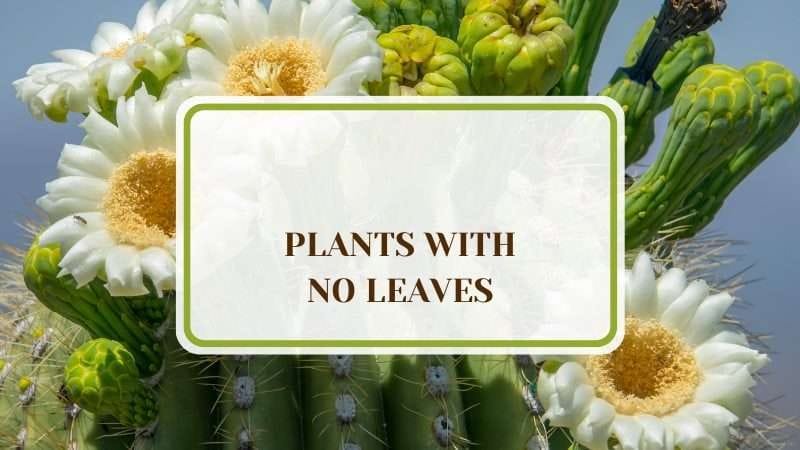
Saguaro is a cactus that grows in desert areas. It grows slowly, probably an inch per year, to a mature height of about 15 to 50 feet. This plant has several branches curving upwards vertically, and it has smooth and waxy skin with a stout trunk and stems containing two-inch spines.
The Saguaro is a plant that has a solid and extensive root system that takes in as much water from the soil as possible. It absorbs the water, and the outer pulp expands, increasing the diameter of the stem and its weight. In addition, it also grows as photosynthesis occurs through the branch feeding the entire plant.
It also has some flowers, which are an essential source of nectar for pollinating birds and insects. The average saguaro has five arms and is at least 30 feet tall. Considering its size, it has a shallow tap root system about three feet long.
3. Lichens

| Characteristics |
|
| Where it grows |
|
| Feeding |
|
| Benefits |
|
Lichens are available in over 3,600 species, with discoveries made each year, some people mistaken them for fallen leaves, but in reality are living organism. They are a self-supporting symbiosis found in a wide range of terrestrial habits.
The key characteristics of lichens are some unique organisms, and no two are alike. this is due to the fact that they are made up of two organisms – an alga and a fungus. They can be easily found on tree branches, trunks, and rocks but rarely in water.
This is a unique plant that can grow in a vast diversity of habitats like desert climates, mountainous regions, and natural forests. On the other hand, it also thrives in areas that are less disturbed by human activities. They contribute heavily to mineral cycling and energy flow. They also contribute significantly to biomass production.
Since they are green leaves, this shows that they have chloroplasts on the top surface that help with photosynthesis. Even though they do not have roots, stems, or leaves to help them feed.
They are beneficial to the ecosystem in that they provide survival for algae in harsh environments and help convert carbon dioxide to oxygen. On the other hand, they also play an active role when absorbing pollutants like heavy metals from the atmosphere.
4. Liverwort

| Characteristics |
|
| Where it grows |
|
| Feeding |
|
| Benefits |
|
Liverwort is available in more than 9000 species of small nonvascular spore-producing plants. In addition to this, they are found in lowlands across temperate regions in Europe and North America.
They are prone to change their shape and move in response to the changes in the surrounding moisture. It’s distributed globally, though it’s commonly found in the tropics. Liverworts are classified into two classes – thalloid or thallose and leafy or scaly liverworts.
Since they do not have any stems, leaves or roots, it is hard for them to boost their growth, hence they get their nutrients from the air and through the water. They do it by absorbing nutrients from the air through their surface.
5. Funaria

| Characteristics |
|
| Where it grows |
|
| Feeding |
|
| Benefits |
|
Funaria has about 210 known and found species in many parts of the world. It is a moss that grows to a height of about half a meter. It has a radial symmetry with multicellular branched and colorless rhizoids.
This is one of the plants with no leaves that can be distinguished by its spirally twisted long stem, and it has vertically long stems that are branched, green, and photosynthetic. These branches start from the lower portion of the stem.
Grows in moist, shady, calm, and rainy areas. Moreover, it would also grow on tree trunks, moist walls, rock crevices, riverbanks, and humid soils, and at times, you may even see it develop in recently burned areas. It also has a water retention ability that can benefit other organisms.
The plant body is soft, upright, and green, growing to about half an inch. The rhizoids in this species are multi-cellular and branched. The stems perform photosynthesis enabling the rest of the plant to get food, and since it is found in moist areas, then it will get its nutrients from the humidity surrounding it.
6. Cuscuta

| Characteristics |
|
| Where it grows |
|
| Feeding |
|
| Benefits |
|
Cuscuta is a genus of over 201 species of orange, yellow, or red parasitic plants. It is found in the tropical and temperate regions of the world. It is a plant that steals food from other plants to survive.
This parasitic plant attaches itself to another plant and wraps itself all around, and this is how it has the ability to pierce the host plant with its root-like structure, absorbing the water and nutrients it needs.
Once it penetrates the host plant, the root-like system dies. It has the ability to grow on other plants in tropical and temperate regions, as it has the tendency to create a network of plants that steals nutrients and water.
This is a plant that begins to feed and nurture itself through its roots, which get nutrients and water from the host plant. On the other hand, the root-like structure penetrates the host plant sucking out nutrients and water according to its requirements.
7. Moss

| Characteristics |
|
| Where it grows |
|
| Feeding |
|
| Benefits |
|
Moss has at least 12000 species of small nonvascular spore-bearing plants. They are commonly found worldwide in moist, shady areas except in salt water. They are best known for covering and protecting the ground.
Moss is a non-flowering plant commonly grown in moist areas, and it is strange how it grows knowing that this plant lacks having stems, roots, or leaves. However, it does have the tendency to spreads and to cover the ground or rocks that grow to less than nine inches tall, as a result, it is common to find these species growing on tree trunks, rocks, branches, or water.
This plant is one that has leaf-like structures on the stem that help in feeding, and because it doesn’t feed on nutrients, it would develop in water through carbon dioxide. In short, it makes its food without leaves because it contains chlorophyll.
8. Riccia

| Characteristics |
|
| Where it grows |
|
| Feeding |
|
| Benefits |
|
Riccia is a genus of liverworts, and it grows to an approximate height of about half an inch. As it does so, it becomes a small creeping plant that develops like a green ribbon with its spiral shape, as it is common to find it floating on shallow pods.
They are ones that would grow naturally across the world in tropical environments, and you can even find them anywhere around marshy places and on rocks, fallen trees, and riverbeds. The ribbons grow together and become tangled, forming large masses.
Although Riccia has no roots, leaves, or stems, it has the ability to grow with umbrella-like structures that grow out of tiny spores in the ground that perform photosynthesis.