
When you see your creeping jenny turning brown, worry can be a normal reaction. Creeping jenny leaves turning brown can be a result of disease, pests, fungi or other reasons.
Another common reason for your creeping jenny drying out is the lack of water. In this article, our gardening experts will be looking into the various reasons why your creeping jenny has health issues and how to remedy them.
Why Is My Creeping Jenny Turning Brown
We have mentioned that there could be many reasons why your creepy jenny is turning brown. Sometimes, it could be because of chemicals, and other times, it could be pests’ fault. You can make your Creeping Jenny plant stronger by adding some companion plants. We will be listing down some common reasons and causes of the brown leaves and how you can resolve each issue.
– Fungal Infections
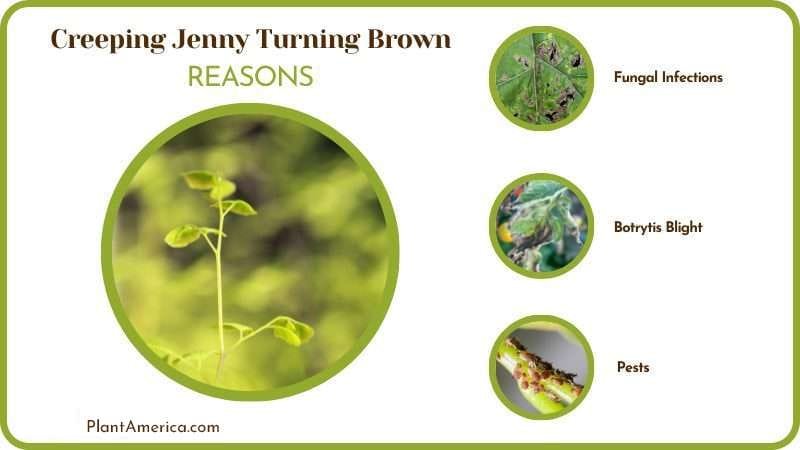
There are several fungal infections that can affect the creeping jenny in harmful ways. The typical symptoms include poor growth habits and wilted leaves. You will need to act quickly when you suspect your creeping jenny is suffering from one of the fungal infections listed.
– Southern Blight
Southern Blight is characterized by yellowing leaves or wilting of the bottom leaves of creeping jenny plants. Southern Blight is a serious fungal infectious disease that attacks not just creeping jenny plants but also over 500 plants, especially in the tropics and subtropics.
– Botrytis Blight
Often called Grey Mold, Botrytis Blight affects the creeping jenny by causing brown discoloration on the leaves. Often, silvery grey spores can develop on the dying or already dead tissues of the infected plant. Grey Mold occurs during rainy seasons when the temperature is around 60 F, and it can quickly spread to other plants if left unchecked.
– Phyllosticta Leaf Spot
Phyllosticta Leaf Spot is caused by the fungal pathogen Phyllosticta minima that makes the creeping jenny develop brown leaf spots. The Phyllosticta minima can also cause the leaves of the creeping jenny to turn brown.
– Wrong Maintenance
Sometimes, the issue of having brown creeping jenny leaves is not a fungal issue but a result of wrong maintenance. Here are some common mistakes that can happen when taking care of creeping jenny.
– Underwatering
The creeping jenny prefers to flourish in moist, damp soil that should receive frequent watering. One reason for creeping jenny leaves turning brown could be that the soil is under watered, causing the plant to become dehydrated.
– Lack of Light
While the creeping jenny prefers warm temperature, the harsh noon and afternoon sun may cause the plant to dry out. Provide an adequate level of light for the creeping jenny plant so that the leaves do not get sunburned.
– Pests
There are some insects that will forage on the leaves of the creeping jenny which may cause them to turn brown. Sawfly larvae are some of the most common culprits to creepy jenny leaf damage and can even cause the leaves to die off. Sawfly larvae are characterized by their silvery-gray coats.
Fixing Guide
Now that you have detected the reason behind the issue, you can try to save the plant. Check the solutions below to keep your plant healthy.
– Southern Blight
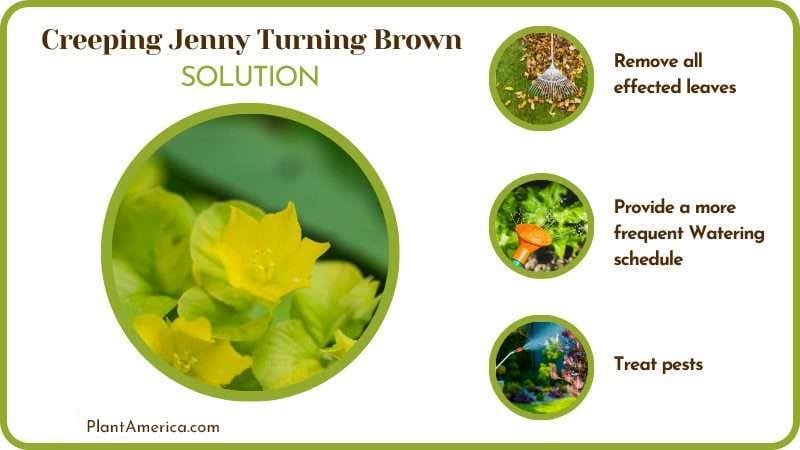
Currently, there are no fungicides that can treat Southern Blight. What you can do is remove all the affected leaves to prevent the spread of this fungal disease. The affected leaves must be placed in a bag or container to not spread and affect healthy plants.
You must prevent further plant contamination by making sure there is minimal contact between the infected parts of the plant with you and with other plants. Once you have removed the infected leaves of the plant, burn them immediately in an area that is far away from other plants.
As an alternative option to burning the infected leaves, you can put them in the garbage bag. Do not use the infected leaves as a component to mulches and composts for your garden and yard.
– Botrytis Blight
Liquid copper fungicides can be quite effective in controlling the spread of this infestation.
– Phyllosticta Leaf Spot
While the Phyllosticta minima is not a serious issue, it is still best to remove the infected leaves in a similar way as when they are infected by Southern Blight and Botrytis Blight issues. Fungicides can also alleviate the spread of this disease.
– Underwatering
You may try to provide a more frequent watering schedule for the creeping jenny. If you don’t have much free time, you may also consider an irrigation system installation that gives you more control over watering amount and frequency while allowing you to have some freedom.
– Lack of Light
You may opt to place the plant where it gets more exposure from the morning sun in the east or a more indirect bright light in the south. You can even place the creeping jenny plant indoors as long as its light requirements are met.
– Treat Pests
These creeping jenny pests can be easily eliminated by herbicides and insecticides aimed at sawfly caterpillars.
Slugs can also wreak havoc on creeping jenny plants, although they do not cause the leaves to turn brown.
Final note:
The creeping jenny is also known as Lysimachia nummularia and Moneywort. The latter name is due to the leaves resembling the shapes of old coin money. You can propagate the healthy parts of your Creeping Jenny and isolate them in order to be free of pests and diseases. The plant is a spreading plant that produces yellow flowers in the summer. Check out our guide on how to care for Creeping Charlie as well.