
Learning how to transplant string of hearts (Ceropegia woodii) of the Apocynaceae family is important so that your plants will grow successfully after you transplant them. You need to know the best time and method to transplant the hearts of the Ceropegia genus.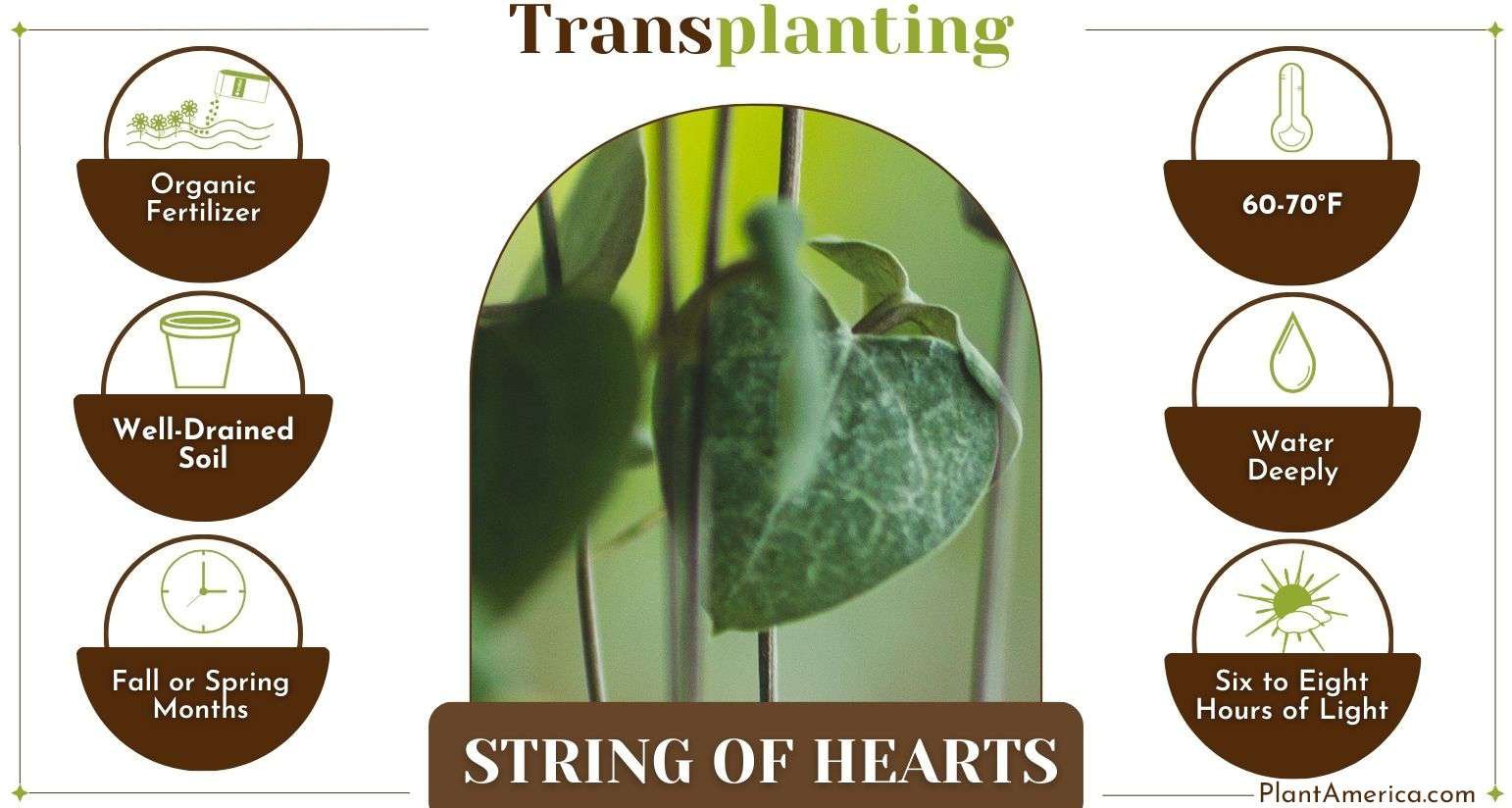
Thankfully, everything that you need to know is well-described in this article. Read this article to learn the best steps for transplanting string of hearts.
How to Transplant String of Hearts
To transplant string of hearts, wait until the period of dormancy then gather all the tools and items that you need. Collect the plants from their current substrate then propagate them if you want. Plant them afterwards then regularly water and fertilize them.
1. Wait Until the Right Time
Even though transplanting string of hearts is easy, you have to ensure that you do so correctly. The first thing to consider before transplanting your hearts is the time or season of transplanting. The best time to transplant these plants is during their dormant season when they are at rest and have a very slow growth rate.
When the growth rate is slow, environmental conditions do not affect places that much. Therefore, they will not be shocked or stressed if you change their environment during dormancy. The dormant season of these plants starts in fall and ends in early spring.
You can transplant them in the fall or spring months. Just ensure that you don’t transplant them less than a month before the first frost date in your area.
2. Gather All That You Need
To successfully transplant your string of hearts, you need to gather a few items. Some things to gather are:
- Knife: you will use your knife to divide the plants and collect cuttings if need be.
- Substrate: grow your plants in fine soil or use a potting mix if they will be growing in pots.
- Water: you have to water your plants before and after you transplant them.
- Fertilizer: occasionally fertilize your string of hearts, especially if the substrate is not very nutritious.
- Pruning shears: use this to prune your plants occasionally.
- Disinfectant: before working on your plants with any tools, disinfect the tools first.
These items are easy to find. Gather them first so that nothing will stop or limit you from transplanting your hearts.
3. Consider the Temperature Requirements of Your Plants
Before you transplant your hearts to an entirely new location, you need to do a few background checks. For example, check if the temperature is suitable for your plants. Temperature is a very vital growing condition, as every plant relies on temperature to grow. Therefore, the temperature range in the new place must be suitable for your hearts.
String of hearts such as Ceropegia woodii string of hearts “orange river” grows optimally at 60-70 degrees Fahrenheit. If the new location’s temperature—during the growing season—is significantly higher or lower than the hearts’ optimal range, you cannot grow the plants there. However, you can grow your plants indoors or in a controlled environment, as the temperature inside is mostly suitable.
4. Consider the Light Requirements of Your Plants
Another thing worth considering is the lighting needs of the string of hearts. Even though these plants are quite hardy, you need to be sure that they receive as much light as they need in their new location. These plants grow optimally when they get six to eight hours of light. You can grow them with direct or indirect light, so they do just fine growing outside or inside. If your yard or wherever you want to grow the plants does not have access to enough light, grow the plants using grow lights. With ten to twelve hours of grow lights, your plants will grow just fine. However, you can simply place them near your south-facing windowsill, as such a place usually has sufficient light for indoor plants.
5. Start Preparing the New Pot and Substrate
You have to prepare the new soil or substrate for your hearts before you transplant them. Also, ensure that the pot or basket is ready. You can use any type of container for your plants so long as the container has drainage holes. With the drainage holes, excess water will flow out if you overwater your plants. For pots, use terracotta pots.
When preparing the substrate, add sphagnum moss to it, as this makes the substrate more suitable for a string of hearts. You can also add compost if you want the substrate to be richly nutritious. Just ensure that the substrate is airy and loose so that the roots of your plants can breathe properly. If you can’t make a substrate for your plants, go to any store nearby and buy one for the plants.
6. Start Preparing the String of Heart Plants
Before you remove your plants from the current pot, prepare them for transplanting. You can do this by watering the plants. When you water your string of hearts, you will keep them hydrated so that they won’t be too stressed during the transplanting process. Watering them also makes the substrate soft so that you can easily remove the roots of your plants without harming them. Ensure you water the plants for at most 12 hours before transplanting them. You also have to expose the plants to the new environment if you can. If the plants are growing in pots, move their pots to the new place for a few hours daily until you are ready to transplant them. This will help them get used to the environmental conditions in the new place, especially temperature and light.
7. Remove the String of Hearts From Their Current Pot
It is time to remove your plants from the pot. So long as you watered them earlier, the substrate should be soft and you will easily remove the plants from the pot. You can use your hands to remove the roots if the substrate is not deep. For deep substrates, however, use a trowel or any hand-held tool. If you are growing the plants in the regular garden soil, dig out the roots using a shovel.
Be very careful with the roots of your plants. The more string of hearts roots you save, the easier and quicker your plants will adapt to their new environment. Therefore, try to save as many roots as you can. Rinse the roots with water when you remove them from the substrate.
8. Divide and Prune
String of hearts propagation is optional, but necessary if you want more plants. To propagate string, you have to divide the mother plant (above) or use the tuber propagation method. Propagating string of hearts by dividing the plant is easier, as you only need some string of hearts cuttings. When you get the cuttings, you may decide to use the soil method in propagating them or the water propagation method.
If you want to monitor the growth of your plants, dip the cuttings in water and replace the water with a new one every two days. However, you can directly plant the cuttings in soil and in a few weeks to months, you will see new leaves growing. Please wait until the fresh cuts get dry before you plant the cuttings.
9. Replant the String of Hearts
After working on your plants and carrying out the plant propagation, it is time to bury the roots of your plants in the substrate. Just in case you haven’t already, plant the cuttings as well. There are several methods of laying cuttings: you can use the butterfly method by burying the entire ½ inch cutting with leaves attached to it or you can plant the 6-inch stem cuttings. As for the mother plant, ensure that the holes you dig are large enough to accommodate the roots. If the holes are ready, place the roots in them then bury them with substrate. Try as much as you can to reduce air pockets so that the entire root system will be buried in and have direct contact with the substrate.
10. Water Your Plants
After planting the string of hearts plants, you have to water them. Water them deeply so that their deepest roots will get water. You can continue watering them until water starts dripping from under the container. So long as the substrate is well-drained, you have nothing to worry about. You can also mist your plant leaves with water. Just ensure that you do so only in the morning hours.
11. Fertilize Your Plants If the substrate isn’t nutritious, you have to occasionally feed your plants. Though you may not feed them immediately as they are still in their dormant season, don’t forget to feed them when they start growing. Use any general indoor plant fertilizer for your plants. When diluting the fertilizer, follow the instructions on the label so that you don’t give your plants too many or too little nutrients.
Frequently Asked Questions
– What Mistakes Should You Avoid When Transplanting String of Hearts?
Some mistakes you should avoid when transplanting string of hearts are damaging the roots, not loosening the substrate first, not watering your plants after transplanting them, overwatering the plants, and not considering the growing conditions of your plants. Some of these mistakes can lead to the loss of your plants.
– What Should You Consider Before Transplanting String of Hearts?
Before transplanting string of hearts, you should consider the growing conditions such as light and temperature. Also, check if it is the right time to transplant the string of hearts. You also have to ensure that the new substrate and pot are ready before transplanting your hearts.
– How Often Should You Transplant String of Hearts?
You should transplant string of hearts as often as necessary. Your hearts will likely cover their current pots every one to two years, so ensure that you repot them when they do. The growth rate of your hearts and the size of your pot determines how often to transplant the plants.
– How Can You Care For Transplanted String of Hearts?
You can care for a transplanted string of hearts by watering them often, feeding them occasionally, pruning them when needed, repotting or transplanting them when they cover their pots, repelling pests from the plants such as mealybugs, and removing weeds as they grow. These tips will help your plants grow successfully. Also, pay attention to its leaves and their color. If the leaves start turning yellow you will have to immediately take care of it.
Conclusion
You are ready to transplant your string, right? Before you get started, remember the following points:
- Transplant your hearts in their dormant season so that you don’t stress them too much.
- Consider the temperature and light needs of your plants and ensure that the new location is suitable for them.
- Remember to use sterilized tools for your string of hearts so that the plants can stay safe.
- To propagate string of hearts, there are different methods. Use the best that suits you.
- Remember to wait until the fresh cuts in your plants are dry before you plant them in soil.
What are you waiting for? Go transfer your plants to their new location right away.