
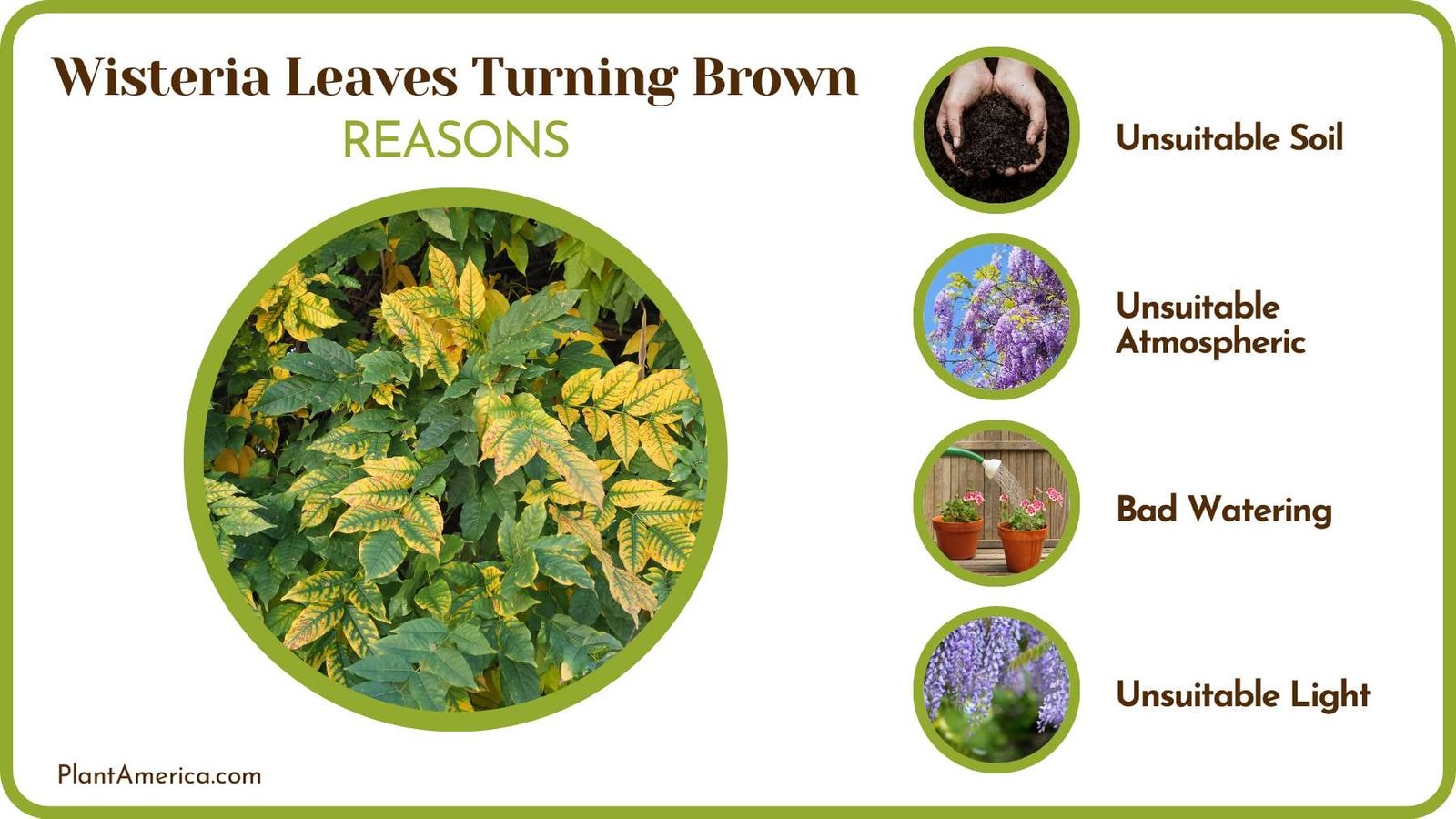
Wisteria leaves turning brown is truly worrisome, as they will spoil the look of your Fabaceae family plants. Also, they might indicate a health problem.

You have to investigate your plants to be sure that they are safe. To easily check your plants so that you can know why they are becoming brown as well as how to fix them, read this article.
Why Are Your Wisteria Leaves Turning Brown?
💥 Your wisteria leaves are turning brown because you may not be watering or feeding them correctly. Also, the light, humidity, temperature, and soil conditions may not be suitable. Pests and diseases are also other factors to consider. You have to carefully observe your plants to find the cause.
– Unsuitable Soil Condition
One thing you should check for your wisteria plant is its soil condition. When last did you amend the soil for your plants? The soil is not just an anchor for your plants, it is the source of life. Therefore, if there is something wrong with the soil, the general health of your plants will be affected. Check soil qualities such as pH, compactness, aeration, pests, and nutrition.
If the soil is too compacted, it can lead to the suffocation of your wisteria roots. If the soil has pests, your plants will be highly affected. Therefore, you must constantly ensure that your soil is okay. Consider taking a few soil samples to a lab nearby for soil analysis.
– Unsuitable Atmospheric Factors
The soil below your plants is important. However, the sky above your plants is also important. Well, “sky” is a figurative term referring to the atmospheric conditions that may affect the growth of your wisterias. For example, conditions such as humidity and temperature are key for the growth of your wisterias.
If the plants are growing in a place with unsuitable temperatures, they will not grow optimally. They might even get stunted growth and die. Always ensure that you check how suitable the temperature, humidity, and hardiness zone of your region are before you start growing any plant. This will help prevent problems in the future.
– Bad Watering and Feeding Practices
Your cultural practices or how you grow your plants can be a problem for your plants. For example, if you regularly give your wisterias more water than they need, they will get root rot soon enough. This is a fungal disease that will kill your plants if you don’t give them quickly. If you overfeed your plants, you will burn their leaves.
All these problems will give your plants brown leaves. For example, the leaves that get burnt due to overfeeding will be brown. Likewise, the ones dying due to overwatering will first turn brown before they fall off. Therefore, when you see brown leaves, check your cultural practices after checking the soil and atmospheric qualities.
– Unsuitable Light Exposure
What if you see the wisteria leaves turning yellow and brown? There are so many reasons why leaves turn yellow. For example, nutrient deficiency can make leaves turn yellow. However, the first thing to think of when you see a lot of yellow leaves is how exposed your plants are to light. If the light is not sufficient, your plant leaves will turn yellow.
Leaves lose their coloration and turn yellow in low light because they need light for photosynthesis and photosynthesis is the major reason why leaves are green. Are your wisterias getting enough light?
If you overexpose the plants to light, they can get sunburn and this will give their leaves brown edges. As you can see, you have to check how exposed your plants are to light.
– Aging of the Leaves
Sometimes, your wisteria leaf may be turning brown because of age. This is true, especially when the leaf itself( i.e., not the plant) is old. Check the plant and try to find out which leaves are losing their colors and how many of them. If only one or two are discolored, you have nothing to worry about for now. However, if there are many, age is likely not the cause.
There’s a low chance that every leaf will grow old and become brown at once. What causes this is mostly nutrient deficiency, especially when your plants are lacking mobile nutrients. Diseases (to be discussed later) can also change the color of only older leaves.
– Presence of External Stress
Do you know that people can be the cause of your plant becoming brown? If, for example, people cut a leaf in half, the remaining part will turn brown. Wisterias are very beautiful, so there is no way they can’t attract people. The more people they attract, the more you need to be extra watchful so that others don’t harm your plants.
Also, remember that compacted soil can give your plants discolored leaves. The more people walk around your plants, the more the soil around them will be compacted. Therefore, ensure to regularly check the soil and other factors when your garden is very busy.
– Pests and Diseases
Surely, there’s no way we can be discussing the general health of a plant without discussing pests that can be responsible for the leaves becoming brown. Some diseases such as powdery mildew regularly attack wisterias, especially when you are growing the plants in a richly humid environment. The honey fungus and wisteria leaf spot also regularly attack wisterias.
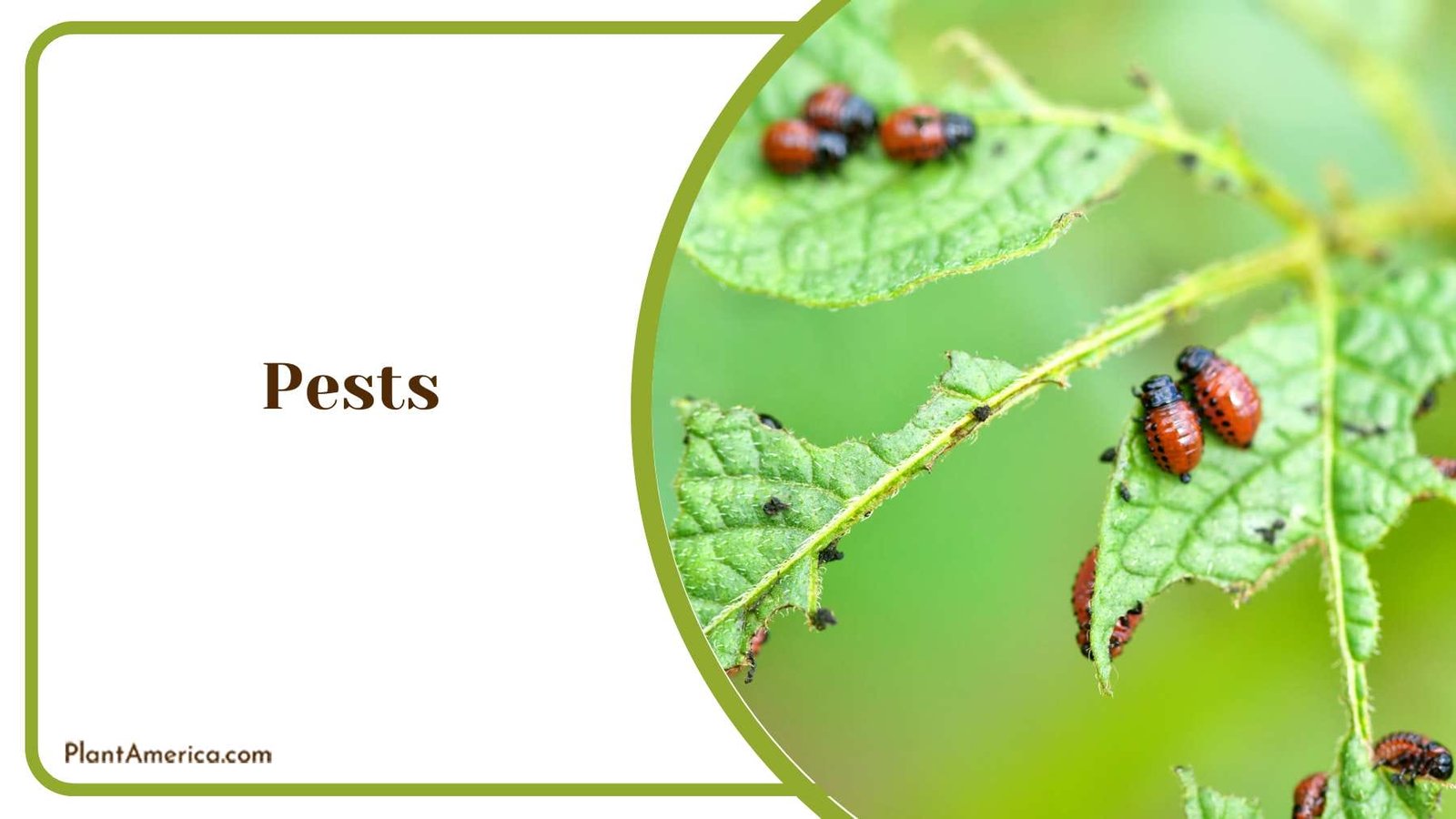
Some insects such as aphids and scale insects are regular visitors of wisterias and they are not the type of visitors that you’d want. The presence of these pests could indicate that your wisterias will soon become brown, so you have to start thinking of ways to repel the pests.
To know the exact pests that attack your wisterias, you have to check the plants several hours a day. This includes late into the night as well. Remember that some wisteria pests are nocturnal. To identify these pests, check the plants at night or very early in the morning.
How to Fix Your Wisteria Plant Leaves That Are Turning Brown
To fix your wisteria plant leaves that are turning brown, you have to properly feed and water them. If they have a nutrient deficiency, fix them by using a foliar spray. Also, ensure that you protect your plants from the hot sun by using a shade cloth.
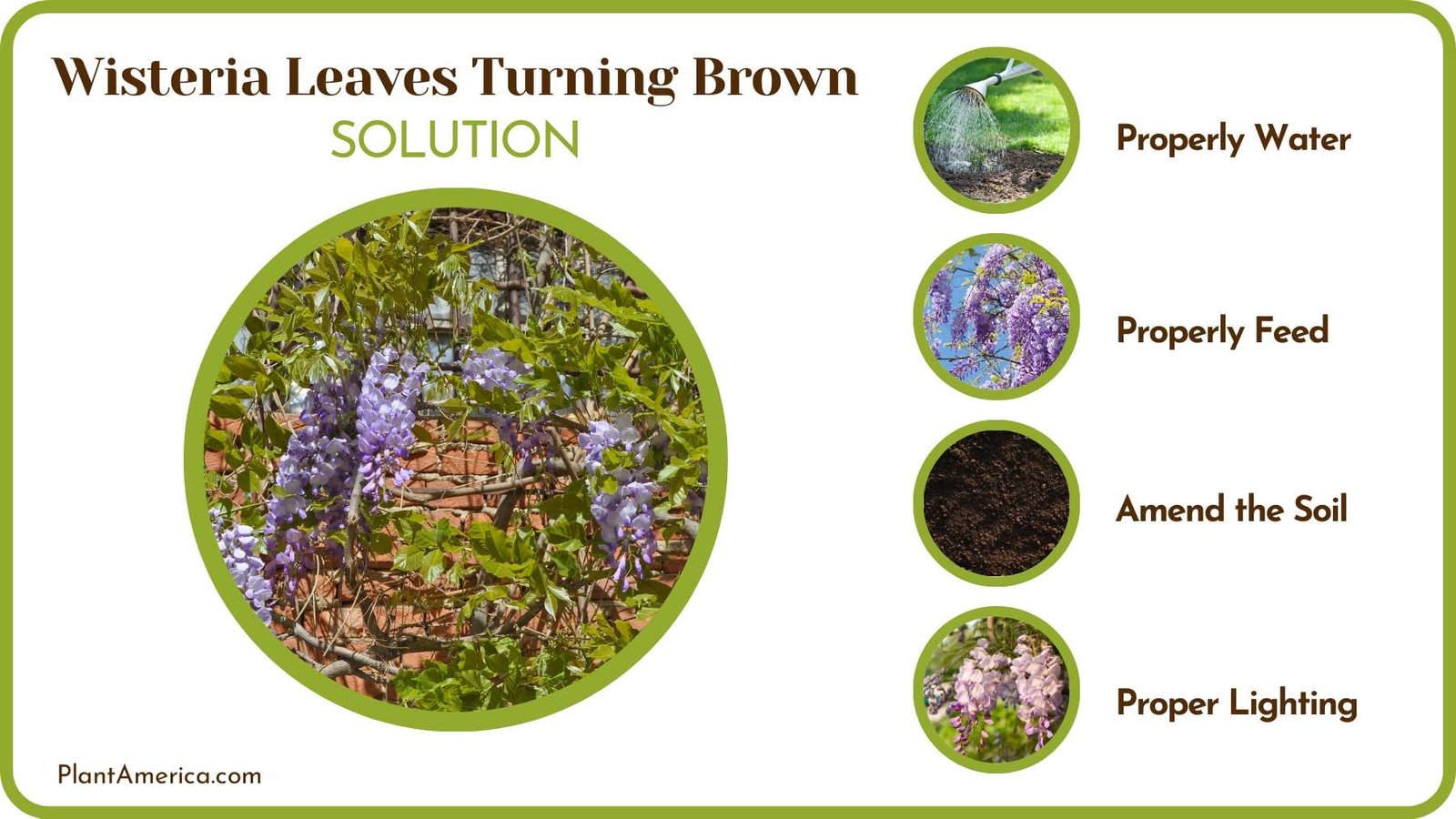
– Properly Water Your Plants
To ensure that no leaf becomes brown due to overwatering or not watering the plants enough, you have to make a proper watering schedule. Water wisterias regularly when they are young and then reduce your watering rate as they get old. When they are old, only water them during the hot periods of spring and summer or whenever you see that the soil is dry.
If your watering technique includes misting your wisterias with droplets of water on their leaves, you have to be sure that the leaves get dry in a few hours. Water droplets remaining on the surface of leaves for a very long time can be harmful to the leaves. Therefore, just ensure that your leaves don’t get wet for long.
– Properly Feed Your Plants
You also have to properly feed your wisterias so that they can grow well. If you regularly fed them when they were young, you have to continue even when they mature. However, your feeding rate will slightly increase, as the matured plants make use of more nutrients than the younger ones.
Use either inorganic or organic nutrients for your wisterias. However, note that if the plants have a deficiency of any nutrient, you can easily correct it by misting the inorganic and readily available form of that nutrient on the leaves. This is called foliar fertilizing.
Ensure that you don’t burn your plants by giving them organic fertilizer that is yet to rot properly. Give them well-rotted manure and other types of organic fertilizer if you choose to feed them with organic fertilizer.
– Amend the Soil
When was the last time you amended your soil? If you think that the soil is no longer suitable for your wisterias, you have to fix it. You can fix it by mixing it with some amendment products. For example, vinegar, pH up, and pH down products can change the pH of your soil to your desired range. Perlite can loosen the soil so that it becomes aerated. If the soil dries out quickly, vermiculite can help.
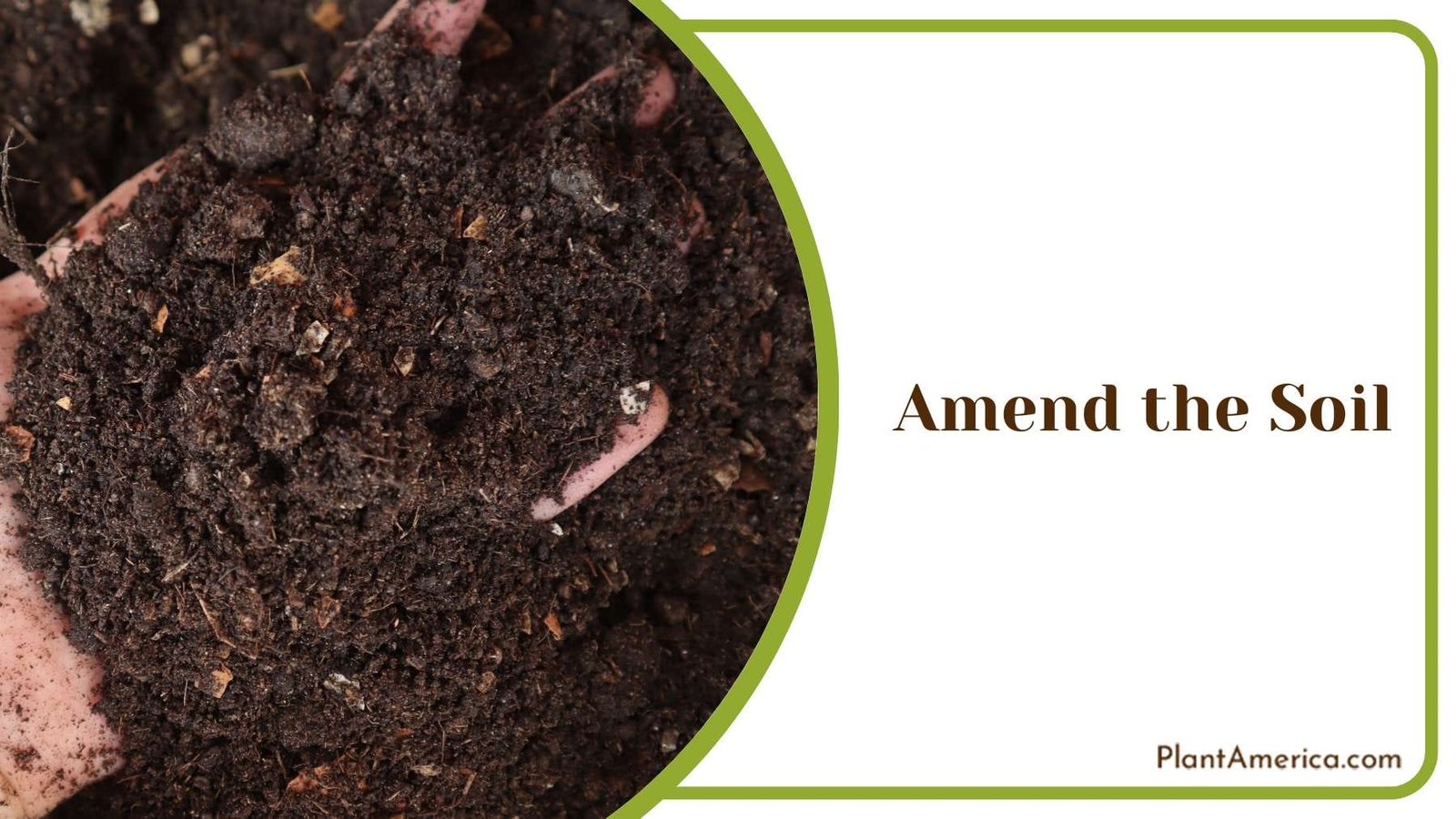
As you can see, the amendment product you choose depends on the quality of your soil and how you want it to be. Just ensure that your wisterias never grow in unsuitable soil again so that they no longer grow brown or discolored leaves.
– Ensure Proper Lighting
This tip is best used before you start growing your wisterias. Before you bring the plants to your yard, ensure that you have selected a spot that has six to eight hours of direct light. This will ensure that the plants will not suffer from insufficient light when they grow. It will also keep their leaves fresh and beautiful.
However, it does not prevent your plants from getting sunburnt, as the summer months may be too harsh. To keep your plants safe during the summer, shade their leaves with a shade cloth during the hottest parts of the day. You can simply throw the cloth on the leaves and then remove it as the day gets cooler. Just ensure that your plants don’t get too enough to the harsh sun.
– Wait for the Growth of New Leaves
Are your plant leaves becoming brown because of age? You have nothing to worry about. You simply have to wait for new ones to grow. So long as the new ones growing are not becoming brown or discolored, you are good to go. However, if they are becoming discolored, you have to fix your plant, as the older ones were not becoming discolored due to age.
– Treat Diseases and Repel Pests
It is time to head to a store and buy a pesticide for your wisterias. Ensure that the pesticide you buy is plant-safe. Also, the pesticide should be suitable for the type of pests attacking your plants. This means that you must be sure that you know what is attacking your wisterias. If the plants have an insect pest problem alone, don’t treat them with a product made for fungi.
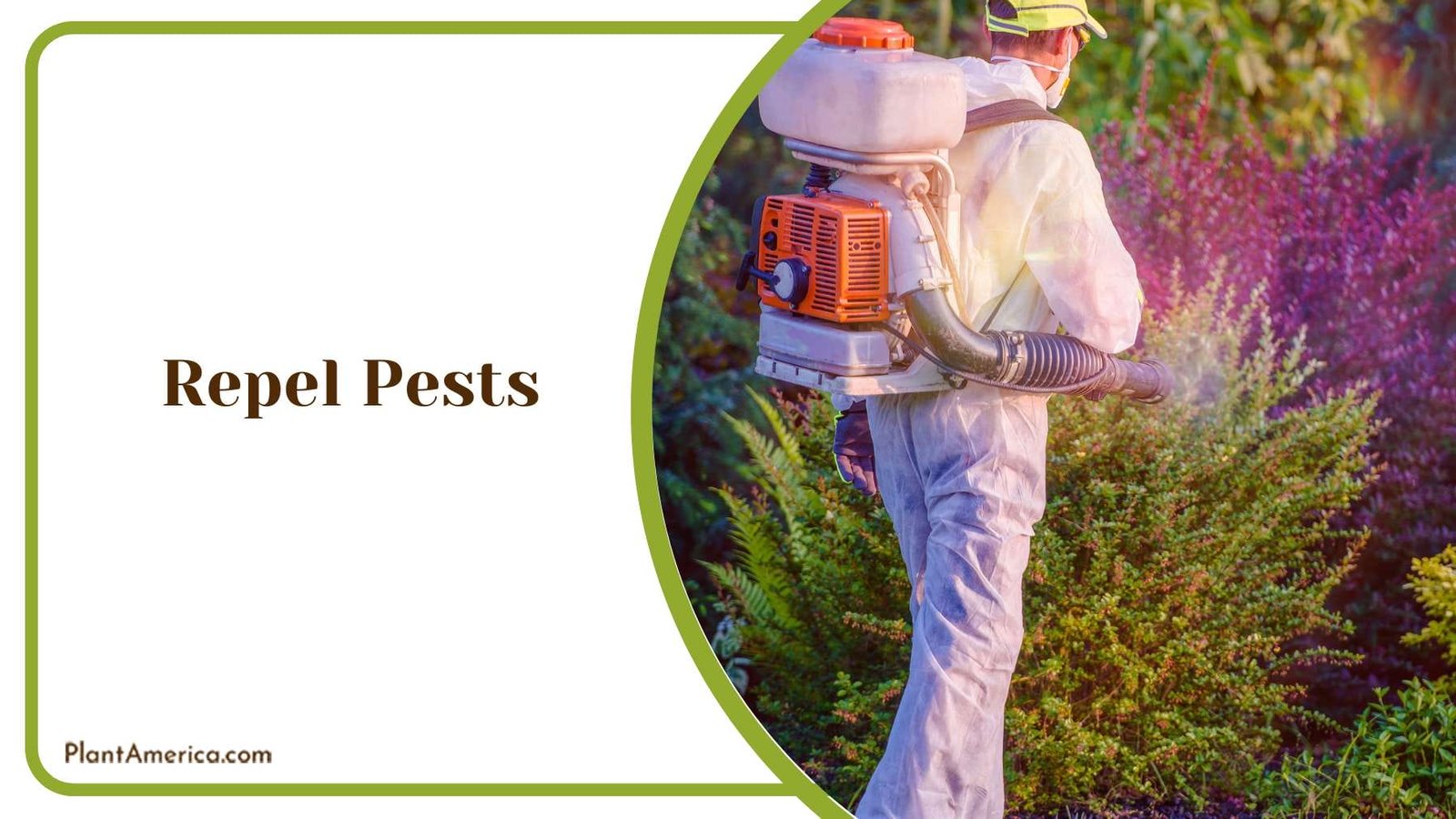
When you get your preferred product, read and stick to the instructions. Also, don’t overuse it so that you don’t harm your plants.
– Prune the Damaged Leaves
After treating your plants, the brown leaves won’t go away unless you cut them off. Discolored leaves hardly turn green again. Therefore, make room for new growth by removing the old leaves. Remember to prune your plants only with clean and sterilized tools.
Conclusion
You are ready to fix your wisteria, right? Before you get started, remember these points:
- Check the atmospheric conditions of your plants and ensure that they are suitable.
- Check and fix the soil quality if it is not suitable for your wisterias.
- Ensure that you properly water and feed the wisterias so that they don’t turn brown.
- Sometimes, the discolored leaves may be caused by age, so it’s not always a cause for worry.
- After you fix your plants, remove all the damaged and discolored leaves to keep your plants beautiful.
- You can also transplant your Wisteria to a place with more ideal conditions.
What are you waiting for? Go fix your plants right away.
References
- Utah State University. (2022, August 3). Wisteria in the garden. USU. https://extension.usu.edu/yardandgarden/research/wisteria-in-the-garden
- Wisteria (Wisteria) | North Carolina Extension Gardener Plant Toolbox. (n.d.). https://plants.ces.ncsu.edu/plants/wisteria/