
The “how to transplant holly bushes” procedure could be a bit challenging, especially when the plant is older. However, this applies more when you are not knowledgeable enough.
Otherwise, you can take charge of the transplanting process and successfully give your holly bush a new home. This article will give you all the knowledge and expertise you need to get started.
Steps for Transplanting Holly Bushes
The clear steps for transplanting holly bushes commence with root trimming and pruning the plant. Make sure the new and old sites have similar growth conditions. Move and transplant your holly bush, but avoid damaging the roots. Track your plant’s progress while keeping pests and diseases at bay.
1. Engage in Root Trimming
You can plan ahead and start preparing your plant for transplanting. One of the important steps in doing this is engaging in root trimming. This is a process that helps to increase the feeder roots of your holly bush. Feeder roots are the ones that the whole tree with all the water and nutrients that enhance their growth and survival. The more feeder roots your plant has, the greater the likelihood of surviving any level of transplant shock.
For root trimming, you will have to grow your plant in a compact area with limited space so that it grows new feeder roots. Create a trench that is 12 inches wide and deep. Get approximately 11 inches of the rootball for every inch of the plant’s trunk. Place the rootball in the trench and cover it with a medium that is prepared by mixing the topsoil and some compost at a ratio of 2:1, respectively.
Immediately water and continue to do so throughout winter. By the time you reach the planned time for the transplanting procedure, the holly bush will have developed more feeder roots.
2. Prune the Holly Bush
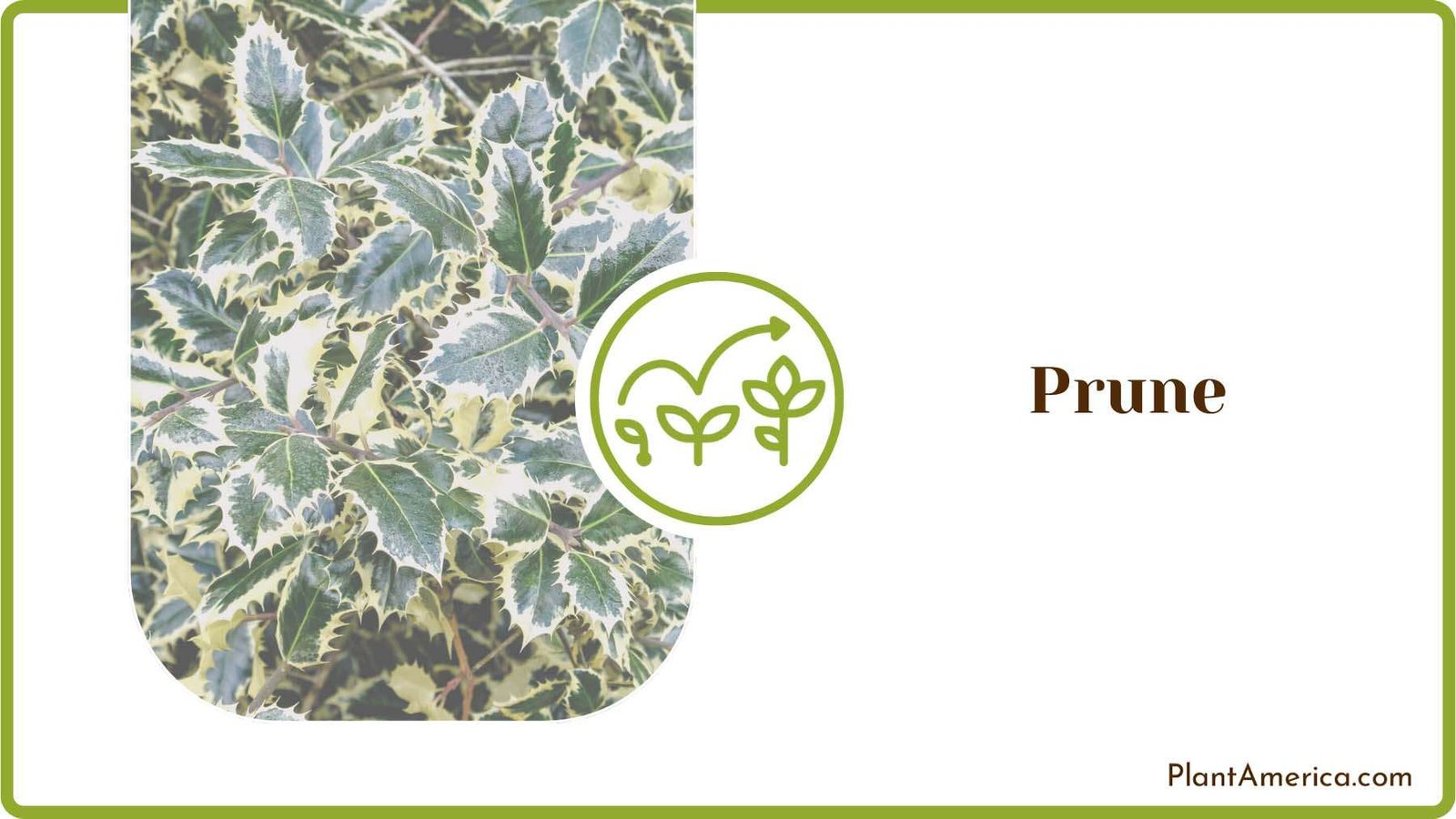
Pruning holly bushes will help to reduce the canopy burden on the roots. That way, your holly bush will focus more on developing and establishing its root system after transplanting, rather than channeling most of its resources to the leaves.
3. Prepare the New Site
We recommend that you prepare the new planting site first before you uproot your holly bush from its original spot. This helps to reduce the time that the holly bush will be out of the soil, thereby increasing chances of survival.
Ideally, the characteristics of the new planting site should resemble those of the previous one. Make sure that there are no sudden alterations in terms of temperature and sunlight conditions, otherwise, you might risk scorching your holly bush. Make sure the soil has good drainage properties so that your plant won’t sit in water.
Use a shovel to create a hole that is wide enough to contain the rootball of your holly plant without it brushing its sides on the walls. The depth of the hole should allow the hosta bush to assume a similar orientation as in its previous home. Ideally, you should go 6 inches deep for every inch of the holly bush’s trunk. Be sure not to add any fertilizer into the hole because it may burn the holly plant.
4. Move Your Beauty
Deeply water the holly bush a day before the planned transplanting session. This helps to loosen the soil around the rootball so that it becomes easier to work with.
As you dig to expose the rootball, remember that the goal is to get as much of it as possible. Gauging from where the leaves of your holly plant end, measure about 6 inches and start digging. Keep digging down to approximately one foot. These measurements should assist you in getting a reasonably big rootball, considering that hooly bushes have relatively shallow roots.
Get a plastic or burlap and wrap the rootball of your plant. This protects the roots from possible damage. As you move the plant to the new spot, please hold the rootball, not the trunk. You can even get someone to assist you in carrying the plant to further monetize chances of dismantling the rootball.
5. Introduce the Plant to Its New Home
Carefully remove the burlap or plastic covering the rootball and lower your holly plant’s rootball into the new hole that you prepared, still taking care to keep the rootball intact. Use the soil that you removed to cover the rootball, after making sure that it is sitting at the same depth as its previous home. Give the holly bush a “deep watering” welcome to provide it with the moisture that it needs.

Add about 3 inches of mulch on the surface that covers the rootball area. Be cautious not to let the mulch come into contact with the trunk of your plant. This is because the moisture that would have been trapped in the mulch can cause fungal infections such as mold. You wouldn’t want to deal with such issues at this time when your plant is still vulnerable and trying to recover from the transplanting procedure.
While moisture is vital for the establishment of your plant, overwatering has undesirable repercussions. Your holly plant could eventually die if you expose it to too much moisture. You can check the soil’s moisture by penetrating your finger through into the soil under the mulch. Only water when a few inches of the topsoil are dry.
6. Keep Your Plant in Check
Your holly plant requires more care now than when it was in its original location. Schedule regular checks to monitor its progress and intervene accordingly.
Scout for any pest and disease attacks on your plant. One of the diseases that usually attack holly bushes is purple blotch, which is characterized by purplish spots. Purple blotch is caused by injury, drought, or nutritional deficiency.
Check your plants for holly leaf miners, scale, aphids, or mites. These pests can destroy the vitality of your plant, adding to its struggle to recover. Insecticidal soap and Neem oil are effective against aphids, scale, and mites. To control the leaf miners, use a foliar insecticide.
Factors That Determine Success in Transplanting Holly Bushes
The factors that determine success in transplanting holly bushes include the plant’s age and proper timing. Taking note of environmental factors such as the soil, light, and temperatures is also of paramount importance. Remember that a bigger rootball is associated with greater chances of success.
– The Plant’s Age
Younger holly plants are easier to transplant compared to the older ones. There are three main reasons why such a conclusion can be made. First, the root system of the younger plants is less established than their original home. This makes it easier for them to acclimatize to the new spot that you will move them to.
Second, the less established roots of the younger hollies can be easily detached from the original soil, with limited chances of them getting damaged. Apparently, successful transplanting will require a substantial amount of undamaged roots. You need to be more careful when uprooting older holly bushes because of their stronger hold on their original spot.
Third, it is logically easier to carry and relocate a smaller plant than a bigger one, based on size. This also applies to all holly varieties, including the American holly.
– Strategic Timing
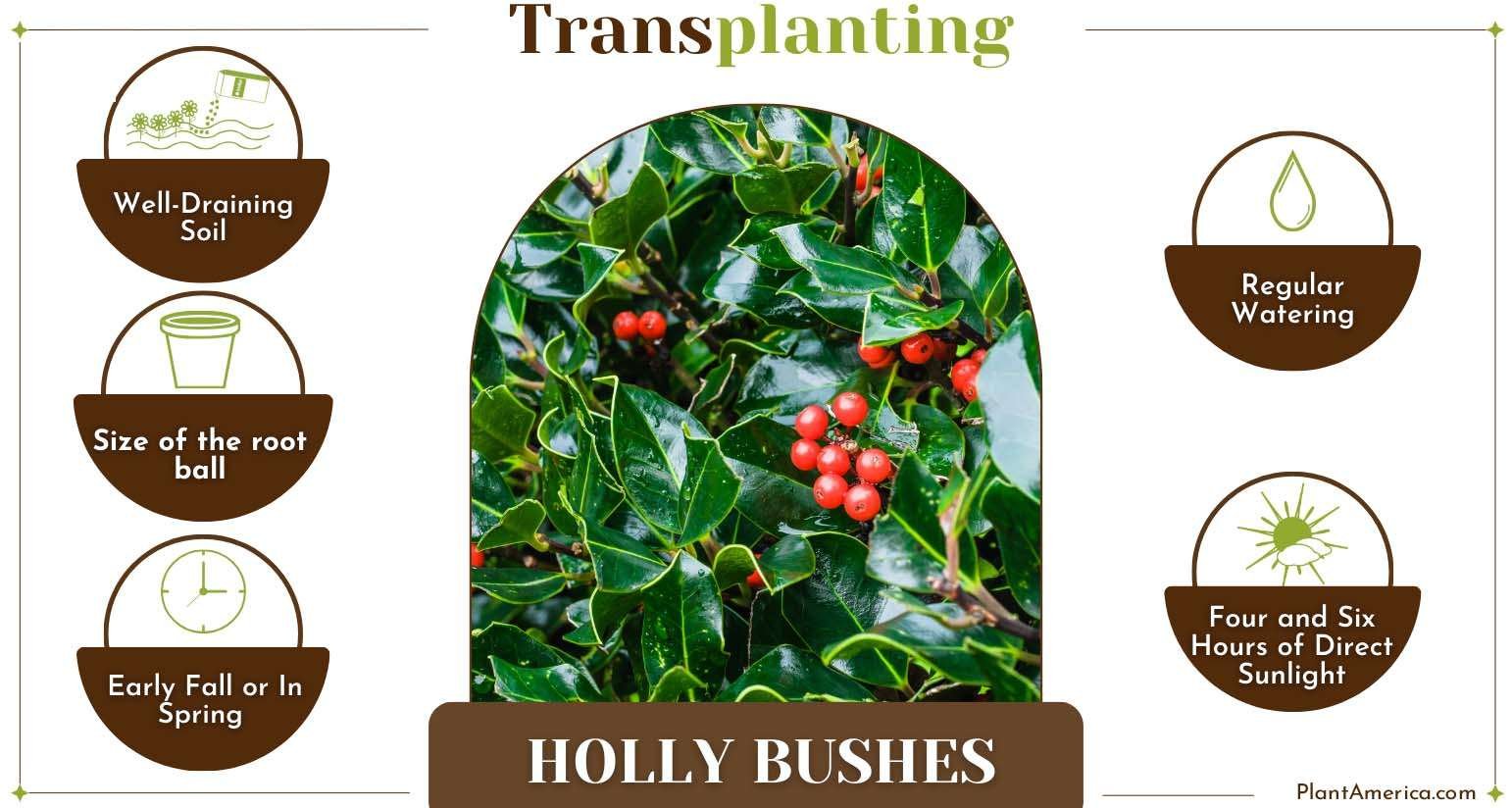
Ideally, consider moving and planting holly bushes during the early fall or in spring. These periods are generally milder so they are less likely to exert more stress on your transplanted holly tree.
High summer temperatures increase rates of evaporation and transcription. This is not a favorable condition for a plant that is already stressed from the transplanting procedure. In winter, the soil is too cold or even frozen, making it unfavorable for the establishment and development of the roots of your holly bush.
Simply put, winter and summer periods enhance severe holly tree transplant shock.
– Undamaged Roots
A successful transplant also depends on the size of the root ball that you are able to dig out from the original spot. The more roots you are able to take with the tree, the greater the survival chances of your plant after transplanting it. Therefore, it is important to avoid damaging the root ball as you dig it out.
– Watering Needs
The water needs of your transplanted holly plant are similar to those of a new plant. You should give your beauty a drink soon after transplanting it and do it regularly after that first time.

Doing so will enhance the root growth, thereby recovering those that the tree might have lost during the move.
– Soil Needs
Loamy soils that are well-draining are conducive to the growth of your holly. Most holly plants disdain conditions that are too wet, even though some like the Winterberry don’t seem to be affected. For varieties that are sensitive to waterlogged conditions, wet conditions increase the risk of root rot, thereby further compromising the success of the transplanting procedure.
If the soil at the projected spot is a bit sandy or has too much clay, adding organic matter will help. Organic matter alters the structure of the soil, making it relatively draining and slightly retentive to moisture.
Please, ensure that the pH of your holly’s new environment ranges between 5 and 6. These plants are happier in acidic growing media.
– Sunlight Needs
If you were wondering, “How much sun do holly bushes need?” it’s vital to know that these plants have varying sunlight needs. Therefore, you should inquire about the specific light requirements so that you know where to plant holly bushes, based on the variety or type that you have. However, if you are not sure yet, expose your holly plants to between four and six hours of direct sunlight on a daily basis.

If you are staying in a hot climate, we recommend that you grow holly plants on a post where they can get some shade. This will shield them from getting scorched by the hot afternoon sun, especially soon after transplanting it.
Conclusion
If you love landscaping with holly bushes, you have just gained another skill for properly handling beauties such as the American holly. Just a moment—make sure you didn’t miss anything important by reading the following reminders:
- To successfully plant holly bushes, you should consider factors such as plant age, as well as soil and sunlight needs.
- Engage in root trimming to increase the feeder roots for your plant.
- To enhance a smoother transition, the conditions at the new site should significantly imitate those of the holly plant’s previous location.
- Throughout the transplanting procedure, handle the rootball with extra care to avoid damage.
- In addition to watering, also check your plant for pests and diseases while closely monitoring its progress.
Congratulations on going through the expert guide for transplanting the holly bushes. Begin the transition from theory to practical by applying what you learned now!