
Mealybugs on fiddle leaf fig trees of the Moraceae family is a concerning situation that can turn a thriving indoor green companion into a battleground for pest control.
These little troublemakers can harm your plant, so let’s dive into their secrets, damages, and how to kick them out!
Why Are There Mealybugs on Your Fiddle Leaf Fig Tree?
There are Mealybugs on your fiddle leaf fig tree because of poor hygiene, excessive watering, and high humidity. Weak or stressed plants are prime targets, and the bugs can hitch a ride on infected plant material or spread from nearby infested plants.
– Poor Plant Hygiene
Over time, dust, dirt, and debris gather on leaves and stems. This can make a comfy home for these pests. They like the cozy hiding spot and settle in easily. Also, not keeping things clean can stop helpful bug-eating insects from doing their job against these pests.
The signs of mealybugs in a plant include the presence of white, cottony clusters on leaves, stems, and around leaf nodes, as well as the appearance of sticky honeydew and sooty mold, often referred to as black spots.
– Overwatering
When the soil stays too wet because of too much watering, the plant’s usual defenses get weaker. This makes the plant easier to damage by bugs. Too much water can also cause the roots to rot, which hurts the plant’s health and its power to fight off problems. And because the plant is weaker, it might not be able to fight off these pests very well.
– High Humidity
The extra dampness in the air helps these bugs grow and multiply, especially if you have a tree grown as an indoor plant. These pests like moisture since it prevents them from drying out and gives them a good place to lay eggs and eat. When it’s very humid, these pests can easily settle on the plants, make the plants weaker, and harm them.
– Lack of Air Circulation
Stagnant air prevents natural predators from reaching the pests, while also allowing humidity to build up, encouraging mealybug growth and reproduction. Without proper airflow, the pests can easily establish themselves on the plant and spread, making it challenging for the plant’s natural defenses to control their population.
– Weak or Stressed Plants
Insufficient light, inadequate nutrients, incorrect watering, or improper potting can weaken the plant’s natural defenses. When a fiddle leaf fig feels stressed, it becomes easier for these pests to infest it. The tree might have trouble making the substances that keep bugs away, which makes it a welcoming place for these pests searching for a simple home.
– Infected Plant Material
Introducing new plants or plant material without proper inspection can inadvertently bring mealy bug infestations to your fiddle leaf fig. Even if you only have a few bugs on new plants you bring in, they can easily move to your other plants. These pests are good at crawling and moving between plants, after all.
– Proximity to Other Infested Plants
Placing your fiddle leaf fig in close proximity to other plants that are already infested with these pests increases the risk of pest transfer. These pests can quickly move from plant to plant, either by crawling or catching a ride on the wind. This rapid spread leads to fast infestations on nearby plants, making it tough to control them effectively.
How To Get Rid of Mealybugs on a Fiddle Leaf Tree?
To get rid of mealybugs on a fiddle leaf tree, isolate the plant, trim heavily infested parts, and physically remove bugs with a brush or water. Alternatively, use alcohol or insecticidal soap, apply neem oil, introduce beneficial insects, or consider systemic insecticides to effectively combat the infestation.
– Isolation
This method is crucial as these pests can crawl, be carried by air currents, or even inadvertently transfer through human interaction. By isolating the infested outdoor or indoor plant, you create a barrier that limits the pests’ access to new hosts, which is an essential step in controlling the infestation’s progression.
To isolate the infested fiddle leaf fig, carefully move the infested plant away from any nearby healthy plants, preferably to a location that is isolated and away from your other vegetation. Make sure to create some space between the infected plant and nearby ones. This stops them from touching or being too close.
– Pruning
Pruning involves selectively cutting away heavily infested or damaged parts of the fiddle leaf fig. This not only reduces the population but also improves the plant’s overall health and aesthetics. By removing infested areas, you eliminate hiding spots and restrict the pests’ movement, making it more difficult for them to spread.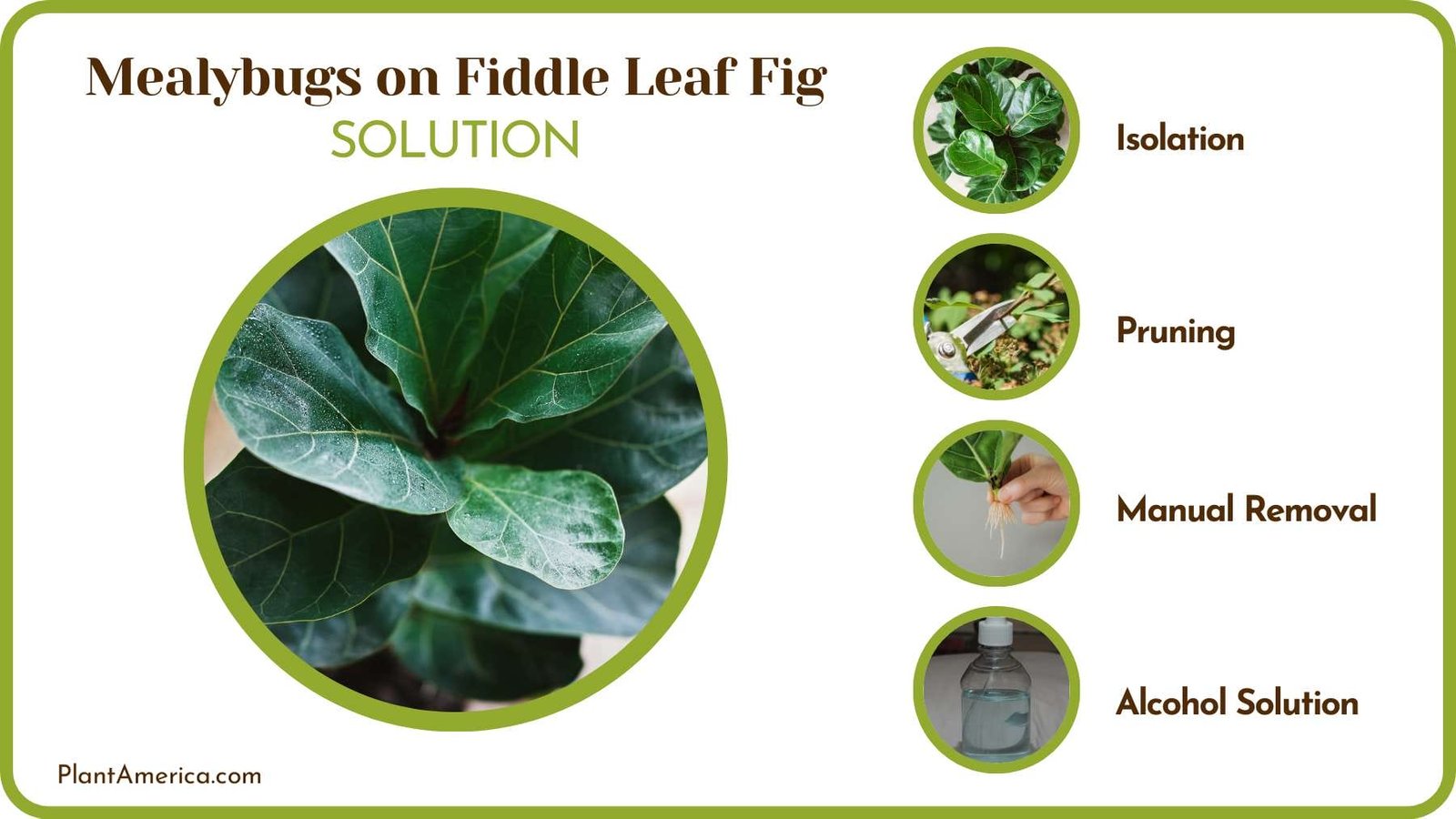
To prune your fiddle leaf fig, first, gather sterilized pruning tools, such as sharp scissors or pruning shears. Take a close look at the plant. Find spots where you see those fluffy white bugs or damage. If you do, gently trim the affected parts. Remember to trim right above a leaf or the main stem.
Toss out the trimmed bits far from your other plants so they stay safe. Watch the plant for a bit after you trim to make sure the bugs don’t come back or the plant doesn’t grow funny. Trim your plant sometimes, use other bug tricks too, and your fiddle leaf fig will be happy again!
– Manual Removal
This involves physically removing these pests from your fiddle leaf fig tree using methods, such as a soft brush, cotton swab, or a stream of water. This technique works well to deal with noticeable bug problems and stop them from staying on the plant. To do this, softly brush or wipe the problem spots with a gentle brush or cotton swab to remove the bugs.
Another way is to use a steady flow of water, like from a hose or sprayer, to wash the bugs off the leaves and stems from your common fiddle leaf. The aim is to take away as many bugs as you can to lower their numbers and stop them from spreading more. Keep checking and removing bugs by hand regularly since they might come back again.
– Alcohol Solution
Dabbing rubbing alcohol onto these pests is a common method to eliminate them. Alcohol disrupts their protective wax coating and dehydrates them, leading to their demise. However, it’s essential to test a small area of the plant first to ensure it’s not sensitive to alcohol.
To use this technique, blend isopropyl alcohol and water in equal parts, like a 1:1 ratio. This makes a solution that won’t harm the plant. Dip a cotton swab or ball into the mixture, and softly put it on them. Cover their whole bodies but don’t make the plant too wet. Keep an eye on the plant for a few days, making sure they are decreasing without hurting the plant.
– Insecticidal Soap
Insecticidal soap is a plant-safe, contact-based pesticide that effectively targets soft-bodied pests like these pests. This contains fatty acids that mess up the pests’ cell covers, causing them to dry out and die. While it’s usually okay for plants and good bugs, it’s important to read and do what the label says. This helps prevent harm to delicate plants and makes sure you put it on correctly.
To treat infestations on your fiddle leaf fig, prepare a solution of insecticidal soap by diluting the concentrate with water as per the manufacturer’s instructions. Spray the plant’s leaves, stems, and problem areas with the solution using a spray bottle. Cover both sides of the leaves where bugs usually hide.
Don’t make the plant too wet, as this can harm it. Leave the soapy solution on the plant for the suggested time. Then, softly wipe away any dead bugs. Apply again when necessary, as mentioned on the label. Keep an eye on the plant and act quickly if bugs come back.
– Neem Oil
This plant oil, derived from the neem tree, is a natural and eco-friendly remedy for combating infestations on your fiddle leaf fig tree. It has elements that interrupt the growth and development of these pests, which eventually results in their end. To use the oil, mix it as per the directions on the product label.
Then, with a spray bottle, evenly cover the parts of the plant that are affected. This includes the undersides of leaves, where these pests usually hide. Apply it again every seven to fourteen days, as needed.
Make sure to coat all plant parts well for the best results. When using the oil, be careful because some plants might react to it. To be safe, try it on a small area before using it on the whole plant.
– Beneficial Insects
Beneficial insects, such as ladybugs and lacewings, are natural predators of these pests. They feed on these pests and their eggs, helping to control their population. Introducing these insects into your environment can provide a sustainable and chemical-free method of managing these pests.
Yet, whether this method thrives relies on forming a fitting home for these hunters and making sure they stay engaged in your area. One effective way to combat these pests on your fiddle leaf fig tree is by introducing beneficial insects into your living space.
Ladybugs and lacewings are helpful bugs that eat these pests, reducing their numbers. You can buy these bugs at stores or online. Make sure the bugs can survive by giving them water, the right warmth, and a safe place. Put the bugs on the plant gently. Let them reach all the areas with bugs. As time passes, these bugs will control them and keep your plants healthy.
– Systemic Insecticides
Systemic insecticides are chemicals that, when applied to the soil or absorbed by the plant, become distributed throughout its system. These tiny pests, when they snack on the treated plant, swallow the bug-killing juice.
To protect your fiddle leaf fig tree from bugs, select a product designed for these pests that also suits your plant type. Follow the instructions from the maker closely, as ways to use it and amounts to apply might differ. Normally, you’ll mix the bug-fighting liquid with water and put it in the soil around your plant’s bottom.
FAQs
– How To Prevent Mealybug Infestations as Much as Possible
To prevent pest mealybug infestations as much as possible, maintain good plant hygiene. Plus, regularly inspecting new plants before introducing them and ensuring proper air circulation around your plants can significantly reduce the risk of infestations by pesky mealybugs and their prolific breeding habits.
– Are All Systemic Insecticides Safe for Indoor Use?
No, not all systemic insecticides are safe for indoor use, as some can release fumes or chemicals that might be harmful to pets, humans, or other non-target organisms. Always read the label and choose insecticides specifically labeled for indoor plants, and follow safety instructions meticulously when applying them.
Conclusion
Getting rid of those pesky mealy bugs is now achievable, so let’s recap everything:
- These pests infest fiddle leaf figs due to poor plant hygiene, overwatering, and high humidity.
- Weak plants and infected materials increase vulnerability to infestations.
- Proximity to other infested plants accelerates the infestation spread.
- Control methods include pruning, manual removal, alcohol solution, neem oil, and insecticidal soap.
- Systemic insecticides provide long-lasting protection by targeting pests within the plant’s vascular system.
With this information at your tips, we’re sure you’ll be the fiddle leaf fig garden guru in no time!