
How to transplant orange lilies is something that guarantees you’ll have one of the best-looking plants. Divide the plants in the spring after the new growth and transplant them in the fall to prevent overcrowding. They thrive in full sun but appreciate some shade in hot climates and can survive in poor soils.
 The Hemerocallis fulva, also known as the common daylily, orange daylily, and tawny daylily, has grass-like foliage, and the orange trumpet-like flowers appear in the summer. These plants thrive in USDA zones 3 to 9 and can tolerate different growing conditions. Our gardening team will tell you how to divide and transplant these beautiful daylilies in your garden.
How To Divide And Transplant Orange Daylilies in 8 Simple Steps?
Orange lilies are fast growers and can quickly spread in your garden to the point of becoming invasive. Dividing daylilies keeps your landscape under control and allows these plants to stay healthy without affecting the health of nearby plants.
The same transplanting technique we follow in this guide can be used to transplant other popular lily types like the tiger lily, golden-rayed lily, Madonna lily, Easter lily, and lily ‘stargazer’ that add vibrant colors to your garden.
The orange lily grows from a rhizome that produces foliage and flowers for several seasons before it becomes too exhausted. Over time, older rhizomes start producing fewer blooms, and this will be the right time to transplant your plants. Moreover, dividing these attractive plants will help you fill your garden with bright and vivid colors, especially in areas where other plants struggle to survive.
1. Pick The Right Time
Can I transplant lilies in the spring? Is it better to wait for the fall before dividing and transplanting them? When to divide lilies in pots?
Choosing the right time is the most crucial factor affecting the transplantation’s success. Orange lilies grow their beautiful blooms in the summer, so can I transplant lilies in summer? Can you transplant lilies when they are blooming? How to replant lilies from a bouquet?
We don’t recommend dividing and transplanting daylilies in summer because this will disrupt the flowering season. However, if you must, you can do that, but you should make sure not to cut the developing flowering stalks so the plant continues blooming.
Regardless of the time, you can’t replant lilies from stem cuttings. These plants will only grow from rhizomes that are transplanted at the right time.
Choosing the right time to divide the rhizomes depends on your USDA zone. So, when to transplant lilies zone 5? In colder climates, the late summer or early fall is the best time to transplant daylilies, as this will give them several weeks to settle before the first freeze. In warm climates, you can divide these plants in the spring or fall.
The transplanted plants might not flower the following season or produce fewer blooms. But your orange lilies will fill your garden with bright, attractive blooms within one year.
The rhizomes never entirely go dormant, and you can overwinter them in the ground. You can remove them from the ground in frigid climates and keep them indoors until spring. However, you’ll have to give them a chilling period before transplanting them outside.
Ideally, you should divide these plants every 3 to 5 years. This will keep the foliage under control without taking over your garden and depriving nearby plants of essential nutrients or damaging your landscape design.
2. Preparing Your Lilies
Orange lilies can be found in several rural areas, so you can save them if you want to grow them in your garden. You can also transplant these gorgeous plants from other spots in your garden to fill your landscape with vivid colors.
Before transplanting your plants in the fall, you should trim the foliage to be about 12 or 18 inches tall. This will protect your plant from transplant shock, as the roots can nourish a shorter plant.
However, you might not have to trim your lilies if you transplant them in the spring. At this time, your plant has already grown new shoots, so the plant won’t have much foliage to deal with.
3. Choose The Right Location
If you have poor soil where your ornamental plants struggle to survive, this will be an excellent spot to grow your orange lilies. These plants can stay in any location, regardless of the fertility of the soil, as long as they have access to full sun.
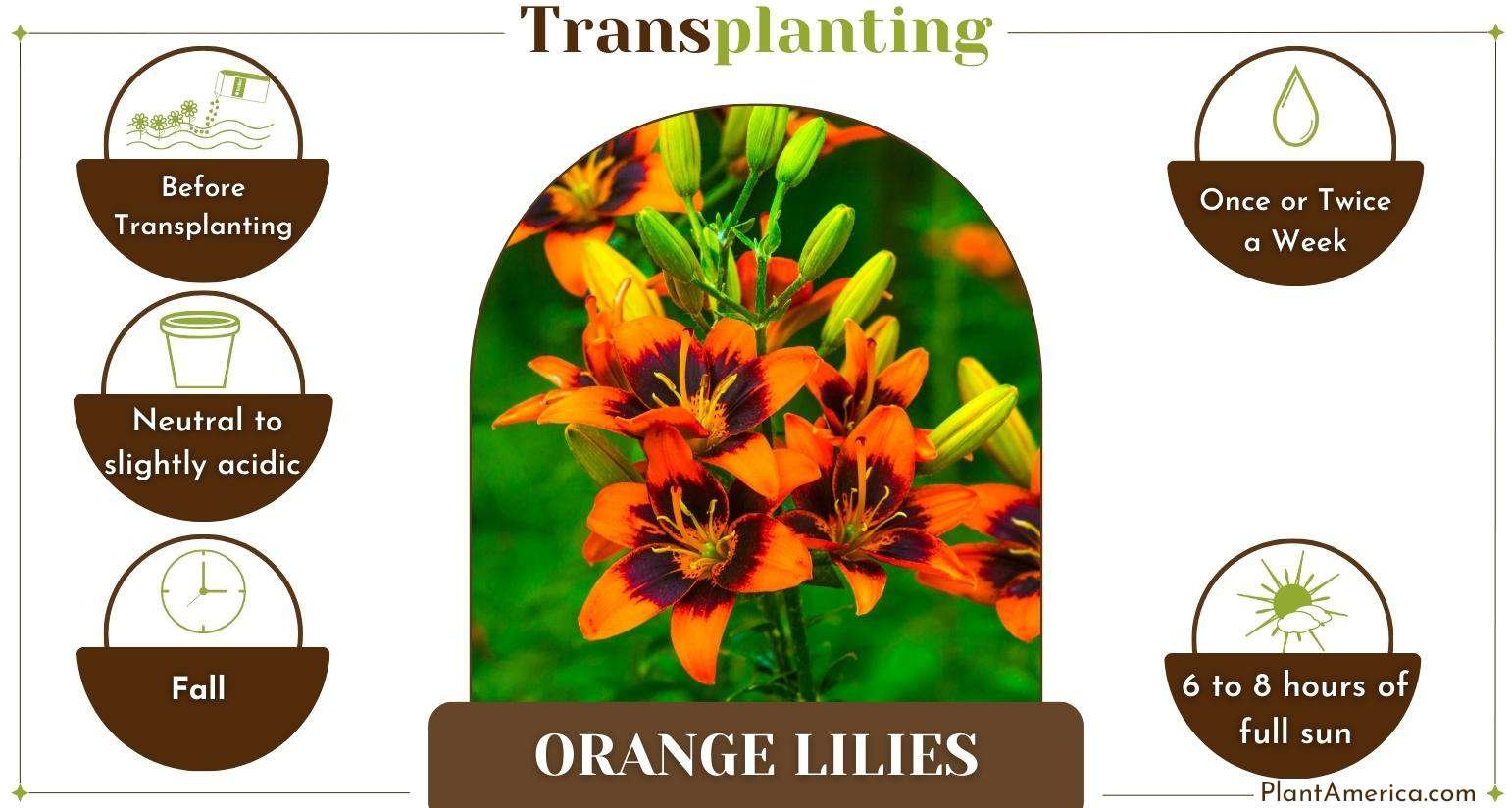
The plant should receive at least 6 to 8 hours of full sun to grow its vibrant colors during its growing season. However, in hotter climates, this plant will appreciate some protection from the intense afternoon sun, which might scorch the leaves and the flowers. These fantastic plants can tolerate some shade, but they might not be as healthy, and they will produce fewer blooms.
Although they can take less-than-perfect soil, excellent drainage is crucial. Clay and compact soil that holds too much moisture will keep the rhizomes wet, which can make them rot.
Lilies prefer rich and fertile soil, thriving in neutral to slightly acidic soil. Although unnecessary, amending the soil with compost and fertilizers before transplanting will guarantee better transplantation and blooming.
4. Prepare The Soil
You don’t need to do much prepping to plant your orange lilies at a new location. Ensure you cultivate the area to improve soil aeration and pick up any rocks or debris that might disrupt the root system.
Test the soil’s pH level and add compost if it’s slightly alkaline. In general, adding compost and manure will help these plants establish at the new transplanting site and soon begin blooming.
5. Dig Out Your Lilies
How to transplant orange lilies in pots or the garden? Whether you transplant your lilies in the spring or fall, you should be careful while digging out the rhizomes. Breaking the rhizomes will injure the plant, and it might not be able to bloom when you transplant it.
Use a shovel or blade to dig around the rhizomes, and push the blade gently about 12 inches deep to be able to loosen them up. Make sure that you don’t push too hard to avoid cutting them.
Once you’ve loosened a clump of rhizomes, use the spade to lift them up, keeping the roots intact. It’s crucial to examine the roots for any fungal diseases or infections before transplanting them and discard the sick ones. Luckily, these plants are resilient to most diseases.
Brush out the old soil and pull out any rotten root strands. Use a water hose to wash the entire plant, including the roots. The water will clean the plant from the dirt and disturb pests hiding in the foliage. It also makes the roots easier to separate if you want to transplant several sections of the same plant.
If you’re not transplanting them immediately, you should keep the roots moist. The roots won’t be able to get established if they dry out, so wrap them in wet newspaper and keep them in a cold, shaded area until you’re ready to transplant them.
6. Divide Daylilies
The primary purpose of dividing your Hemerocallis fulva is to allow this beautiful plant to spread in your garden or backyard. So, look for fans that show natural separation, as you can divide them into several plants. Trimming the foliage will make this job more manageable.
Once you’ve identified the separate fans, you must untangle their roots from the entire root system. Do this as gently as possible to avoid injuring the plant, then grab the plant at the crown area and pull the fans away to separate them.
Repeat this process until you’ve divided the plant into several sections. Daylilies can survive with foliage damage as long as you carefully handle the crown area. If the fans don’t separate easily, you can use a gardening knife to cut through the crown area.
7. Plant Daylilies
After cultivating and amending the soil, dig a hole to accommodate the rhizome cluster you’ve picked. Make sure you don’t bend the flowering stalks, if any, and keep the foliage intact while planting daylilies.
Ideally, this hole you dig should be about 4 inches deeper and wider than the size of the rhizomes. Hold the sections upright, bury the rhizomes to their original planting depth, and fill the hole with soil until the dirt reaches the top of the crown. Press the soil gently around the rhizomes.
Planting several sections at the exact location will give your plant a fuller appearance. Keep sections about 8 inches apart if you bury them in the same hole. If you want to plant them separately, leave between 15 and 18 inches of space between different plants.
8. Caring For Your Orange Lilies
After transplantation, you should pay attention to your orange lilies and ensure they’re well-nourished. This will help them recover from the transplant shock and will encourage new growth.
Water your plants weekly until the water is moist but not soggy. Ideally, you should only water your young lilies every week when the top layer of the soil feels dry because too much moisture can lead to root rot. But after transplanting lilies, you might have to water the plants every 2 or 3 days for at least a month.
Avoid watering your orange lilies during the hottest part of the day, and apply the water to the soil and not the top part of the plant. After the roots get established, you can water the lilies once or twice a week. Mature orange lilies can withstand extended drought periods.
These plants tolerate the heat and humidity pretty well, but if the temperature drops significantly in the winter after fall transplanting, you should expect a delay in growth until the soil is warm enough.
Orange lilies aren’t heavy feeders. As a matter of fact, these blooming plants can survive in poor soil conditions. However, if you have poor soil, you might want to fertilize it to help plants recover from the transplant shock.
Using a balanced fertilizer and applying it in the spring will work best. Avoid overfeeding as it can cause foliage wilting and prevent blooming.
Conclusion
Orange lilies grow vibrant flowers where other plants might not survive. Dividing these plants guarantees they continue to bloom for several seasons.
- You can transplant lily plants in the spring or the fall.
- These plants thrive with full sun exposure but tolerate partial shade.
- You should trim your plants before dividing them.
- After transplanting, you should water your orange lilies constantly to help the roots establish.
With our gardening tips, you can enjoy the bright orange flowers growing in several areas of your garden.