
“How to transplant a cottonwood tree” is an often-cited query in the Northern American states. This is one of the most common trees in these areas and often needs to be moved from one place to another.
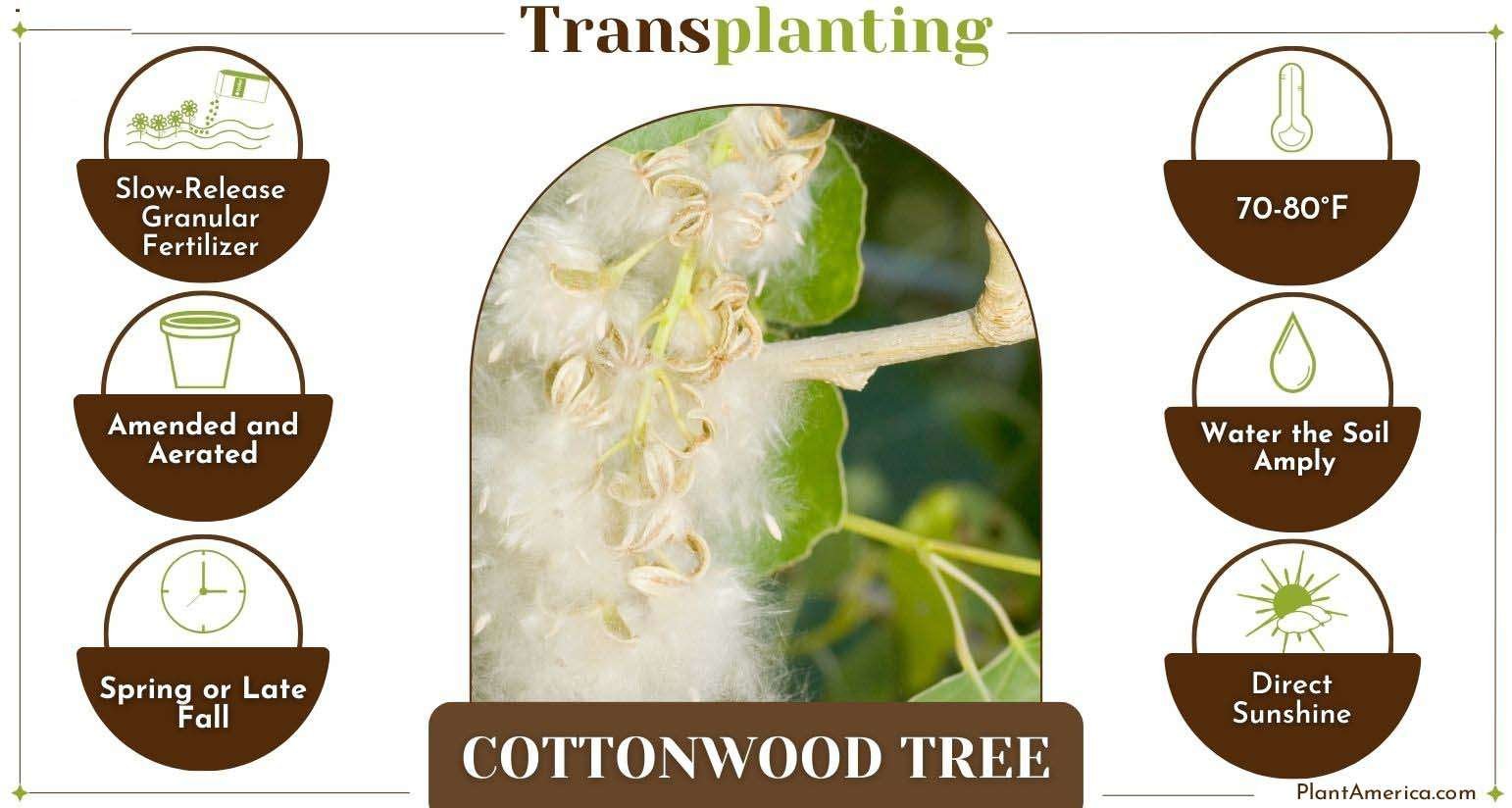
The transplant will only be successful if done at the right time and with proper care. Go through this guide to find a step-by-step approach to transplanting a cottonwood tree in the fall and spring.
What Are Some Factors That Help in Transplanting a Cottonwood Tree?
💥 Factors that help in transplanting a cottonwood tree are adequate to direct light most of the day, watering every week, and well-draining soil. Trees have the best chances of survival and healthy growth when transplanted in early spring or late fall.

– Best Time to Transplant
The best time to transplant a cottonwood-type tree is early spring and late fall, just before winter dormancy. The temperatures range from mild to cold during this time, perfect for the tree’s eventual survival. Transplanting the tree in very hot summers and cold winters puts undue stress on the roots and the stems.
Sometimes, the tree stops growing in its old spot for several reasons. The soil may be too poor and compacted, or a nearby building provides extra shade to the tree. Even when you want to transplant for esthetics, it is best to wait till spring and fall to carry out this plan. You can transplant the tree in the summer or winter if it is dying.
– Watering Requirements
This tree needs ample watering regularly to survive and grow well. A tree adequately watered throughout its life will survive being transplanted well. This plant is famous for being drought-tolerant, but let’s remember that it grows natively in areas with good underwater supplies.
Ensure the tree is watered regularly every week for one month before replanting. Take two gallons of water to soften the cottonwood soil one or two days before digging the roots out. After the transplant, water the soil again with as much as one gallon. Take care that the soil is well draining because waterlogging conditions will weaken its bark and make it prone to fungal rot.
– Fertilizing Requirements
This tree will grow in various soil types, so choosing a good spot should be fine. Despite being highly flexible concerning the soil, it cannot tolerate water logging conditions. Ensure that the soil in the new location or pot is draining well; otherwise, cottonwood’s bark will begin to rot.
The soil pH can vary from acidic to mildly alkaline on the pH scale. It is one of those rare trees that can be transplanted to soils with a pH of 4.5 to 8.0. It tolerates even compacted soils, but you should aerate the soil first or add sand.
Usually, these trees are fertilized with a slow-release granular fertilizer in early spring. Such a fertilizer keeps releasing nutrients in the soil for several months. However, do not fertilize the new hole that you have just dug for the new plant. The roots of trees are very sensitive after a transplant and do not take kindly to being fertilized.
– Temperature Requirements
The temperature needs of cottonwood vary from species to species. Most of these trees grow in climate conditions in most of northern America, Utah, and California. They natively grow in areas that receive bright sun yet abundant rainfall all year round.
These are the perfect conditions that you need to recreate for a successful transplantation. Early spring in March and late fall in September provide the most suitable temperatures. Summer temperatures are too hot to carry out a transplant and prevent the roots from drying out.
– Proper Place to Transplant
When choosing the perfect spot to relocate your cottonwood, there are a number of factors to consider first. The number one thing to look out for is the light conditions in that area. These trees will die unless they receive full sun for most of the day. So, a bright, sunny spot not shaded by anything is a top priority.
Secondly, you need to see if the soil in the new place is suitable for this tree’s survival. If you still need to, you must carry out a proper soil amendment a few weeks before. Although it will survive in most soil conditions, the area should at least be well-draining and well-watered.
The distance between two cottonwoods or cottonwood and other trees also matters. Trees that are planted too close together usually die soon after a transplant. Since these are big trees, they need to be produced at a distance of eight to 18 feet from neighboring trees in a row. The distance between trees in two rows is ideally 20 to 24 feet when it comes to cottonwood.
– Light Requirements
These trees like plenty of sunshine directly throughout the day all year round. Well-established trees can survive with at least three to six hours of direct light exposure, given they receive indirect light for most of the day. Young and newly transplanted trees need about seven hours of natural light exposure daily.
That is why they cannot be planted anywhere that is shaded by more giant trees. They can also be transplanted only a short distance from each other because they also tend to block light from neighboring trees.
How to Transplant a Cottonwood Tree by Yourself
Transplant a cottonwood tree by yourself by digging it out of the ground using either a shovel or a spade. Enfold the roots in a damp burlap sack as you dig a new hole. This new hole has to be twice as wide as the roots but only as deep.
– Wait Till the Timing Is Right
Timing is everything when it comes to carrying out a successful transplantation of any tree. Unless the tree seems to be in dire distress, it is best to defer transplantation till early spring or late fall. Eastern cottonwood and other common varieties are very sensitive in both summers and winters. Transplanting these gorgeous trees during this time of the year is never a good idea.
– Gather the Essential Tools
Gathering the right gardening tools needed for tree transplantation is super important. This will make this job go smoother and save a lot of time and energy. Don’t worry if not all of these are in your toolshed; you can always borrow them from your local nursery!
Pruning shears or loppers are a must-have tool because you must prune down the tree a bit. Ensure that the cutting edges of these tools are sharp enough; otherwise, they will end up crushing the cut ends of stems.
Digging out a tree of this size with a shovel with a comprehensive and flat cutting edge is possible. In this case, a garden hose is essential because the tree will have to be watered abundantly both before and after a transplant.
A large wheel cart will have to be arranged for transporting the tree if its new home is far. Just put the tree on a plastic tarp for smaller trees and distances and have someone help you drag it. Wear gloves that are thick and made of rubber to keep your hands from getting cut accidentally.
– Amend the Soil as Needed
Many of you ask us, “How to transplant a cottonwood tree in Texas?”. No matter where you are transplanting this tree, make sure to conduct soil testing of the new area first. Just take a fistful of soil and send it to a nearby lab for evaluation. If that is not possible, then at least carryout pH testing of the new soil.
The lab results will show you whether the soil needs any additional amendments. In case of pH disturbance, you can always correct them by adding lime or organic matter as needed.
– Dig the Cottonwood Out of the Soil
This is one of the most crucial steps of the process because there is a risk that the roots might get damaged. The tree must be dug in a circle around its main stem. The circumference of this circle is usually based on educated estimates. Usually, a tree trunk two inches thick should have a root ball about 24 inches wide.
Once you have estimated the circumference of the roots, start digging into its edges using a spade. Once this step is complete, push the shovel deep under the roots and try to lift them in one go. Do not remove the soil stuck to the roots; instead, wrap them quickly in a moist burlap sack.
– Create a New Hole
Once the soil has been amended and aerated, it’s time to dig a new hole for the cottonwood. A shovel or a spade is the right tool to dig a pit in the soil for trees. The outline of this new hole should be twice as broad as the total diameter of the roots that have been dug out.

Place the sharp edge of the spade into the ground at an acute angle and push it down with your feet. Then, tilt the soil up with the spade using your hands in lever action. The depth of this hole has to be almost the same as the length of the roots on average. Save the soil that has been dug out to fill the hole once the roots have been put within it.
– Place the Tree and Provide Support
This is another crucial step in carefully lowering the tree to its new spot. This might be a more than one-person job, so make sure you have a couple of people to help get this right. Keep the tree’s main stem as upright as possible; otherwise, it will remain tilted forever.
Spread the roots within the hole carefully and pour soil over them using a shovel. Pour the sand over layer by layer and press each layer with the flat end of the shovel. If the tree has trouble standing upright, use a pole for support.
– Take Good Care of the Cottonwood
Almost all varieties of cottonwood, like Populus deltoids, need special care after transplantation. Tree care includes keeping the soil dry at most two inches from the top. A moisture meter is an electronic instrument that really comes in handy in situations like these. After a couple of months, you can start fertilizing with a liquid feed, but only after diluting it to half its strength.
Conclusion
Here is a brief yet concise recap on how to transplant the cottonwood plant tree as efficiently as possible:
- Wait until early spring or late fall before carrying out this transplantation.
- Water the soil amply before a transplant and also weekly afterward.
- Plant the tree in a location that is brightly lit with direct sunshine.
After going through this article, you are all set to transplant this glorious tree to any place you like.