
Types of cactus in the desert range from small barrel forms to towering giants that have come to symbolize the American Southwest. We’ll cover 13 distinct cactus varieties you’re likely to encounter in Sonoran, Chihuahuan, and Mojave deserts. From prickly pears and massive saguaro to teddy bears and pipe cacti, we’ll explore their key identifying features, growth habits, and how best to appreciate these cold-tolerant plants up close or afar.
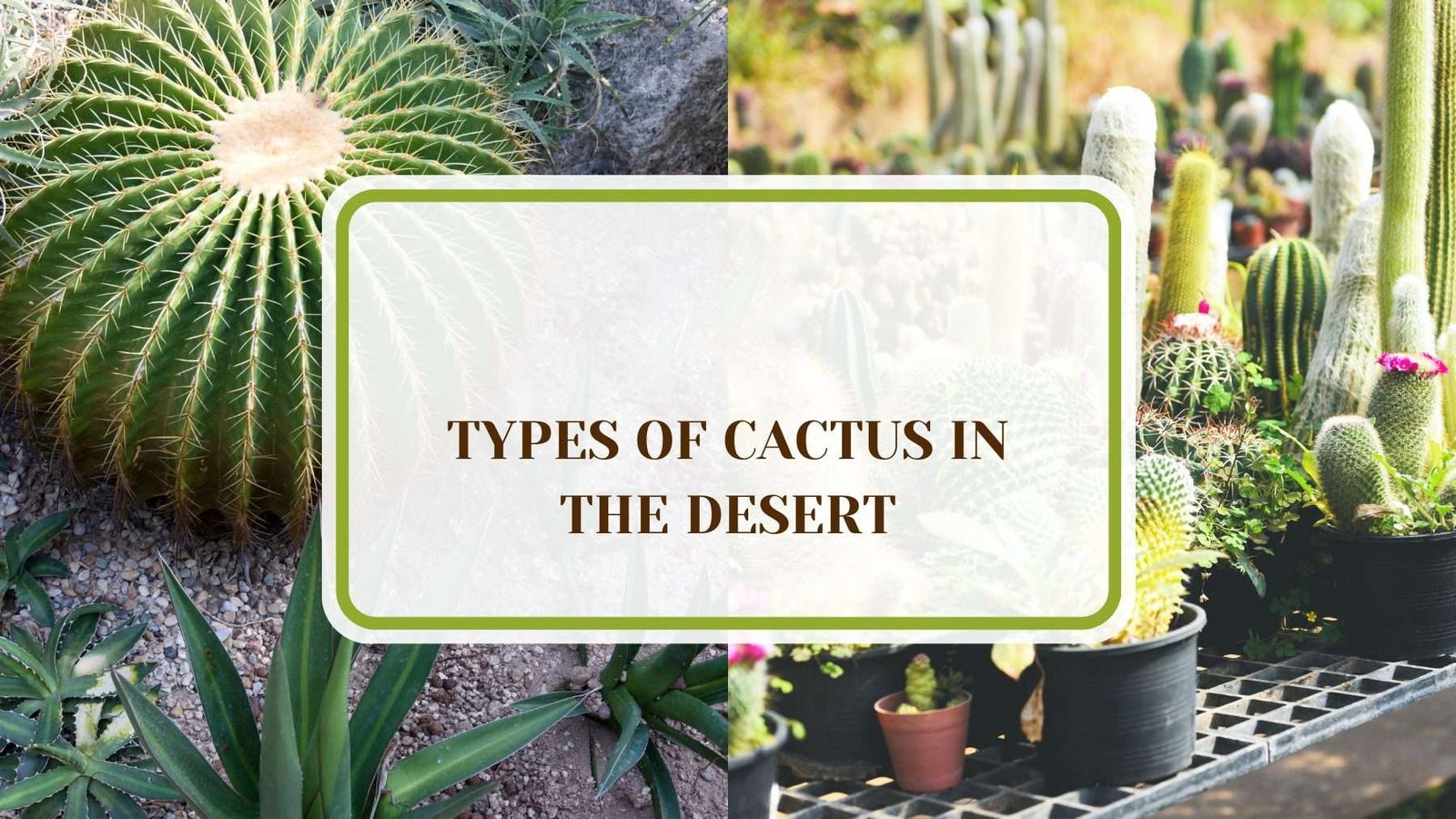
Whether you long to grow cactus indoors or admire the quirky shapes and shallow roots from the comfort of your air-conditioned vehicle, read on to discover the astounding diversity of cacti that thrive in desert splendor!
13 Types of Cactus in The Desert Adapted to Low Humidity
1. Prickly Pear Cactus
- Growing Season: Spring, Fall
- Leaf Shape: Flat pads, Varied size
- Specific Needs: Full sun, Well-draining soil
- Common Pests: None
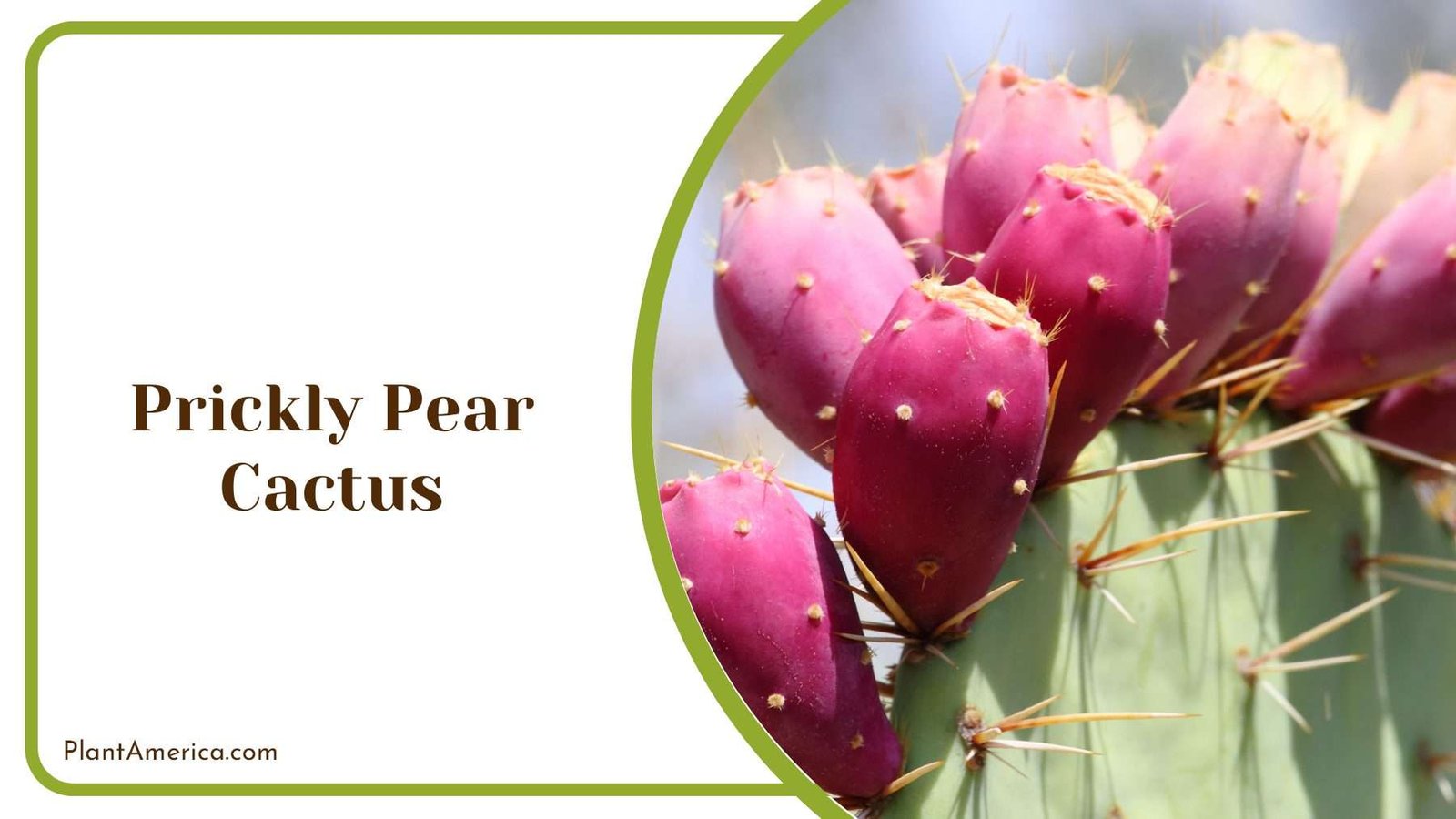
The prickly pear cactus is a member of the Opuntia genus, characterized by flat, succulent pads instead of the more typical cylindrical stems. Prickly pear produces showy flowers and edible fruit known as tunas.
Prickly pear thrives under hot, arid conditions in full sun and well-draining soil. Native species develop slender shallow roots that efficiently absorb infrequent rainfall. Plant segments are spaced one to two feet apart.
Water prickly pear deeply but infrequently during the growing season, from spring to fall, allowing the soil to dry between moisture. Reduce watering in winter while cacti are semi-dormant. New pads form annually along cacti stems. Apply a balanced, slow-release fertilizer or compost in spring after new pads appear.
The prickly pear cactus is one of the most widespread desert cacti found throughout the American Southwest in the wild and is commonly cultivated. The genus Opuntia refers to the city of Opus in ancient Greece, where a similar cactus reportedly grew.
Prickly pear pads come in many sizes and shapes, ranging from baseball-sized ovals to tennis-court treelike forms. Colorful flower clusters and edible fruit give a prickly pear aesthetic and culinary appeal. Introduced rabbits and overgrazing by livestock pose the greatest threats to native prickly pear populations. Use gloves and protective eyewear to avoid damage from sharp spines covering pads and fruit when handling cactus.
2. Barrel Cactus

- Growing Season: Spring, Fall
- Leaf Shape: Tubular stems, Thick spines
- Specific Needs: Full sun, Well-draining soil
- Common Pests: None
Barrel cacti are columnar cacti that form cylindrical, barrel-shaped stems. Many species produce showy flowers at the crown of the cactus. Barrel cacti get their common name from their shape and ability to store large amounts of water.
Barrel cacti thrive under hot, arid conditions in full sun and well-draining soil. Native species develop deep roots that absorb infrequent but heavy rainfall. Space barrel cacti one to two feet apart. Water barrels cactus deeply but infrequently during the growing season from spring to fall, allowing the soil to dry between moisture. Reduce watering in winter while cacti are semi-dormant. Prune off dead stems as needed.
Barrel cacti are renowned for their unique shapes. Some barrel cacti reach heights of 10 to 15 feet tall. Large specimens may live for over 100 years and weigh several tons. The main stem and clusters of spines covering them give barrel cacti a stately, sculptural appearance.
Many barrel cacti produce showy pink, yellow, or red flowers that can stay open for weeks. Their ability to store water in swollen stems makes barrel cacti hardy, low-maintenance choices for desert landscapes. Some species like Ferocactus and Echinocactus produce waxy, edible fruit enjoyed by desert native peoples.
3. Hedgehog Cactus
- Growing Season: Spring, Fall
- Leaf Shape: Short tubercles, Dense spines
- Specific Needs: Full sun, Well-draining soil
- Common Pests: None
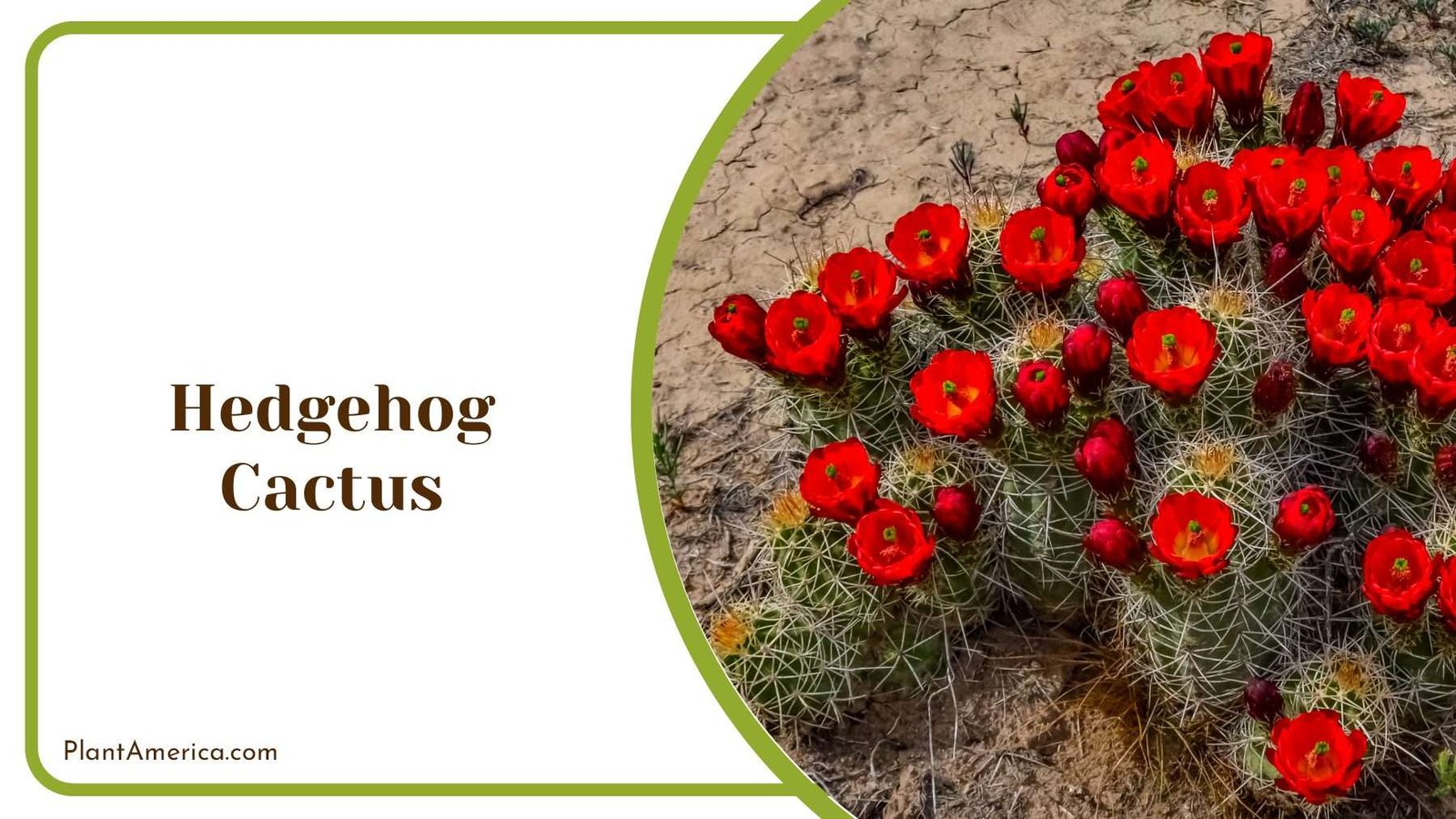
Hedgehog cacti are low-growing, pillow-like, adorned with dense clusters of stiff, upright spines. Tubercles, or specialized stem segments, give hedgehog cacti a lumpy appearance. Hedgehog cacti produce showy, funnel-shaped blooms in pink, red, and yellow shades.
Hedgehog cacti thrive under hot, arid conditions in full sun and well-draining soil. Native species develop shallow roots that efficiently absorb infrequent rainfall. Space hedgehog cacti six to 12 inches apart.
During the growing season from spring to fall, water hedgehog cactus deeply but infrequently, allowing the soil to dry between moisture applications. Reduce watering in winter while cacti are semi-dormant. Prune off dead segments as needed.
The dense cover of spines on hedgehog cacti gives them their common name. The spines arise from tubercles, or specialized stem segments, which allow the cactus to store significant water. Many hedgehog cacti remain relatively small, reaching only four to 12 inches in height.
They produce showy flowers in warm weather and have an almost prehistoric appearance due to their lumpy form shrouded in spines. Hedgehog cacti are low-maintenance choices for xeriscapes, rock gardens, and patio containers, provided they have excellent drainage.
4. Saguaro Cactus
- Growing Season: Spring, Fall
- Leaf Shape: Tubular stems, Branching arms
- Specific Needs: Full sun, Well-draining soil
- Common Pests: None
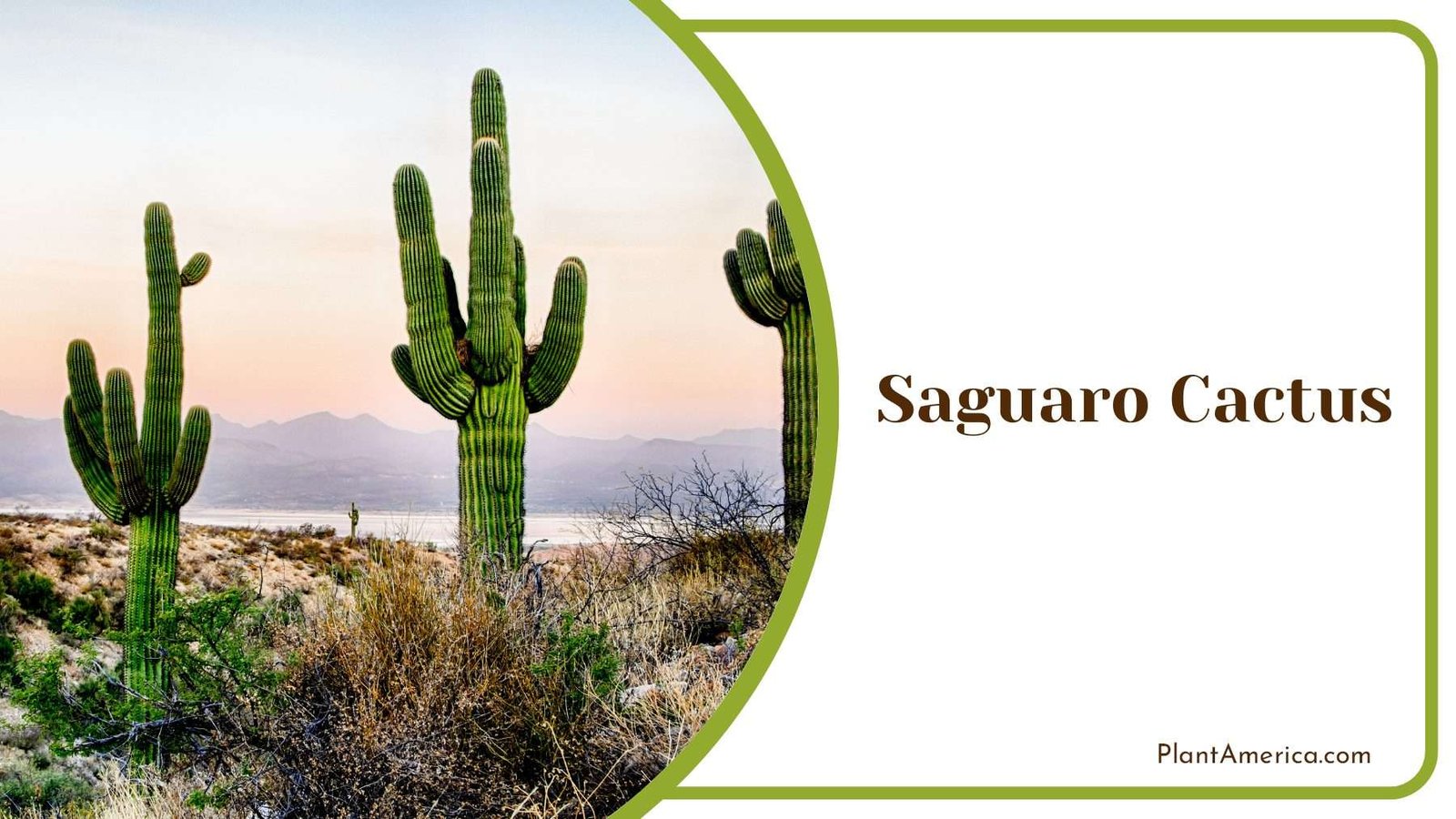
The saguaro cactus is an iconic species unique to the Sonoran Desert of North America. Its distinctive multiple branching arms and height of up to 60 feet have made it a symbol of the American Southwest.
Saguaro cacti thrive under hot, arid conditions in full sun and well-draining soil. Native saguaros develop an extensive shallow root system to absorb infrequent desert rains. Saguaro seeds require a nurse plant like a prickly pear to germinate.
Young saguaros grow very slowly, only putting on one to three inches annually. Once established, space saguaros are at least 10 to 20 feet apart. During the growing season from spring to fall, water saguaro deeply but infrequently, allowing the soil to dry between moisture. Saguaros rely on stored water to survive years without rain.
The saguaro cactus is impressive in both stature and longevity. Saguaros may live 150 to 200 years, with the oldest specimens over two centuries. Their tall, branching stems and dense clusters of spines give saguaros a human-like appearance.
Saguaros famously flower en masse following rare desert rains, carpeting the landscape in white blossoms. During hot summers, saguaros rely on cooling ‘sweating’ through pores in their skin. Evergreen woodpeckers create nest cavities in the hollow interiors of saguaros that other desert species depend on. Threats to native saguaros include fires, the proliferation of non-native plants, and commercial harvest for landscaping.
5. Pincushion Cactus
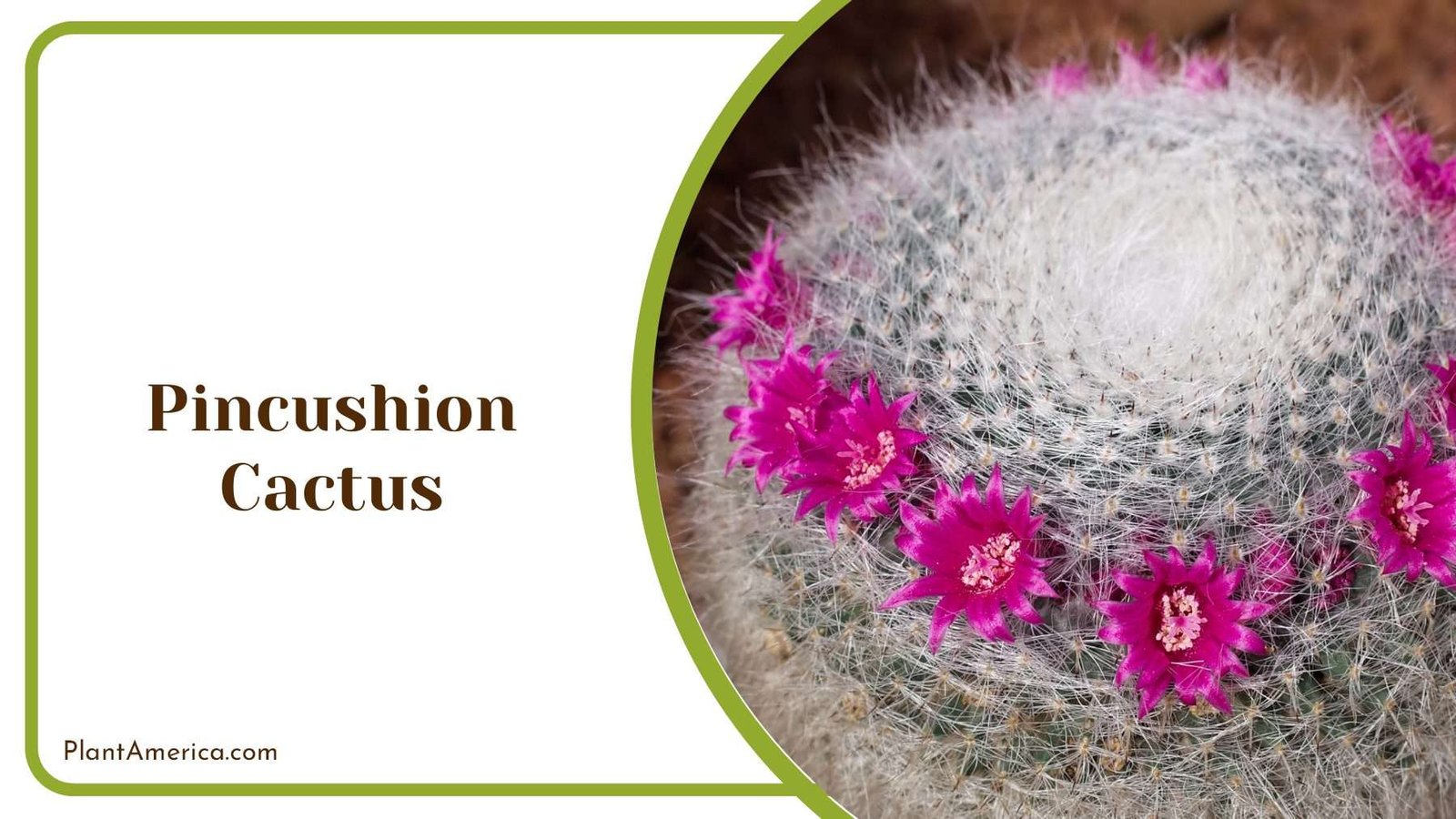
- Growing Season: Spring, Fall
- Leaf Shape: Flattened stem, Bears areoles
- Specific Needs: Well-draining soil, Full sun
- Common Pests: None
Pincushion cacti are small, low-growing cacti with a flat-topped stem covered in dense clusters of spines. Their flattened shape and fuzzy coating of wooly spines have earned them the common name pincushion.
Pincushion cacti thrive under hot, arid conditions in full sun and very well-draining soil. Native pincushion cacti develop shallow delicate roots that absorb infrequent desert rains. Pincushion seeds and seedlings are particularly vulnerable to drying out.
Space mature plants six to 12 inches apart. During the growing season from spring to fall, water pincushions deeply but infrequently, allowing the soil to dry between moisture. Reduce watering in winter while cacti are semi-dormant.
Pincushion cacti grow very slowly over many years to form small clumps. Their flattened stem segments are known as areoles and produce clusters of spiny bristles as well as flowers. Due to their low height and fuzzy coating, pincushion cacti appear soft and stuffed animal-like. Many species of pincushion cactus produce yellow, pink, or red flowers along the stem segments.
The dense spines protect the inner stem tissue and flecks of green photosynthetic skin from desert elements and herbivores. As with other slow-growing cacti, pincushion species have relatively low reproduction rates making populations vulnerable to threats like development, overgrazing, and illegal collecting.
6. Jumping Cholla

- Growing Season: Spring, Fall
- Leaf Shape: Joined stems, Segments detach
- Specific Needs: Well-draining soil, Full sun
- Common Pests: None
The jumping cholla cactus gets its common name from the tendency of its segmented stems to easily break off and jump onto anyone that brushes against it. Jumping cholla spreads along the ground forming clusters of jointed stems and branches.
Jumping cholla thrives under hot, arid conditions in full sun and well-draining soil. Native chollas develop extensive shallow roots that absorb infrequent desert rains. Cholla segments roots easily where they come in contact with the ground.
During the growing season from spring to fall, water cholla deeply but infrequently, allowing the soil to dry between moisture. Reduce watering in winter while cacti are semi-dormant. Clip off dead segments as needed.
The jumping tendency of cholla stems makes them remarkably well-adapted for dispersal. Cholla sections detach at the slightest touch and remain attached to clothing, animal fur, and feet. This allows cholla to spread far and wide in the desert.
Barbed spines covering cholla stems cling tightly, making these hitchhikers notoriously difficult to remove from skin and garments. Mature jumping cholla form clustered clumps of long stems holding dense clusters of wooly, golden spines.
Their stems have a V-shaped joint, creating a hinge point for easy detachment and spreading. Jumping cholla adorns the low desert scrub of southern Arizona and California, where it provides structural habitat and protective cover for small desert animals.
7. Staghorn Cholla
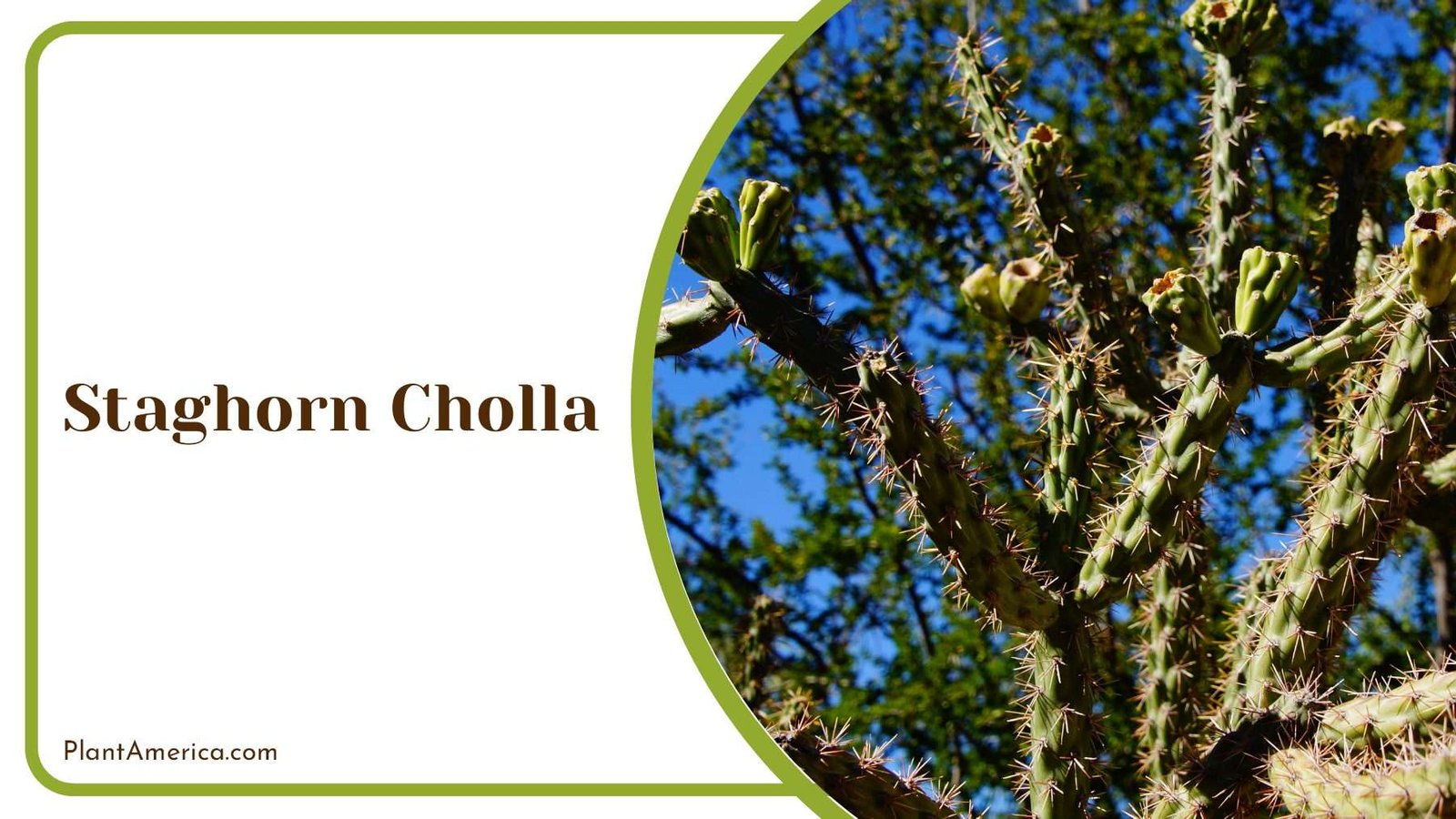
- Growing Season: Spring, Fall
- Leaf Shape: Joined stems, Clusters of spines
- Specific Needs: Well-draining soil, Full sun
- Common Pests: None
The staghorn cholla cactus is characterized by pale, jointed stems densely covered in clusters of stiff, branching spines vaguely resembling an animal’s antlers. Staghorn cholla forms low clumps and spreads via rolling tumbleweed-like segments.
Staghorn cholla thrives under hot, arid conditions in full sun and well-draining soil. Native chollas develop extensive shallow roots that absorb infrequent desert rains. Cholla segments root easily where they come in contact with the ground.
During the growing season from spring to fall, water cholla deeply but infrequently, allowing the soil to dry between moisture. Reduce watering in winter while cacti are semi-dormant. Clip off dead segments as needed.
The curved, branching spines of staghorn cholla give rise to its common name. The numerous upward-pointing spines cover the jointed stems, creating a fuzzy silhouette suggestive of antlers. Staghorn cholla produces strongly barbed spines that cling tenaciously to animal fur and surfaces.
The easily detachable segments allow staghorn cholla to spread rapidly and widely across desert plains. Intact stems may reach three to six feet tall, forming large mounds of spiny branches. In dry conditions, staghorn cholla segments detach and roll across the desert floor like tumbleweeds spreading seeds as they go.
The thorny clumps of staghorn cholla provide valuable cover for desert lizards and small mammals. The spines pose dangers for livestock that step on or brush against these low-growing cacti.
8. Nipple Cactus
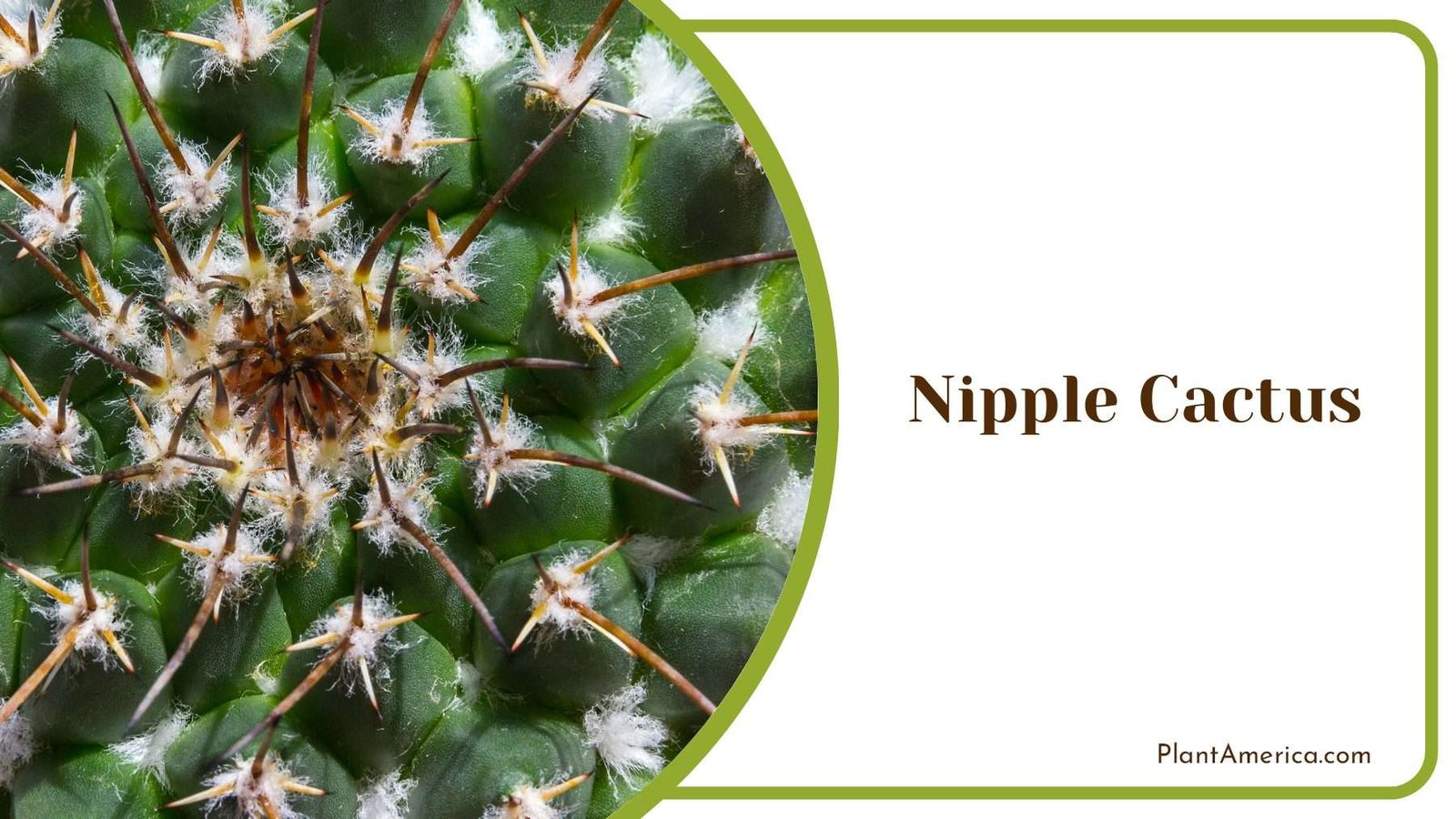
- Growing Season: Spring, Fall
- Leaf Shape: Globular stems, Bears areoles
- Specific Needs: Well-draining soil, Full sun
- Common Pests: None
The nipple cactus is a strange and wonderful tiny cactus characterized by perfectly rounded tubercles covering its stem-like bulges. Nipple cactus bears numerous small spines from areolas at the crown of each globular tubercle.
Nipple cacti thrive under hot, arid conditions in full sun and very well-draining soil. Nipple cacti develop shallow roots that absorb infrequent desert rains. Plant nipple cacti spaced three to six inches apart. Propagate by separating tubercles in spring or summer and allowing them to heal.
During the growing season from spring to fall, water nipple cactus deeply but infrequently, allowing the soil to dry between moisture applications. Reduce watering in winter while cacti are semi-dormant.
The rounded areole-bearing tubercles covering nipple cactus stems give rise to its common name. Each areole produces clusters of short, fine spines. The tubercles swell with water, providing storage for the cactus during times of drought.
Nipple cactus grows very slowly, typically only reaching 6 inches in height after several years. Its small stature and weird, lumpy appearance from afar give nipple cactus a bizarre yet charming quality. Nipple cactus stems range in color from pale green to silvery gray.
In warm weather, the tiny cacti produce pale yellow flowers. Their almost alien-like forms have made nipple cacti favorites for rock gardens and terrarium plantings. Care for nipple cactus requires a similar hands-off approach to cultivation.
9. Fairy Castle Cactus
- Growing Season: Spring, Fall
- Leaf Shape: Globular stems, Bears areoles
- Specific Needs: Well-draining soil, Full sun
- Common Pests: None
The fairy castle cactus, also called castle cactus, is characterized by numerous small globular tubercles clustering to resemble miniature turrets and towers of a castle. Fairy castle cactus form tight clumps of squat stems bearing needle-like spines. Fairy castle cacti thrive under hot, arid conditions in full sun and very well-draining soil. Develop shallow roots that absorb infrequent desert rains.
Propagate in spring or summer by separating tubercles and allowing them to heal. During the growing season from spring to fall, water cactus deeply but infrequently, allowing the soil to dry between moisture. Reduce watering in winter while cacti are semi-dormant.
The common name fairy castle cactus accurately describes the miniature castle-like form of clustered globe tubercles that cover this dwarf cactus. Each tubercle bears clusters of spines arising from areoles. As the tubercles swell when wet, they resemble miniature turrets and crenellations of a fairy castle.
Fairy castle cactus grows slowly over many years, typically only reaching six to 12 inches in height and width. During summer, fairy castle cactus may produce yellow or white flowers that appear at the stems’ tips.
10. Ball Cactus

- Growing Season: Spring, Fall
- Leaf Shape: Globular stems, Bears areoles
- Specific Needs: Well-draining soil, Full sun
- Common Pests: None
Ball cactus is characterized by perfectly rounded tubercles, like green marble balls, clustered together to form spherical cactus heads. Spines arise from areolas at the crown of each tubercle, giving ball cactus a fuzzy appearance.
Ball cacti thrive under hot, arid conditions in full sun and very well-draining soil. They develop shallow roots that absorb infrequent desert rains. Plant ball cacti spaced three to six inches apart. Propagate by separating tubercles in spring or summer and allowing them to heal.
During the growing season from spring to fall, water ball cactus deeply but infrequently, allowing the soil to dry between moisture applications. Reduce watering in winter while cacti are semi-dormant.
11. Stenocereus Thurberi

- Growing Season: Spring, Fall
- Leaf Shape: Joined columnar, Bears areoles
- Specific Needs: Well-draining soil, Full sun
- Common Pests: None
Stenocereus thurberi is a jointed columnar cactus also known as organ pipe cactus. It has a tall cylindrical stem segmented into joints bearing clusters of short brown spines. Organ pipe produces tubular white flowers at stem tips.
Organ pipe cacti thrive under hot, arid conditions in full sun and very well-draining soil. They develop shallow roots that absorb infrequent desert rains. Space organ pipes three to five feet apart. During the growing season from spring to fall, water organ pipes deeply but infrequently, allowing the soil to dry between moisture applications. Reduce watering in winter while cacti are semi-dormant.
The common name organ pipe cactus refers to the tall, segmented stems of Stenocereus thurberi, which resemble the pipes of a church organ. Each segment or joint on the columnar stem bears clusters of short brown spines and many dense wooly hairs.
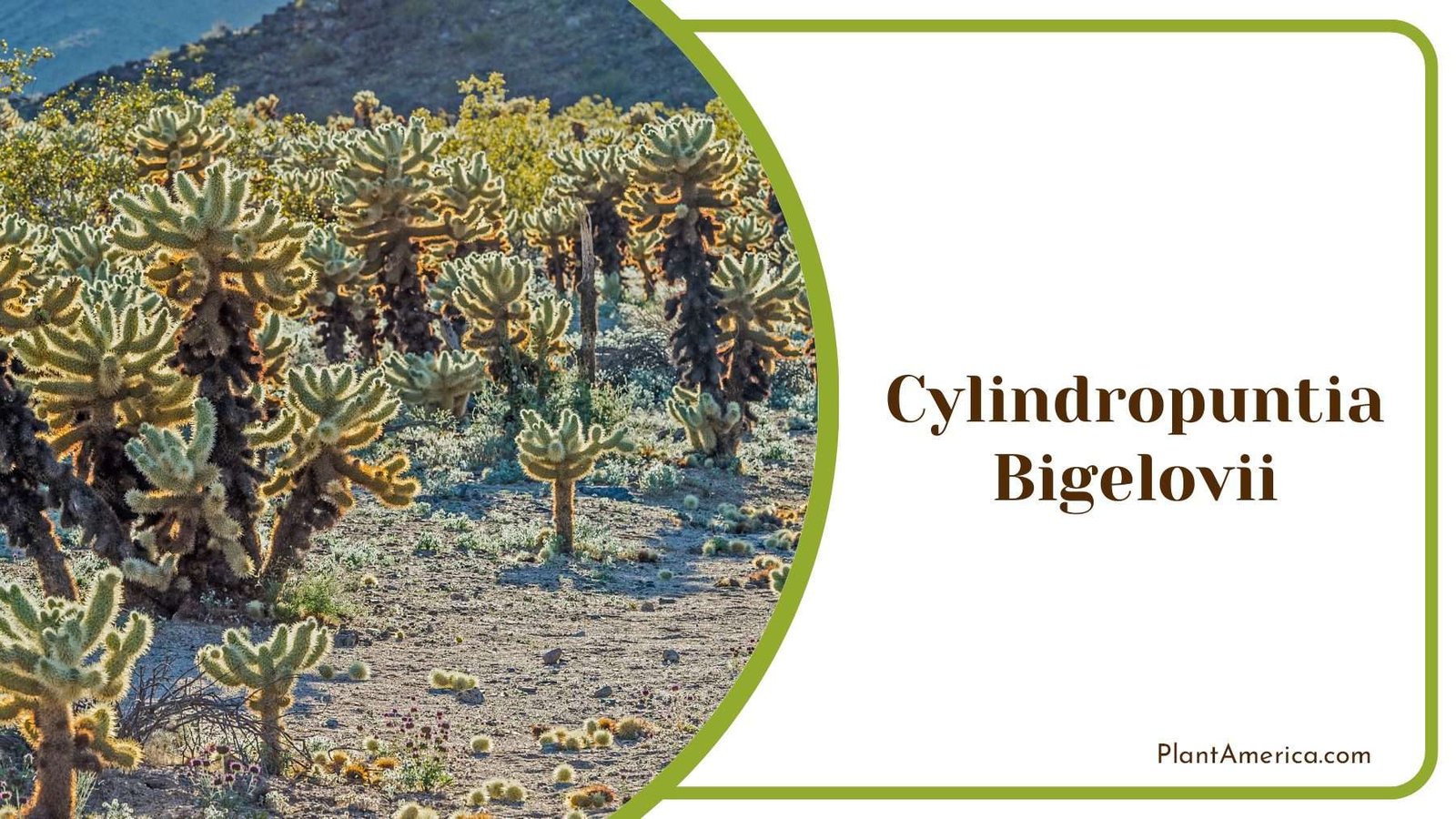
12. Cylindropuntia Bigelovii
- Growing Season: Spring, Fall
- Leaf Shape: Joined pads, Bears areoles
- Specific Needs: Well-draining soil, Full sun
- Common Pests: None
Cylindropuntia bigelovii, also called teddy bear cholla or jumping cholla, is characterized by slender pointed joints or pads covered in dense clusters of short brown spines. Teddy bear cholla easily fragments and spreads by tumbling across the ground.
Teddy bear chollas thrive under hot, arid conditions in full sun and very well-draining soil. They develop shallow roots that absorb infrequent desert rains. Propagate by letting detached pad segments root in the soil. During the growing season from spring to fall, water deeply but infrequently, allowing the soil to dry between moisture applications. Reduce watering in winter while cacti are semi-dormant.
The common name, teddy bear cholla, refers to the plush-like appearance of the cactus due to its dense covering of short brown spines. The thin cylindrical stem segments or pads bear numerous areoles from which the spines arise. Teddy bear cholla is well adapted for dispersal through its tendency to easily break apart at pad joints.
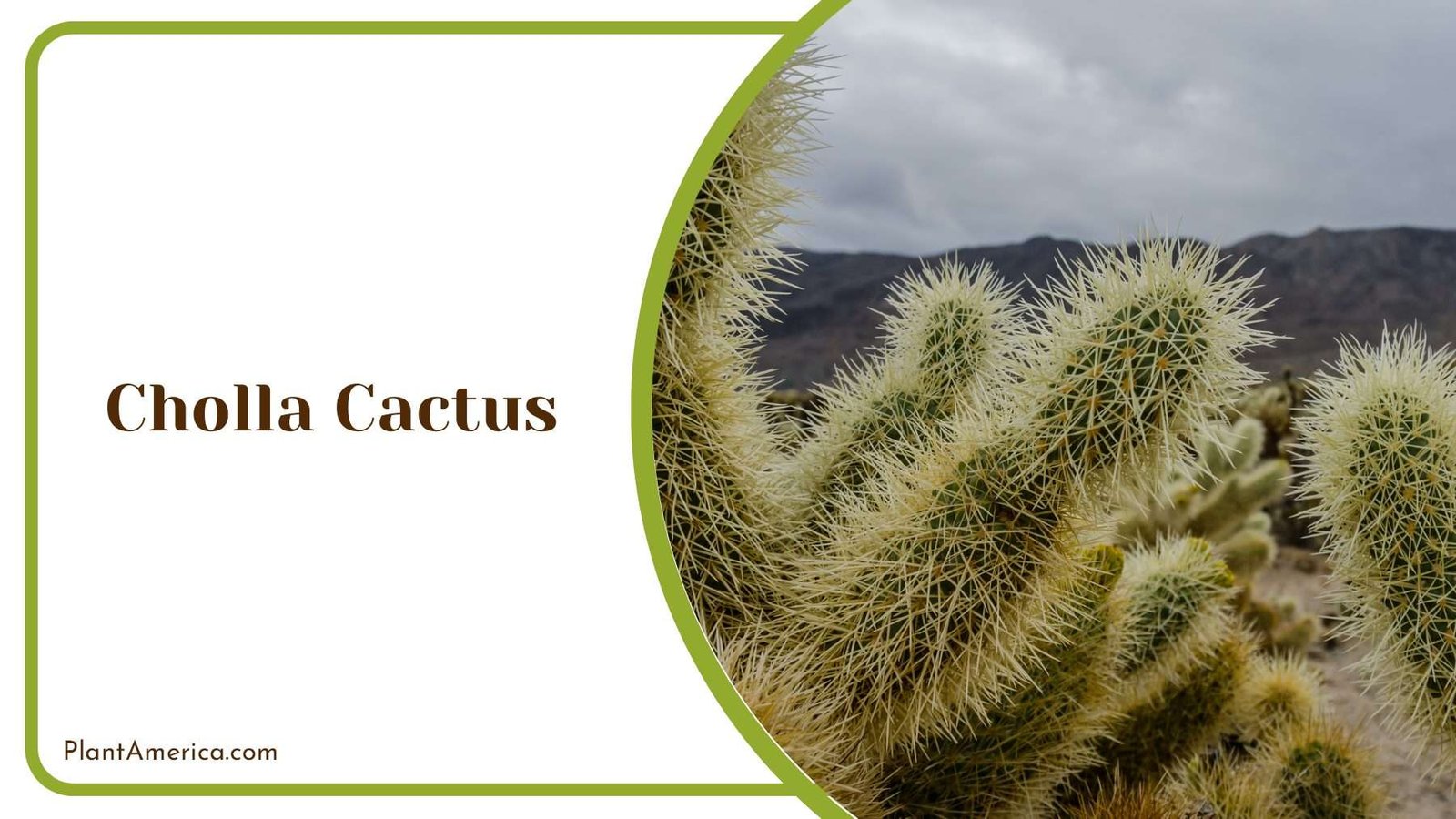
13. Cholla Cactus
- Growing Season: Spring, Fall
- Leaf Shape: Joined pads, Bears areoles
- Specific Needs: Well-draining soil, Full sun
- Common Pests: None
Cholla cacti are medium to large-sized cacti characterized by jointed stem segments or pads covered in dense clusters of short, barbed spines. Cholla pads easily break off and spread through clonal fragmentation.
Cholla cacti thrive under hot, arid conditions in full sun and well-draining soil. They develop extensive shallow roots that absorb infrequent desert rains. Propagate by letting detached pad segments root in the soil. Water deeply but infrequently during the growing season from spring to fall, allowing the soil to dry between moisture applications. Reduce watering in winter while cacti are semi-dormant.
Conclusion
This article explored distinct types of cactus native to American deserts, from the Sonoran to the Chihuahuan.
- The prickly pear cactus has flat, segmented opuntia stems that are densely covered in sharp spines and produce colorful flowers along the edges, bearing edible red or purple fruit known as prickly pears.
- A barrel cactus is a short, cylindrical cactus with thick ribs covered in sharp spines and clusters of flowers that emerge from the crown.
- The saguaro cactus is a giant columnar species that can tower over 50 feet tall with multiple branching arms and ribbed segments bearing white funnel-shaped flowers at night and red fruit eaten by desert wildlife.
- Fairy castle cacti are small, clustered cylindrical cacti that form irregular turreted structures resembling miniature castle spires due to multiple stems branching from a central base, covered in short delicate spines.
- The cholla cactus has jointed cylindrical stalks of short segments covered in groups of very thin, easily detached spines that can lodge in the skin if touched.
Whether enjoyed from a distance driving the desert highways or up close in our gardens, these amazing hardy plants offer inspiration for resilience and persistence in the harshest of environments. With thoughtful care, many of these unique cactus varieties that have adapted over millions of years can be nurtured and enjoyed within our landscapes, reminding us of the wondrous diversity and resourcefulness of the desert flora.