
Types of Arborvitae of the Cupressaceae family for you whether you’re looking to add evergreen structure, privacy screening, or year-round visual interest. Arborvitae, literally “tree of life” in Latin, makes up one of the most popular groups of conifers for ornamental landscaping.

Whether you want dwarf varieties for foundation plantings or towering specimens for hedges and wind blocks, we’ll provide tips on choosing, planting, and maintaining arborvitaes so you can enjoy their classic beauty for years to come. So if you’re ready to discover the type of arborvitae that will take your landscape to the next level, start reading to find your perfect match!
18 Types of Arborvitaes to Consider for Your Landscape Design
1. American Arborvitae
- Growing Season: Summer, Spring
- Leaf Shape: Scale-like, Simple
- Specific Needs: Full sun, Moist soil, Well-drained soil
- Common Pests: Bagworms, Sawfly larvae
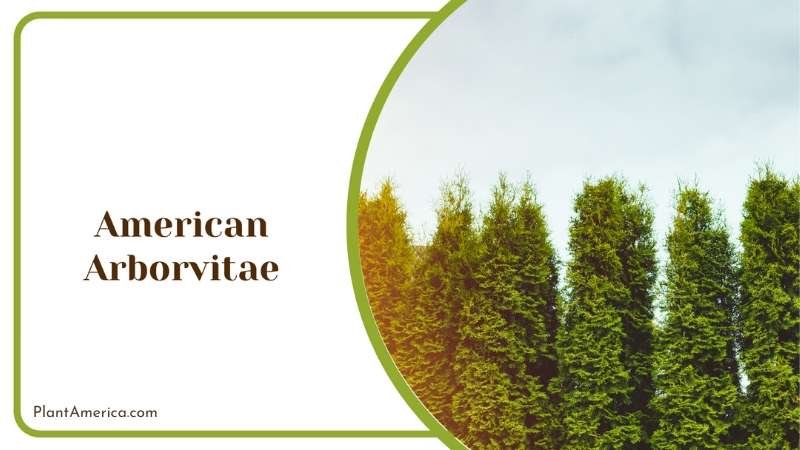
The Native American arborvitae excels as a hedge, screen, or specimen plant. Its pyramidal form and soft gray-green color make it a timeless choice for residential landscapes. The soft foliage and slowly tapering crown create a graceful rounded silhouette that continues to provide winter interest after leaf drop.
American arborvitae succeeds in a wide range of conditions from alkaline clay to damp acidic soils, making it extremely versatile and low maintenance. When situated in full sun, the blue-green foliage deepens in color and the plant becomes more dense and compact.
2. Techny Arborvitae

- Growing Season: Fall, Spring
- Leaf Shape: Scale-like, Simple
- Specific Needs: Full sun, Moist soil, Well-drained soil
- Common Pests: Bagworms, Spider mites
The Techny Arborvitae gets its name from Techny, Illinois where it was first propagated. It is a narrow, upright evergreen conifer with scale-like leaves that are arranged spirally around the twigs.
This tightly pyramidal grower makes an excellent privacy hedge, windbreak, or tall accent plant, reaching heights of 30 to 40 feet with proper care. The Techny Arborvitae has a dense growth habit when young that opens up more with age, allowing light to filter through the canopy.
Its compact form and tolerance of varied soil make it suitable for smaller landscapes and urban gardens. While generally resistant to pests and diseases, the Techny Arborvitae may develop brown tips and yellowing foliage from overwatering, salt buildup, or extreme cold temperatures. Proper spacing, pruning, and fertilizing will promote the health and vigor of this classic evergreen beauty for years.
3. Eastern Red Cedar

- Growing Season: Fall, Spring
- Leaf Shape: Scale-like, Simple
- Specific Needs: Full sun, Moist soil, Well-drained soil
- Common Pests: Bagworms, Spider mites
The lovely eastern red cedar native to eastern North America has become a staple in landscapes and gardens. This pyramidal evergreen conifer covers itself with scale-like green foliage that turns a rich bronze-red in the winter.
The fragrant foliage and reddish bark pair well with junipers, creating an assortment of textures and colors. The compact habit of youth slowly spreads with age, eventually forming an elegant oval silhouette with drooping lower branches clothed in soft gray-green to blue-green foliage. Ideal for privacy hedges, windblocks, and foundation plantings, the hardy eastern red cedar tolerates a wide range of conditions from sandy to clay soil, and moisture levels from dry to wet.
This low-maintenance tree requires minimal pruning and little care beyond an occasional spray of insecticidal soap to ward off pests like bagworms and spider mites. The gorgeous bark, form, and fragrance make the eastern red cedar a perfect choice to enhance any landscape.
4. Emerald Arborvitae

- Growing Season: Fall, Spring
- Leaf Shape: Scale-like, Simple
- Specific Needs: Full sun, Moist soil, Well-drained soil
- Common Pests: Bagworms, Spider mites
The Emerald Arborvitae produces an upright columnar form, growing quickly to 20 to 30 feet with disciplined pruning. Its distinguishing characteristic is the rich bottle green color of its scale-like leaves which persist year round.
The densely packed foliage creates a sturdy barrier that is effective for privacy and sound reduction. When young, the Emerald Arborvitae has a tight cone shape that becomes more open and irregular as it ages.
This hardy conifer thrives in most soil conditions, tolerating dry or somewhat wet sites equally well. The dark coloring also makes it useful as a foundation planting alongside the home’s light-colored walls. However, the Emerald Arborvitae does require adequate drainage as overwatering can cause foliage discoloration and dieback.
Regular fertilization in spring and summer will ensure healthy growth and a dense canopy. Prune as needed in early spring while growth is still dormant to maintain shape and size. The rich year-round color, uniform shape, and screening ability of the Emerald arborvitae make this an ideal choice for many landscape uses.
5. Globe Arborvitae
- Growing Season: Fall, Spring
- Leaf Shape: Scale-like, Simple
- Specific Needs: Full sun, Moist soil, Well-drained soil
- Common Pests: Bagworms, Spider mites
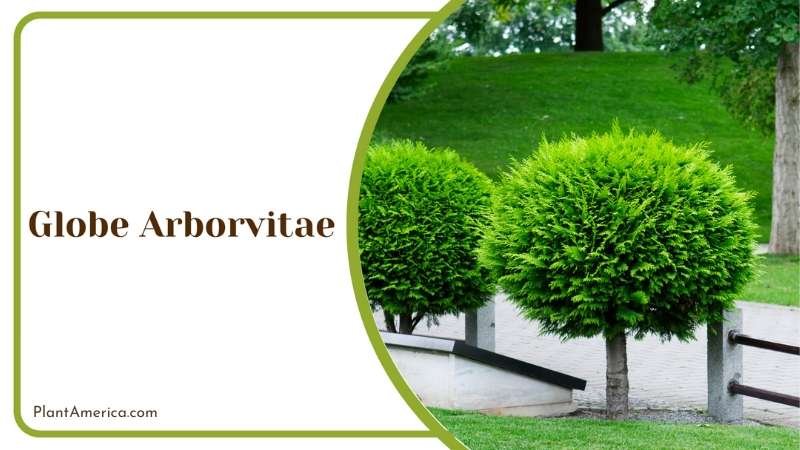
The Globe Arborvitae forms a dense, nearly pyramidal or somewhat rounded crown that makes an attractive accent plant for small spaces. Its medium green scale-like foliage remains attractive year-round with a waxy luster. Thanks to the Globe Arborvitae’s compact size of six to 10 feet tall and wide, it is ideal for foundation plantings, container specimens, and bonsai.
This dwarf conifer thrives in full sun and well-drained soil conditions, though occasional watering may be required during periods of drought. Pruning the Globe arborvitae early in its life will help maintain its dense rounded conical shape.
Minor shearing and shaping are recommended yearly to encourage density and remove any dead or diseased foliage. The slow-growing nature and small stature of the Globe Arborvitae make it a low-maintenance choice that provides a pop of evergreen color and texture anywhere in the garden.
6. Douglas Arborvitae
- Growing Season: Fall, Spring
- Leaf Shape: Scale-like, Simple
- Specific Needs: Full sun, Moist soil, Well-drained soil
- Common Pests: Bagworms, Spider mites
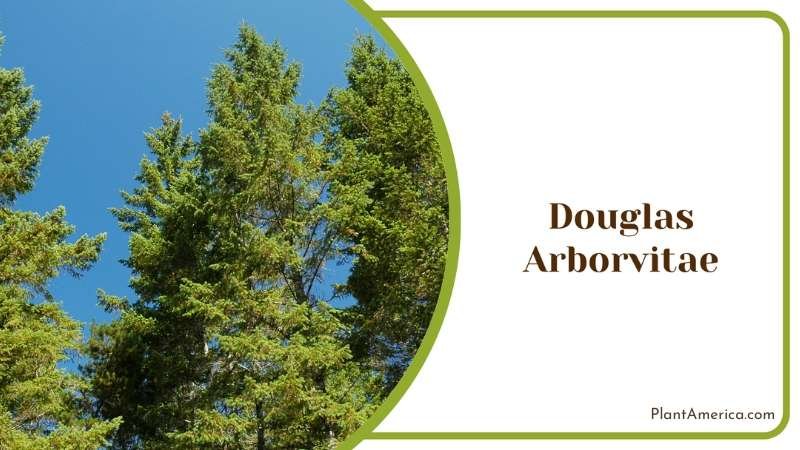
The Douglas arborvitae, also called the coast or Oregon arborvitae, is one of the coldest hardy evergreen conifers, surviving temperatures as low as 40 F. Its scale-like leaves are soft textured and gray-blue, arranged spirally around the branches.
The pyramidal shape of youth opens up with age to a broad cone shape, reaching heights of 60 to 80 feet at maturity with a spread of around 20 feet. This towering columnar tree serves well as a privacy screen, windbreak, or specimen plant for large landscapes and properties.
The Douglas arborvitae prefers full sun but can also thrive in some shade. It grows quickly in rich loamy soil with adequate moisture though drainage must be good due to its shallow roots. This stunning conifer needs little care once established though proper watering and feeding during growth spurts will promote its health and vigor.
Pruning may be required to remove dead wood and maintain a uniform shape while spraying with insecticidal soap will keep pests like spider mites and bagworms at bay. The Douglas arborvitae’s pleasing form and resilience make it a striking addition to large gardens and rural properties.
7. Yellow Ribbon Arborvitae
- Growing Season: Fall, Spring
- Leaf Shape: Scale-like, Simple
- Specific Needs: Full sun, Well-drained soil
- Common Pests: Bagworms, Spider mites
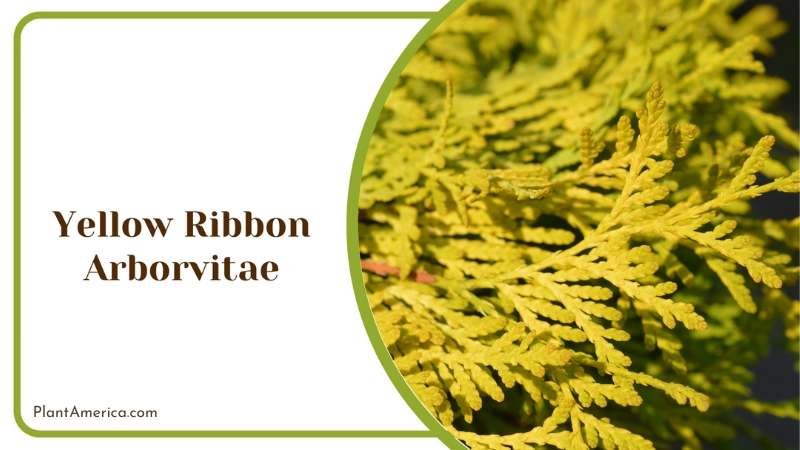
The Yellow Ribbon Arborvitae gets its name from the creamy yellow strips that emerge on new growth each spring, giving the foliage a two-toned appearance. reveal bluish-green mature leaves which remain all winter.
This colorful narrow conifer typically matures to between 15 and 20 feet tall by ten feet wide with a tight pyramidal form. The Yellow Ribbon Arborvitae thrives in full sun and soil that is moist but well-draining, though it displays the best color in full sun exposure. It prefers neutral to slightly acidic pH levels and benefits from a moderate fertilizing program in spring and summer. Pruning is only required to shape the plant when young as it develops its mature form.
This eye-catching narrow tree adds seasonal color and contrasting texture to landscapes and gardens, providing year-round architectural interest with its classic pyramidal silhouette. The Yellow Ribbon Arborvitae is a striking choice for smaller gardens where its compact size and colorful foliage won’t overwhelm other plants.
8. Holmstrup Arborvitae
- Growing Season: Fall, Spring
- Leaf Shape: Scale-like, Simple
- Specific Needs: Full sun, Moist soil, Well-drained soil
- Common Pests: Bagworms, Spider mites
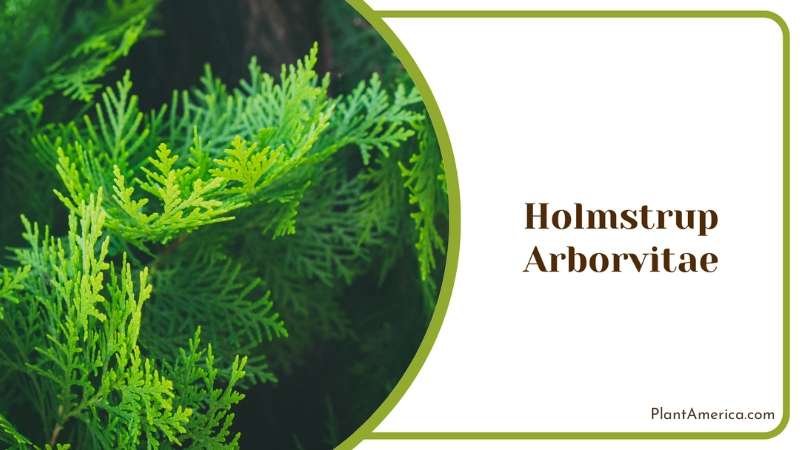
The Holmstrup arborvitae is an exceptionally narrow evergreen conifer, typically growing only three to six feet wide despite reaching heights of 30 to 40 feet tall. Its upsweeping branches and scale-like leaves covered in a waxy coating give this plant its tight upright form. The bluish-green to gray-green color of young foliage gradually becomes a deeper green with age, developing an attractively mottled appearance.
The thin trunks and delicate branches make the Holmstrup arborvitae ideal as an accent plant while its narrow profile is perfect for placement between buildings or along walkways in restricted spaces. This tightly pyramidal conifer succeeds in most well-draining soils and full sun exposure where it grows rapidly once established.
Regular pruning and shearing are necessary to maintain the upright-narrow shape while keeping foliage healthy and vigorous. However, extreme shearing can expose branches making invasive insects like spider mites and bagworms more of an issue.
Moderate pruning combined with spraying of insecticidal soap twice a year will bring out the true form and beauty of this columnar arborvitae for small gardens.
9. Little Gem Arborvitae
- Growing Season: Fall, Spring
- Leaf Shape: Scale-like, Simple
- Specific Needs: Full sun, Moist soil, Well-drained soil
- Common Pests: Bagworms, Spider mites
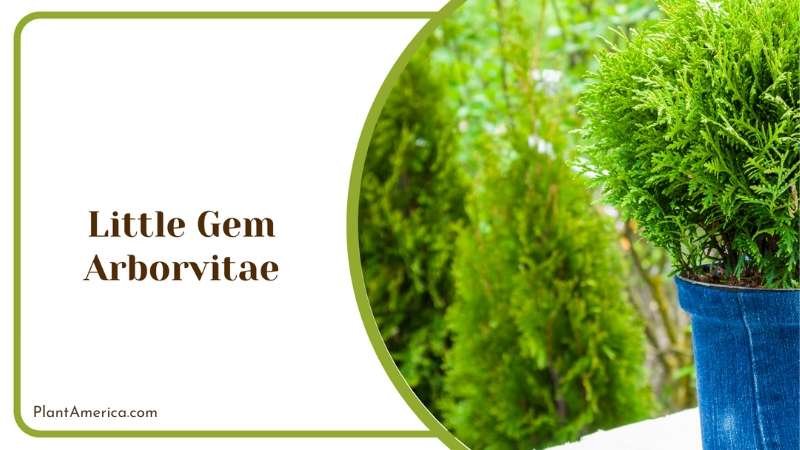
The Little Gem arborvitae is a compact slow-growing columnar dwarf conifer that rarely exceeds five feet in both height and width even at maturity. Its scale-like medium green leaves are inconspicuously arranged spirally around small twigs to create a slightly looser but still pyramidal crown.
The medium green color persists through winter and pairs nicely with other little trees, shrubs, and ground covers suitable for smaller spaces. This dense miniature evergreen tree succeeds in full sun and well-draining soil conditions though occasional irrigation may be needed in extreme drought.
10. Pyramidal Arborvitae

- Growing Season: Fall, Spring
- Leaf Shape: Scale-like, Simple
- Specific Needs: Full sun, Moist soil, Well-drained soil
- Common Pests: Bagworms, Spider mites
The pyramidal arborvitae forms a classic picturesque conical shape reminiscent of Christmas trees due to its upright growth habit and closely spaced branches. Its bluish-green scale-like foliage arranged spirally around the twigs gives this plant its dense and uniform appearance.
When young, the pyramidal arborvitae has a tight pyramid shape that gradually spreads at the base with age while maintaining an overall conical silhouette. At maturity, this columnar evergreen conifer typically reaches heights of 40 to 60 feet high and 15 to 20 feet wide. The pyramidal arborvitae thrives in full sun and well-draining soils, requiring little care beyond infrequent watering during extreme heat or drought.
11. Green Giant Arborvitae

- Growing Season: Fall, Spring
- Leaf Shape: Scale-like, Simple
- Specific Needs: Full sun, Moist soil, Well-drained soil
- Common Pests: Bagworms, Spider mites
The Green Giant arborvitae boasts an exceptionally dense conical crown and sturdy rapid growth habit that allows it to reach heights up to 100 feet with a spread under 20 feet. Its bluish-green scale leaves are tightly arranged around the short side branches, giving the plant its narrow upright appearance.
When young, the Green Giant arborvitae displays a classic pyramidal shape but becomes more irregular and crooked with age. This fast-growing tree thrives in full sun exposure with adequate irrigation during dry periods and well-draining rich soil.
The sturdy and towering nature of the Green Giant arborvitae makes it an ideal choice for privacy hedging, windbreaks, and screens where densely foliated branches provide year-round obstruction.
12. Canadian Hemlock

- Growing Season: Fall, Spring
- Leaf Shape: Linear, Simple
- Specific Needs: Full sun, Moist soil, Well-drained soil
- Common Pests: Bagworms, Spider mites
The Canadian hemlock is a graceful pyramidal evergreen that develops a broad base and full-rounded crown with age, making it a popular choice for privacy screens and specimen planting.
Its fine-textured linear dark green needles arranged radially around the stem have a distinctively pale underside, giving the plant a distinctive two-toned appearance. This drought-tolerant conifer grows at a moderate rate to heights of 40 to 60 feet with a spread of 20 to 30 feet when mature, requiring ample space within the landscape.
13. Densiformis Arborvitae

- Growing Season: Fall, Spring
- Leaf Shape: Scale-like, Simple
- Specific Needs: Full sun, Well-drained soil
- Common Pests: Bagworms, Spider mites
The Densiformis arborvitae develops a tight columnar form, typically growing to 15 to 20 feet in height with just a three to five-foot spread. Its gray-green scale leaves are closely arranged spirally around the twigs to create the plant’s dense compact habit.
When young, the Densiformis arborvitae has a narrow upright pyramidal shape that maintains a tight spindle form throughout maturity. This dwarf columnar conifer grows at a moderate rate making it particularly suitable for smaller landscapes. The Densiformis arborvitae succeeds in full sun and well-draining soil where its foliage darkens to a distinct bluish-green coloration.
14. Hinoki Cypress

- Growing Season: Fall, Spring
- Leaf Shape: Scale-like, Linear leaves
- Specific Needs: Full sun, Moist soil, Well-drained soil
- Common Pests: Bagworms, Spider mites
The Hinoki cypress native to Japan is a graceful pyramidal evergreen valued for its fragrant soft textured foliage. The short linear dark green needles arise from flattened Branchlets which radiate horizontally from gracefully upturned branches, giving the plant an airy open habit when young.
As the Hinoki cypress matures it develops a broad conical crown with weeping lower branches, reaching heights of 40 to 60 feet. This elegant evergreen conifer prefers full sun but can tolerate some shade, thriving in well-draining moisture-retentive soil with ample space for growth. Infrequent irrigation may be required during warmer periods depending on soil conditions.
15. Italian Arborvitae
- Growing Season: Fall, Spring
- Leaf Shape: Scale-like, Simple
- Specific Needs: Full sun, Well-drained soil
- Common Pests: Bagworms, Spider mites
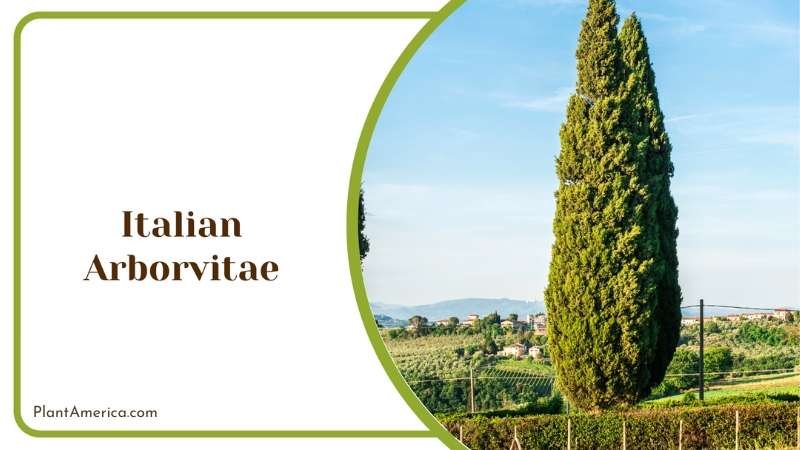
The Italian arborvitae develops an imposing narrowly pyramidal habit, maturing to heights up to 60 feet tall and just 10 to 15 feet wide with a dense dark evergreen canopy. Its medium green scale leaves are tightly arranged spirally around thin branches to create a dense conical shape when young.
With age the plant’s central leader begins to crook and become irregular, giving the Italian arborvitae a picturesque gnarled silhouette. This columnar conifer grows quickly in full sun and soil with good internal drainage but moisture retention. Infrequent deep watering during the growing season will promote a healthy and more dense canopy.
16. Threadleaf Arborvitae

- Growing Season: Fall, Spring
- Leaf Shape: Scale-like, Simple
- Specific Needs: Full sun, Moist soil, Well-drained soil
- Common Pests: Bagworms, Spider mites
The Threadleaf arborvitae forms a variable conical shape with fine gracefully arching branches bearing linear bright green needles. Depending on the cultivar, the Threadleaf arborvitae can range from a pyramidal upright habit to a more rounded spreading form. This multi-stemmed conifer grows at a moderate rate to heights between 15 to 25 feet tall with a spread up to 15 feet wide.
The Threadleaf arborvitae thrives in full sun or dappled shade and moist yet well-draining fertile soil where proper irrigation will encourage healthy growth. This elegant evergreen requires little pruning other than the occasional shaping or removal of damaged branches.
17. Koster Arborvitae

- Growing Season: Fall, Spring
- Leaf Shape: Scale-like, Simple
- Specific Needs: Full sun, Moist soil, Well-drained soil
- Common Pests: Bagworms, Spider mites
The Koster arborvitae develops a narrowly pyramidal habit, maturing to heights around 30 to 50 feet tall with a compact width of six to 10 feet. Its gray-green scale leaves are arranged closely and spirally around the short shoots to create an exceptionally dense and narrow shape.
When young, the Koster arborvitae exhibits a tightly columnar form that maintains a sturdy upright profile throughout maturity. This columnar conifer grows at a moderate rate making it ideal for restricted spaces where its slender outline meets vertical design needs. The Koster arborvitae performs best in full sun though it can adapt to partial shade, thriving on well-draining light to medium-textured soils.
Regular pruning may be required to maintain a tapered columnar form while removing any dead or diseased wood. Fertilizing annually in spring with a balanced granular food will promote leaf density and vigor. Though resistant to most pest and disease issues when situated properly, common problems like spider mites and bagworms can impact its fine foliage if left untreated.
Overall, the upright narrowly columnar habit, uniform dark green year-round foliage, and inherently sturdy growth of the Koster arborvitae make it a stunning choice for smaller areas in need of vertical evergreen structure.
18. Compacta Arborvitae
- Growing Season: Fall, Spring
- Leaf Shape: Scale-like, Simple
- Specific Needs: Full sun, Moist soil, Well-drained soil
- Common Pests: Bagworms, Spider mites
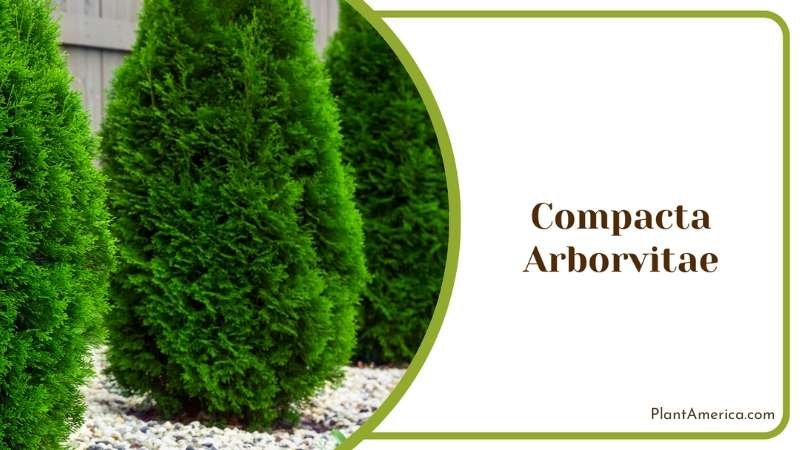
The Compacta arborvitae matures to a stiffly upright pyramidal habit, typically reaching heights between six to 12 feet tall with a three to five-foot spread. Its dark green scale leaves are closely spaced spirally around the short shoots, creating the plant’s dense compact appearance.
When young, the Compacta arborvitae exhibits a tight, narrowly columnar shape that maintains an upright spire form throughout maturity. This dwarf columnar conifer grows slowly making it particularly suitable for smaller landscapes, containers, and rock gardens. The Compacta arborvitae performs best in full sun and on well-draining soil where its fine foliage develops a bluish cast.
Conclusion
Overall, the naturally upright narrowing habit, fine fragrant foliage, and inherently coarse texture of the Compacta arborvitae make it a stunning choice for more diminutive gardens seeking vertical evergreen structure.
- The Canadian hemlock is a graceful pyramidal evergreen that develops a broad base and full-rounded crown with age, making it a popular choice for privacy screens and specimen planting.
- The Yellow Ribbon Arborvitae gets its name from the creamy yellow strips that emerge on new growth each spring, giving the foliage a two-toned appearance.
- The Globe arborvitae forms a dense, nearly pyramidal, or somewhat rounded crown that makes an attractive accent plant for small spaces.
No matter your space or climate, finding the perfect arborvitae to complement your landscape is an achievable goal. By considering key characteristics like growth rate, leaf color, mature size, and preferences for light and water, you can select an arborvitae variety that brings you decades of enjoyment. Equipped with knowledge from this article go ahead and find that special arborvitae to take your garden design to the next level!