
The Philodendron Brandtianum of the Araceae family, also known as a Silver Leaf Philodendron, is an attractive tropical plant with olive green leaves with silvery markings.
They are bushier compared to other Philodendrons, coming with a host of benefits besides their tropical features. Suppose you plan on growing them in your home. In that case, this article will tackle how you can adequately propagate and care for a Philodendron Brandtianum.
What is a Philodendron Brandtianum?
A Philodendron is a prevalent genus comprising of a wide range of plants that can grow indoors and outdoors. One of its popular plant varieties is the Philodendron Brandtianum plant, which can grow in various forms.
Gardeners can see it grow as an epiphyte, hemiepiphyte, and even a terrestrial plant. It comes from the Araceae family and genus Philodendron, with two different common names: Silver Leaf and Brandy Philodendron. The Philodendron family has more than 400 species as indoor houseplants and outdoor container plants, coming in various colors, shapes, and sizes.
This family of plants is one of the easiest to grow and toughest to kill, making it a beginner-friendly plant that many gardeners will love. The Philodendron Brandtianum is a plant native to parts of Colombia, Bolivia, Brazil, Ecuador, and Peru. They thrive in warm and non-freezing climates.
Here are some features to learn about the Philodendron Brandtianum:
– Philodendron Brandtianum Leaves
This plant dons olive green and elongated heart-shaped leaves that have prominent greyish-white to silver striations.
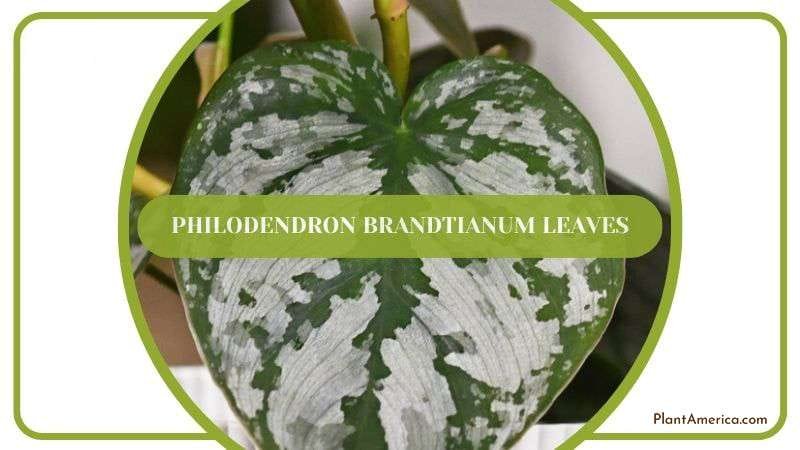
Younger leaves would look colorful with their orange hues, which would morph from dark-green to olive tones.
– Where To Grow a Philodendron Brandtianum
These are fast-growing cascading climbers, so they are perfect for those who don’t have much space indoors. They are also great to grow in hanging baskets, terrariums, or terrestrial pots with a supporting totem for it to climb on.
– Growth Habit
The Philodendron Brandtianum growth rate varies, growing into tropical and perennial climbing vines growing in multiple forms. Compared to other Philodendrons, these are busier, with their leaves growing in compact manners. It would go through stages of morphogenesis as it grows, changing its physical appearance.
The plant’s height and leaf size depend on its environment and growing conditions. For instance, in indoor environments, mature vines can reach up to 5 feet tall. But when outdoors or in the wild, it can grow even taller.
As for its leaves, the length on average is between 4 and 7 inches. However, mature leaves can grow up to 12 inches.
– Toxicity Levels
It’s essential to keep pets and children away from Philodendrons Brandtianum, as all parts of this plant are toxic and may cause allergic reactions when ingested. It can cause burning of the mouth, vomiting, drooling, as well as difficulty in swallowing. They contain a lot of calcium oxalate crystals that can lead to allergies.
With that said, the plant will look great in any room while improving air conditions, and acting as a purifier. You can breathe easily when it is growing indoors, but it should never be ingested. Place it in an area where pets and children can’t reach it so that the household can enjoy its benefits without danger.
How To Care for Philodendron Brandtianum
Another benefit of the Philodendron Brandtianum is how easy it is to grow! These plants are a suitable option for beginner and easy-going gardeners.
Here are the plant’s basic nutrition requirements:
 Light Requirements
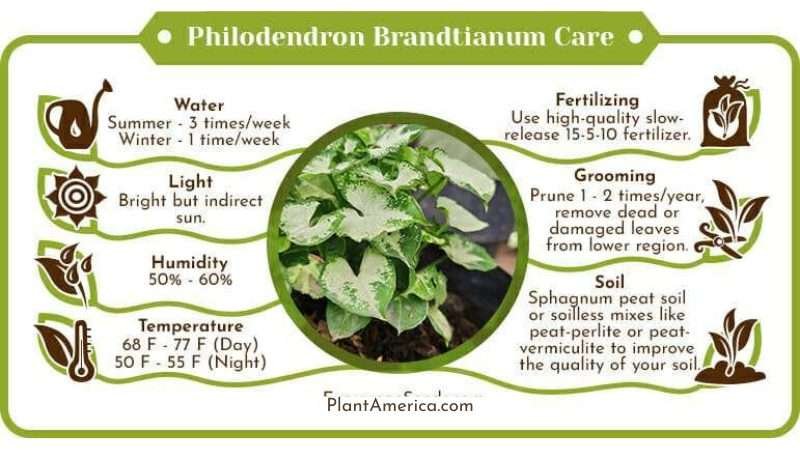
Philodendron Brandtianums require bright but indirect sun exposure. While the plant grows well in most light levels, it will grow best when in medium light or under filtered sunlight.
If you grow it outdoors, place it under a 20-40 percent shade cloth or in areas under partial shade. When under partial shade, protect your plant from long periods of sun exposure, particularly during peak hours, as the intense sunlight may damage its leaves. For indoor growth, place it by a north or east-facing window, which shouldn’t be blocked by buildings, trees, or other external obstacles.
The plant can tolerate low and high lighting levels, provided that it is indirect light. However, for quicker and healthier growth, place it under bright and indirect light. Houseplants under direct sunlight can have the plant burn, so if you put them indoors, the windows should have sheer curtains to diffuse sunlight.
If your plant’s leaves begin to yellow, place them in another location to provide the best light exposure.
 Water Requirements
When in its original and natural mesic habitat, the Philodendron Brandtianum is accustomed to a constant water supply. Meaning, you will need to water it regularly for optimum growth. During the summer season, water your plant thrice a week. Come winter, you can water it just once a week.
You will know if it’s time to water your plant by checking the top 2-3 inches of its soil. If you see it’s dry, then your plant needs water. If you see that the plant has curly or droopy leaves, it isn’t receiving enough water.
When watering your Philodendron, do so deeply, allowing the soil to dry a bit between the waterings. This is why the plant needs to grow in pots with drainage holes so as to not sit in water for too long. Remember that this is an epiphytic plant that has aerial roots, making it sensitive to overwatering. If it sits in water for an extended period, it can increase the risk of diseases, leading to damage or death.
Besides this, do not wet the leaves, as the leaves moisture would help bacteria grow and spread to other areas of the plant. Plus, leaves would drop if left overwatered, more so during the winter season. You will need to find a balance between watering and humidity, though, as this plant likes damp and humid conditions during the summer. With that in mind, cut back on watering your plants from November to March.
 Ideal Soil Type for Philodendron Brandtianum
When it comes to the soil for Philodendron Brandtianum, ensure that your chosen potting mix is fertile with good drainage. Select large containers or pots with drainage holes at their bottom, allowing excess water to leave the container quickly.
This plant does well in loose and moist soil rich in organic matter. We recommend using sphagnum peat soil or soilless mixes like peat-perlite or peat-vermiculite to improve the quality of your soil. Do NOT use dry, mucky, sandy, or wet soils.
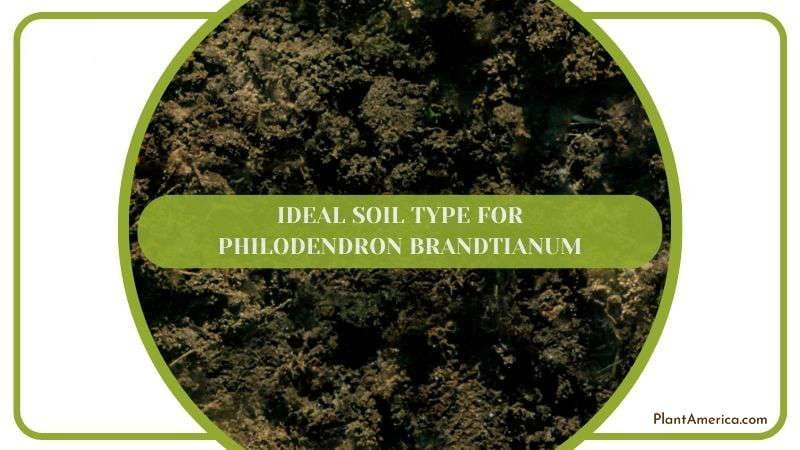
Keep your soil moist throughout the growing season for the Brandtianum to grow well, reach its potential. The soil’s pH levels should range between 6.1-7.3.
While Brandtianums are grown indoors, they thrive outdoors in USDA plant hardiness zones 9b-11.
 Temperature and Humidity
When planting philodendron brandtianum indoors, place it in a room with temperatures between 50 and 95 degrees Fahrenheit. These plants’ ideal temperatures are around 68-77 degrees Fahrenheit during the day and 50-55 degrees Fahrenheit at night. Remember, you should never go below 50 degrees Fahrenheit!
You can move the plant outside during the summer season but place it back inside with ideal temperatures when the colder months arrive or before autumn frosts. Place it in warm areas at home when winter comes. Keep the plant away from vents, radiators, and air conditioners, which mess with its humidity needs. Before you plant or transfer your plant outdoors, allow it to adapt to its environment by gradually bringing it to sunny areas for one or two weeks. This will prevent transplant stress.
Speaking of humidity, Brandtianum plants prefer above-average humidity levels of 50-60 percent. As much as possible, maintain optimum humidity levels using a humidifier so the plant can grow quickly and produce large and healthy foliage.
If the humidity level lowers, then it may cause brown leaf tips. You can mist its leaves or place a pebble tray beside the pot to increase the area’s humidity level, as necessary. When you are misting the plant, keep in mind that it should have excellent aeration to avoid fungus or leaf rot.
 Fertilization
When fertilizing your plant, use high-quality fertilizer, as cheap ones contain heavy salts, leading to damage.
The Philodendron Brandtianum is a slow-growing plant, that wants a slow-release 15-5-10 fertilizer. Use them during the growing seasons, which are spring and summer. Feed a mature plant with fertilizer once a month during these times, then stop fertilization come winter. For young plants, fertilize them sparingly, doing so thrice a year.

To help with its growth, feed the plant using general-purpose and water-soluble houseplant fertilizers. It’s best to dilute the fertilizer to half strength. When doing this, apply fertilizer around 6 inches away from the plant base. They benefit better from a supply of good quality fertilizer.
While it’s possible not to fertilize your plant, they would grow much slower. If ever your plant shows signs of being overfed (such as not thriving despite the proper environment), add dolomitic lime to break down fertilizer in the soil. Let the soil dry between the times you water it. Remember, over-fertilizing will disturb soil pH levels would negatively impact its growth.
– Potting and Repotting Your Philodendron Brandtianum
If you’re planning to plant or repot a Philodendron plant, then there is one vital thing to keep in mind as you do so: Leave its roots loose! By leaving the roots loose, your plant can grow taller and stay healthy.
Repot the plant every 2-3 years unless you notice anything unusual. For example, if you see that the plant is crowded in the pot, repot it to a larger and appropriately-sized container. A rootbound plant would slow down its growth, so if this happens, check its root system and repot to a much larger container as needed. The looser the roots, the taller and healthier it is.
Depending on your growing preferences, you may pot your plant in terrestrial pots, containers, terrariums, or hanging baskets, as long as they have drainage holes underneath.
 Pruning
When pruning, this plant has the compact-growth habit, developing leaves near each other as it trails and climbs. You may prune the plant one or two times a year, removing the dead and damaged leaves from the lower region. This will help maintain its beauty and promote its growth.
– Build a Climbing Support
While they are famous for hanging plants, Philodendron Brandtianums are also trained as climbing plants. When you want to train it as a climbing plant, you have to build a different trellis compared to other houseplants.
You’ll need to give your plants damp and rough support rather than latticework or stakes. Gardeners also recommend using sphagnum moss poles because of this, either creating your own or purchasing it from gardening stores.
If you plan to create your own, you can do so by rolling up hardware cloth, and forming a cylinder. I recommend you use copper mesh for its rust-proof feature, and for its size, choose one based on how tall you’d like your plant to grow. Tie the cylinder’s sides with copper wire, then stuff it with damp sphagnum moss tightly. You won’t have to fill parts going below soil level.
When constructing a moss-covered pole, get PVC pipe and tape fishing line or copper wire to the end, wrapping pieces of sphagnum moss. Secure the moss tightly with winding wire.
Once you have created or constructed the pole, insert it in the pot’s center, plant your philodendron around your pole, and tie vines with gardening tape or twine. Mist the sphagnum moss regularly to maintain its damp state.
How To Propagate Philodendron Brandtianum
The Philodendron Brandtianum is well known for its ease of propagation.
The two most common methods used are through:
1. Herbaceous Stem Cuttings
Follow these steps:
- Fill a jar with tap water, leaving 1 inch of space from the container’s rim. Leave it overnight for the water to settle and the chlorine to evaporate.
- Get a 6-inch long stem from any healthy philodendron, then cut it below the nodes using gardening clippers, scissors, or a sharp knife. Also, cut two or three sets of leaves, leaving two leaf nodes on its stem bare.
- Place leafless end nodes of your stem cutting underwater, with the upper leaves above the container and bare leaf nodes underwater as well.
- Promote quicker growth roots by placing the stem cutting in a bright location without much sun. Replace the water every three days, but let it sit overnight before replacing it.
- Expect the step to form roots within 10 days to three weeks, plant the stem cutting in potting soil, or grow in water.
2. Air-Layering
This is another easy method that requires you to cut the stem and wrap a medium around the stem, cutting rather than waiting for the roots to begin growing.
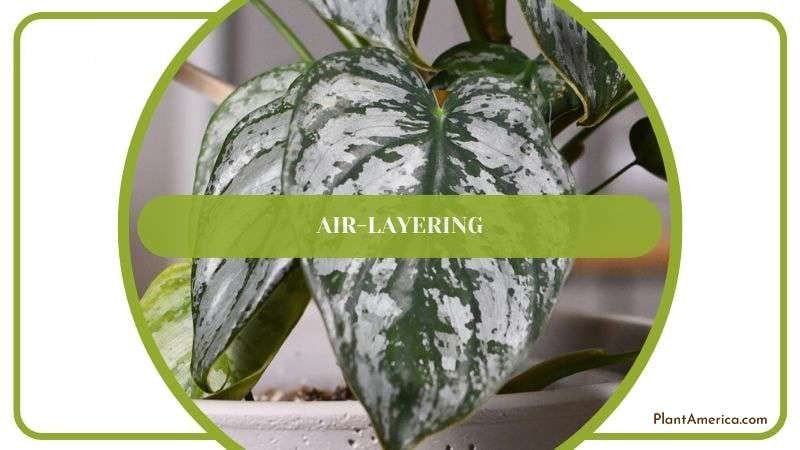
For this method, select a healthy stem, cutting upward toward its node, around 1 inch below it. Afterward, wrap a handful of damp sphagnum peat moss around your stem cutting, securing it with first-aid tape or plastic wrap.
The roots will begin appearing within three or four weeks, and by that time, you can plant them in high-quality soil.
Common Problems
You may come across a few problems when growing Philodendron Brandtianum, such as:
1. Tip Curl
If your plant’s leaves curl downwards and then turn brown, this is a tip curl caused by over-fertilization. Leach the soil by watering your plant thoroughly and reduce the frequency of fertilizing the plant, repotting it if you use excessive amounts of slow-release fertilizer.
2. Leaf Spot
This happens if your plant’s leaves have irregularly shaped reddish-brown spots with yellow centers. Remove these damaged leaves and do not water your plants overhead, draining excess water collecting in your tray or saucer. Plants that sit in water are more prone to leaf spots and root rot.
3. Spider Mites
The Philodendron Brandtianum is more prone to spider mites, which are located on leaf borders and axils.
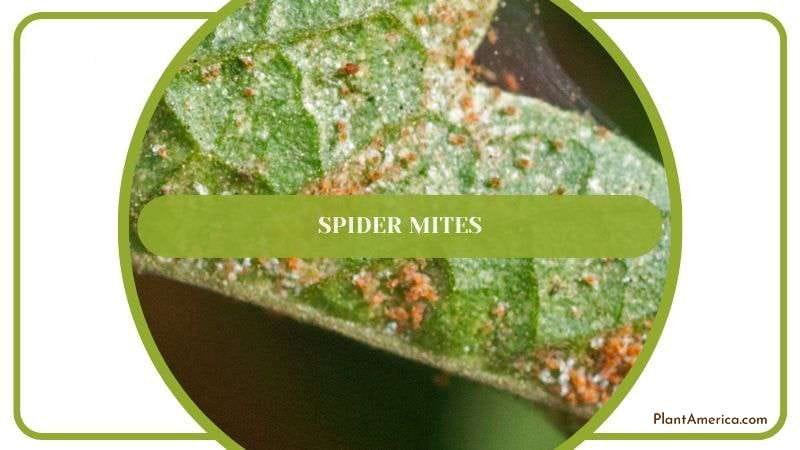
You can find them when watering or disturbing the plant. If you see spider mites, wipe the leaves using a soft cloth and soapy water mixture.
4. Mealybugs
Mealybugs are a common problem with many plant varieties, thriving in warm areas and hindering plant growth. They also cause leaf drop!

Mealybugs are tiny and soft-bodied insects that suck sap from plant phloems. If detected, kill them off using 70 percent rubbing alcohol solution mixed with water, and dab it directly on the pests using a cotton swab.
5. Fungal Infection
If you notice dark dead areas on your plant, it indicates fungal infection. To remove dead growth, apply wettable sulfur and spray your foliage using neem oil, which can hopefully kill off the infection and let your plant grow normally again.
6. Other Issues
If you just got your new plant, it may bring in diseases or viruses. Before placing your plant in a permanent spot, disinfect it with a safe and homemade cleaning solution made with water, mild dish soap, and a few essential oil drops. Place the mixture in a spray bottle and apply it to the stem and leaf surfaces; be careful not to saturate the soil.
An alternative method is to use a sponge with the cleaning solution, gently wiping the leaf surfaces. This can be done with regular plant care so you can prevent pests and diseases.
7. What if Your Philodendron Brandtianum Is Infected?
If your plant is infected, isolate it from other plants, then cut off all brown or yellow leaves using a pair of clean, disinfected scissors, disinfecting them between cuttings.
For plants with a lot of yellowing or falling leaves, or dead stems, it’s possible to save it using a dry plant resuscitation procedure.
Place the plant in a water-filled sink or basin, leaving it for a couple of hours for the soil to fully absorb water. If ever the water floods from drainage holes, this indicates that the soil is too dry. If so, then you’ll need to follow a drastic pot-submerging method.
After submerging it in water, cut off yellow leaves from your plant and then use liquid fertilizer, encouraging foliage growth. The potting soil should be slightly moist, not wet. Monitor your plant closely for the next few days to see what other care it requires.
8. Philodendron Brandtianum Leaves Turning Brown
There are three main reasons why your leaves are browning, which comes from:
- Underwatering: These plants require stable supplies of water to stay healthy. The soil should stay only a little damp, watering it thoroughly until you see water draining out of drainage holes. If you water your plants too little or less frequently, it may cause browning leaves.
- Overwatering: Too much watering can also cause brown leaves. These plants don’t like sitting in overly wet and soggy soil. Prevent overwatering by making sure your pots have many drainages for water to flow easily out of while you water them.
- Overexposure or underexposure to direct light: When placing your plant outdoors or by windows where it’s exposed to direct light, it causes your leaves to turn yellow or become sunburned. That said, philodendrons would struggle to have TOO little light, yellowing during the winter season or in dark rooms.
Identify the cause of the problem and adjust its watering schedule and/or light exposure accordingly, based on the care tips I mentioned above.