
Oak trees in Florida come in a stunning variety of shapes, sizes, and hues and we’ve rounded up the most beautiful native Fagaceae family oak tree species growing in the Sunshine State’s unique landscape.

In this article, we’ll introduce you to the wonderful world of oaks in Florida by highlighting some of the most common and captivating species. So join us on a journey exploring the natural splendor of these unique and lovely plant inhabitants that help define the Florida landscape.
15 Oak Trees in Florida Perfect For Thriving Landscapes
1. Live Oak

- Growing Season: Year-round
- Leaf Shape: Oblong, Elliptical
- Specific Needs: Dry, Well-drained soil, Full sun exposure
- Common Pests: Oak leaf roller, Oak leaf miner
Live oaks grow slowly throughout Florida’s warm winters. Their oblong evergreen leaves and distinctive twisting branches make live oaks (Quercus virginiana) attractive specimen trees for medium to large landscapes.
Oaks can live for hundreds of years, developing massive trunks and wide, spreading branches. The leaves are thick, leathery, and dark green, providing a year-round canopy. The twisting branches form an open, irregular structure that creates dappled shade patterns on the ground.
Live oaks thrive in full sun and tolerate poor, dry soils, heat, humidity, and salt spray. Their deep, extensive root systems search for moisture and nutrients to supply the large canopy. Live oaks are relatively pest resistant due to chemicals in their leaves and acorns.
Prune live oaks only as needed to remove damaged or rubbed limbs while the tree is young. Mature trees require little pruning aside from clearing space around branches for pedestrians. Live oaks grow slowly and naturally form their open canopy structure with minimal human intervention.
2. Water Oak

- Growing Season: Spring, Fall
- Leaf Shape: Oblong, Lance-shaped
- Specific Needs: Moist, Acidic soil, Full to partial sun
- Common Pests: Oak leaf roller, Leaf miners
The water oak (Quercus nigra) is a common Florida oak tree thanks to its tolerance for wet soils. Its dark green leaves turn bronze in fall before dropping, providing brief but brilliant seasonal color.
Water oaks produce clusters of male and female flowers that appear in spring along with the new foliage. The male catkins are slender and yellow, while the females are inconspicuous. By summer, the female flowers develop into one to one and a half inches long acorns with a shallow cap.
Water oaks can reach heights over 100 feet with trunk diameters up to four feet. They form a rounded crown of ascending branches, creating a broad, spreading canopy. The bark is gray and shallowly furrowed on young trees, developing into thick, deeply fissured plates with age.
The extensive root system of water oaks helps them thrive in wet soils along streams, pond edges, and flooded areas. Their tolerance for poor drainage and inundation makes them ideal choices for landscapes in low-lying areas.
Though pest-resistant, water oaks can develop oak leafrollers, caterpillars, and scale insects under stress. Regular pruning when young helps develop a strong structure, while pruning of mature specimens removes diseased or damaged wood. Fertilizing annually promotes vigorous but balanced growth.
3. Swamp Chestnut Oak

- Growing Season: Spring, Fall
- Leaf Shape: Oblong, Deep lobes
- Specific Needs: Moist, Acidic soil, Full to partial sun
- Common Pests: Oak leaf roller, Fall webworm
The swamp chestnut oak (Quercus michauxii), also known as basket oak, has broad, rounded leaves that turn shades of red and maroon in fall. It grows best in consistently moist, acidic soil and even flooded areas where its extensive root system has constant access to water.
This oak develops a massive rounded crown of mature spreading branches, making it well-suited for parks, large estates, and commercial landscapes. The leathery leaves are elliptic with spiny-toothed margins ranging from three to eight inches long. They emerge bronze in spring before darkening to glossy green.
Swamp chestnut oaks grow slowly, reaching around 80 feet with trunk diameters up to five feet. The thick, deeply furrowed bark provides insulation against fire damage which is common in wetland habitats. The acorns are one to two inches long with a fuzzy cap enclosing one-third of the nut.
These oaks thrive in constantly moist acidic soils along streams, bayous, swamps, and floodplains where flooding is seasonal. Their tolerance for wet conditions and brief inundation makes them ideal landscape choices for low-lying areas.
Though generally pest-resistant, swamp chestnut oaks can develop issues like oak leafrollers, scale insects, and caterpillars when under stress. Regular pruning when young helps establish structure, while selective thinning of mature trees optimizes health. Fertilizing annually supports vigorous growth.
4. Myrtle Oak

- Growing Season: Year-round
- Leaf Shape: Oblong, Lance-shaped
- Specific Needs: Moist, Acidic soil, Full sun
- Common Pests: Oak leaf roller, Spider mites
The myrtle oak (Quercus myrtifolia), also known as the scrub oak or turkey oak, is an evergreen oak native to Florida and the Gulf Coast. It is identified by its narrow, leathery, lance-shaped leaves that are dark green on the surface and lighter underneath.
The myrtle oak develops a rounded canopy of dense foliage that adds textural interest and shade year-round. The leaves are usually about two to five inches long with spiny or bristly margin tips along the edges. The acorns are oblong, three-quarters to one and a half inches long, and enclosed in shallow caps.
Myrtle oaks grow slowly, typically reaching heights around 30 to 40 feet, with multiple trunks and wide-spreading branches that form a dense rounded crown. The gnarled bark is gray and shallowly fissured, developing deep ridges with age.
These oaks thrive in sandy, well-drained soils and full sun, where their extensive root systems can mine for nutrients and moisture. Their Evergreen foliage provides shade and cover for wildlife throughout winter.
Though generally pest-resistant, myrtle oaks can develop minor issues like leaf miners that burrow into foliage, scale insects that suck sap, and caterpillars when under stress. Regular pruning helps develop a strong structure while thinning selectively optimizes health once established. Fertilizing annually in spring promotes balanced growth.
5. Shumard Oak

- Growing Season: Spring, Fall
- Leaf Shape: Oblong, Deep lobes
- Specific Needs: Moist, Well-drained soil, Full sun
- Common Pests: Oak leaf roller, Caterpillars, Oak lace bugs
The southern red oak, the Shumard oak (Quercus shumardii), is a large, vase-shaped oak tree with leaves that turn brilliant scarlet red in fall. It grows best in moist, properly drained soil and full sun, using warmth and light to fuel growth.
The Shumard oak prefers slightly alkaline soil conditions and tolerates clay and sandy soils once established. The leaves are oblong with bristle tips, ranging from four to 12 inches long. They emerge bronze in spring before darkening to glossy green.
This majestic Florida native oak makes an ideal specimen or shade tree for large landscapes. It develops a broad, rounded crown of ascending branches on a straight trunk that quickly reaches heights of around 80 to 100 feet at maturity. The orange-brown bark becomes deeply furrowed with age.
Shumard oaks produce acorns yearly that are one to one and a half inches long, shed in autumn and winter. They are pest-resistant except for occasional leafrollers, scale insects, and caterpillar infestations.
Prune Shumard oaks only as needed when young to develop structure and remove rubbing limbs. Once established, pruning after leaf drop maintains shape and optimizes health. Fertilize annually in spring with a balanced fertilizer to promote healthy growth.
6. Sand Live Oak

- Growing Season: Year-round
- Leaf Shape: Linear to oblong, Elliptical
- Specific Needs: Dry, Sandy soil, Full sun
- Common Pests: Oak leaf roller, Scale insects
The sand live oak (Quercus geminata) is a small, evergreen oak tree adapted to Florida’s coastal dunes and sandy uplands. It is identified by its linear to oblong leaves that are dark green on the surface and lighter underneath. The sand live oak develops gnarled, twisted branches that give it an aged appearance. This tree develops an umbrella-shaped canopy that offers year-round foliage and visual interest in dry landscapes.
Sand live oaks typically grow 20 to 40 feet tall and almost as wide, forming a broad, rounded crown on short, crooked trunks. The leaves are usually about two and five inches long with bristle tips along the margins. The acorns are oblong, three-quarters to one inch long, and enclosed in shallow caps.
These oaks thrive in constantly dry, nutrient-poor sandy soils and withstand high winds due to their shallow, spreading roots and low profile. Their evergreen foliage provides cover and nesting sites for wildlife year-round.
7. Willow Oak
- Growing Season: Spring, Fall
- Leaf Shape: Narrow, Willow-like
- Specific Needs: Moist, Well-drained soil, Full sun
- Common Pests: Oak leaf roller, Caterpillars
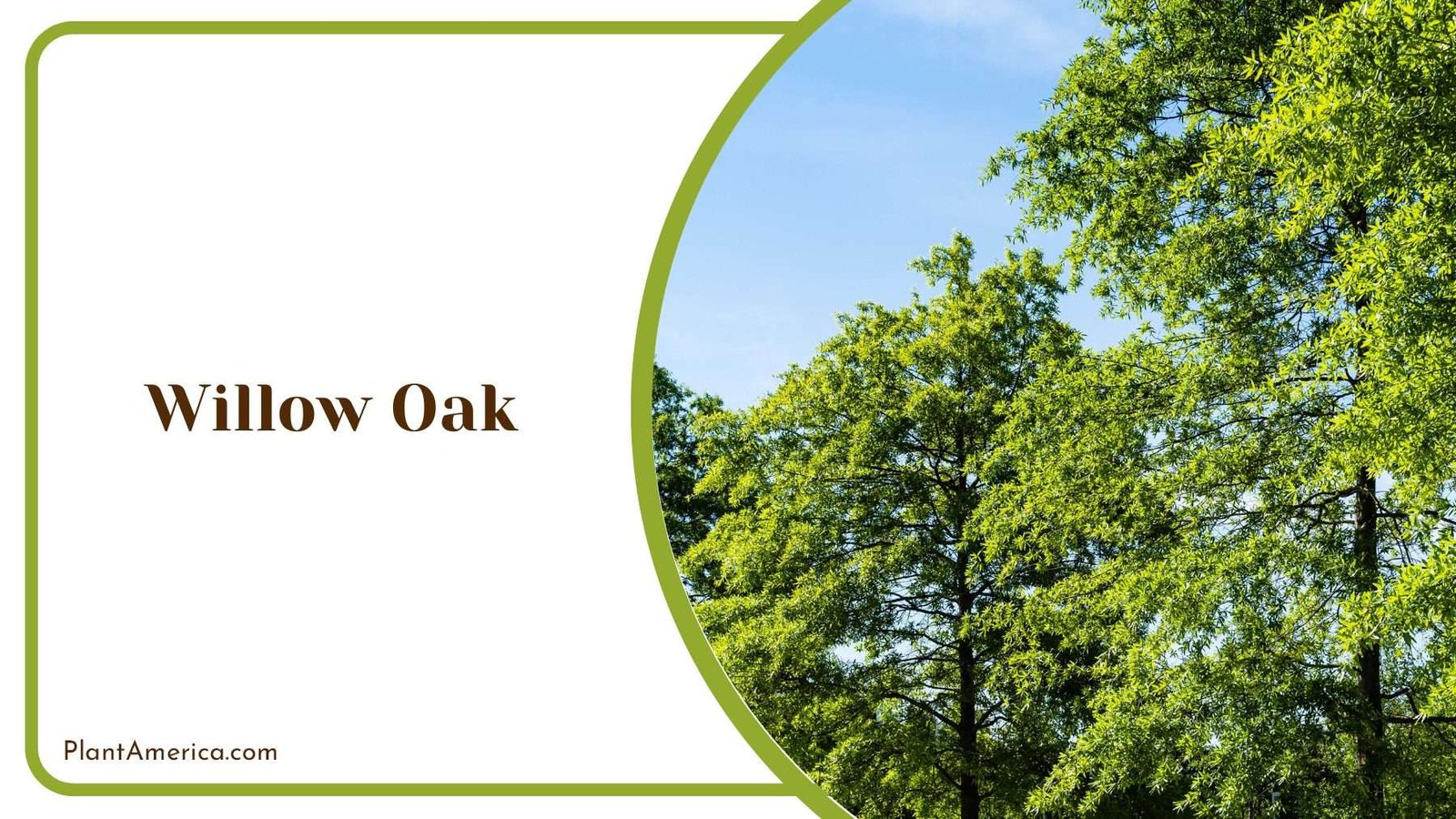
The willow oak (Quercus phellos) is a fast-growing Florida native with narrow leaves that resemble willows. In fall, the leaves turn magnificent shades of gold, burnt orange, and scarlet red before dropping, providing one of any oak’s best seasonal color displays.
This oak prefers consistently moist, well-drained soils and full sun exposure, where it can take advantage of warmth and light to fuel rapid growth, especially when young. The willow oak typically develops a tall, oval-shaped canopy on a straight trunk, making it a good choice for large lawns, parks, and commercial landscapes.
Willow oaks reach heights around 80 to 100 feet at maturity, with trunk diameters nearing three feet. The leaves are usually about two to six inches long with bristle-tipped margins, dark green above and yellow-green beneath. The acorns are oblong, three-quarter to one one-quarter inch long, and shed in autumn and winter.
Though pest-resistant, willow oaks can occasionally develop issues like leaf miners burrowing into leaves, scale insects that suck sap, and caterpillars when under stress. Regular pruning when young helps develop structure, while pruning of mature specimens removes diseased or damaged wood. Fertilizing annually supports optimal health.
8. Southern Red Oak

- Growing Season: Spring, Fall
- Leaf Shape: Oblong, Spiny lobes
- Specific Needs: Moist, Acidic soil, Full sun
- Common Pests: Oak leaf roller, Caterpillars
The southern red oak (Quercus falcata), the cherry bark oak, is known for its brilliant red fall color and large oblong leaves with spiny, toothed lobes. It grows best in moist, acidic soil conditions and full sun exposure, where it can take advantage of warmth and light to fuel steady growth.
When mature, the southern red oak develops a vase-shaped crown of ascending branches and a thick, furrowed trunk. The red autumn hues produced by its substantial canopy and stately pillar-like form make this Florida native oak a good choice for large landscapes.
Southern red oaks reach heights around 100 feet at maturity with trunk diameters up to four feet. The leaves are usually about four to eight inches long with three to seven deeply-lobed segments. They emerge bronze in spring before darkening to glossy green.
These oaks produce acorns annually that are three-quarter to two inches long, and shed in autumn and winter. Southern red oaks are pest-resistant except for occasional caterpillar infestations and leafminers.
Prune southern red oaks as needed when young to select a central leader and remove rubbing and damaged branches. Fertilize in spring with balanced, slow-release fertilizer to promote healthy growth. Mature trees require little pruning aside from thinning to open the canopy and remove dead wood.
9. Chinquapin Oak

- Growing Season: Spring, Fall
- Leaf Shape: Palmate with 5-7 lobes
- Specific Needs: Moist, Well-draining soil
- Common Pests: Caterpillars, Fungus
The Chinquapin Oak is a unique species that is native to certain regions of North America. It is known for its distinctive characteristics. The Chinquapin Oak’s foliage is notable for its palmate leaves that emerge each spring. Throughout the growing season, the leaves will have five to seven smooth lobes that take on vibrant shades of green.
This oak thrives when its soil conditions are just right – nutrient-rich but not oversaturated. An ideal habitat would be near streams or low-lying areas with adequate drainage to supply water needs.
Common pests can occasionally plague the Chinquapin Oak as with many trees. Certain caterpillars may cause damage by feeding on the foliage. Fungal infections are another potential issue, especially if the soil is too wet. Maintaining optimal growing conditions helps the tree resist pest and disease problems.
At up to 80 feet tall, the Chinquapin Oak is a stately presence in the forest. Its palmate leaves set it apart from other oak species and provide attractive foliage throughout most of the year. With a bit of knowledge about its preferred habitat and potential issues, this unique oak is well-suited for landscape use in parts of its native range.
10. Sand Post Oak

- Growing Season: Year-round
- Leaf Shape: Oblong, Elliptic
- Specific Needs: Dry, Sandy soil, Full sun
- Common Pests: Oak leaf roller, Caterpillars
The sand post oak (Quercus Margaretta) is native to the Florida panhandle and coastal plains. It is adapted to dry, sandy, nutrient-poor soils and full sun exposure, where its extensive root system can search for scarce moisture and nutrients.
The sand post oak has dark green, elliptic leaves that turn brilliant shades of orange-red in fall before dropping, providing seasonal color. When mature, this oak develops an irregular, rounded crown of branching trunks and distinctive corky bark. The sand post oak is usually smaller in stature compared to other oaks, reaching heights around 40 to 50 feet, making it a good choice for dry coastal landscapes.
The leaves are usually about two to five inches long with entire margins. The bark on young trees is gray and shallowly fissured, becoming thick and corky with age. The acorns are oblong, half to one one-quarter inch long, and shed in autumn and winter.
These oaks thrive in dry sandy soils along dunes, coastal scrub, and barrens. Their drought tolerance and ability to withstand nutrient deprivation make sand post oaks ideal for infertile landscapes with little competition.
11. Turkey Oak

- Growing Season: Spring, Fall
- Leaf Shape: Oblong, Elliptic
- Specific Needs: Moist, Acidic soil, Full sun
- Common Pests: Oak leaf roller, Caterpillars, Oak skeletonizer
The Turkey Oak is a majestic oak tree native to scattered regions of central North America. Commonly found inhabiting open woodlands, grasslands and desert scrub across the southern Great Plains, this hardy species thrives in hot, dry climates from USDA zones 5b-9 where others would struggle.
At maturity, a Turkey Oak develops a broad, rounded canopy reaching heights up to 80 feet tall with an equal spread, casting dappled shade over a sizable area. Short and stocky trunks gain impressive girth and character over centuries, their bark developing into thick ridged plates deeply furrowed with age.
Compared to other oak varieties, new growth emerges later in the season, an adaptation allowing Turkey Oaks to survive periods of water scarcity. Their leathery leaves are smaller in size at two to five inches but refractory dark green hue. Glossy foliage provides vital cover through long, parched summers while conserving precious moisture.
In autumn, leaves slowly transition to warm hues of burnt orange, russet and goldenrod before dropping to reveal the tree’s intricate branching structure. Interest continues into winter as acorns mature, often held tightly to branches well into the following year. These hardy acorns are a crucial food source sustaining wildlife including deer, wild turkey and squirrels during barren seasons.
Beyond environmental resilience, the Turkey Oak presents an architectural elegance in the landscape. Its naturally sculptural habit features rounded, layered branching forming a loosely tiered canopy. Moderate growth rate fosters low-maintenance beauty in public parks, private gardens and reforestation projects.
Deeply anchoring roots lock tightly into well-draining soils, securing these giants against seasonal fires and harsh winds common to the Great Plains. Thick bark plates further insulate vascular tissue within, aiding the tree’s ability to survive temperature fluctuations and periodic droughts that challenge less hardy competitors.
Pioneers recognized and depended upon the Turkey Oak’s multi-purpose virtues. Its durable wood served utilitarian needs while acorn mast sustained livestock and people. Today its adaptive beauty, cultural heritage, and role in stabilizing native prairie ecosystems cement this oak’s stature as one of North America’s most stalwart native tree species.
Beyond environmental adaptability, this oak presents architectural elegance. Its rounded, layered branches form a naturally sculptural outline ideal for landscapes. Moderate growth rate fosters low maintenance in parks, gardens or reforestation projects.
Deep roots lock tightly into well-draining soils, securing Turkey Oaks against harsh winds and fire. Peeling bark further insulates cambium from heat. These traits made the tree crucial for stabilizing grasslands and providing wildlife shelter across prairie ecosystems.
12. Swamp Laurel Oak

- Growing Season: Year-round
- Leaf Shape: Oblong, Elliptic
- Specific Needs: Consistently moist soil, Full to partial sun
- Common Pests: Oak leaf roller, Caterpillars
The Swamp Laurel Oak is a majestic, slow-growing hardwood tree native to southeastern coastal plains and floodplain forests from Virginia to eastern Texas. Tolerant of wet soil conditions where others struggle, it typically inhabits swamps, baygall savannas and floodplains from USDA zones 7a-10.
Maturing at a ponderous yet graceful pace, Swamp Laurel Oaks develop broad, rounded crowns reaching heights up to 120 feet tall with magnificent spreads sometimes spanning twice as wide. Their bark is a handsome grayish color, developing fine scaly ridges with age.
Dark green leaves shine glossy yet leathery, well-adapted to withstand periodic flooding and humidity. Spanning four to eight inches, foliage remains through winter providing structure and cover for wildlife like birds and small mammals within the tree’s sheltering canopy.
In fall, color transitions can include burnished shades of reddish-bronze, maroon and russet before leaves drop. Between late spring to summer, modest clusters of small white flowers bloom, followed later by burs yielding acorns up to 1.5 inches in length prized by turkey, deer and squirrels come autumn.
While massive in stature, Swamp Laurel Oaks flourish even in soils too wet, nutrient-poor or acidified for most other timber species. Their vast, spreading root systems adeptly source moisture and oxygen under flood conditions, stabilizing wet landscapes prone to erosion.
Beyond ecological virtues, the tree presents architectural distinction. Its layered branching forms a naturally sculptural outline enhancing bayous, sloughs and flood-resistant reforestation projects. Historical uses included durable wood favored for shiplap, pilings and carving.
Today, Swamp Laurel Oaks stand as symbols of resilience amid changing climates. Nurseries help reestablish this wetland sentinel to optimize flood water retention, wildlife habitat and carbon sequestration across the southeastern coastal plain. Their grandeur and perseverance in watery realms inspires ongoing conservation efforts.
13. Blackjack Oak

- Growing Season: Spring, Fall
- Leaf Shape: Oblong, Elliptic
- Specific Needs: Dry, Sandy soil, Full sun
- Common Pests: Oak leaf roller, Caterpillars
The blackjack oak (Quercus marilandica) is a Florida native adapted to dry, sandy uplands. It is identified by its oblong leaves that turn brilliant shades of brown and red in fall before dropping, providing seasonal color.
This oak prefers well-drained, acidic soil and full sun exposure, where its extensive root system can search for scarce moisture and nutrients. When mature, the blackjack oak develops a rounded crown of ascending branches and distinctive dark, furrowed bark.
The small to medium stature at maturity – reaching heights around 30 to 50 feet and adaptability to dry, infertile soils make the blackjack oak a good choice for drought-tolerant, low-maintenance Florida landscaping.
The leaves are usually about two to five inches long with entire margins. The bark on young trees is gray and shallowly fissured, becoming dark brown and deeply furrowed with age. The acorns are oblong, three-quarter to one one-quarter inch long, and shed in autumn and winter.
Blackjack oaks thrive in dry sandy uplands and barrens. Their drought tolerance and ability to withstand nutrient deprivation make them ideal choices for infertile landscapes with little competition.
Though generally pest-resistant, blackjack oaks can develop issues like scales that suck sap and leaf miners that damage leaves and caterpillars when under stress. Regular pruning optimizes health while fertilizing annually in spring promotes balanced growth.
Blackjack oaks are well-suited for infertile Florida landscapes with their adaptability to dry soils, seasonal color displays, sculptural branching, and small to medium stature. Their size at maturity provides dappled shade while highlighting autumnal foliage. Given proper care, these oaks have the potential to become attractive specimen trees that impart natural character for decades.
14. Chapman Oak

- Growing Season: Spring, Fall
- Leaf Shape: Oblong, Elliptic
- Specific Needs: Moist, Acidic soil, Full sun
- Common Pests: Oak leaf roller, Caterpillars
The Chapman oak (Quercus chapmanii), also known as the common oak, is a medium-sized Florida native tree. It has oblong elliptic leaves that turn brilliant golden yellow to burnt orange in fall before dropping, providing one of the best seasonal color displays of any oak.
The Chapman oak prefers moist, acidic soil and full sun exposure to maximize growth. It develops a rounded crown of ascending branches and distinctive ridged, furrowed bark when mature. The colorful autumn foliage display and medium size at maturity, reaching heights around 60 to 80 feet, make the Chapman oak an attractive specimen tree for Florida landscapes.
The leaves are usually about two to five inches long with spiny-toothed margins. They emerge bronze in spring before darkening to glossy green. The acorns are oblong to oval, three-quarter to one-and-half inches long, and shed in autumn and winter.
Chapman oaks produce acorns every year. They are relatively pest resistant though occasional issues like scales that suck sap, leaf miners that burrow inside leaves, and caterpillars that can cause aesthetic damage when trees are under stress. Regular pruning when young helps establish structure, while pruning of mature specimens removes dead or damaged wood. Fertilizing annually supports optimal health and growth.
With their stunning seasonal color displays, medium stature, beautiful autumnal bark, and adaptability, Chapman oaks offer shade, grace, and natural beauty to Florida landscapes. Their size at maturity provides ample shade while highlighting peak fall foliage. Given ample space and care, Chapman oaks have the potential to mature into attractive specimen trees that enhance properties for decades.
15. Post Oak

- Growing Season: Spring, Fall
- Leaf Shape: Oblong, Elliptic
- Specific Needs: Dry to moist, Acidic soil, Full sun
- Common Pests: Oak leaf roller, Caterpillars
The post oak (Quercus stellata) is native to Florida and much of the eastern and central U.S. It is considered one of the most drought-tolerant oak species, thriving in dry, acidic soils where its extensive root system can search for scarce moisture and nutrients.
The post oak has oblong leaves that are dark green above and lighter beneath. In fall, the leaves turn shades of brown before dropping. When mature, the post oak develops a rounded crown of gnarled, twisted branches and distinctive dark, furrowed bark. Post oaks are typically smaller in stature, reaching heights of around 40 to 60 feet at maturity. The acorns are oblong, three-quarter to one and half inches long, and enclosed in shallow caps.
Thanks to their drought tolerance, post oaks thrive in dry uplands, sandy hills, and Flatwoods. Their ability to withstand infertile conditions with little competition makes post oaks well suited to low-maintenance landscapes.
Though generally pest-resistant, post oaks can develop minor issues like scales that suck sap and leaf miners that damage leaves and caterpillars when under stress. Regular pruning optimizes health, while fertilizing annually in spring promotes balanced growth.
With their tolerance for dry conditions, sculptural branching, moderate scale, and adaptability, post oaks offer textural evergreen foliage, natural shade, and low-maintenance beauty to Florida landscapes. Their size at maturity provides dappled shade while highlighting seasonal autumn foliage. Given ample space, post oaks have the potential to become picturesque specimen trees that add character for decades.
Conclusion
Florida has a rich diversity of native and introduced oak trees that add beauty, character, and habitat to the state’s landscapes:
- The southern red oak (Quercus falcata), the cherry bark oak, is known for its brilliant red fall color and large oblong leaves with spiny, toothed lobes.
- The willow oak (Quercus phellos) is a fast-growing Florida native with narrow leaves that resemble willows.
- The Chapman oak (Quercus chapmanii), also known as the common oak, is a medium-sized Florida native tree.
No matter which oak species you decide to incorporate into your Florida landscape, remember that these trees provide important habitat, oxygen, and character to the state’s unique ecosystems. We hope that appreciating the simple beauty of Florida’s native oak trees will inspire you to value and protect the wider natural environment that sustains us all.