
New Guinea Impatiens leaves turning brown suggests that the plant is facing challenges, like overwatering potassium deficiency and extreme temperatures. But there’s no need to lose hope; you can fix this discoloration by doing simple things.
But following our suggestions step-by-step is crucial, as doing these solutions wrong can worsen the condition. Let’s delve further.
Why Do New Guinea Impatiens Leaves Usually Turn Brown?
New Guinea Impatiens leaves usually turn brown due to overly moist soil and potassium deficiency. These things slow down crucial processes, stressing out the plant. In addition, sunburn and extreme temperatures, like heat or cold stress, can also lead to discoloration in some cases.
– Pouring More Water: Damp Soil
New Guinea Impatiens (Impatiens hawkeri) prefer well-draining soil. So, problems can arise if the roots stay consistently wet for a long period. It usually happens when you grow New Guinea Impatiens in pots.
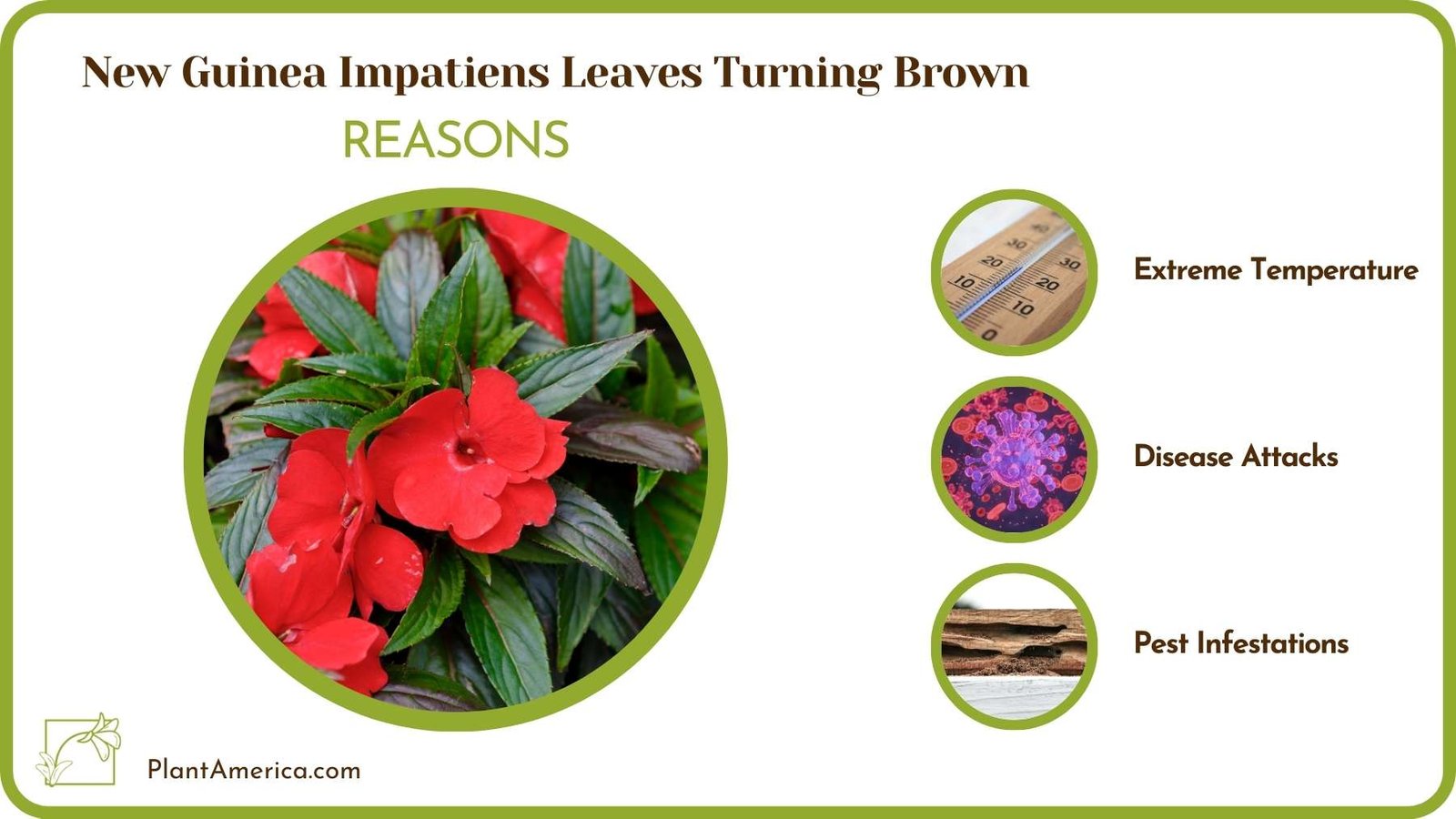
When the soil is overly damp, the roots of the impatiens can’t access the oxygen they need. This leads to stress in the plant, which can result in the leaves turning brown.
Moreover, when roots can’t function, the plants become water-stressed (as water absorption depends on roots). As a result, dehydration will occur, even though there’s plenty of moisture in the soil.
– Potassium Deficiency
A potassium deficiency is another potential cause of brown leaves on New Guinea impatiens. Potassium plays a crucial role in photosynthesis and overall plant health. When there’s not enough potassium available, photosynthesis and other critical processes cannot occur properly. As a result, leaves may turn brown along the edges or between the veins.

Consider getting a soil test kit to confirm if potassium deficiency is the culprit. This will provide you with specific information about the nutrient levels in your soil. You can look into appropriate fertilizers to address the issue if potassium is lacking.
– Full Sun Exposure
Are your New Guinea Impatiens leaves drying up and turning brown simultaneously? It can happen due to the “sun stress.” Note that the New Guinea impatiens are not fans of total sun exposure. When these delicate plants are subjected to prolonged direct sunlight, their leaf cells die. When this happens, you’ll see brown patches on the leaves.

– Extreme Temperature
If you notice New Guinea Impatiens leaves turning yellow and brown simultaneously, it is a sign of unsuitable environmental conditions. Note that New Guinea Impatiens likes temperatures between 63 to 73 degrees Fahrenheit. Check your weather report to see if the plants enjoy the preferred temperature.
If not, then you know the reason behind the discoloration is unfavorable conditions. High temperatures (heat stress) can cause the plant to lose moisture rapidly, resulting in leaf dehydration and browning. On the other hand, extreme cold can freeze the cell fluid and stop the internal processes.
– Disease Attacks: Another Cause Behind Brown and Yellow Leaves
Sometimes, the culprit behind those brown and yellowing leaves on your New Guinea impatiens can be disease attacks. This plant can get infected by both bacteria and fungi. But the disease that is commonly seen is downy mildew.
One of the telltale signs of the infection is the yellowing of leaves, followed by browning as the disease progresses. The leaves may also develop a fuzzy, mold-like growth on the undersides.
– Pest Infestations
One of the most common New Guinea Impatiens problems is pest invasion. Pests like aphids, spider mites, and thrips feed on plant juices, causing damage to the leaves. They can leave behind tiny scars that eventually turn brown as they feed. The honeydew they excrete can also attract mold, further contributing to leaf discoloration.

To confirm a pest infestation, closely inspect your impatiens leaves for signs of tiny insects, webs, or stippling marks. After knowing the cause behind your plant’s browning, it’s time to take actionable steps.
How to Fix Brown Leaves on New Guinea Impatiens?
– Dry the Soil if It’s Soggy
When you notice New Guinea Impatiens leaves turning brown after watering, it’s essential to dry the soil. By doing this, you’re reducing the stress of “soggy conditions” on the roots. Remember that the root system must be healthy if you want the leaves to be green.
Here’s what to do:
- Adjust Your Watering Routine: Start by adjusting your watering routine. If you’ve been watering frequently, consider watering less often.
- Choose the Right Pot: If your impatiens are in containers, make sure the pots have proper drainage holes. Well-draining pots prevent water from accumulating at the bottom, helping the soil dry more effectively.
- Improve Soil Texture: Mixing organic matter into the soil can enhance drainage capabilities. This promotes a healthier balance of moisture for your impatiens.
- Provide Adequate Air Circulation: Ensure your impatiens have enough space around them to allow air to circulate. Proper air circulation can aid in drying out the soil.
Remember, maintaining the proper moisture balance is vital to keeping your impatiens healthy and vibrant.
– Repot the Plant: Give Your Plant a Fresh Start
Repotting your New Guinea impatiens, especially in pots, offers several advantages. It allows you to refresh the soil (which can become compacted and depleted of nutrients over time). This process also addresses drainage issues, as pots with inadequate drainage can lead to waterlogged soil. Moreover, you can also learn about the plant’s root health. All of these things can fix the browning of leaves.
Here’s how to repot your New Guinea impatiens:
- Choose a New Pot: Select a slightly larger terra-cotta pot with many drainage holes.
- Prepare New Soil: Use a high-quality potting mix with good drainage properties. Avoid garden soil, as it can be too dense for potted plants.
- Remove the Plant: Remove your New Guinea impatiens from their current pot. Shake off excess soil, being careful not to damage the roots.
- Plant in the New Pot: Place the impatiens in the new pot, ensuring that the top of the root ball is level with the pot’s rim.
- Fill with Fresh Nutrient-Rich Soil: Add the prepared potting mix around the plant, pressing it down gently to eliminate air pockets.
- Water Thoroughly: Give the newly potted impatiens a moderate soak to settle the soil.
- Monitor and Care: Monitor the moisture levels and ensure your impatiens adjust well to their new home. Continue with your regular care routine.
Repotting your New Guinea impatiens can rejuvenate their growth and appearance, reducing the chances of brown leaves.
– Maintain Ideal Lighting Conditions
Impatiens plants prefer bright and indirect light. When you fulfill this requirement, photosynthesis takes place rapidly. This will keep the leaves energetic and help them stay green (even if they now have brown patches).
Here’s how to maintain ideal lighting conditions:
- Observe Light Levels: Pay attention to the light levels in your growing area. Indoors, place them near a window or a door with filtered light. Outdoors, consider partial shade or dappled sunlight.
- Rotate the Plants: If growing impatiens indoors, occasionally rotate the pots. This ensures all sides of the plant receive equal light, promoting even growth.
- Watch for Warning Signs: Keep an eye on your Impatiens. If you notice pale, bleached, or stressed leaves, it’s a sign they might be getting too much light.
- Adjust as Needed: If your impatiens get too much light, move them to a shadier spot. If they lack light, find a brighter location.

– Provide Protection from Temperature Extreme
If your plants face temperature stresses, their leaves can’t turn green until you fix them.
Here’s what we suggest:
- Monitor Weather: Stay updated on the local weather forecast. Be prepared for sudden temperature changes.
- Use Shade Cloth: Use shade cloth or create partial shade for your impatiens during hot spells. This shields them from intense sunlight, preventing leaf damage.
- Cold Protection: Cover your impatiens with a cloth or bring potted plants indoors when temperatures drop significantly, especially at night.
- Mulch the Soil: Spread mulch (mixture of grass, straws, and other organic stuff) around the base of your impatiens. This helps regulate soil temperature, preventing extreme heat or cold from affecting the roots.
By following these strategies, you can maintain healthy leaves and ensure your impatiens remain vibrant and attractive.
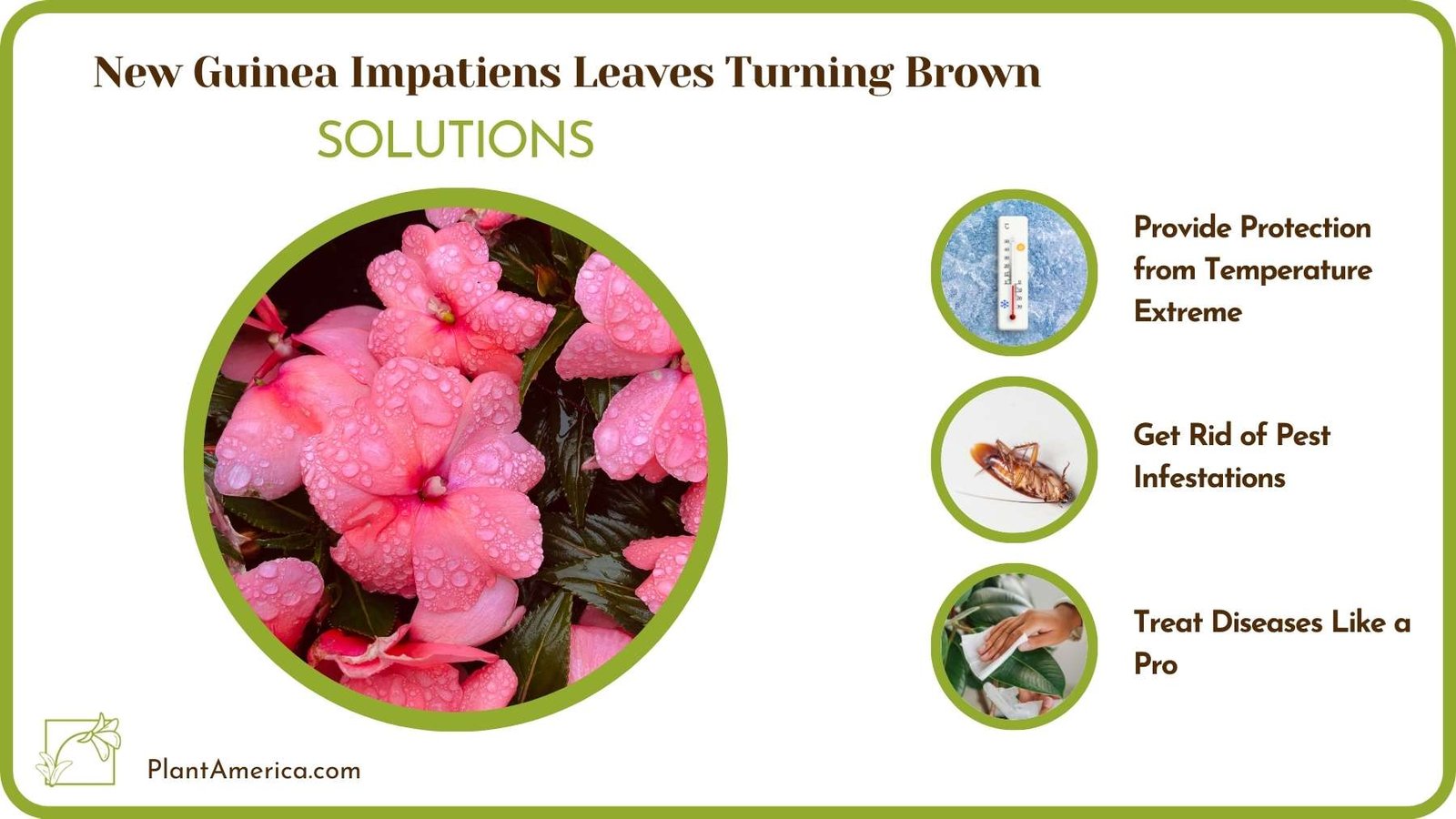
– Get Rid of Pest Infestations
If pests are the reason behind the browning, then it’s essential to tackle them first before doing the above steps.
Here are the best methods to eliminate them:
- Handpicking: Inspect your impatiens regularly and remove pests like aphids, spider mites, and thrips by hand. Wear gloves and gently pick them off the leaves and stems.
- Neem Oil Spray: Neem seed oil is a natural pesticide that can deter and kill many common garden pests. Mix the oil with water and 2-3 and spray it on your impatiens.
- Insecticidal Soap: Commercial insecticidal soaps are effective against soft-bodied pests like aphids. Spray the soap on your impatiens, focusing on the undersides of the leaves.
- Beneficial Insects: Introduce predatory insects like ladybugs and lacewings to your garden. They can help control pest populations by feeding on them.
- Diatomaceous Earth: Sprinkle store-bought diatomaceous earth (DE) around the base of your impatiens. This natural substance can harm pests with exoskeletons.
- Chemical Pesticides (As a Last Resort): If other methods fail, consider using chemical pesticides as a last resort. Ensure you follow the manufacturer’s printed (label) instructions carefully and use them sparingly.
– Treat Diseases Like a Pro
If you’re sure a disease infects your plant, take steps to cure it as soon as possible. If you don’t, the whole plant can turn brown and die.
Here’s how you can treat diseases like a pro with these simple care tips:
- Identify the Disease: The first step is accurately identifying the disease that’s affecting your impatiens. Common diseases include downy mildew, powdery mildew, and bacterial leaf spot. Look for characteristic symptoms like discolored or spotted leaves, wilting, or unusual growth.
- Isolate Affected Plants: If you discover diseased plants, isolate them from healthy ones to prevent the disease or spore from spreading.
- Prune Infected Parts: Carefully prune and remove any infected leaves or branches and safely throw them away.
- Fungicides: For fungal diseases like mildew, consider using a suitable fungicide. Follow the manufacturer’s printed (label) instructions for application and safety precautions.
- Bactericides: If your impatiens suffer from bacterial diseases, apply a bactericide as recommended. These products can help control the spread of the disease.
- Improve Air Circulation: Ensure proper air circulation around your impatiens by spacing them adequately. Good airflow can prevent the development and spread of diseases.
- Remove Fallen Leaves: Collect and remove fallen leaves from the ground, as they can harbor disease spores.
After doing the above steps, don’t sit back. Keep a watchful eye on your impatiens for any signs of disease recurrence. Remember that early detection can protect your plants from severe damage.
Conclusion
In summary, overwatering, potassium deficiency, extreme temperature fluctuations, disease attacks, and pest infestations can turn the leaves of New Guinea Impatiens brown. But you can ensure their health and vibrancy if you do these things:
- Adjust your watering routine to prevent soil from becoming excessively damp.
- Provide partial shade or shelter from intense sunlight.
- Protect your impatiens from extreme temperature fluctuations via mulching and shade clothes.
- Use natural remedies, like neem seed oil or insecticidal soap, to combat pests.
- Identify and treat diseases promptly with appropriate measures, like fungicides and bactericides.
By implementing these solutions, you can maintain healthy New Guinea impatiens with lush, vibrant foliage. So, follow our suggestions and enjoy the beauty they bring to your garden.