
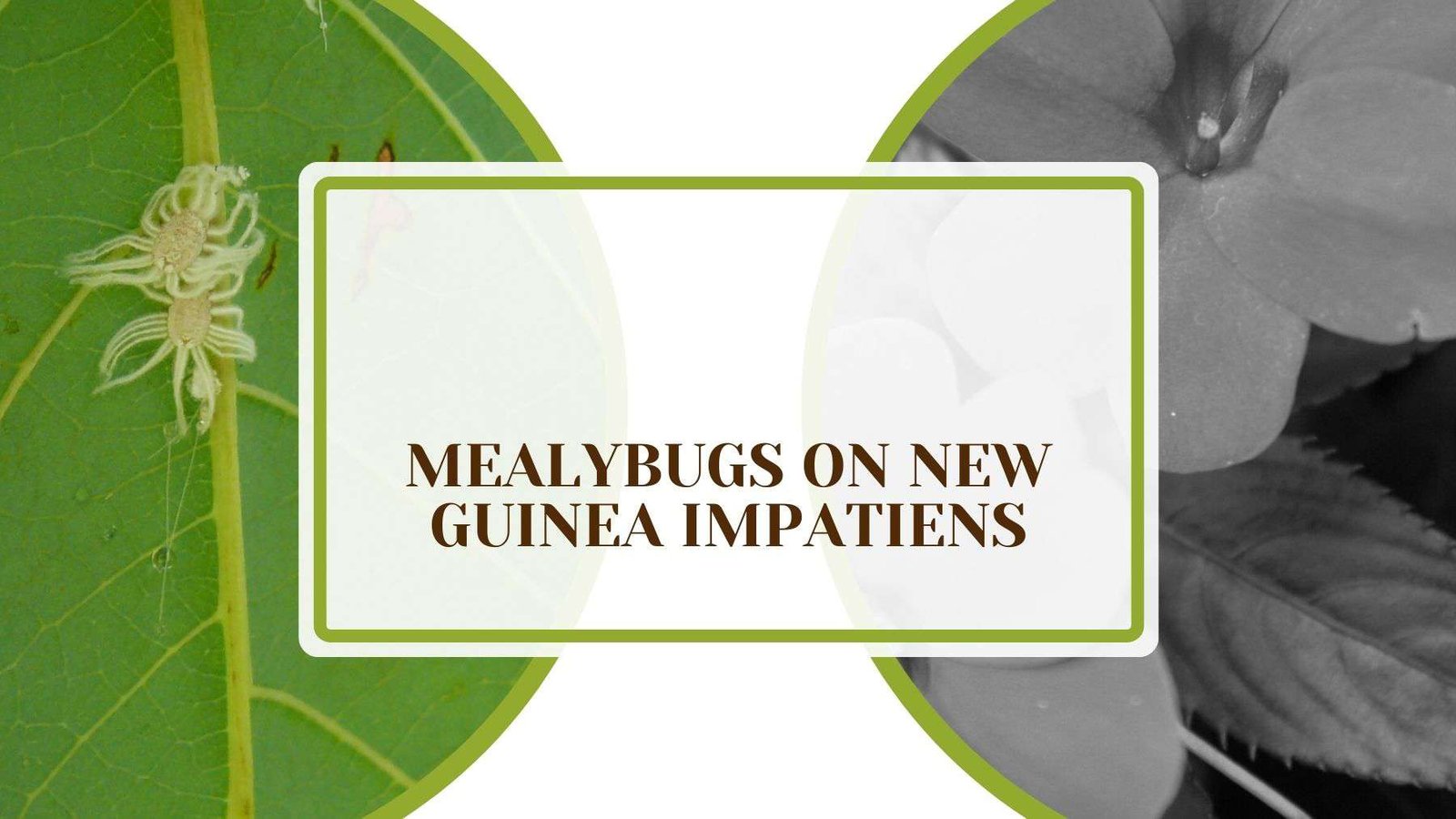
Mealybugs on New Guinea Impatiens is a problem that plant enthusiasts don’t wish to deal with. The reason is that mealybugs are sap-sucking insects that can affect the health and appearance of any flowering plants in just a few days.
 Let’s not lose hope; in this blog, we’re diving into easy-to-follow approaches to keep your Impatiens blooming and “bug-free.”
Why Are There Mealybugs on Your New Guinea Impatiens?
There are mealybugs on your New Guinea Impatiens due to the tender foliage and succulent stems. These invaders have a knack for siphoning sap from your precious plants during an attack. Moreover, poor air circulation, over-fertilization, moist soil, and high humidity often favor mealybug infestation.
– Soil Conditions and Mealybugs
Mealybugs, one of the most significant new guinea impatiens problems, are attracted to the soil that holds moisture well. So, note that soggy soil is an open invitation for bugs.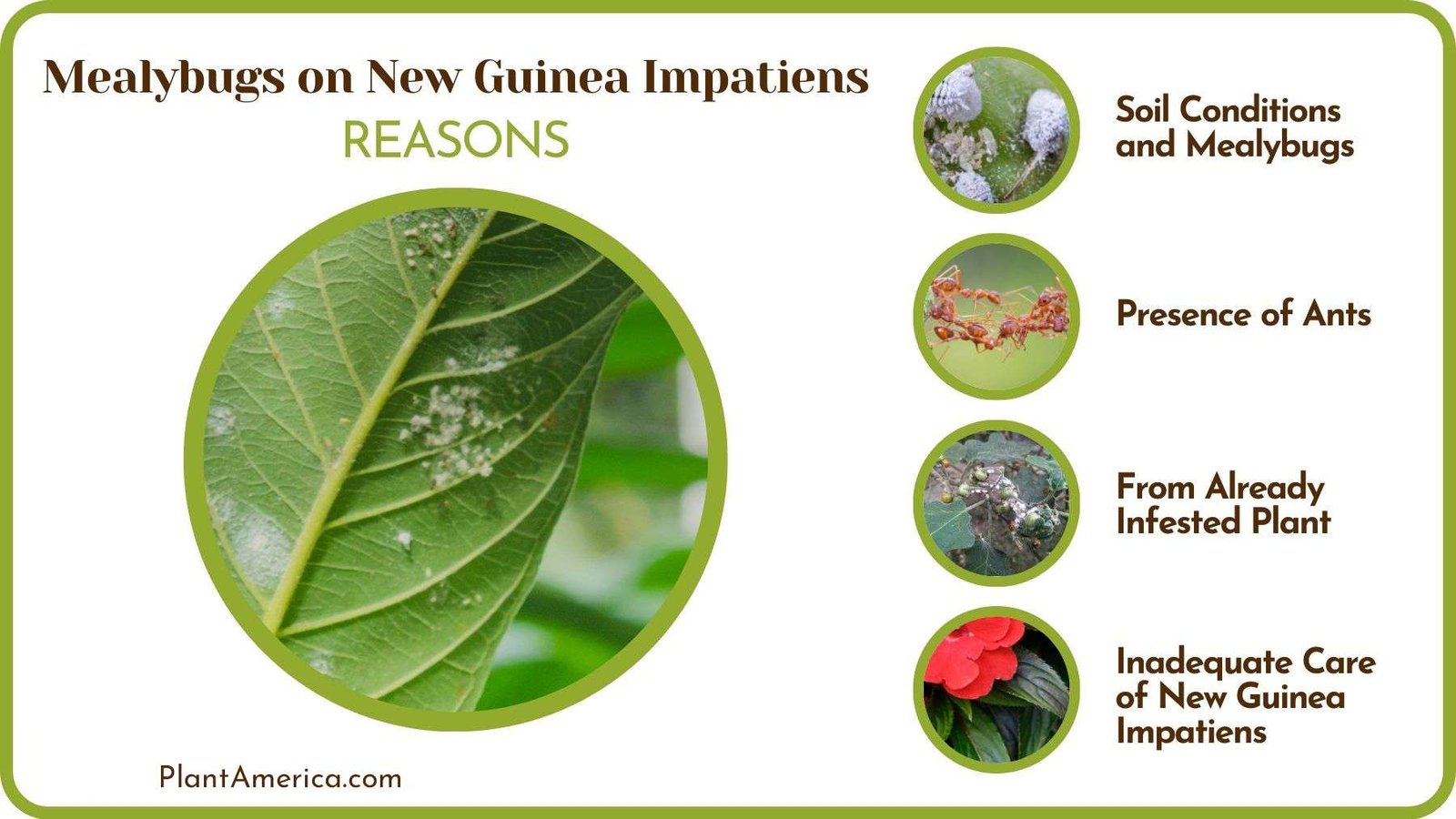
Stressed plants are vulnerable to mealybugs. Factors like under-watering or over-fertilizing can weaken Impatiens. If mealybugs attack them, you will see “New guinea impatiens wilted overnight.” Providing the right amount of water and balanced fertilization can keep the plants robust and less prone to infestation.
– Presence of Ants: Alliance of Mealybugs
Ants and mealybugs often work together. Ants consume the honeydew produced by mealybugs and, in turn, safeguard them. Controlling ant populations around New Guinea Impatiens can minimize the attraction for mealybugs.
– From Already Infested Plants
Mealybugs can spread from infested plants to nearby healthy ones. Remember that these pests can readily migrate from one plant to another. It means they can swiftly colonize your entire garden.
– Inadequate Care of New Guinea Impatiens
Improper care, such as incorrect watering or sunlight exposure, can make the plants fragile. Such plants will have weaker immunity and can’t fight off pests for long.
– Lack of Natural Predators in Your Garden
Natural predators of mealybugs, such as ladybugs, keep their population in check. Therefore, encouraging these predators in your garden by planting flowers that attract them can act as a natural mealybug control method.
– Seasonal Changes and Mealybugs
The prevalence of mealybugs may also be related to the season. In some regions, mealybugs infest during certain times of the year (mainly spring and summer). Most species also lay eggs during October and November.
How To Get Rid of Mealybugs From New Guinea Impatiens?
To get rid of mealybugs from New Guinea Impatiens, start by pruning out light infestations, washing the foliage regularly, and using natural remedies like neem oil or diatomaceous earth. Essential oil soak and biological sprays are also pretty effective against pests like mealybugs.
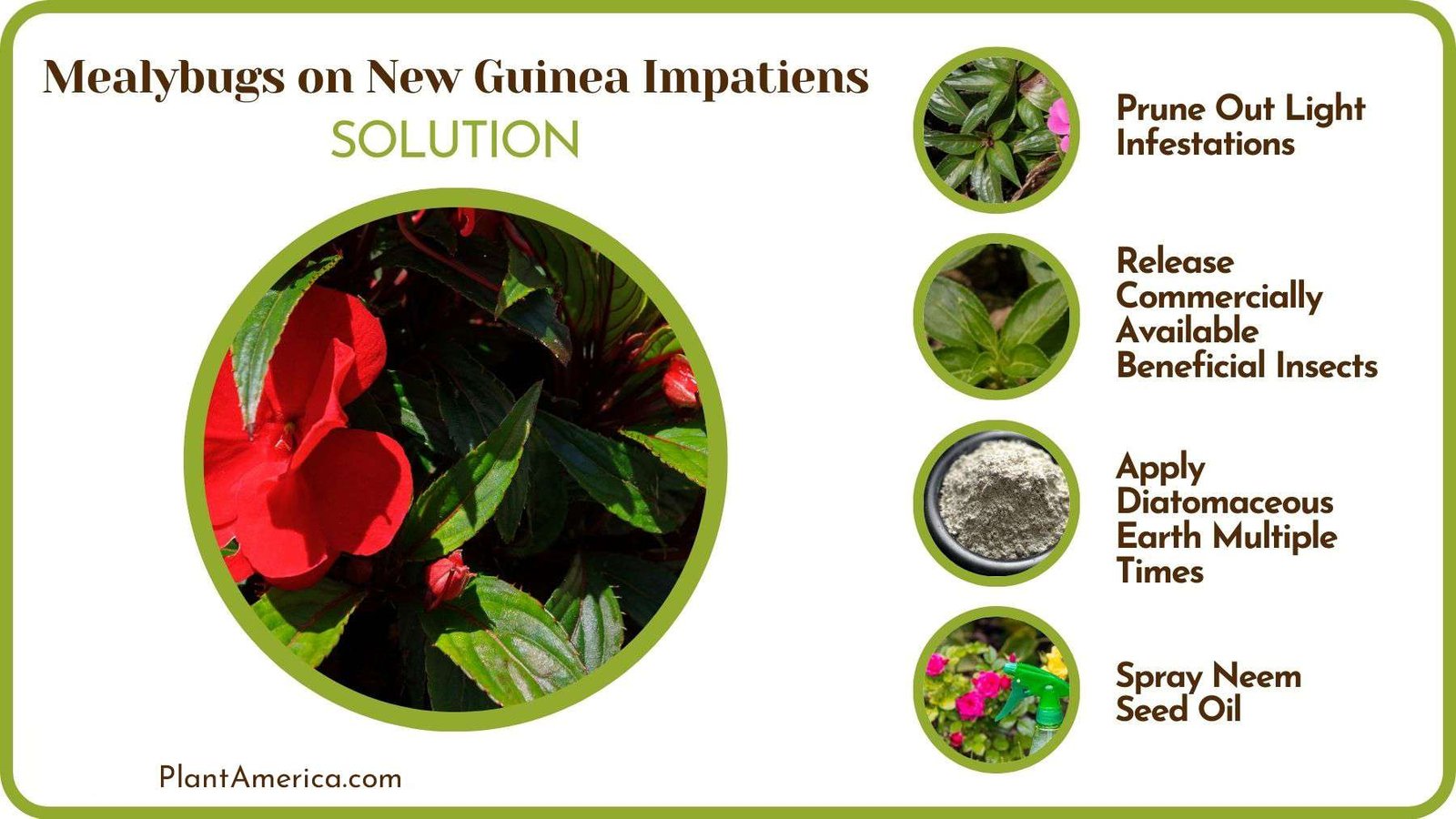
– Prune Out Light Infestations: Best Strategy Against Small Numbers
Light infestations of mealybugs can often be managed through careful pruning. Look for the cotton-like substance that mealybugs produce on the leaves and stems.
 Then, follow these steps:
- Get the Right Tools: Sharp, sanitized pruning shears will ensure clean cuts without damaging the plants.
- Prune Affected Areas: Cut off the infested parts of the plants. Be cautious about removing only the necessary portions to minimize plant stress.
- Dispose of Infested Material: Place pruned material in a sealed bag and throw it away to prevent the mealybugs from spreading.
- Monitor and Repeat if Necessary: Keep an eye on the plants for any signs of reinfestation, and repeat the process if needed.
– Release Commercially Available Beneficial Insects
What if you could manage mealybugs and simultaneously beautify your impatiens flowers? You can indeed make this happen by employing the aid of predatory insects beneficial to your garden.
Here’s what to do:
- Choose the Right Insects: Ladybugs and lacewings are popular options as they are natural predators of mealybugs.
- Purchase from Reputable Sources: Ensure you buy these insects from reliable commercial sources.
- Release at the Right Time: We suggest early morning or late afternoon.
- Monitor the Progress: Observe the plants to see if the beneficial insects effectively control the mealybugs.
- Repeat if Necessary: If the infestation continues, it might be beneficial to release additional insects.
– Apply Diatomaceous Earth Multiple Times
Many gardeners prefer Diatomaceous earth (DE) against mealybugs because it is affordable and easy to apply.
- Wear Protective Gear: Although DE is non-toxic, it can irritate the eyes and respiratory system. Therefore, wearing a mask and goggles is advisable.
- Apply Liberally to Affected Areas: Focus on the areas where pests are most prominent. Make sure to get underneath the leaves, where mealybugs often hide.
- Reapply After Rain: DE loses its effectiveness when wet, so you must reapply it after rain or heavy dew.
- Monitor and Repeat: Regularly check for signs of infestation and reapply as necessary.
– Spray Neem Seed Oil: An Old Strategy Against Mealybugs
Among the many products to combat mealybugs, neem oil is one of our top picks. Unlike chemical insecticides, neem oil doesn’t harm beneficial insects like bees and ladybugs.
Using neem oil on New Guinea Impatiens requires careful preparation and application:
- Choose the Right Product: Look for pure neem oil or products designed for garden pest control.
- Mix with a Mild Soap: To help the oil mix with water, combine it with a mild soap. Follow the instructions on the neem oil packaging for proper dilution.
- Spray the Affected Areas: Focus on the leaves top and underside, ensuring thorough coverage.
- Apply Regularly: Depending on the severity of the infestation, you may need to spray your New Guinea Impatiens every week or even more frequently.
- Monitor for Effectiveness: Monitor the plants for signs of Downy mildew, spider mites, or other issues, and adjust your treatment plan as needed.
– Try Cinnamon powder Against Bugs
Using cinnamon powder on New Guinea Impatiens can be a simple and fragrant way to deter insects.
Putting cinnamon to work in your garden is easy:
- Find the Right Cinnamon: Any ground cinnamon from your kitchen or local grocery store will do.
- Sprinkle It: Dust the cinnamon powder on the soil around your New Guinea Impatiens.
- Mix with Water for a Spray: If you prefer, mix cinnamon with water and spray it on the leaves and stems.
- Keep Monitoring: Regularly check for signs of pests, and reapply the cinnamon as needed.
– Apply Hot Pepper Spray Correctly
Hot pepper spray is perhaps the best home remedy to keep pests away from your New Guinea Impatiens. It works because the heat from the peppers deters many common garden pests. Moreover, it is easy to make. Making and using hot pepper spray is a snap:
- Gather Your Ingredients: You’ll need hot peppers (the hotter, the better), liquid soap, water, and a blender.
- Blend the Peppers: Put the peppers and water in the blender and mix them until they’re smooth.
- Strain the Mixture: Use a filter to remove large chunks so they won’t clog your spray bottle.
- Add Soap: Mix in a little liquid soap. This helps the spray stick to the plants.
- Pour into a Spray Bottle: Use a funnel to pour the mixture.
- Spray Your Plants: Coat your New Guinea Impatiens with the spray, paying particular attention to the undersides of the leaves.
– Go For Baking Soda Solution But Follow Plant Care Tips
Baking soda can also combat various plant diseases and deter pests from your Impatiens.
- Gather Your Ingredients: You’ll need baking soda, liquid soap, and water.
- Mix the Solution: Combine one tablespoon of baking soda with 2 to 3 drops of liquid soap in a gallon of water.
- Spray Your Plants: Coat your Impatiens evenly, coating the undersides of the leaves.
- Monitor and Repeat: Regularly inspect your plants and reapply the solution.
There are still two things to remember:
- Test on a Small Area First: Before spraying all your plants, test the solution on a small area to ensure it doesn’t harm the foliage.
- Avoid Using in Full Sun: Spraying in full sunlight can cause leaf burn, so apply it early or late afternoon.
– Reflective Mulch Is Also Effective Against Impatiens Pests
Reflective mulches are available in aluminum or silver polyethylene. You can use both when dealing with mealybugs.
- Prepare the Soil: Before laying the mulch, ensure the soil is weeded correctly and watered.
- Lay the Mulch: Place the reflective side facing up and cover the soil thoroughly, leaving space around the base of each plant.
- Secure the Mulch: Use garden staples or rocks to keep the mulch in place, especially in windy areas.
- Monitor for Effectiveness: Regularly check your plants and the mulch to ensure it’s doing its job.
– Give Essential Oil Soak a Chance
Essential oils are for those who prefer organic options to deal with mealybugs.
- Select Your Essential Oil: Oils like lavender, peppermint, and rosemary are popular.
- Mix with Water: Combine a few drops of the essential oil with water in a bucket or spray bottle.
- Soak or Spray Your Plants: You can soak the plants in the solution or mist it, ensuring coverage.
- Reapply as Needed: Essential oils can evaporate so regular reapplication might be necessary.
However, be mindful of concentration. Too much essential oil might harm the plants, so follow recommended guidelines.
– Trap Cropping To Avoid Common Problems
This strategy involves using companion plants to attract pests away from your primary plants (Impatiens).
Here’s how to implement Trap Cropping:
- Select the Right Trap Crop: Common trap crops include orchids, sunflowers, nasturtiums, or marigolds.
- Plant Strategically: Place the trap crops near the plants you want to protect but not too close, as the goal is to lure pests away.
- Monitor and Maintain: Regularly check your primary plants and the trap crops to assess their effectiveness and make any necessary adjustments.
But if not appropriately managed, trap cropping could attract more pests to your garden.
– Spray Biological Insecticides At the Right Time
Biological insecticides are many gardeners’ first choice in dealing with mealybugs. However, you must still follow these instructions:
- Timing: Knowing when to apply these insecticides is crucial for effectiveness.
- Storage and Handling: Biological insecticides often require special storage and handling instructions to maintain their effectiveness.
– Wash Foliage Regularly
Don’t overlook this straightforward yet effective technique when considering guinea impatiens care. Why Wash Foliage Regularly?
- Prevents Pests: Regular washing can dislodge pests and eggs, reducing infestations.
- Enhances Appearance: Clean leaves are visually appealing and help the plant photosynthesize more efficiently.
- Addresses Common Issues: Regular washing can prevent or mitigate issues like new guinea impatiens leaves turning brown.
Here’s how to wash foliage:
- Choose the Right Time: Early morning or late afternoon is ideal, as washing in the hot sun can cause leaf burn.
- Use Gentle Water Pressure: A gentle spray from a hose or a soft cloth can effectively clean the leaves without causing damage.
- Inspect Regularly: Look for signs like wilting or discoloration, as washing can also be part of figuring out how to revive dying impatiens or understand will wilted impatiens come back.
While washing the leaves, be mindful of the overall water needs of the plant to prevent overwatering. Moreover, cleaning alone may be insufficient if you notice ongoing problems like browning leaves or wilting.
Conclusion
All-inclusive, New Guinea Impatiens are beautiful plants that can face challenges like mealybugs. Fortunately, You have plenty of choices to remove them from your garden, which is:
- If the infestation is small, pruning, releasing beneficial insects, or spraying neem oil.
- Trap cropping and essential oil spray suit those who prefer organic measures.
- Keep washing your foliage to reduce the chances of pest infestation.
- Always focus on regular maintenance and monitoring.
With these strategies (and understanding the needs of New Guinea Impatiens), you can eradicate bugs in no time.