
The Japanese Iris (Iris ensata) of the Iridaceae family, native to the wetlands of East Asia, is a beautiful plant to spice up your garden or poolside. It produces flowers of different colors according to the Iris variety, is easy to care for, and has a lot of uses in your poolside.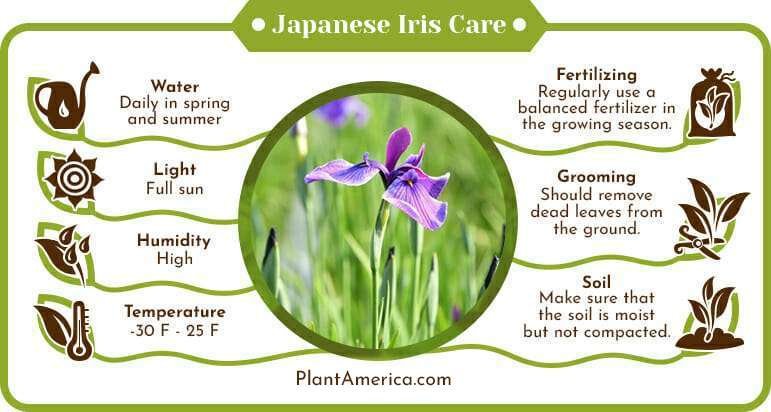
Read through this complete care guide to see how you can make this plant thrive!
Japanese Iris Care
Caring for and growing Japanese Iris is very easy. You just need to consider the type of soil or potting mix you use, water, temperature, light, humidity, and fertilizer given to the plant.
 Soil
Soil
Iris ensata loves very loose soil. Japanese Iris is an acid-loving plant, so the soil should be slightly acidic (pH 6 – 6.5). Your plants will grow better when you plant them near a swimming pool, pond, or a body of water. If you do not have a swimming pool or pond, you can still grow Japanese Iris. Just make sure that the soil is not compacted.
 Light Requirements
Japanese Iris loves full sun but can tolerate partial shade. Your plants will grow faster and healthier if you plant them in a place where they can get six or more hours of sunlight daily. The minimum amount of daily sunlight that Iris ensata can tolerate is four hours.
 Humidity
Japanese Iris love a humid environment, so you should grow them in average humidity. You can mist water around the plants to increase the humidity.
 Temperature
As a temperate plant, the Japanese Iris is cold-loving. It grows best in USDA hardiness zone 4 – 9. This means that it can survive a wide range of temperatures (from -30 F or -34 C to 25 F or -4 C). In winter, you do not have to take your plants indoors as they are winter-hardy.
 Water Requirements
As a water-loving plant, you need to water your Japanese Iris regularly. If you are growing Japanese Iris close to a pool or pond, you do not need to water them always as the nearby water will supply your plants with their water needs.
For plants grown in other places (far from pools) or containers, you should water them daily in spring and summer. Remember that Japanese Iris need friable or loose soil, so you have to make sure that the soil is not waterlogged.
You should also pay attention to the pH. Iris ensata grows best in slightly acidic soil. If the water source near your plants is basic, you should add two or three teaspoons of vinegar to a gallon of water to water your plants.
 Nutrients
Iris ensata is a heavy feeder. One reason you have to fertilize your plant regularly is that the soil is loose, so nutrients are easily washed off. You should fertilize your plants regularly.
To help reduce the cost of fertilizer, you should grow your Japanese Iris in amended soil. Use a balanced fertilizer in the growing season. Make sure to fertilize your plants when they are blooming.
 Grooming
The clumpy nature of Japanese Iris can attract pests or even affect the soil composition. You should remove dead leaves from the ground. Also, look for and remove pale and weak leaves. Transplanting Japanese Iris can be a necessity especially when some clumps look too crowded.
Propagation
There are different methods to propagate Iris Ensata.  Listed below are propagation methods of Japanese Iris that you can try:
– Rhizomes
As you already know, Japanese Iris have underground stems called rhizomes. These rhizomes can grow into new plants, so propagating Japanese Iris by splitting their rhizomes is the easiest and most common method of propagation.
Aside from the purpose of propagation, you need to split the rhizomes every three or four years especially when the Iris are growing out of control in their location. To propagate the plant with the rhizome, dig out any section of the plant (you do not need to dig out the entire plant).
When you have revealed a section of your Japanese Iris, use a shovel or any handy tool to cut out that section. Cover the remaining parts of the plant and soak your split rhizome in water at least for 12 hours before planting.
Make sure that you plant the rhizome in suitable soil else it may start to decay from the ground.
– Seeds
Iris ensata plants are also easy to grow with seeds. The seeds of these plants have a high germination rate and germinate quickly. After successful pollination, your Japanese Iris plants will produce seeds. Wait until the seeds are matured enough and are about to fall off the plant before you collect them.
You can wait a few weeks before planting the seeds, or you can plant them immediately. However, it is best to wait until the next growing season before planting the seeds. You should start the seeds in a container so that you can nurture them until they are matured enough to grow in soil.
Water the seeds regularly and make sure that their growing medium is well-drained.
– Seedlings or Offshoots
Your Japanese Iris plant rhizomes produce a lot of offshoots. You can collect these offshoots and plant them somewhere else. To collect an offshoot, dig off that section to reveal the rhizome. Use a shovel to cut off the rhizome attached to the offshoot.
Cover the remaining part of the plant and take that offshoot somewhere else. You can plant it immediately, but you can soak it in water for six to twelve hours before planting.
Which method of propagation will you use for your Japanese Iris?
Potential Problems
Japanese Iris are easy to grow when they are in the right media and receive just enough water and nutrients. They may, however, get sick or you may face one or two problems when growing the plants. Here are some examples of problems you can face when growing Japanese Iris:
– Weak Plant
A plant that is weak or dying is a sign that the soil is poor. Japanese water Iris is very sensitive to the type of soil it grows in, so will appear weak when grown in poor soil. Japanese Iris plants need loose soil. The soil should not be compacted and you should water it regularly.
While Japanese Iris love wet soil, they do not like compacted soil. Make sure that the water drains quickly (i.e. does not stay on top of the soil) so that your plants can remain healthy.
– Pests
Pests such as snails, slugs, and insects can attack your Iris, and if care is not taken, they can kill the plant. You should spray pesticides on the Japanese Iris to repel or kill the pests. Also, planting your Iris ensata close to pest-repellant plants such as mint can help prevent pests from reaching the plant.
– Death of Other Plants
If other plants in your garden are dying while your Japanese Iris are not, it could mean that the root and rhizome of your Japanese Iris plants are competing with the other plants for space and nutrients.
Remember to divide your Japanese Iris regularly. Also, remember to space your Japanese Iris plants 12-18 inches apart when planting.