
Indoor citrus tree pests can destroy even the hardest plants if left unchecked. In this post, we’ll look at nine common citrus enemies that like to lurk around the house. We’ll clue you in on identifying these stowaways before they munch your trees into mulch.

By the end of the read, those pesky pests won’t stand a ghost of a chance against your newfound knowledge.
Identifying the Top Indoor Citrus Pests to Look Out for
1. Spider Mites

- Pest Description: Small, red, or green, almost invisible to the naked eye.
- Damage/Symptoms Caused: Stippling on citrus leaves, Webbing on the undersides of leaves, Plants may yellow and drop leaves
- Time of Year: Year-round in warm climates, Summer in colder areas
- Control Methods: Insecticidal soap, Neem oil, Predatory mites like Phytoseiulus persimilis
Did you know spider mites are so tiny you may need a magnifying glass to see them? These unseen invaders can cause major mayhem on your citrus trees. Spider mites suck the chlorophyll from citrus leaves, leaving them speckled with yellow or whitish stippling. You may also spot intricate webbing on the undersides of leaves where large mite colonies have taken up residence.
It’s easy to first mistake spider mite damage for a nutrient deficiency. But upon closer examination, you will see the telltale stippling or webbing that confirms their infestation. They feed on the undersides of leaves, weakening the plant. This stresses the tree and results in fewer citrus fruits being produced.
Spider mites reproduce rapidly, with females laying 200 eggs in their lifetime. So, populations can explode quickly if left unchecked. Monitoring plants regularly, especially in warm weather, is important for the earliest signs of an infestation. To treat spider mites, horticultural oils such as neem oil are effective when applied as directed.
Be sure to thoroughly coat both top and bottom leaf surfaces until you see dripping. This suffocates the mites and disrupts their egg-laying. Insecticidal soaps also work by dehydrating the mites when thoroughly sprayed.
Another option is introducing predatory mites like Phytoseiulus persimilis that actively hunt spider mites. Release them early before a major outbreak occurs for best results.
2. Scale Insects

- Pest Description: Small, hard-shelled insects that attach firmly to citrus trees and other hosts.
- Damage/Symptoms Caused: Stunted growth and yellowing of leaves from feeding on plant sap, Black sooty mold develops on honeydew secreted by some species.
- Time of Year: Present year-round on trees in warm climates, Peak during summer months.
- Control Methods: Horticultural oil sprays to suffocate soft-bodied stages, Insecticidal soap spray to kill crawlers emerging from females.
Scale insects can wreak havoc on citrus trees if left unmanaged. Several varieties affect citrus, but two common ones are the calico and black scales. Adults are armored with a hard shell that protects a soft body underneath. They attach firmly to branches and feed by inserting a hollow needle-like structure into plant tissues to suck out sap.
This constant feeding results in stunted growth or yellow leaves as the tree struggles to produce enough sap. Over a long period, it can cause a decline in tree health and lower yields. You may also notice black sooty mold growing on the honeydew secretions left by some scale insect species. This mold doesn’t directly damage the tree but makes it very unsightly.
To check for signs of infestation, closely examine branches and the undersides of leaves for small bumps on branches or leaves coated in a gray charcoal-colored wax shell. Use a hand lens or magnifying glass for a better view. Underneath each shell is the soft-bodied insects. Females are stationary for life once the shell hardens. They give live birth to crawler stages and lack a protective shell.
The crawlers emerge in warm weather and lack protective armor. They are the vulnerable stage where contact-type treatments work best. Options include insecticidal soap or horticultural oil sprays applied generously every seven to ten days during the peak summer season. Soap or oil sprays suffocate the thin exoskeleton of the crawlers before they can latch onto leaves or branches.
3. Citrus Thrips

- Pest Description: Tiny yellow, black, or reddish-winged insects that feed on new growth.
- Damage/Symptoms Caused: Silvery stippling or black patches on leaves from feeding, Premature leaf drop, deformed fruits, and dieback in severe cases.
- Time of Year: Warm months are when damage is most likely seen, Populations may persist year-round in greenhouses.
- Control Methods: Insecticidal soap spray applied weekly at first signs, Biological control with predatory mites and bugs
Citrus thrips can plague indoor citrus trees, though thankfully, their damage is usually more aesthetic than lethal to the plants. An infestation may first be noticed as a stippling or spotting of leaves in silvery gray or black patches. This marks the feeding sites of these tiny 1/25-inch-long pests.
Upon closer examination of new growth with a magnifying glass, the slender brown or black thrips with fringed wings can sometimes be spotted moving about. They prefer congregating on the undersides of young leaves and folded areas. Heavier infestations cause greater impact – premature leaf drop as well as misshapen and scarred fruits that are lower in quality and yield. In rare, severe cases, dieback of new shoots may occur.
However, citrus trees are relatively resilient and can often outgrow light thrips feeding once the insects are suppressed. It’s best to act promptly at the first signs of their silvery stippling damage or viewing the tiny insects themselves.
Insecticidal soaps are effective against exposed adults and larvae when sprayed weekly until damage subsides. Repeat applications during warm summer months are needed to control multiple generations.
Another approach is to introduce predatory mites like Amblyseius cucumeris that actively hunt thrips and lacewing larvae that prey heavily on thrips in their juvenile stage. Regular monitoring allows early detection before populations balloon. Diligent control in the most hospitable seasons leads to attractive, unblemished trees.
4. Citrus Rust Mite

- Pest Description: Very small rust-colored mites are visible with magnification.
- Damage/Symptoms Caused: Stippling or bronzing of leaves, Leaves may be yellow and grow warped, Young fruitlets may drop if the infestation is severe.
- Time of Year: More common in dry, warm conditions year-round, Populations peak during mid-late summer.
- Control Methods: Oil-based miticides are applied early at first signs, Thorough coverage is important as mites shelter on undersides.
The citrus rust mite poses a unique threat, being one of the smallest mite pests around. Their itty bitty size makes them difficult to spot without magnification. However, their damage is evident through stippled or bronzed discoloration of leaves. This oxidative damage weakens the leaves and trees.
Initial symptoms may resemble nutrient deficiencies, but carefully examining leaves under 10x magnification will reveal the faint reddish mites. As damage progresses, leaves take on a distorted, curled appearance, eventually turning yellow and dropping prematurely. Additionally, young fruit may also drop if mite populations are high.
These rust mites thrive in warm, dry indoor conditions preferred by citrus trees. Be vigilant in monitoring new flush and the undersides of leaves weekly using a hand lens. Catching infestations very early allows for effective treatment before populations explode. Oil-based miticides kill mites on contact when applied according to label instructions.
Thorough coverage is critical because rust mites congregate on protected undersides of curled leaves and tight spaces where sprays may not reach as easily. Repeat applications every five to seven days are required to smother any survivors or new hatchings as long as the damage continues.
Consider augmenting treatment by releasing predatory mites like Amblyseius spp. that feed exclusively on rust mites. With prompt action, your citrus trees need not fall victim to these tiny troublemakers.
5. Citrus Leafminer

- Pest Description: Small fly larvae that mine the interior of leaves.
- Damage/Symptoms Caused: Serpentine tunnels on leaves made by larvae feeding, Premature leaf drop, stunted growth in heavy infestations.
- Time of Year: Most common during spring and summer, Can occur year-round in greenhouse environments.
- Control Methods: Insecticidal soap spray weekly at first signs of damage or mining, Biological control with parasitic wasps that target leafminer larvae
The citrus leafminer poses a unique threat as its larvae feed concealed within leaf tissues. Upon hatching from eggs laid along veins, young larvae begin hollowing out winding tunnels between the top and bottom surfaces as they feed on chloroplasts.
At first, their subtle scribbles can be hard to spot without careful examination. But as they mature over three to four weeks, the winding trails become obvious, and leaves take on an unhealthy, stippled look. Heavily mined foliage yellows and drops prematurely.
This top-of-the-leaf defoliation stunts new growth and overall plant vigor if repeatedly damaged. Thankfully, established trees can usually withstand some degree of leaf mining without long-term effects. The best time to take action is at the first sighting of their signature tunnels or adult fly activity on emerging leaves and stems.
Weekly applications of insecticidal soap maintain contact with any roaming larvae. Another approach is introducing tiny parasitic wasps that instinctively lay their eggs within leafminer larvae, slowly reducing populations over time. Monitoring is key to staying one step ahead with integrated controls.
6. Mealybugs
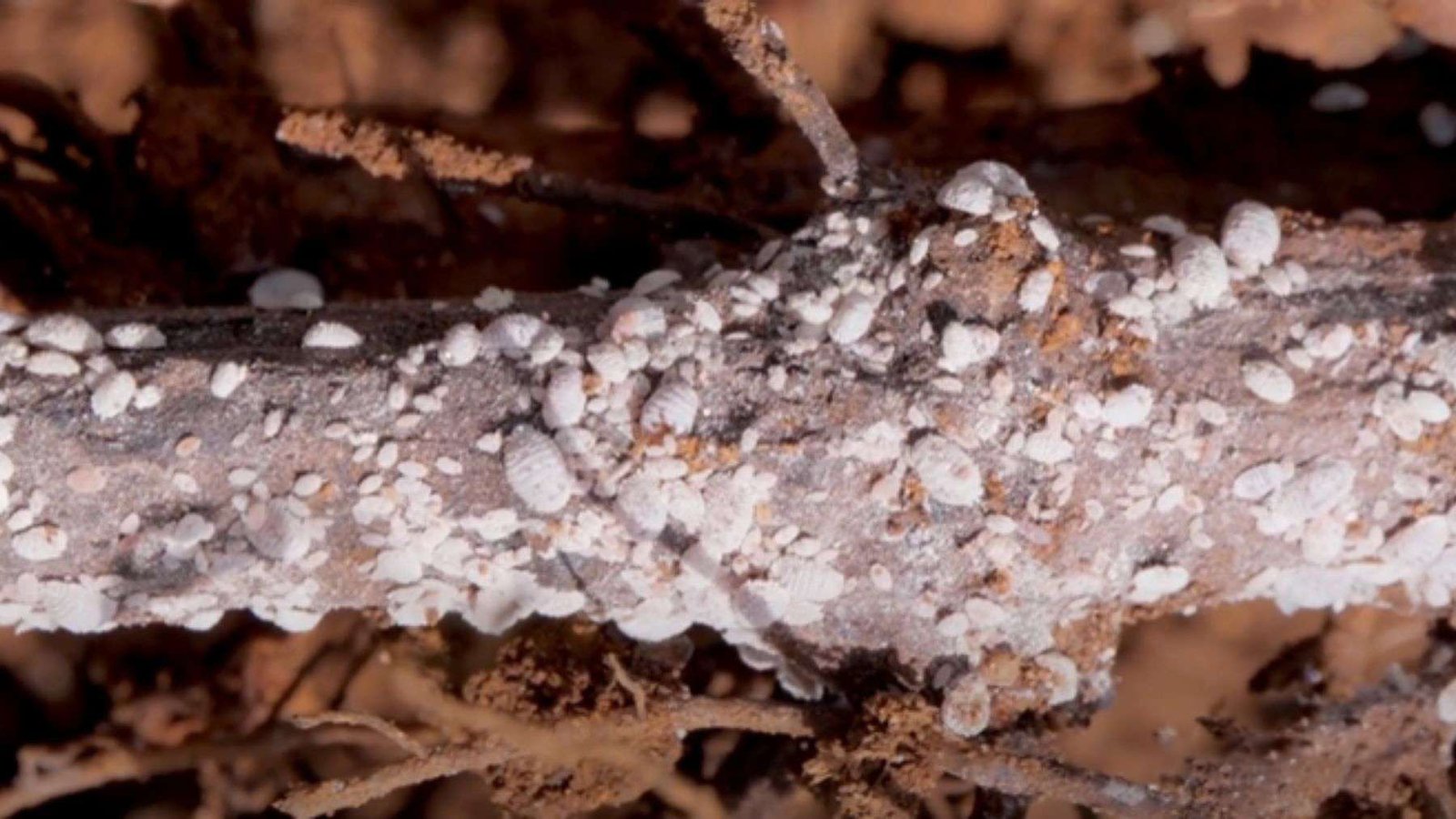
- Pest Description: Small, soft-bodied insects covered in a powdery wax.
- Damage/Symptoms Caused: Leaves may yellow, drop, or become covered in sooty mold from honeydew secretions, heavy infestations can weaken trees.
- Time of Year: Present year-round in warm conditions, populations may peak during summer.
- Control Methods: Insecticidal soap or horticultural oil spray thoroughly applied, biological controls like ladybugs that feed on mealybugs.
Mealybugs can plague indoor citrus trees due to their cryptic wax coatings. Females give live birth to crawlers that rapidly spread on plants. Both feed by piercing leaves and stems to suck out sap. Their feeding activity leaves unwanted residues from expelled honeydew high in sugars. This sooty mold doesn’t harm plants but looks very unsightly.
Heavier tapping by large numbers of mealybugs stresses trees, yielding blotchy yellow foliage and premature defoliation. Chronic infestations may negatively impact tree health over time by disrupting sap flow. Their powdery exterior also provides camouflage to elude detection.
To inspect for infestations, carefully scrutinize all areas of plants, including undersides of leaves, stems, and locations where branches meet the trunk, using a 10x hand lens. Look for the small pink/gray bugs alone or in clusters. The vinegar-soaked cotton ball test can assist by disturbing hidden undercoats and causing the bugs to flee.
Insecticidal soap or horticultural oil sprays power-wash crawlers and smothers any oil-coated individuals. Be sure to drench hidden areas they favor, like leaf axils and under sheaths.
Biological controls like ladybugs and their larvae voraciously feed on mealybugs of all stages. Introduce them as a long-term solution. Your citrus trees can stay mealybug-free with regulated treatment and monitoring during warm seasons!
7. Aphids

- Pest Description: Small, soft-bodied insects that feed on plant sap.
- Damage/Symptoms Caused: Leaves may curl or yellow from toxins in saliva, sooty mold grows on honeydew secretions, heavy infestations can stunt new growth.
- Time of Year: Present year-round in warm conditions, populations may peak during spring and summer.
- Control Methods: Insecticidal soap or horticultural oil spray applied weekly, biological predators like ladybugs and lacewings feed on aphids.
Aphids can persistently plague indoor citrus trees in both winged and wingless forms. They feed by piercing plant tissues and sucking out sap, excreting sticky honeydew. This residue encourages the growth of sooty mold, an unappealing sign of an infestation. Some aphid species also spread plant diseases as they feed from one tree to another.
Their small size and ability to rapidly reproduce colonies allow populations to explode quickly if left unmanaged. Heavy infestations result in telltale curled or discolored leaves and stunted new growth.
Affected trees appear generally unthrifty. Aphids often congregate on tender new shoots, leaf undersides, and protected crevices.
Regular inspections allow early detection before large numbers take hold. Insecticidal soaps or horticultural oils have contact-killing action against exposed aphids. Thorough coverage is essential, ensuring the penetration of sheltered areas.
Biological control with imported ladybugs and their larvae, as well as native lacewing larvae, provides a greener approach as these natural predators feed avidly on soft-bodied aphids.
With dedicated monitoring primarily during warmer seasons and consistent spraying as needed, the reproductive cycles of aphids can be out-paced. This protects citrus trees from declining health and maintains their picturesque appearance. Staying one step ahead leads to bountiful harvests!
8. Citrus Red Mite

- Pest Description: Tiny reddish mites that feed on leaves.
- Damage/Symptoms Caused: Stippling, bronzing, or yellowing of leaves from sap-feeding, Premature leaf drop in heavy infestations.
- Time of Year: It may be present year-round but thrives in warmer months, Populations usually peak from May through September.
- Control Methods: Contact miticides applied at first signs of damage or when mites are spotted, Repeated applications are required to control successive generations.
The citrus red mite presents challenges due to its minuscule size and overlapping generations. Females lay multiple batches of eggs during favorable seasons from these hatch microscopic six-legged mites that feed on leaf tissues.
Their piercing-sucking damages chloroplasts, stunting photosynthesis. Over time, this results in stippling or bronzing of leaves. Heavily tapped foliage turns yellow and drops early. Trees sustain cosmetic blemishes or stunted growth depending on severity.
Red mites thrive during warm spells but can persist year-round in greenhouses. It’s important to check new leaves weekly using 10x magnification for reddish specks. Contact acaricides applied at initial damage or mite sightings kills on contact.
Be sure to target the undersides where they hide. Repeating applications weekly, biweekly, or as directed by the label until damage ceases is necessary to eliminate successive tiny generations as they appear. With patience and dedication to monitoring and timely treatment, you can prevent these pesky mites from marring trees.
9. Fungus Gnats

- Pest Description: Small black flies that live and breed in potting soils,
- Damage/Symptoms Caused: Adults are minor biters but larvae feed on fungi growing in soil, Heavy infestations can damage roots,
- Time of Year: Present year-round in warm, moist indoor conditions, Populations often peak in spring and summer,
- Control Methods: Reduce watering and allow soil to dry slightly between waterings, Treat soil with parasitic nematodes or insecticidal drenches.
Fungus gnats thrive in constantly moist potting mixes favored by indoor citrus trees. Adults are harmless, but larvae feed subsurface on fungi sustaining gnat numbers. Large numbers undermine the bioavailability of certain micronutrients and cause roots to rot or fail to develop properly. Adult gnats are tiny, slender flies attracted to light.
Their presence is usually first noticed hovering and skittering near pots. The true impact lies beneath ravenous subterranean larvae. Maintaining moisture control helps limit fungal growth depended on for gnat reproduction.
Allowing soil surfaces to dry slightly between thorough waterings disrupts larvae. Target treatment application works, such as nematodes that enter larvae and parasitic wasps that lay eggs within them.
Trees remain unstressed from root feeding by understanding fungus gnat life cycles and integrating multiple approaches primarily in their most active seasons. Healthy plants yield abundant harvests!
Conclusion
Indoor citrus tree growers now have greater insight into identifying and addressing key pests that may affect their trees.
- Scale insects and mealybugs require contact sprays or oils often found on branches and leaf undersides.
- Spider and citrus red mites create stippled leaves through sap feeding, managed with miticides.
- Aphids and whiteflies form colonies using contact products plus biological predators as winged sap-feeding insects.
With diligent scouting, timely applications of integrated controls mentioned, and patience during infestations, indoor citrus cultivars can thrive bountifully. Understanding pests is empowering versus feeling overwhelmed.