
How to transplant a peace lily effectively can be challenging, but it is possible. Peace lily is one of the most popular plants of the Araceae family due to its low maintenance and green glossy leaves that make it more attractive.

This detailed guide will teach you how to create an ideal condition for this flawless plant to thrive.
What Are the Important Factors to Transplanting a Peace Lily?
The important factors when transplanting a peace lily include knowing the best time to transplant, adequate watering, optimum light, and temperature requirement, fertilization, and proper potting techniques to ensure a successful Peace Lily transplant. Keeping these points in perspective will allow this houseplant to thrive.
The beautiful plant has several other benefits, such as air purification and mold spore removers.
1. Best Time to Transplant
The suitable time to transplant lilies is spring, when they are actively growing. In this period, peaceful lilies produce new leaves and roots, making them more robust and better able to recover from transplant shock.
Transplanting always ensures that plant-specific needs are met. Don’t transplant in winter because, at this time, they are less active and have a less favorable time for root establishment and optimal growth.
2. Temperature Requirements
The lilies are tropical plants that need a specific temperature requirement to thrive. The ideal temperature for a lily plant is between 68 to 85 degrees Fahrenheit. In addition, they can tolerate slightly cooler temperatures, not less than 10 degrees Fahrenheit.

Try to avoid temperatures below 60 degrees Fahrenheit for plant safety. Always prevent your plant from cold drafts because peace lily plants are susceptible.
Keep them away from windows, doors, and areas with drafts, especially during wintertime. However, if you are growing them outdoors, bring them indoors before the first frost. Maintaining a slightly cooler temperature at night but at least 50 degrees Fahrenheit is vital.
3. Light Requirements
Peace lilies are considered indoor plants to live in low to bright indirect sunlight. Avoid exposing them to direct sunlight because their leaves are delicate and can be burned in direct sunlight. One of the most unique reasons they are considered indoor plants is they can tolerate low light.
You can use artificial light if you don’t have natural light access or suitable windows in your home. Place the peace lily under fluorescent, LED grow, or other suitable indoor plant lights. Keep the light source at least a few inches above the plant.
4. Proper Pot
Choosing the right pot for your plant is essential to maintain health and growth. Choose a pot that should be larger than the plant size. The pot should be more significant at least 1 to 2 inches than the current pot. Make sure that the selected pot has drainage holes in the bottom. Proper drainage is vital to prevent lilies from diseases.
Different pots are available according to your preferences, but plastic pots retain moisture well and are light enough. If you plan to move your pot consistently, then clay and ceramic pots can be heavy and hard to manage.
5. Watering
Proper watering is vital for the health of your beautiful, peaceful lily. You must give them water before and after transplantation to maintain their health and growth. Always use room temperature filtered water because lilies don’t like chemicals like chlorine that may be present in tap water. Water your peace lily when you feel the soil is dry. You can check this by hand or use a soil tester.

Don’t overwater the lily plant because it can cause rotting of roots. Always err by letting the soil dry out slightly between watering. The best time for watering is early morning; if you missed it, don’t worry; you can also give them water in the evening.
6. Fertilization
Fertilization is vital to keep lilies healthy and active throughout the year. Peace Lily maintenance is vital, and lilies love to grow in acidic soil, used in fertilization for better water drainage. Lilies actively grow during summer and spring, so this is the ideal time to start fertilizing.
Start with a balanced fertilizer ratio such as 10-10-10. If you are planting indoor plants such as peace lily, you can use a liquid fertilizer because it is convenient for house plants. Avoid fertilization in winter because this is not a suitable time for fertilization.
How to Transplant a Peace Lily Successfully at Home
To transplant a peace lily successfully at home requires a slight soil for well-draining purposes, a proper hole for planting the tree nicely, and an organic mulch layer to protect your plant from weeds and aphid attacks. Following these steps will ensure a healthy transplantation.
Let’s explore these steps one by one.
1. Prepare the New Pot
Select the pot that should be larger than the current one. Peace lily loves to be slightly root-bound, so avoid selecting a too-large pot. Clean the pot carefully; if used or stored for a while, you can wash it with warm, soapy water to remove dirt.
After that, add a high-quality potting mix to the bottom of the new pot. It is the best way to increase the drainage; the potting mix layer should be deep enough at the same level as in the old port. Peace lily potting soil helps plants to thrive.
2. Position the Peace Lily
Place the peace lily in the center of the hole in a new pot. Make sure that you place the lily plant into the exact center of the hole. Once you place the plant into the hole, fill it with the potting mix soil.

Place your peace lily pot where it can receive bright and indirect sunlight and maintain and maintain a suitable temperature and humidity.
3. Mulch Layer for Protection
A mulch layer is unnecessary for indoor plants such as Peace Lily because they are already potted in well-draining soil, so they don’t need a mulch layer around their base. If you are growing a peace lily outside, you can protect your plan from weeds and pests using an organic mulch layer.
Always use a high-quality mulch layer, such as a wood layer. These mulch layers protect our plants and encourage them to grow more. Additionally, it also helps to retain moisture and control the soil temperature as well.
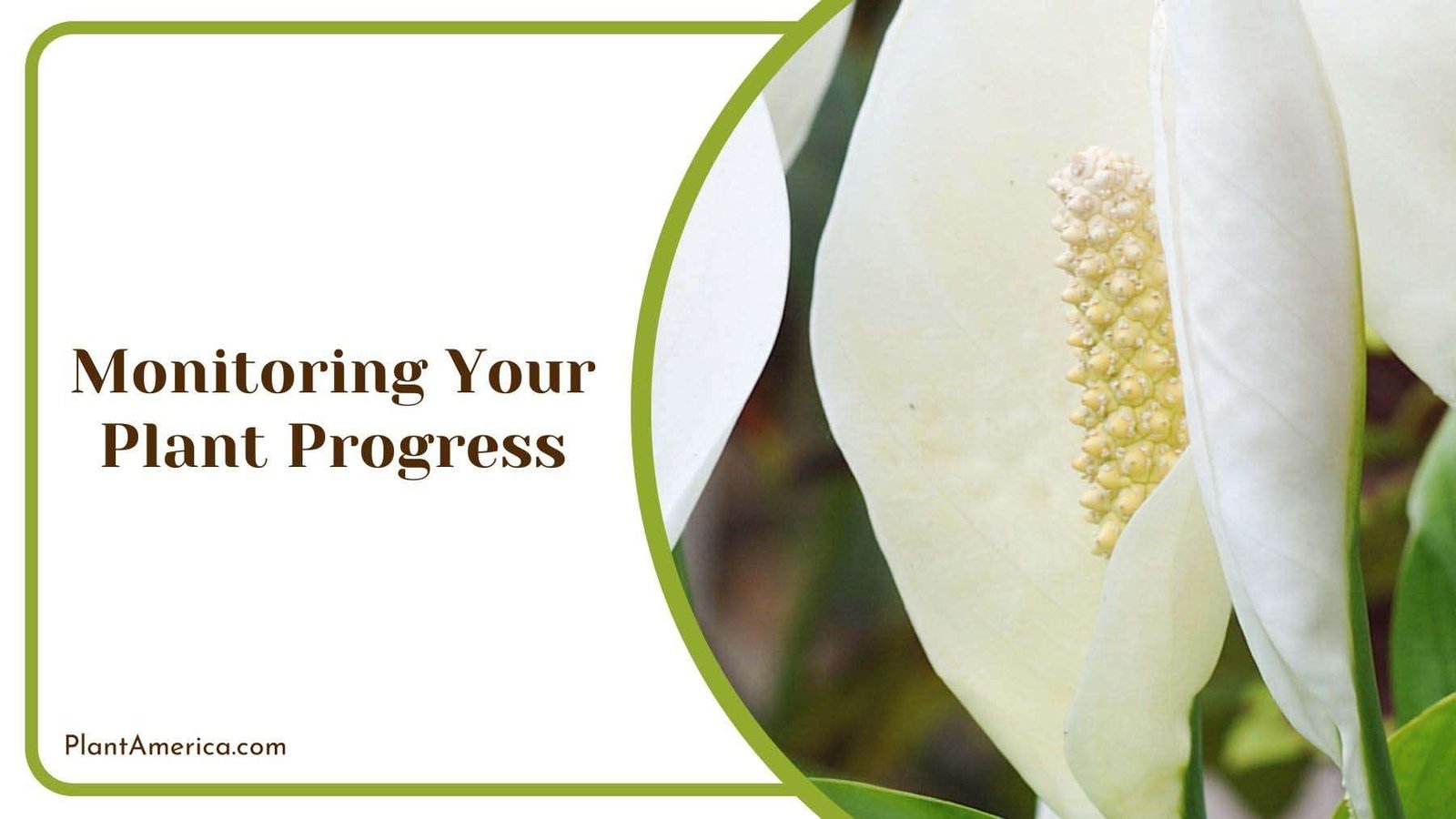
4. Monitoring Your Plant Progress
Monitoring your plant’s progress is vital for the plant’s overall health and well-being. Regular monitoring helps detect any issue early, take action, and save your plant life.
Monitor the soil moisture because peace lilies are sensitive to both underwater and overwater. Always give them appropriate water to keep them active and healthy.
In addition, constantly monitor the leaf’s progress; healthy leaves are always green, vibrant, and free from yellowing and other spots. If you see any spots and discoloration, then you should take action. You can consult with professionals to learn how to handle this issue.
How to Take Care of Your Peace Lily Plant
To take care of your peace lily plant, there should be regular pruning, humidity, and pest control to ensure that the plant is safe from many diseases and pest attacks because pests attack peace lilies and damage their overall health, so proper action is essential to keep your plants safe.
Here is a comprehensive guide regarding peace lily care.
1. Pruning and Dead-heading
Pruning is the best way to protect your plant from diseases and pest infestation. Peace lilies don’t need regular pruning because these are indoor plants. Pruning encourages them to produce new and healthy leaves.
Remove the damaged leaves, and branches don’t go toward healthy leaves because these healthy leaves are essential for plant growth. Always use recommended tools for pruning.
If your peace lily needs to grow correctly or become lopsided, you should prune it for shape improvement. Trim back longer stems to create a more symmetrical appearance. There is no particular time for pruning. You can start as you need.
2. Repotting
Repotting is essential to keep your plant healthy and protect it from dangerous diseases. Repotting provides enough room for the root ball to access and take the fresh nutrients. According to general guidelines, report your peace lily every 1-2 years, and spring and summer are perfect for repotting.
Always select a large pot where plant roots can expand quickly; after repotting, the lily requires fresh water to adjust with a potting soil mix, allowing water to drain from the bottom.
Once you complete this process, you can keep your new pot in a location with bright, indirect sunlight. Always prevent them from direct sunlight because they are sensitive and cannot tolerate the scorching sun.
3. Humidity
Peace lilies grow in tropical environments and already grow in high humidity levels. Providing an adequate level of humidity is vital for plant health. Aim to keep the humidity level between 35 % and 45%.

In addition, you can use a humidifier to maintain the room humidity level. The ideal humidity level protects the plant from brown tips and edges.
During the winter season, it is essential to maintain the humidity level according to requirements because when the heating system runs inside the home, the air can become dry, so, at this point, plant care is our responsibility.
4. Pests Control
Lily care is essential, and you should protect them from pest attacks. Yellow aphids and spider mites attack these flawless flowers and damage their root balls. Regular inspection can help you to find the signs of pests. Early detection can prevent the infestation from becoming severe.
Insecticidal soaps are the best way to protect your pants from pests and infection. If there is less infestation, then you should remove them manually. Otherwise, you can use this soap to remove pests from your plants. You can use neem oil if you don’t want to use insecticidal soap.
Neem oil is another natural pesticide, and it works completely fine. Many other valuable pesticides are available, but before trying those pesticides, always consult with professionals.
Frequently Asked Questions
– How to Successfully Transplant a Peace Lily Indoors
To successfully transplant a peace lily indoors, you must find the ideal pot or container, place the lily into it nicely, and tamp it well to remove the air pockets. Give a freshwater for better adjustments into a new location.
– Can You Repot a Peace Lilies While They are Flowering?
No, you cannot repot peace lilies while they are flowering because it can cause plant stress, and plants may start dropping flowers in the growing season. So always avoid repotting your stylish peace lilies while flowering, but if necessary, you can consult experts for better advice and suggestions.
– How To Repot a Peace Lily With Root Rot
To repot a peace lily with root rot starts with removing the damaged root or cutting the affected area; clean the pot with soapy water, add a layer of potting mix, and place the peace lily inside the pot and give it fresh water.
Conclusion
The peace lily is a beautiful white floral plant that can be grown anywhere.
- In the care guide, we have discussed how you can transform this excellent plant indoors.
- Another benefit of this plant is that the lily can survive in low light, so it is beautiful if you want to grow it inside the house.
- These plants are grown in containers or pots, so repotting peace lilies is essential to maintain their growth.
Follow all these instructions and transplant the peace lily into your beautiful house. We hope you liked the information.