
Stop neighbor’s tree roots from entering your yard and causing damage to the foundation and plumbing of your house by following our complete guide given below.

This is a problem lots of homeowners have, so we have compiled some of the easiest and most effective ways of solving this problem for you.
JUMP TO TOPIC
How To Stop Neighbor’s Tree Roots
Stop the neighbor’s tree roots from entering the yard by installing a root barrier all around your property or do some digging to cut out the roots or the entire tree. Another great option is transplanting the offending tree to another location.

You can stop the neighbor’s tree roots from entering your yard or roots under fence by either cutting off the invading root or the entire tree altogether.
Find out about all these options in detail below.
– Install a Root Barrier
A root barrier is a mechanism by which you can prevent tree roots from encroaching into your territory. There are two types of root barriers available.
Chemical barriers work by destroying the invading roots and preventing their further growth. However, they also destroy other plant life in the vicinity, which is why we never suggest chemical root barriers.
Physical roots barriers are proper boundaries deep underground that prevent the invasion of neighboring roots in your yard. Instead, they force the roots to burrow deeper still.
Ideally, you should have a root barrier installed around your property whenever you build or buy a new house. But you can also carry out this undertaking at a later time if you feel that your neighbor’s trees have begun invading your property through their roots. Learn how to install a root barrier here.
Plan how much area between your neighbor’s property and yours needs to be chosen for this task. Take measurements thoroughly.
Fill the rest of the trench with soil and dirt. Add soil and water, then soil and water and so on until the trench is completely filled. This ensures that the barrier is firmly planted into the soil.
– Chop the Roots or the Tree

Is it possible for a neighbor’s tree roots are damaging my property? Yes, when your neighbor’s trees are particularly large and strong, their roots might actually creep into the ground below your house and damage its foundation.
This is a problem common in houses built more than 20 years ago when adding root barriers was not common practice.
These days, with most of us having concrete foundations, not very significant damage occurs to them. Still, you still might notice certain damaging signs such as those given below:
- Cracks in the floor of the foundation are evident. You will notice that most of these cracks are vertical.
- The doors and windows of your house might start appearing askew.
- In severe cases, your yard or floor might start buckling due to pressure from below.
Here are the steps you can take when this happens:
First of all, carry out a proper inspection to make sure that your neighbor’s trees are, in fact, responsible for this structural damage. Dig into the foundation near the trees and see if any roots are going in the direction of your foundation.
Many people ask us “Can I cut tree roots on my property that belong to neighbors?” and “What do I do with neighbor’s tree roots in my yard?” The answer to that is that technically yes, but it is still better to obtain the permission of your neighbor first. If they don’t comply, then try involving the local municipal and horticultural authorities in the matter.
One option is to chop off the offending root only. Obtain a permit for it first and install a root barrier against your foundation to prevent further encroachment by the root when it grows back.
– Digging Around the Plumbing
Sometimes your neighbor’s roots will extend under the ground in your property and reach your plumbing. They will find a source of leaking water like a crack and move towards it. You will soon begin to experience some problems.
Here are some tell-tale signs that your plumbing has been affected by your neighbor’s roots:
- Your drains will start to clog and will not clear even with a plunger or a drain cleaner.
- You will begin to experience changes in the water pressure of your house.
Thankfully, you will not have to cut the entire tree or even a whole root in order to save your plumbing.
Simply dig around the plumbing then call in a tree trimming expert to trim that part of the root that has grown towards the plumbing. Also, call in a plumber to replace the damaged pipes. Before closing the dug-out trench again, protect the plumbing with root barriers.
– Transplant the Tree
Sometimes when a tree starts to extend its roots too much into the ground, getting rid of it becomes the only option. However, instead of killing the plant or cutting off its roots which also puts it at risk, why not transplant it someplace where it can thrive without bothering anyone?
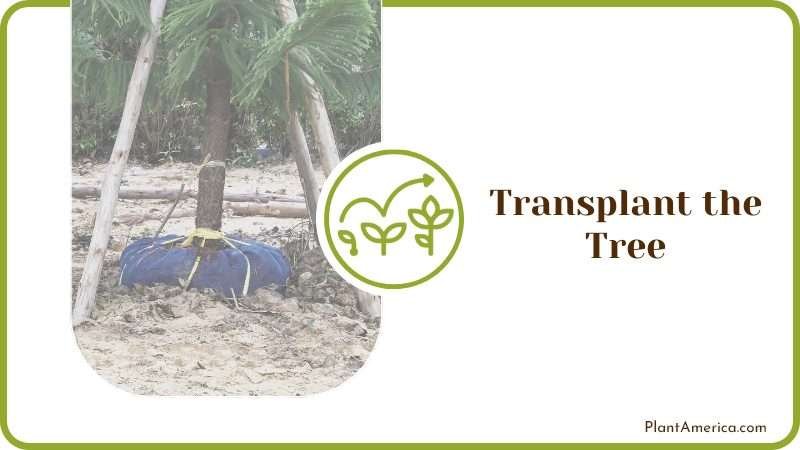
If both you and your neighbor are on the same page regarding this option, then there is no better alternative.
Before transplanting a tree, we suggest you contact or hire a professional. If you want to go ahead with this yourself, then you must educate yourself first.
Determine the diameter and the depth of the tree’s root ball first, then demarcate the area on the ground where this entire root ball is potentially present. Wet the soil deeply before you start digging. Dig the whole tree out very carefully. It’s better if you take it out with some soil still attached to it.
Use a proper vehicle to transfer this tree to a previously dug hole in the ground. Take great care of the plant for the first couple of weeks so it doesn’t end up being damaged by transplant shock.
Preventing Roots From Falling Into Your Garden
Not planting trees with invasive roots and planting trees at a distance can prevent neighbor’s roots from entering the yard. Read some useful preventative guidelines to stop the invasion of neighboring trees in your yard:

- Educate yourself about trees with the most invasive roots. Discuss with your neighbor before planting these trees. Some trees with the most aggressive roots are the maple, poplar and willow trees.
- If your house’s foundations weren’t reinforced with root barriers, then trees should be planted at a distance of at least 10 feet from pavements and underground utilities.
- Trees with invasive roots should be planted even further than this. It would be better if you could double the distance to 20 feet.
- It would be best for your yard if you take the effort to install proper physical root barriers all-around your property. This will prevent neighboring roots from invading under your property and destroying it.