

The Echeveria Minima plant of the Crassulaceae family brings charm, beauty, and magic in its compact form, whether indoors or outdoors. Growing small Echeveria genus species like the Minima succulent plant is a great way to incorporate greenery into tight spaces with ease and elegance.
Succulent collectors often find growing Echeveria Minima quite easy, as long as its roots remain relatively safe in potting soils with some gardening sand mixed in. It’s no wonder many growers propagate Echeveria Minima for its enthralling looks and ease of care!
Echeveria Minima Care
The Echeveria Minima plant is exceptionally easy to care for and maintain, provided that all the basic succulent requirements are met. The plant may seem intimidating initially, but many novice growers have become adept at taking care of these sweet succulents.
 Water
Water
The Echeveria Minima succulent plant prefers to slightly dry out its soil before being watered again. Succulents like this plant do not tolerate excess moisture in the soil and root system.
Prolonged exposure to excess and stagnant water can cause the plant to experience root rot, which can eventually cause it to perish.
The ideal watering approach is the “soak and dry” method. This technique involves watering around the soil of the plant until excess water drains away.
The soil is then left to slightly dry out before watering again. When grown in colder regions, watering frequency should be reduced.
 Light
Light
The Echeveria Minima plant prefers high levels of bright indirect light, although it tolerates a certain amount of direct sun exposure. High bright levels of sunlight trigger the plant to produce colors at its leaf margins and tips, making them quite decorative.
Excess direct sun exposure can lead to leaf burns and should be avoided. When grown indoors, the most ideal locations for these plants are on windowsills that face south. When possible, east- and west-facing windows are also ideal.
 Soil
Soil
The Echeveria Minima plant requires fast-draining soil to keep its root system healthy and free from constant exposure to stagnant water. Commercial cactus soil mixes are ideal potting and planting mediums for this succulent.
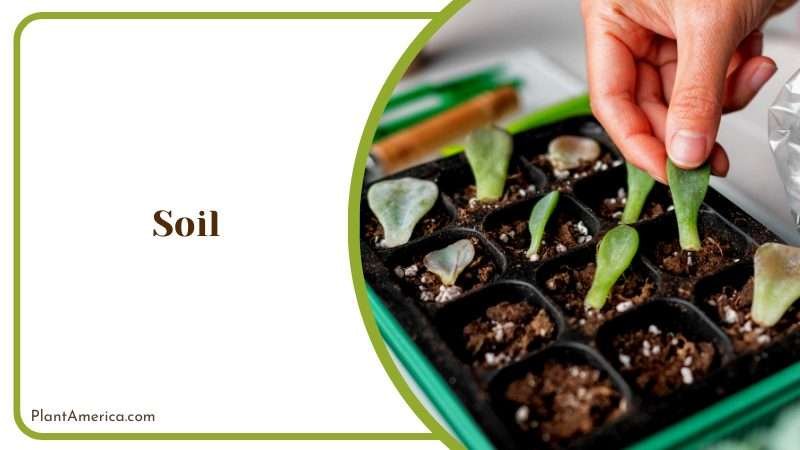
For gardeners who wish to make their own soil mixes, equal parts of gardening soil, gardening sand, and pumice or perlite make up the ideal combination.
 Temperature
The Echeveria Minima plant thrives in warm, dry environments. The plant may tolerate lower temperatures but may not thrive well as it is not cold-hardy. The lowest temperature the plant can tolerate is 20 F, so most growers ensure that the plant is placed in warmer conditions.
Regions in North America that are ideal for the Echeveria Minima plant are those located in the USDA zones 9 through 11. When grown outside of these areas, keeping the plant indoors where temperature can be regulated is recommended.
 Humidity
The Echeveria Minima succulent plant has become accustomed to growing well in areas where the humidity is low. Regions where the air is arid ensure that the succulent plant does not experience conditions where fungal and bacterial growth may occur.
When grown indoors, the Echeveria Minima is recommended to be kept in rooms where the air moisture levels are not extremely high.
 Fertilizer
The Echeveria Minima succulent plant normally does not require supplementary feedings as it has adapted to grow in poor soils. When cultivated, the plant appreciates Minimal amounts of fertilization.
Ideally, the growing period of the succulent would benefit from diluted cactus fertilizer every two weeks. When grown in cooler locations, fertilization should be stopped.
– Rest Period
The Echeveria Minima plant normally does undergo a period of dormancy or rest. The warm, dry regions in which the plant is normally found ensure that it does not experience low light levels, low temperatures, or excessive moisture.
When grown in colder regions, the Echeveria Minima may undergo a slight winter dormancy. During this time, watering should be reduced, and fertilizer feedings should be halted.
Propagation
The Echeveria Minima succulent plant can be propagated in various ways that have been proven to yield high viability.
– By Stem Cuttings and Leaves
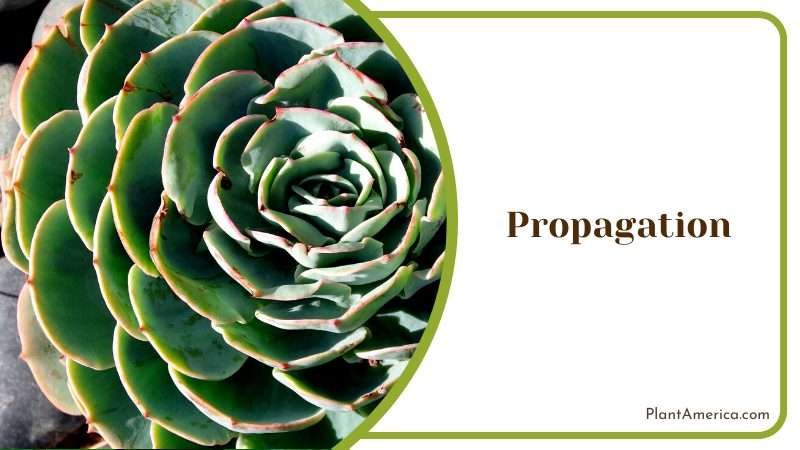
When using stem cuttings and leaves, the Echeveria Minima has been shown to be exceptionally easy to propagate. This method involves planting calloused cuttings and leaves into ideal soil mixtures. Cultivators then water the calloused parts, similar to the parent plants.
– By Offshoots
Offshoots from the parent plant are great options to ensure high seedling viability and yield.
– By Seeds
The least ideal method is to propagate the plants using Echeveria Minima seeds. Due to the slow-growing nature of the plant, using seeds to propagate it may yield extremely low and slow viability and yield.
Problems
The Echeveria Minima is normally a very healthy succulent species, although it can be susceptible to some pests if the plant becomes unhealthy.
Fungal, viral, and bacterial infections may occur if the Echeveria Minima plant has its roots constantly exposed to stagnant water, leading to root rot.
From this condition, pests like spider mites, mealybugs, and soil gnats may attack the plant in its weakened state.
Intervention
To remedy this situation, ensure that any rotting parts are removed from the plant. The pests may be eliminated using commercial insecticides or neem oil solutions.
Facts

– Name Origins
The Echeveria Minima succulent plant is named after Atanasio Echeverria y Godoy, a Mexican 18th-century botanist and botanical illustrator who studied extensively at Mexico’s Royal Art Academy.
The epithet “Minima” refers to the small, compact size of the succulent. While the plant can be commonly called the Dwarf Echeveria, the name can be pretty confusing as there are many Echeveria succulent plants that are also small.
– Size
The Echeveria Minima plant grows up to around three to five inches tall and up to four inches wide. The succulent plant is a slow grower despite its clumping habit. The size of the succulent plant makes it a perfect addition to many indoor and outdoor surfaces where its striking foliage offers a visual relief.
– Leaves
The Echeveria Minima succulent plant has dense leaves that form a rosette. The leaves are bluish-gray green in color and are known to show reddish, coral pink leaf margins and tips when exposed to full sun. Care should be ensured that the plant does not become overly exposed as prolonged direct sun exposure could lead to leaf burns.
The leaves of the Echeveria Minima can become so densely packed that the lower halves of the leaves are often not visible. The smooth, waxy texture of the leaves ensures that the succulent efficiently stores water. Wrinkled leaves indicate dehydration.
– Roots
The Echeveria Minima has a very shallow root system composed of fine, hairy root tendrils. The root system is common to many succulents. Although fibrous and shallow, the root system is a very efficient organ in acquiring moisture from the soil.
The efficient root system of the plant is an evolutionary reaction to living in dry and arid conditions. Over decades, the succulent has adapted to thrive profusely in areas where other plants do not survive, making the Echeveria Minima a desert darling for many growers.
– Flowers
The Echeveria Minima flowers are produced from a slender stalk that develops and rises from the basal center of the plant. The flowering of the Echeveria species is often attributed to long periods of bright light where photosynthesis produces enough energy for blooms.
The flowers of the Echeveria Minima plant are tubular and shaped like bells. The colors of the blossoms come in delightful hues of oranges, peaches, and pinks, making the plant especially endearing.
– Habitat
The Echeveria Minima succulent plant is found locally in Mexico and some parts of Central America, South America, and North America. Warm arid regions are especially favorable for the plant, where it can be found growing in rocky outcrops with sandy soils.
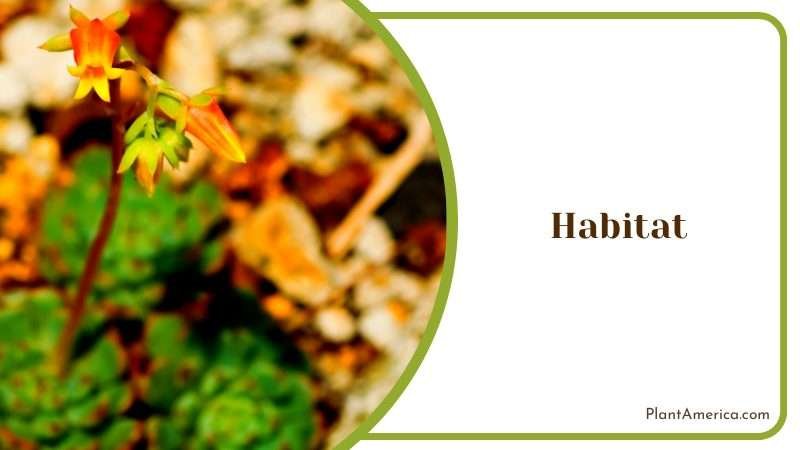
The Echeveria Minima plant often grows under trees and rocks, where it can be protected from harsh sun exposure yet still receive water during rainfall.