
Dumb cane leaves turning brown can be a wake-up call for plant parents. It indicates that the plant is suffering from challenges like infections, poor soil health, and pest attack. Therefore, you should act immediately if you see brown patches on the leaves.

To learn what to do, continue reading until the end of this guide.
Why are Your Dumb Cane Leaves Turning Brown?
Your dumb cane leaves are turning brown due to root rot, a fungal infection that attacks plants when you overwater. In addition, poor soil health and pest invasion can also lead to the discoloration of cane or Dieffenbachia plants in some cases.
– Root Rot: Aftermath of Wrong Dieffenbachia Watering
Root rot or dieffenbachia leaf rot is a sneaky issue that often goes unnoticed until it starts showing its effects on the plant’s foliage. It occurs when the plant roots become waterlogged, and the environmental conditions become humid.
When the soil remains consistently soggy, it deprives the roots of the oxygen they need to thrive. This lack of oxygen creates a breeding ground for harmful fungi, including the one responsible for leaf rot.
Now, when the roots can’t do their job, the plant responds by displaying signs of distress (brown patches). If you suspect root rot might be the reason behind your cane’s brown leaves, you should first gently unpot the plant and examine the roots.
Healthy roots should be firm, white, and slightly woody. If you notice mushy, brown, or black roots, it’s a sure sign of root rot.

– Poor Growing Medium: Bad Soil Health
Sometimes, it’s not about how much you water your plant but the soil quality it’s rooted in. A bad growing medium can also stress the roots and stop them from functioning. When this happens, browning (discoloration) is a matter of time.
The biggest soil problem is poor drainage. The roots will stay waterlogged if the growing medium retains water for too long. You now know root rot occurs due to this. But poor soil health isn’t just about drainage but also the pH levels.
Dumb cane plants prefer slightly acidic to neutral soil. If the pH level is off (too alkaline or too acidic), it can stop the plant from absorbing essential nutrients, resulting in those dreaded brown leaves.
So, how do you confirm poor soil health? First, let’s talk about drainage. To check if poor drainage is causing the cane leaves to turn brown, water your plant as you normally would and observe.
If water accumulates at the bottom of the pot or takes an eternity to drain away, that’s a sign of poor drainage. You can use a pH meter or testing strips available at most gardening stores to assess soil pH.
– Fluoride Toxicity: Applying Hard Water
Are your dumb cane leaves turning brown and brown? If yes, then hard water might be the reason. It contains higher levels of fluoride that garden plants can’t tolerate. When you consistently apply fluoride-rich tap water to your plant, it can gradually accumulate in the soil.
The fluoride toxicity disrupts the normal water flow through the plant, leading to dehydration and damage. As a result, you may notice your plant leaves becoming crispy and brown at the edges.
– Incorrect Lighting Conditions
Are your dumb cane leaves turning yellow and brown at the same time? It happens when the lighting conditions are unsuitable. If your cane plant is exposed to too much direct sunlight, especially during the scorching hours of the day, it can cause the leaves to develop brown, crispy edges. This happens because excessive sunlight can result in sunburn.

On the flip side, insufficient light can also be a problem. If your plant doesn’t receive enough light, it may struggle to carry out photosynthesis effectively. As a result, you may notice Dieffenbachia crispy leaves.
– Pest Invasion: One of the Most Common Dieffenbachia Problems
Pests can wreak havoc on your beloved Dieffenbachia plant. For example, spider mites pierce the plant’s cells to feed on the sap (cell fluid). This feeding activity disrupts the normal functioning of the leaves, leading to a loss of color and vitality.
To confirm whether spider mites are responsible for your Dieffenbachia leaves turning yellow and brown, perform a thorough inspection. Examine the undersides of the leaves with a magnifying glass. If you spot tiny, speck-like creatures moving about, you’ve got spider mites on your hands. Additionally, look for fine webbing on the plant, a telltale sign of their presence.
– Potassium and Magnesium Deficiency
Potassium and magnesium are vital nutrients that play essential roles in a plant’s overall health. When Dieffenbachia or cane becomes short on these nutrients, it can lead to malnutrition.
One of the classic signs of potassium deficiency is the development of yellow leaves, particularly along the edges and between the leaf veins. This yellowing can turn brown if the deficiency persists.
On the other hand, magnesium deficiency can also manifest as yellowing, primarily affecting the plant’s older leaves.
We suggest conducting a soil test to confirm if nutrient deficiencies are causing the yellowing and browning of your Dieffenbachia leaves. Soil testing kits or services offered by gardening centers can help determine if your soil lacks potassium and magnesium.
What to Do When Dumb Cane Leaves Start to Turn Brown?
When dumb cane leaves start to turn brown, remove the discolored leaves first. Doing this will help plants save the rest of the foliage. After this, add water correctly, focus on lighting conditions, and feed nutrients appropriately. In case of a pest or disease attack, use natural remedies.
– Remove the Brown Leaves First
Pruning is one of the initial steps to help the plants get healthy. Many gardeners hesitate to do it, but it has many benefits. Firstly, pruning enhances the plant’s overall appearance by eliminating the unsightly brown spots and edges.
Secondly, it promotes healthier growth by redirecting the plant’s energy away from damaged leaves and toward new development.
Be careful when removing leaves or brown leaf tips. Use sharp shears to make clean cuts. Also, avoid tearing or damaging adjacent healthy leaves. We recommend cutting the brown leaves back to where they connect to the main stem (to prevent stressing the plant).
Furthermore, be sure to dispose of the removed leaves properly. Please do not leave them in the pot or on the soil, as they can potentially harbor diseases or pests. Instead, please put them in a sealed bag and dispose of them in the trash.

– Start Adding Water Correctly
Proper watering is crucial in preventing further leaf discoloration. The reason is simple: It keeps the roots happy, which makes the plant healthy.
Here’s what we suggest:
- Monitor First: Always check the moisture level of the soil before watering. Stick your thumb, pencil, or a wooden stick about an inch into the soil. If you sense dryness, it’s time to water. If it’s still moist, hold off on watering.
- Water Thoroughly: Make sure to water sufficiently. This means watering until you see liquid begin to drain from the bottom of the pot.
- Use a Well-Draining Potting Mix: Ensure your plant is potted in a well-draining mix. Good drainage prevents water from accumulating around the roots, reducing the risk of root rot.
- Consider the Environment: Factors like temperature and humidity affect your plant’s water needs. Adjust your watering frequency based on the conditions in your home. Doing this will avoid plant diseases like rot, dieffenbachia fungal leaf spot, etc.
Following these watering guidelines can create a healthier environment for your canes. It will reduce the risk of further brown leaves and promote its well-being.
– Maintain 6-8 Hours of Bright Light
Ensuring your Dieffenbachia receives the right light is crucial to keeping the leaves green.
We suggest placing your plants in a spot where plenty of bright and indirect light falls, such as:
- Near east-facing windows.
- Under tree canopy.
- Under awning
In case of low lighting, you can use LED grow lights. They emit a full spectrum of light that closely resembles natural sunlight, making them highly effective for indoor plants.
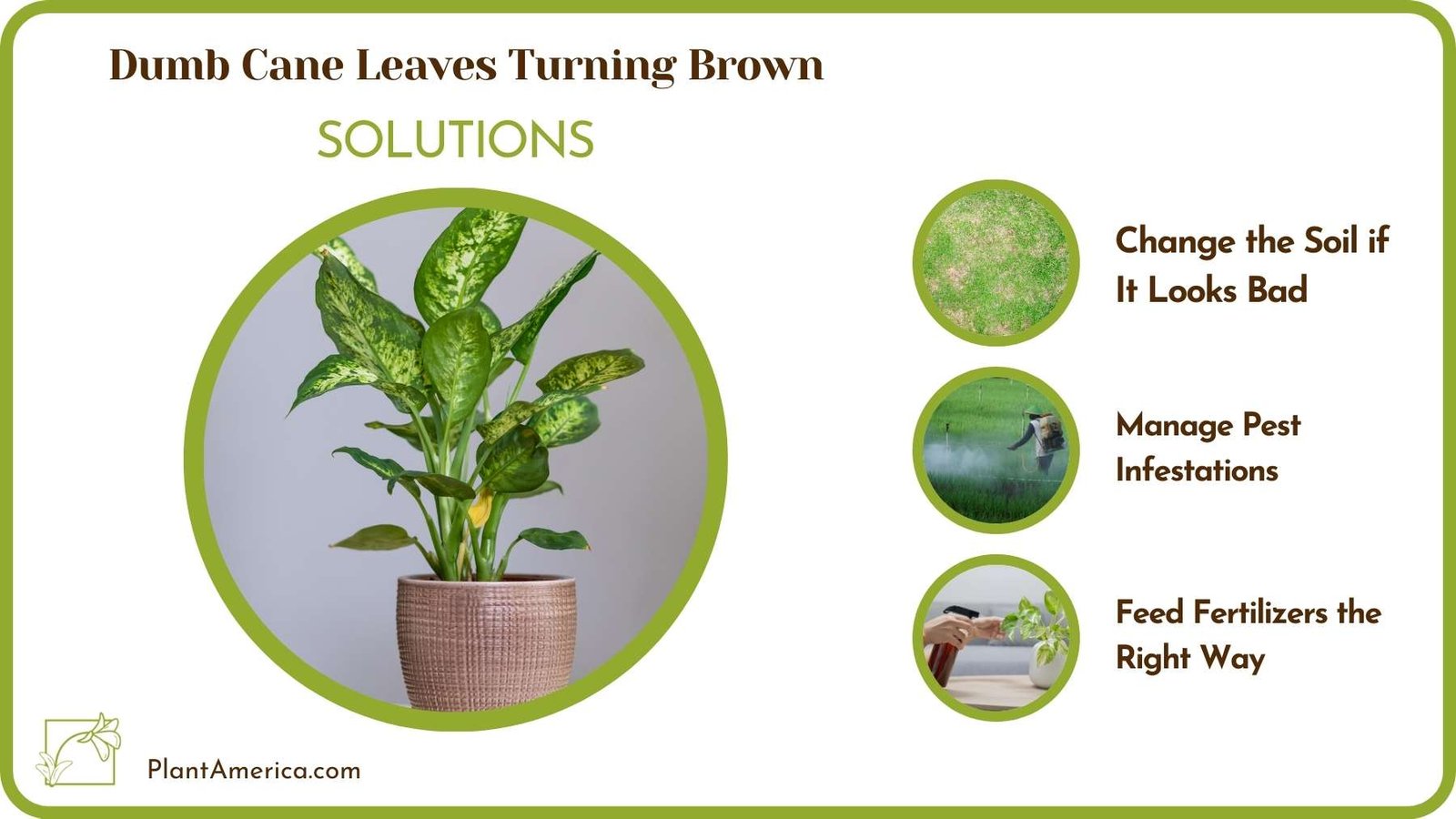
– Change the Soil if It Looks Bad
If you notice that your dumb cane’s soil is in poor condition, changing it can help address the issue of brown leaves.
Here’s a step-by-step guide on how to do it:
- Prepare a New Pot: Select a slightly larger pot with good drainage. Ensure the pot has a hole at the bottom to allow excess water to escape.
- Remove the Plant: Gently remove the cane from its current pot. Be careful not to damage the roots during this process.
- Clean the Roots: Shake off the old soil from the roots and examine them for any signs of rot. Trim away any brown or mushy roots using clean pruning shears.
- Spread Fresh Soil: Fill the new pot with fresh, well-draining potting mix. You can use a mix specifically designed for indoor plants.
- Replant: Place the Dieffenbachia into the new pot and fill the remaining space with soil by patting it down gently.
- Water Thoroughly: Give the plant a thorough watering to help settle the soil. Ensure that water drains freely from the pot’s bottom.
Don’t forget to keep an eye on the plant in its new soil. Adjust your watering schedule as needed, following the guidelines mentioned earlier.
– Manage Pest Infestations
If you see pests in your garden, act immediately. These tiny invaders can turn dozens of leaves brown in just a few days.
Here’s what to do:
- Isolate Affected Plants: If you detect an infestation, isolate the affected plant to prevent pests (like mites, bugs, etc.) from spreading to others.
- Soap Solution: Use insecticidal soap according to the product’s instructions. It’s a gentle and effective remedy for many pests, like spider mites, aphids, mealybugs, etc.
- Natural Predators: Release natural predatory insects like ladybugs to control pest populations in your outdoor garden.
- Rotate Locations: Periodically move your plants to different locations to disrupt pest patterns.
When you do these things, your pests will find it difficult to survive in your garden.
– Feed Fertilizers the Right Way: One of the Best Plant Care Tips
Properly feeding your Dieffenbachia with fertilizers can help it grow green leaves and fix the brown ones. But do it correctly, as wrong fertilization can worsen the condition.
- Choose the Right Fertilizer: Select a balanced, water-soluble fertilizer formulated for indoor plants. Look for a balanced NPK ratio (e.g., 10-10-10).
- Follow Instructions: Read the fertilizer’s label carefully and follow the recommended dosage instructions. Over-fertilizing can harm your plant.
- Feed During the Growing Season: Dieffenbachia typically thrives in spring and summer. Feed your plant every 4-6 weeks during this period.
- Dilute Fertilizer: Dilute the fertilizer in water to half or quarter strength to avoid overwhelming the plant with nutrients.
- Flush the Soil: Every few months, thoroughly flush the soil with pure and lukewarm water to remove excess salts that can accumulate from fertilization.
When you focus on fertilization and other solutions we’ve discussed, you’ll have a dumb cane plant full of green leaves.

Conclusion
In summary, dumb cane leaves may turn brown due to various causes, including root rot, poor soil health, fluoride toxicity, and more. Luckily, there are solutions to these problems, which we discussed in detail here. Let’s now sum up key points before we sign off:
- Remove Brown Leaves: Trim and remove affected leaves to redirect the plant’s energy to healthy growth.
- Proper Watering: Monitor soil moisture and water your plants correctly to avoid overwatering.
- Change Soil: If the soil looks unhealthy, repot your cane in a fresh, well-draining potting mix.
- Manage Pest Infestation: Go for various pest control methods, like insecticidal soap, natural predators, etc.
- Feed Fertilizers Correctly: Choose the right fertilizer, follow instructions, and feed your Dieffenbachia or cane during its growing season.
So, say goodbye to brown leaves and look forward to a thriving indoor garden!