
Brown tips on leaf of desert rose are caused by inconsistent or overwatering, low light, nutrient deficiency, low humidity, cold temperatures, pests, and bacterial and fungal infections. You can fix these problems by following a good plant care regimen.
Adenium obesum is a stunning flowering succulent that adds beauty wherever it grows. Our gardening team will help you understand why you might notice discoloration on the plant’s leaves and how to deal with this issue.
Why Are There Brown Tips On Leaf of Desert Rose?
There are brown tips on the leaf of desert rose because of inadequate watering, insufficient light, a lack of nutrients, low humidity, frost damage, pests, and diseases. These factors can all change the color of the glossy foliage of Adneiums from green to brown.
This succulent plant is typically easy to care for, so understanding the reasons behind foliage discoloration is crucial.
– Poor Watering Habits
Overwatering is one of the most common reasons for brown tips on the desert rose foliage. Adneiums are adapted to arid conditions and have low water requirements. Many home gardeners mistakenly think they should water this plant more often because it’s a flowering plant.
When these plants receive too much water, their roots become waterlogged. This leads to difficulties in nutrient and oxygen absorption. You’ll notice brown margins are spreading along the leaves. The overall leaves will turn yellow or brown when ignored.

Even if you water your plant regularly, it might experience overwatering and excessive moisture issues if you grow it in poorly draining soil. Since this succulent is native to desert climates, it will suffer if you grow it in clay soil. Inadequate drainage can cause signs of waterlogged soil, like root rot and stunted growth.
Underwatering is another factor that causes brown tips on desert rose leaves. When these succulents do not receive adequate water, they begin to utilize the water stored in their thick succulent leaves, which can result in tip browning, and you’ll see the leaves turning brown and yellow gradually. The plant may also experience wilting, leaf drop, and a weakened appearance.
– Low Light Exposure
The Adenium plant is native to tropical Africa and thrives in full sun. Without exposure to sunlight, this plant will experience wilting, and the desert rose leaf color will change from vibrant green to green.
This is why growing this plant in indirect sunlight or shade will affect the overall appearance of the plant. It might stretch towards the light and might not flower. Plants grown in the shade will also be prone to pests and diseases.
– A Lack Of Nutrients
Desert roses aren’t heavy feeders but can benefit from regular feeding. Seeing desert rose leaves turning yellow and brown is usually a sign of nutrient deficiency.
When grown in low-nutrient conditions, these plants will suffer. The foliage will become brown, and the plant won’t bloom.
This is common among potted plants, where the nutrients get depleted quickly. Yellowing and chlorosis may also be seen on the new and old leaves.

– Low Humidity
Low humidity can also contribute to brown tips on Adenium foliage. These plants thrive in dry, arid conditions but may struggle in environments with deficient humidity.
In arid conditions, these plants will start to turn brown at the edges, and the browning will spread as you continue to neglect the plant. You’ll also see the yellow leaves curling to prevent excessive moisture evaporation.
– Cold Temperatures
Just like most succulents, the Adenium plant is sensitive to cold temperatures. Exposure to cold conditions, especially frost, can cause tissue damage and, subsequently, browning of the leaves.
– Pests And Diseases
Common garden pests such as aphids, mealybugs, or spider mites can feed on the plant, causing stress and potential damage. Fungal and bacterial infections may lead to dead tissue or brown spots on the leaves.
You’ll probably see localized browning where the pests feed. As they suck on the sap, the foliage gets severely damaged, and the plant will also be prone to pathogens that these annoying pests transfer.
Seeing Adenium leaves turning to shades of bronze and brown indicates that this plant is affected by a bacterial or fungal disease like leaf spot. Fungal infections can be related to inadequate growing conditions, like too much moisture, while bacterial infections can be transmitted from one plant to another.
Easy Solutions To Cure Browning On the Leaves of Desert Rose
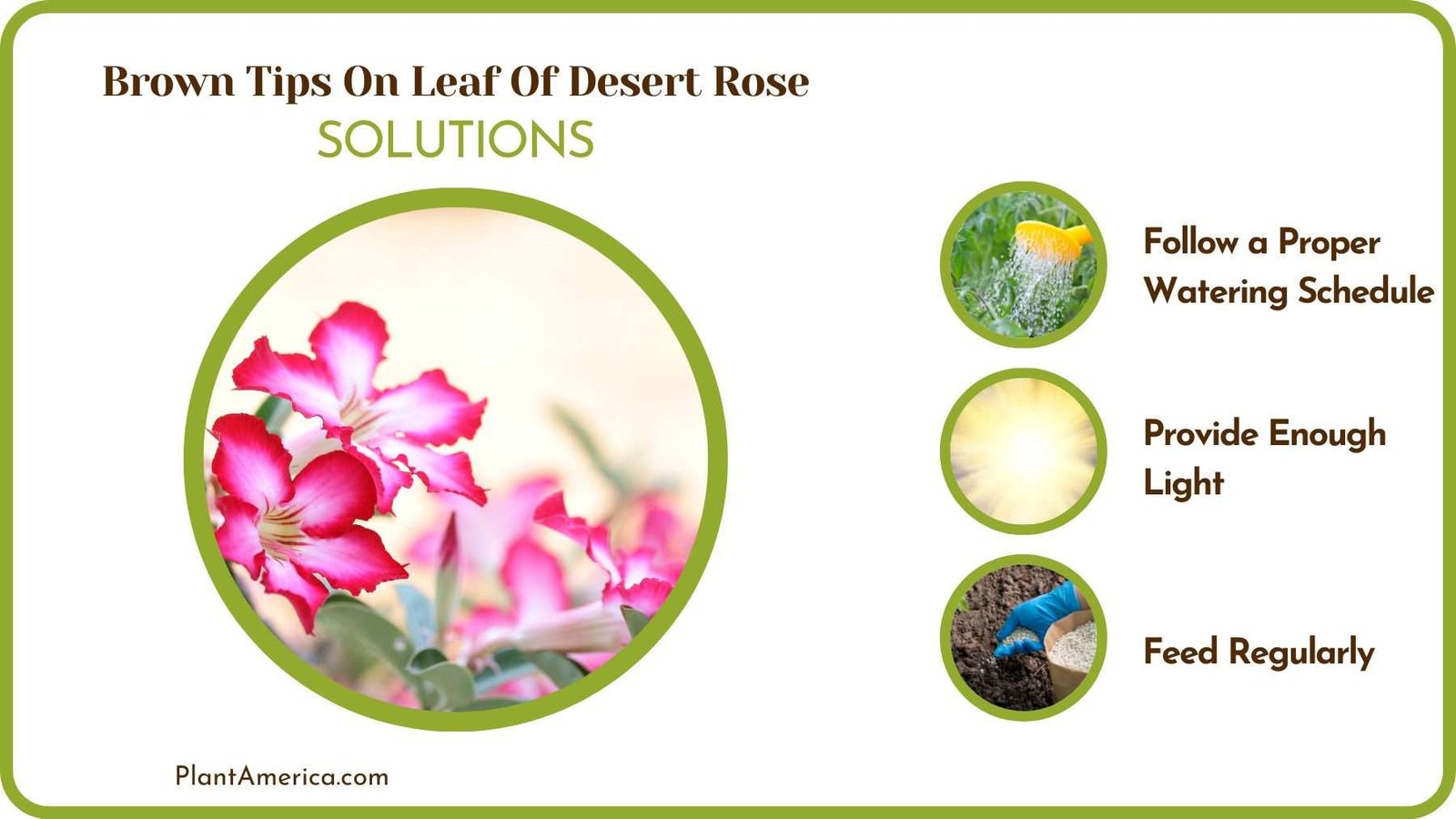
– Follow a Proper Watering Schedule
Proper watering is essential to prevent brown tips caused by underwatering and overwatering. These succulents have varying watering requirements depending on the climate and where you’re growing them. This is why you should adjust the watering schedule based on the plant’s needs.
Ensure that you water your Adenium profoundly and consistently. Despite being succulent, this plant requires consistent moisture. So, wait for the top inch of the soil to dry before watering, allowing the plant to draw moisture from the soil.
If underwatering symptoms are caused by inadequate soil, add some mulch to retain moisture. You should water your plant more often during the growing season, typically in spring and summer.
Start by allowing the soil to dry slightly before the next watering to combat overwatering. Ensure your planting medium has proper drainage to avoid waterlogged roots, which can lead to brown tips.
If you have a potted Adenium plant showing overwatering signs, you need to dig it out. You might notice a foul odor due to root rot, so trim the mushy roots and repot your plant in fresh soil. You shouldn’t choose an overly big container for this plant, as a snug fit promotes healthy growth.
– Provide Enough Light
Adequate light is paramount for keeping this plant in perfect health. Adenium plants thrive in USDA zones 11 and 12 and suffer in colder climates when they don’t receive enough light.
The plant won’t absorb enough light to perform photosynthesis, so it will experience stunted growth and won’t bloom as usual. Ideally, this plant will receive 6 to 8 hours of direct sunlight.
If you grow this plant in a container inside your house, you should pick a sunny spot to avoid having brown tips on leaf of desert rose indoors. A spot close to a west or south-facing window will be ideal. Investing in a grow lamp will be beneficial if you can’t provide enough light.
– Feed Regularly
Your Adenium plant won’t require regular feeding when grown in organic-rich soil. However, this might not always be the case, and you’ll notice stunted growth, browning foliage, and reduced blooming.
Proper fertilization is critical to addressing nutrient deficiencies that lead to brown tips. A balanced, slow-release fertilizer or a specialized succulent fertilizer is recommended during the growing season. These unique formulas are designed to provide Adenium plants with the needed macro and micronutrients.
Needless to say, overfertilizing your plant isn’t recommended. It can lead to leaf burn due to salinity stress, and you might notice a white crust covering the top layer of the soil or potting mix.
If you have no access to diluted fertilizer, you can add well-rotted compost or manure to the base of the plant. No feeding is required during winter, as the plant needs to rest.

– Maintain Good Humidity Levels
While desert rose plants aren’t particularly picky about humidity, low humidity can harm this plant. This is why improving moisture will benefit this gorgeous succulent.
– Keep Your Plant Warm
Desert rose plants thrive in arid and hot climates and can even tolerate high temperatures in desert climates. Nevertheless, these plants are extremely sensitive to low temperatures, and frost damage will damage the foliage.
So, how much coldness can this plant tolerate? This is one of the most frequently asked questions when dealing with desert rose leaf tips turning black and brown.
Ideally, you should grow your plant in a temperature range between 60 and 90 degrees Fahrenheit to avoid desert rose leaves curling. Night-time temperatures shouldn’t fall below 50 degrees Fahrenheit, or the plant will die from frost damage. If the weather is too cold, you can use a frost cloth or bring your plant inside.
Adenium plants can grow annually in colder climates, so they will thrive only in the warm season. Container planting is recommended, so you can bring your plants inside when it’s cold.
– Eliminate Pests and Diseases
Addressing brown tips due to pests and diseases involves proper care and preventative measures. To avoid these common issues, you should regularly inspect your plant for infestation symptoms to avoid having a severe infestation that becomes difficult to deal with.
Some pests, like mealybugs, can be hand-picked. For other pests, you can use a neem oil spray or insecticide to kill these pests. These brown tips on leaf of desert rose Reddit solutions are chemicals that can potentially burn your plant if not used properly, so don’t apply them in direct sunlight or overapply them to avoid scorching the leaves.
After that, according to the instructions, you can apply a suitable desert rose fungus treatment. Viral diseases are more challenging to deal with and are fatal in most cases. So, if you notice that your plant is suffering from a viral infection, you should uproot it and burn it. Typically, you shouldn’t use these plants in mulching.
Conclusion
Seeing brown tips spreading on the leaves of Adenium plants can be alarming, but it doesn’t mean your plant is dying. Understanding why browning happens will help you find the right solution.
- Avoid overwatering and underwatering your desert rose because it can cause the browning of the foliage.
- Provide this plant with enough light, adequate feeding, and enough humidity levels to keep the foliage in the best shape.
- Frost damage can kill this plant, so keep it warm to avoid leaf browning.
- Pay attention to the symptoms of pests and diseases to eliminate their symptoms before they progress.
Desert roses will thrive for decades with proper brown tips on leaf of desert rose care tips so that these resilient succulents will fill your garden with vibrant colors for years.