
Brown spots on elephant ears plants is a health issue that you must tackle immediately. It usually happens due to overexposure to sunlight, imbalances in temperature, or unwanted pest residents.
But fear not; this guide will help you navigate these challenges, ensuring your plant remains vibrant and strong. Keep reading for expert tips to keep your elephant ear in peak condition!
Why Are There Brown Spots on Your Elephant Ears Plants?
There are brown spots on your Elephant ears plants due to excessive direct sunlight, unfavorable temperatures, and pest attacks. Over-fertilization can also cause issues, leading to bigger brown patches on leaves. Sometimes, soil problems and fungal diseases can also lead to leaf discoloration.
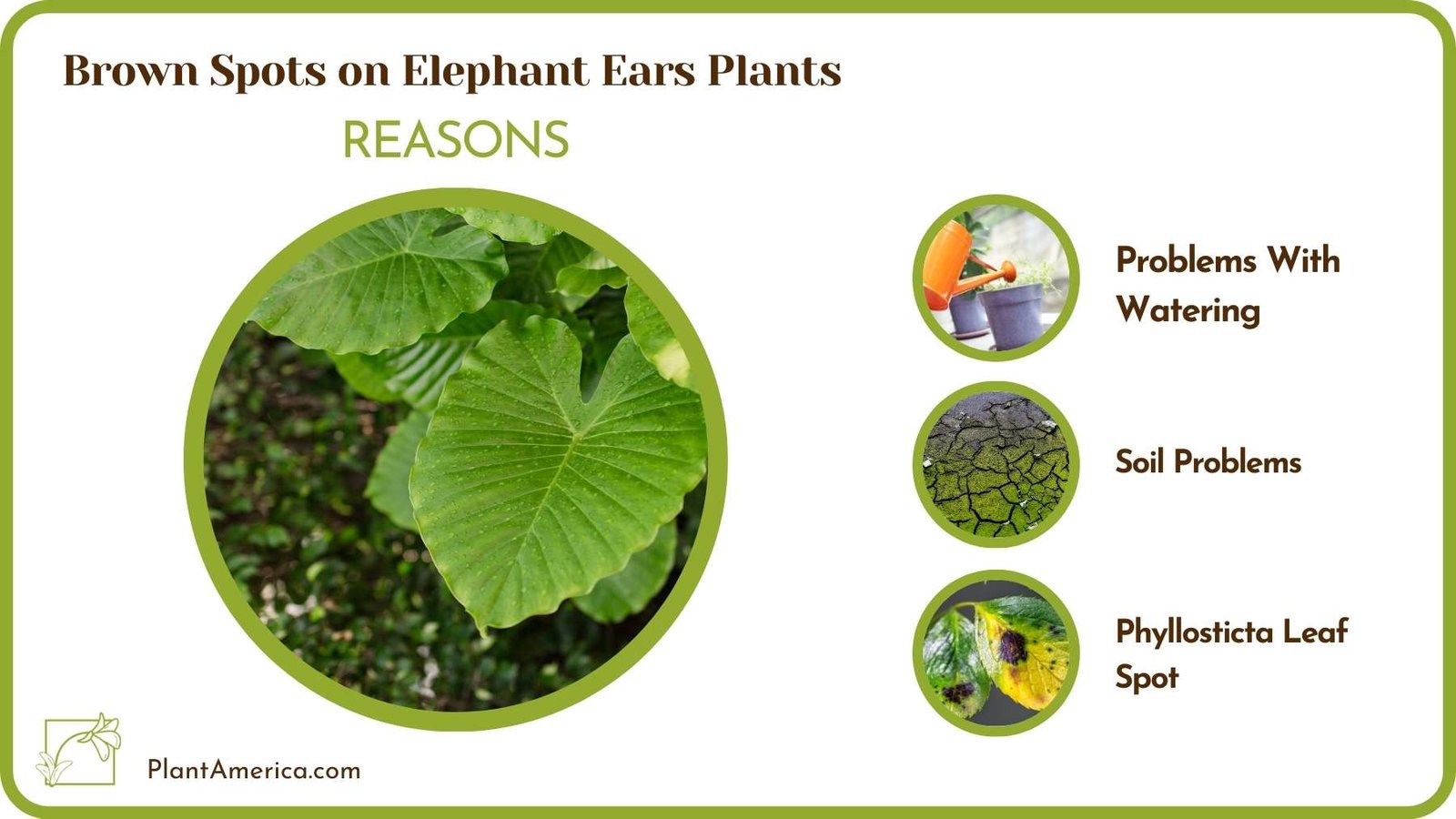
– Problems With Watering
Leaves turning brown can be a telltale sign that the plant is receiving too much or too little water. Watering too frequently (overwatering) can cause the roots to rot. On the flip side, inconsistent or infrequent watering can cause dehydration. These issues can stress the plants; you’ll see brown patches on the leaves.
Now, how can we confirm that watering is the cause of the problem? Well, the soil’s moisture level is a good indicator. If you push your finger an inch deep into the soil and it feels dry, you’re not watering enough.
But if it’s soggy or has a damp smell, you might be overwatering. Monitoring your watering habits is essential to maintain a healthy plant.
– Soil Problems
Soil conditions, like its texture, drainage, and pH, can significantly affect plant health. If these conditions are not met, it might lead to yellow brown spots on elephant ear plants.
For instance, poor soil texture can impede root growth and water absorption. If the soil is too compact, the roots might suffocate and not receive the necessary nutrients. Similarly, poor drainage can lead to waterlogged soil and root rot.
Another soil problem that can affect the elephant plant is its pH level. If the soil/potting medium is too acidic or alkaline, it can cause nutrient deficiencies, resulting in discolored leaves.
So, how do you confirm if soil conditions are the issue? A simple test can be performed. For checking drainage, water your plant and see if the water gets retained or drains away quickly. If it stays or takes time to drain, you’ve found your problem.
– Phyllosticta Leaf Spot
It’s a fungal disease that manifests as dark spots on the leaves, which eventually turn brown. It’s caused by the fungus Phyllosticta colocasiae, which thrives in humid and warm conditions. So, if your plant is in such an environment, it’s more susceptible to this fungal attack.
It’s also worth noting if the conditions around your plant are consistently humid, which can be a breeding ground for this fungus.
– Too Much Sunlight: Another Common Cause
A common misconception is that all plants crave endless amounts of sunshine. However, this isn’t always the case. The brown elephant ear plant, in particular, isn’t a fan of excessive sunlight. It might surprise you that these plants are more accustomed to the dappled light.
So, when exposed to direct sunlight for prolonged periods, the leaf cells start to dehydrate and die. When this happens, brown marks will appear on the leaves. To determine if too much sunlight is causing the browning, inspect the location of your plant.
If it’s placed in a spot receiving intense sunlight throughout the day, it’s likely the culprit. Also, leaves that face the sun directly are more prone to show the damage first.
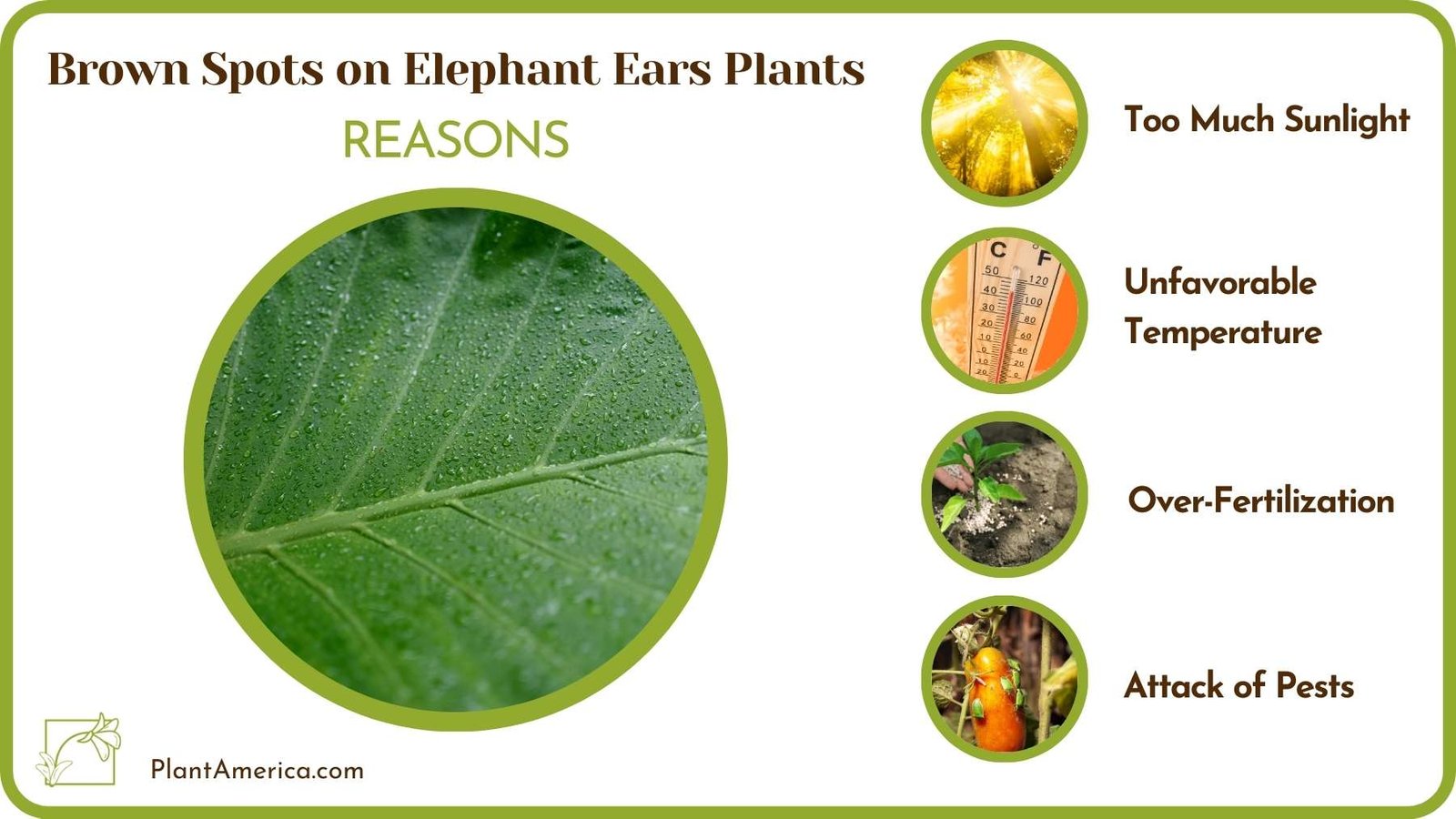
– Unfavorable Temperature
Elephant ears generally thrive in warmer temperatures, ideally between 67 to 75 degrees Fahrenheit. Anything below 60 degrees Fahrenheit isn’t favorable for them. While outdoor plants can tolerate some variation, indoor elephant ear plant problems often arise from inconsistent temperatures or drafts.
Cold drafts from windows or doors, or even heaters during winter, can cause significant stress.
– Over-Fertilization: Adding More Nutrients than Plants Can Take
Feeding our plants can seem like a beneficial act. We want them to grow big and strong. However, when you feed excessive fertilizer, the leaves start turning yellow. And not just yellow – in severe cases, they can turn yellow with a burnt appearance around the edges.
The reason behind this is simple. Plants can only take up a certain amount of nutrients. Bombarding plants with a high concentration can create a toxic environment for them. The excess salts from the fertilizer can build up, drawing water from the plant and causing dehydration.
– Attack of Pests
Are you seeing mealybugs on elephant ear plants? If yes, then it means your plant is under Pest attack. Let’s look at common pests that cause brown patches on leaves.
- Mealybugs: They appear as white, cotton-like masses on the plant. They suck the sap and weaken the plant.
- Spider Mites: Tiny and reddish-brown, these pests create webs on the plant. They, too, suck the sap, causing the leaves to develop yellow or brown spots.
- Aphids: These tiny, pear-shaped pests are often green or black. They suck plant sap, leading to curled or yellowed leaves.
- Thrips: These are minute, slender insects with fringed wings. They also like to feed on flowers and stems.
- Scale Insects: These pests look like small bumps on the plant. They feed on the plant’s sap, weakening it and leading to browning.
A close inspection of your plant is necessary for each of these pests. You’ll often find them on the undersides of leaves or in the nooks and crannies of your plant. If you do find them, then take action.
How to Help Elephant Ear Plants Stay Healthy?
To help elephant ear plants stay healthy, ensure proper watering and maintain suitable lighting conditions. It’s also essential to manage temperatures effectively and use fertilizers correctly. Moreover, swift action against diseases and pests can make a significant difference if you spot any of them.
– Focus on Watering First
Watering is the first line of defense for many plant issues. Proper hydration ensures the plant’s roots receive the essential nutrients. Plus, water is a critical part of all the internal processes, which keeps the plant energetic.
Here’s how to properly water your plants:
- Frequency: Elephant ear plants prefer their soil to be kept evenly moist. However, “moist” doesn’t mean “wet.” Water the plant when the top inch of the soil feels dry to the touch.
- Method: Use a watering can with a narrow spout, ensuring the water reaches deep into the soil, nourishing the plant’s roots.
- Drainage: Always make sure that the pot has adequate drainage holes. This ensures any excess water can easily escape, preventing root rot.
- Check the Environment: Remember, plants might not need as much water in a humid environment. Conversely, in drier conditions, they might need more frequent watering.
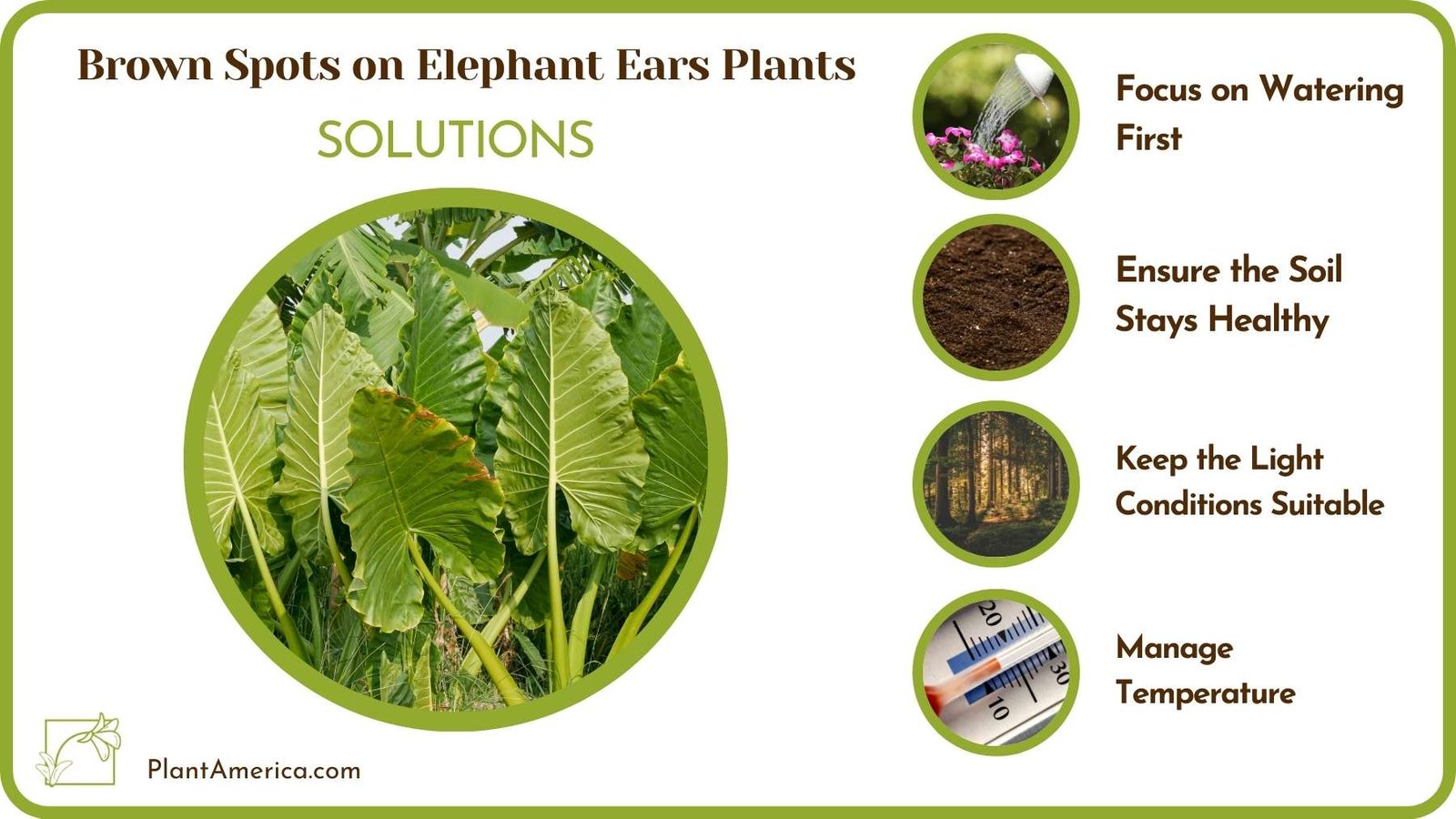
– Ensure the Soil Stays Healthy
Soil provides the necessary nutrients to the plants, which improves the immune system. Therefore, ensuring it’s in the best shape is crucial.
Here are five ways to keep soil healthy:
- Balanced Soil: Invest in a well-draining soil mix, usually a blend of potting soil, perlite, and coarse sand. This ensures good aeration for the roots.
- Regularly Refresh the Soil: Every year or so, consider repotting your plant or, at the least, refreshing the top layer of the soil. This ensures that the plant always has access to fresh nutrients.
- Fertilize in Moderation: Add a diluted liquid fertilizer every few weeks during the growing season. But always follow the recommended dose. More isn’t better here!
- Avoid Soil Compaction: Ensure that the soil remains loose. Compact soil can hinder root growth and restrict water flow.
- Check for Pests: Occasionally check the soil for any signs of pests or larvae. Keeping the soil healthy also means keeping it pest-free.
– Keep the Light Conditions Suitable
Proper lighting can prevent brown leaves and other common issues in elephant ear plants. However, “too much” or “too less” can hurt the plants.
Here’s how to ensure suitable lighting conditions:
- Avoid Direct Sunlight: Place your elephant ear plant in a spot/location where it can receive indirect light. This could be near a window with sheer curtains or a location that gets dappled sunlight.
- Rotate the Plant: Every once in a while, rotate your plant. This ensures that all parts of the plant receive equal amounts of light, promoting even growth.
- Use Artificial Lights: If you don’t have an ideal spot with natural light, consider using grow lights. They can provide the necessary light spectrum for the plant’s growth.
- Monitor & Adjust: Keep an eye on your plant. Consider adjusting the plant’s position if you notice signs of distress, like browning or yellowing leaves.
– Manage Temperature: Maintain Ideal Growing Conditions
If you’ve been wondering how to treat brown spots on elephant ears plants, you might want to closely examine the temperature conditions in which they grow. An ideal temperature range helps plants thrive and grow elephant ears that are vibrant and healthy.
We suggest you consider these things:
- Placement Matters: Always position the plant in a spot away from drafts, be it the cold draft from an open window or the hot airflow from heaters.
- Use a Thermometer: Monitoring the room’s temperature is essential. Aim for a consistent range of 67 to 75 degrees Fahrenheit.
- Humidity Trays: Elephant ear plants adore humidity. A humidity tray filled with water can increase the surrounding moisture, especially during dry months.
- Shade during Peak Hours: Consider shading the plant during the scorching afternoon hours in hotter climates.
- Bring Them Inside during Frost: If you’ve placed them outside, ensure they are brought in during colder months to avoid frost damage.
– Fertilize Correctly
Fertilization isn’t just about adding nutrients; it’s about understanding the plant’s needs. But if you’ve noticed yellowing, you might question, should I cut off yellow elephant ear leaves before fertilization? The answer is yes. Removing unhealthy parts ensures that the nutrients benefit the plant’s healthy sections.
Here are the key considerations:
- Determine Need: Observe your plant. It might be time for added nutrients if its growth has slowed despite optimal conditions.
- Choose the Right Fertilizer: Opt for a balanced liquid fertilizer suitable for foliage plants.
- Apply to Moistened Soil: Never fertilize dry soil, which can lead to root burn. Water the plant lightly before fertilizing.
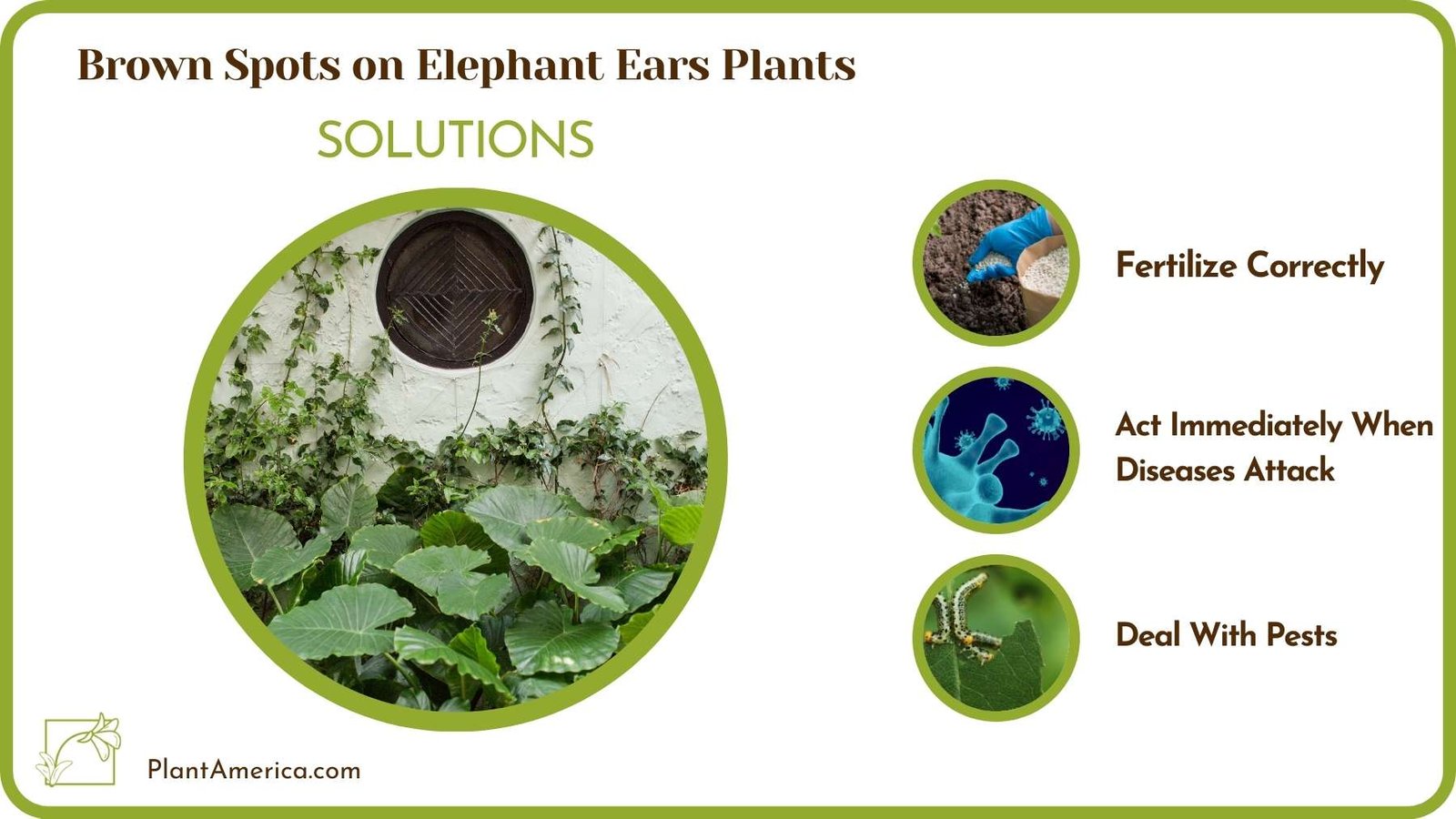
– Act Immediately When Diseases Attack
Elephant ear plants can sometimes succumb to diseases that might lead to browning or yellowing. When this happens, it’s essential to know the brown spots on elephant ears plants treatment methods.
Here’s how to address diseases in Elephant Ear Plants:
- Isolate the Plant: Prevent the spread of the disease to other plants by placing the affected plant away from others.
- Trim Affected Areas: Use sterilized scissors or pruners to remove the diseased parts.
- Use Organic Fungicides: Neem oil or baking soda solutions can be effective against many fungal diseases.
- Improve Air Circulation: Place the plant where there’s better air movement. This deters fungal growth.
- Check Watering Habits: Over-watering can be a primary cause of fungal diseases. Ensure the plant is adequately watered.
When you do these things, you’ll also resolve other common problems, like fungal leaf blight.
– Deal With Pests
No plant care guide would be complete without addressing the tiny pests that might occasionally bother your beloved elephant ear plant. Thankfully, these can be managed with a bit of vigilance and the suitable remedies.
Here’s what to do:
- Prepare the Soap Solution: Mix a gentle dish soap with water. Typically, 2.5 tablespoons of soap per gallon of water is recommended.
- Test a Small Area: Before applying to the entire plant, spray a little on a leaf and wait for a day. Ensure there’s no adverse reaction.
- Apply Liberally: Spray the insecticidal soap solution on the entire plant, focusing on the undersides of leaves where pests usually reside.
- Rinse After Some Time: After letting the solution sit for a few hours, gently rinse the plant with water to remove the soap residue.
- Repeat if Necessary: Insecticidal soap affects only on contact. If the infestation persists, you might need to repeat the treatment.
Caring for elephant ear plants is a delightful journey. With the right knowledge and dedication, you can ensure they remain the radiant centerpiece of your garden or indoor space. Remember that you’re learning with each challenge, and your green thumb will shine in no time!
Conclusion
Elephant ear plants can have brown spots due to too much sunlight exposure, improper temperature conditions, and pest infestations. But you can keep the leaves green by following our recommendations, which are:
- Properly manage watering to avoid both over-watering and under-watering.
- Provide the right amount of light by rotating and placing artificial lights.
- Maintain optimal temperature conditions by positioning the plants correctly and managing humidity.
- Act swiftly against pests with remedies like insecticidal soap.
By adopting these proactive measures, you’ll enjoy the sight of your lush, healthy elephant ear plant every day!