
Baby’s Breath Flowers come in an astonishing variety of colors, forms, and sizes that most people don’t know about. In this post, we’ll explore 20 varieties of baby breath flowers you likely haven’t seen before but are sure to love.
Whether you want baby breath for a wedding bouquet or flower arrangements or just to give your garden that extra “wow” factor, learning about these unique varieties will give you new inspiration and gorgeous floral options. By the end, you’ll be eager to grow some of these beautiful breath flowers in your own garden!
Stunning Varieties of Baby’s Breath Flowers You May Not Know About
1. Perfekta

- Growing Season: Spring, Early Summer
- Leaf Type: Long, Narrow, Grass-Like
- Specific Needs: Moist, Well-Drained Soil, Partial Shade
- Common Pests: Aphids, Slugs, Leaf Miners
Perfekta baby’s breath has such a lovely name, don’t you think? Its long, grass-like leaves give it an airy and delicate appearance. This variety prefers partial shade and moist soil to spread and blanket an area with wispy blooms.
While it can withstand variability better than some, common pests like aphids still pose a risk. You’ll want to look for signs of infestation and address them promptly if any arise to preserve this lovely perennial’s frilly flowers.
A nice thing about Perfekta is that it stays relatively short and compact compared to other gypsophila. This makes it a good option for gardens with less space to spare or where you want baby’s breath but in a more refined form.
Its spring and early summer blooming time also provides beginning-of-season flowers to enjoy. The wispy white blooms emerge in fluffy clusters on tiered, branching stems. Individual blooms are clustered in small, rounded heads. The plant has a hazy, cloud-like appearance from a distance due to the sheer volume of delicate blooms.
2. Festival Star

- Growing Season: Late Spring, Summer
- Leaf Type: Long, Narrow, Grass-Like
- Specific Needs: Well-Drained Soil, Full Sun
- Common Pests: Powdery Mildew, Leaf Spot
Festival Star baby’s breath will surely be a star in any garden with its long-lasting summer display. As its name implies, this variety shines brightest during the season’s festivities. Its grass-like foliage spreads to form airy clumps topped with clustered white flowers.
Festival Star flourishes in full sun and well-draining soil. It’s less fussy about moisture levels than other types but prefers not to stand with wet feet. Its branches stay nice and strong, holding aloft bouquet-like flower clusters for several months. The tiny blooms also dry beautifully, ensuring this baby’s breath remains a fixture through much of the warm season.
While powdery mildew and leaf spot can occasionally impact Festival Star, it tends to be more resistant to pests than many varieties. Its structure and long bloom time make for fantastic, long-lasting floral filler in no-fade bouquets.
Cut stems back after flowering to encourage basal re-growth and renewed blooming later in the season. The wispy plants also work nicely as a gentle, naturalizing ground cover or for softening the borders between garden beds.
3. Compacta Plena

- Growing Season: Late Spring, Summer
- Leaf Type: Round, Dense, Bushy
- Specific Needs: Well-Drained Soil, Full Sun
- Common Pests: Powdery Mildew
Compacta Plena lives up to its name with its neat, compact habit. Where other baby’s breath spreads outward, this variety forms tidy mounds. Its thick, round leaves emerge in a fluffy mass, soon topped by rounded clusters of fully double blooms.
Compacta Plena’s self-contained shape is ideal for beds, borders, or containers, making it a handy option where space is limited. It flourishes with sunshine and well-draining moisture but won’t become unruly. Clusters of petite white petals fill each tiny bloom. From a short distance, the plant resembles a frothy mound of soap bubbles or snow drift.
While powdery mildew can sometimes spot leaves, Compacta Plena is generally quite trouble-free. Deadhead spent flower clusters to encourage reblooming. Cut stems make excellent fillers for small bouquets or posy-style arrangements, fitting perfectly in tiny spaces.
Its abundant flowers also attract myriad pollinators to the garden. Such a compact variety also lends itself perfectly to creative topiaries or living picture frames when trained on small structures.
4. Pink Fairy
- Growing Season: Late Spring, Summer
- Leaf Type: Long, Narrow, Grass-Like
- Specific Needs: Well-Drained Soil, Full Sun
- Common Pests: Spider Mites
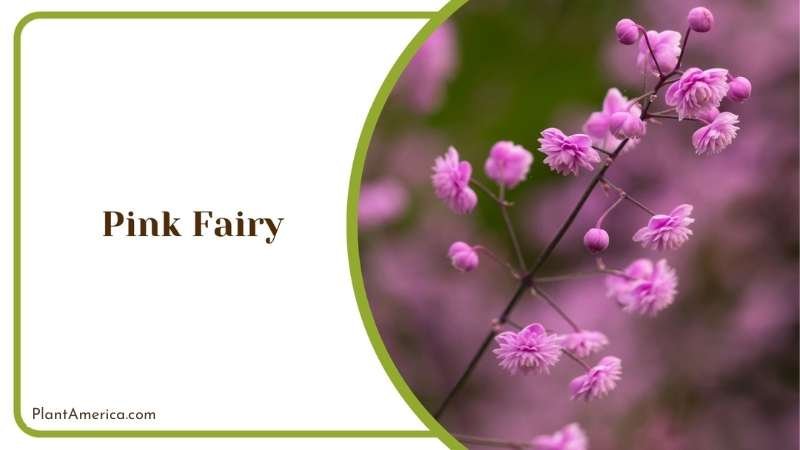
Pink Fairy shames other baby’s breath varieties with its pretty pink blooms. Whereas most are limited to white, this selection bears delicate flowers in a soft rose-pink hue. Its foliage is typical grassy Gypsophila—long and lean.
But oh, those lovely flushed blooms! They emerge slightly doubled yet still retain an airy, fleecy charm. As the name implies, Pink Fairy has a magical romantic quality, bringing fairy tale enchantment to the garden.
Take the same care of Pink Fairy as its white cousins—plenty of sun and good drainage. Watch for spider mites, which may be more prone to flocking due to the flower color. A spray of water or light horticultural oil can help prevent buildup. Cut back after blooming to maintain a tidy shape and encourage reblooming throughout summer.
Pink blooms have a way of cheering the soul, so imagine how Pink Fairy baby’s breath will lift your spirits each time you catch sight of its soft color drifts. Use it to line a walking path, accent a cutting garden, or give your floral arrangements a blush of fancy. This selection makes any space more wonderful with its magical pink fairy magic.
5. Vhiette’s Dwarf
- Growing Season: Late Spring, Early Fall
- Leaf Type: Round, Compact
- Specific Needs: Well-Drained Soil, Full Sun
- Common Pests: Spider Mites, Powdery Mildew
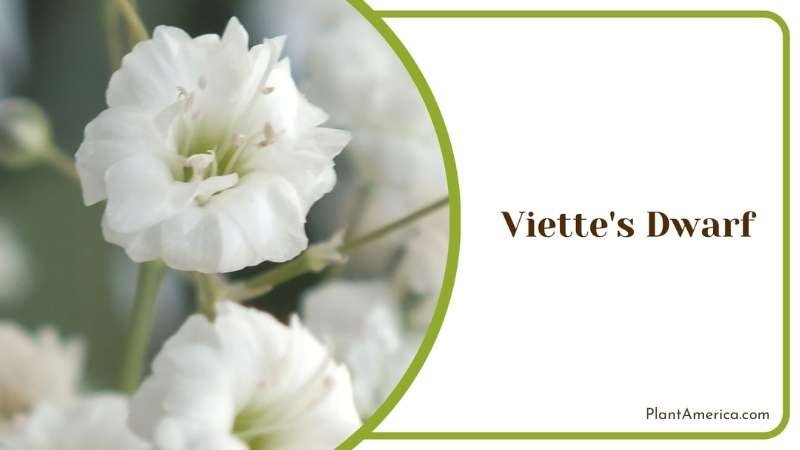
As the name suggests, Viette’s Dwarf is a miniature version of traditional baby’s breaths. This compact selection is perfect for tight spaces or containers. It forms a low, spreading mound wrapped in rounded leaves.
Diminutive stems are smothered in clusters of tiny white blooms. Over multiple flushes from late spring through early autumn, Viette’s Dwarf offers a nonstop floral display in a petite package.
Its small stature makes it well-suited to rock gardens, crevice plants, or the front row of borders. Keep soil well-draining and give full sun exposure to encourage maximum blooming. Watch humidity levels to prevent powdery mildew, and check for spider mites in hot, dry spells.
Deadhead spent flowers to refresh the plant and prolong its blooming season deep into fall. Clipped sprays make perfect accents in miniature bouquets. Viette’s Dwarf is also delightful for tucking along stepping stone paths or between pavers for a blossomy carpet. This fun little selection proves that big things come in small packages!
6. Million Star Baby’s Breath

- Growing Season: Late Spring, Early Fall
- Leaf Type: Long, Narrow, Grass-Like
- Specific Needs: Well-Drained Soil, Full Sun
- Common Pests: Spider Mites
With its nonstop bloom time and ability to spread up to 3 feet, Million Star Baby’s Breath lives up to its name by showering a million tiny white flowers across the garden from late spring until the first fall frosts.
Slender stems emerge from loose clumps of thin, wispy foliage bearing dozens of branch points. Each node produces an array of secondary blooms, ensuring this variety is smothered in starry blossoms all season long.
You won’t find a harder-working selection of baby’s breath. Not only does Million Star spread quickly via stolons to form billowing mats, but it also blooms prolifically for months on end.
Its compound flower stems almost give the illusion of a bouquet frozen in full bloom. Providing full sun and well-draining soil truly allows Million Star to shine throughout the warm months.
Be sure to side dress with fertilizer every six to eight weeks to boost blooming power throughout the growing season. Clean up any dead or diseased growth to optimize airflow and reduce risks from pests like spider mites, which may be attracted to the dense flowering.
Deadheads spent blooms as they fade to encourage repeated flushes of new starry clusters emerging in waves all summer.
7. Queen Anne’s Lace

- Growing Season: Summer
- Leaf Type: Highly Dissected, Foliage Resembles Fennel
- Specific Needs: Well-draining Soil, Full Sun
- Common Pests: Leaf Miners, Rust
With its lacy white “flowers” and fern-like leaves, Queen Anne’s Lace brings an old-fashioned charm to the summer garden. Often found naturalizing along roadsides, this decorative biennial exhibits traits similar to its botanical cousin, the wild carrot.
In the first year, Queen Anne produces a rosette of soft, feathery foliate that spreads broadly. Then, in its second summer, ribbon-like stems shoot skyward, displaying clusters of small white flowers in umbrella-shaped, flat-topped arrays. Each bloom resembles a dainty lace parasol.
Queen Anne prefers nutrient-rich, well-drained soil and full sun exposure to thrive. It may reseed itself around freely if conditions suit. Deadhead spent blooms before seeds fully develop to prevent overcrowding. Leaf miners or rust can occasionally impact foliage but are rarely serious issues.
Naturalize stands of Queen Anne at meadow edges, among wildflowers, or accenting stretches of rural fencing. It also adds charm mingled in cottage-style beds alongside old-fashioned plants like yarrow, coneflowers, and phlox.
Come summer, abuzz with pollinators flitting between its blooms, the graceful, lacy Queen Anne lights up the garden like an airy vintage postcard come to life.
8. Chocolate Queen Anne’s Lace

- Growing Season: Summer
- Leaf Type: Highly Dissected, Foliage Resembles Fennel
- Specific Needs: Well-draining Soil, Full Sun
- Common Pests: Leaf Miners, Rust
While most Queen Anne’s Lace varieties boast white blooms, Chocolate takes this classic charmer in a richer direction. Its frilly flowers emerge in a soft cocoa hue, bringing decadent drama to the garden.
First-year rosettes form as typical Queen Anne; then the second summer unfolds with circles of chocolate parasols. The unique coloring brings dimension, casting the lacy flowers in warm, textural tones against greenery.
Cultural requirements mirror the white Queen Anne’s – provide well-draining soil and full sun. Deadhead spent blooms or let some stand to develop seeds for possible reseeding next year. Occasional pests like rust or leaf miners require the same vigilance.
Use Chocolate’s eye-catching blooms to line walkways or curtains between taller plantings. Mass along borders for a swath of rich texture. And combine with neutral or light shades to let the unusual flowers sing. Delivering the same ethereal lacework but in mouthwatering shades, Chocolate Queen Anne’s Lace is a temptingly tasty twist on this classic perennial.
9. Orlaya Lace Flower
- Growing Season: Summer
- Leaf Type: Finely Dissected, Foliage Resembles Fennel
- Specific Needs: Well-Draining Soil, Full Sun
- Common Pests: Leaf Spot, Rust
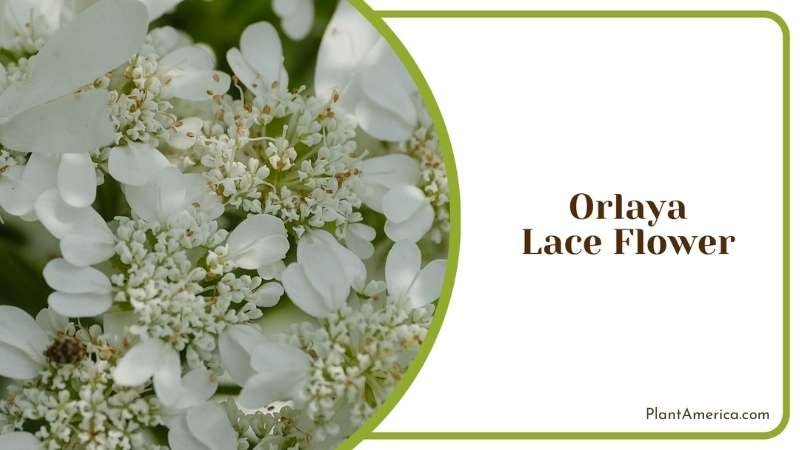
A relative newcomer among the false Queen Anne’s lace selections, Orlaya lace flower captivates with its delicate, intricate blooms. Reaching two to three feet tall, erect stems bear umbrella-like clusters of petite white flowers resembling miniature parachutes.
Each near-translucent bloom contains five lobed petals delicately fused at the base. Up close, their tracery of veins and stamens resembles fine lacework – indeed, from afar, the plant appears swathed in a lacy froth. Basal foliage resembles feathery fennel leaves.
As with its cousins, provide full sun exposure and moderate water in free-draining beds. Tolerant once established, Orlaya thrives with minimal care beyond an occasional deadhead to extend its flowering display well into fall. Leaf spots or rust may spot foliage in wet conditions but cause little harm.
Naturalize Orlaya among grasses or native meadow plants to appreciate its gracefully airy habit. Its fine texture also adds ethereal charm when underplanted with bolder perennials. Snip stems for delicate bouquets showcasing each bloom’s lacy filigree up close.
Combining the wispy beauty of Queen Anne’s lace with an intricate detail uncommon in the genre, the Orlaya lace flower brings an intriguing variety to summer gardens. Its intricacy makes it worth getting up close and personal with this newcomer to the lace flower clan.
10. Alpine Baby’s Breath

- Growing Season: Early summer, Late summer
- Leaf Type: Linear, Narrow
- Specific Needs: Full sun, Well-drained soil
- Common Pests: Aphids
The tiny blooms and low-growing habit of alpine baby breath make it a perfect choice for rock gardens, between stepping stones and along path edges. The petite purple, pink, and white flowers dot the compact spreading mounds of foliage, contributing delicate texture and color.
Cut stems of alpine baby’s breath and display them in tiny pots, dwarf terrariums, or dish gardens for a breath of fresh air indoors. Or tuck the tiny blooms into crevices between rocks and stones in your outdoor rock garden.
Monitor alpine babies’ breath closely for signs of pests like aphids due to their low-growing habit. Removing diseased or faded foliage regularly helps promote fresh growth and blooming. Cut back to encourage a more compact habit over time.
The dwarf, spreading growth form, and miniature blooms of alpine baby breath give it a unique textural interest that softens and connects hardshipscape elements.
11. Bristol Fairy

- Growing Season: Summer
- Leaf Type: Fine, Grass-like Foliage
- Specific Needs: Well-Draining Soil, Full Sun
- Common Pests: Powdery Mildew
Bristol Fairy stands out with its double-flowered blooms, a unique variety within the baby’s breath genus. Where typical Gypsophila produce single, star-like blooms, Bristol Fairy bears puffballs composed of petite doubled petals
Elongated stems reach two to three feet tall, bearing clusters of fluffy whiteness resembling pom-poms or snowballs. Up close, faint veins trace the texture within each miniature doubled sphere. Fine, wispy foliage resembles grass blades.
Cultural needs mimic a single baby’s breath – preferring full sun exposure and free-draining soil. Prune after flowering to rebloom potentially. Watch for powdery mildew in moist conditions, addressing it promptly.
Use Bristol Fairy to add whimsical charm along pathways or scattered throughout borders. A few sprigs lend a soft texture to mixed bouquets. Naturalized drifts resemble cottony clouds or drifted snow. And massed in fields, its petite pom-poms sparkle from afar. Unique and fanciful, Bristol Fairy brings playful delight to summer gardens with its doubled baby’s breath clusters.
Whether floating amid prairie plants or mingling with annual poppies and lisianthus, Bristol Fairy’s cheerful double-flowers will light up the landscape – bringing a smile to any gardener who discovers its double delight!
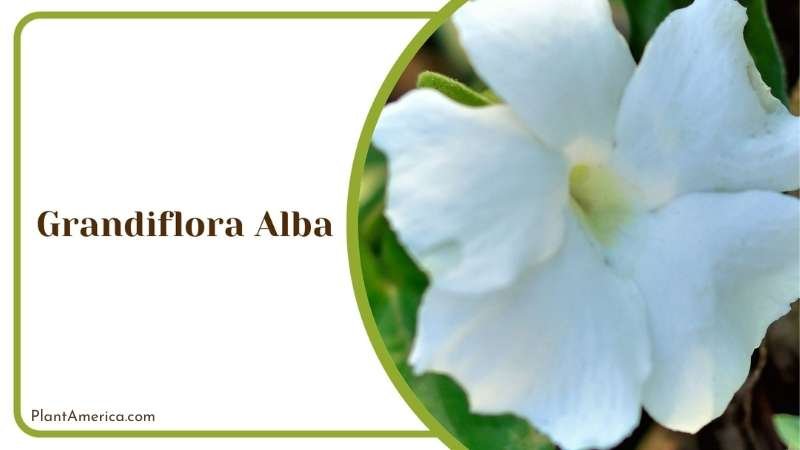
12. Grandiflora Alba
- Growing Season: Summer
- Leaf Type: Fine, Grass-Like Foliage
- Specific Needs: Well-Draining Soil, Full Sun
- Common Pests: Powdery Mildew
Offering dramatically enlarged blooms up to two inches wide, Grandiflora Alba Baby’s Breath elevates this genus to truly grand proportions. Elongated stems reaching three to four feet are laden with gigantic pom-pom flowers sporting extra-large, single white petals.
Each generous bloom consists of many reflexed petals with visible veins reminiscent of finely woven lace. Faint veins lend texture to individual petals within each ample, snowball-shaped display. Fine-textured grassy leaves radiate from the base.
Cultural needs remain simple – provide excellent drainage and full sun exposure. Prune faded flowers to rebloom through summer potentially. Monitor foliage carefully for powdery mildew in patches retaining moisture.
Grandiflora Alba’s monumentally sized blooms create a dramatic impact, rising above ornamental grasses or floating amid prairie plants. Single towering stems also stand out strikingly in simple bouquets. Looming drifted clouds of supersized flowers impart an ethereal grandeur when naturally massing wildflower meadows or meadow edges.
With its crowning, outsized blooms, Grandiflora Alba Baby’s Breath is truly befitting its name. A laser focus on flourishing this show stopping selection will allow gardens to become awash in grand surges of lacework bouffancy on a scale accentuating its magnificently pompous presence.
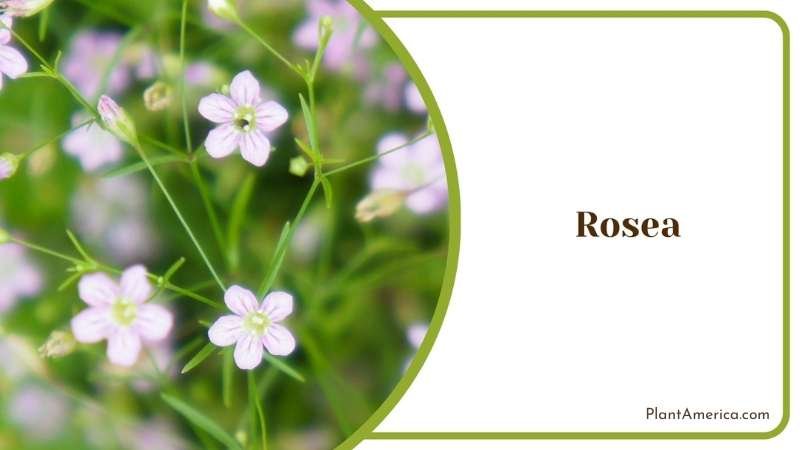
13. Rosea
- Growing Season: Summer
- Leaf Type: Fine, Grass-Like Foliage
- Specific Needs: Well-Draining Soil, Full Sun
- Common Pests: Powdery Mildew
A delightful addition to the genus, Rosea Baby’s Breath bears soft pink blooms that add a romantic splash of color. Elongated stems reach two to three feet tall, bearing tufted pom-pom flowers composed of diminutive single petals in a rosy blush tone.
Up close, the translucent pink petals radiating from each miniature pom pom subtly display wispy veins within their gossamer texture. Blades of grass-like greenery emanate from basal rosettes.
This variety thrives with the same simple care as its white cousins – favoring sunshine and good drainage. Prune faded flowers to prolong the bloom period. Watch for powdery mildew incursion, addressing it swiftly with optimal air flow and foliage drying.
Scattered signatures of Rosie’s romantic pink bells liven meadow edges, prairie plantings, and wildflower mixes. Their delicate coloring also adds a soft flush layered amid simple bouquets alongside lisianthus and statice.
14. Carminea

- Growing Season: Summer
- Leaf Type: Fine, grass-like foliage
- Specific Needs: Well-draining soil, Full sun
- Common Pests: Powdery mildew
Carminea Baby’s Breath stands out with its vivid crimson blooms. Rising to four feet tall, the stems bear clusters of tiny flowers dyed a dramatic scarlet red. Each miniature pom-pom displays delicate reflexed petals imbued with a rich ruby hue. Below the sanguine blooms, blades of emerald green foliage emerge.
The bright red color makes Carminea an eye-catching addition to gardens and floral arrangements. Mass-planted, it can create swaths of scarlet that contrast strikingly against the surrounding greenery.
Used as an accent, its scarlet pom-poms draw the eye amid planting schemes featuring darker colors like black or deep burgundy. Its color adds vibrancy when incorporated into bouquets alongside shades like creamy whites or golden yellows.
Culturally, Carminea Baby’s Breath has the same needs as other varieties in the genus – preferring well-draining soil, full sun exposure, and regular pruning to prolong its blooming period throughout summer. It also benefits from typical pest prevention and treatments, keeping an eye out for powdery mildew under conditions that foster fungal growth.
15. Mouse-Ear

- Growing Season: Summer
- Leaf Type: Tiny, rounded leaves resembling mouse ears
- Specific Needs: Well-draining soil, Full sun
- Common Pests: Powdery mildew
Mouse-ear Baby’s Breath features diminutive leaves shaped like tiny mouse ears, giving this variety a distinct appearance. In addition to its unique foliage, erect stems reach two feet, bearing clusters of petite white flowers blooming into fluffy pom-pom shapes.
The plant’s small, rounded leaves, no more than a half-inch wide, resemble the ears of a mouse. They form low basal rosettes that add visual interest all season. Against this backdrop, the pom-pom blooms appear particularly puffy and full.
For such a petite plant, Mouse-ear thrives in the regular conditions favored by the baby’s breath. It performs best with sunlight and drainage to prevent foliar diseases. Deadheading after flowering encourages a longer bloom time through summer.
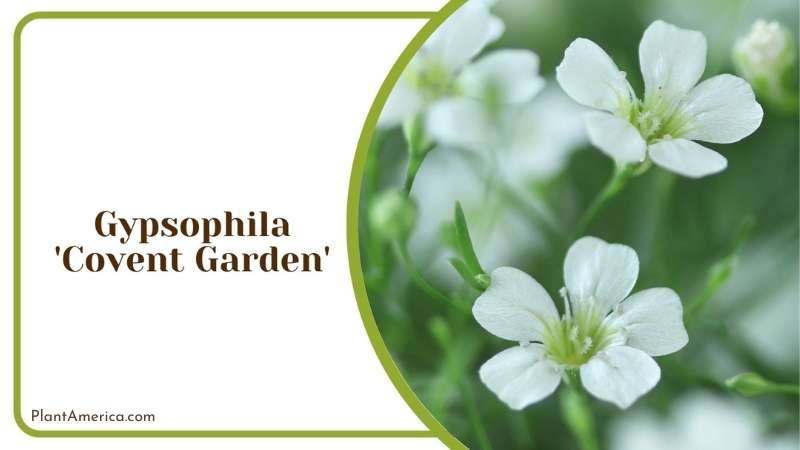
16. Gypsophila ‘Covent Garden’
- Growing Season: Summer
- Leaf Type: Fine, bushy foliage
- Specific Needs: Well-draining soil, Full sun
- Common Pests: Powdery mildew
Gypsophila ‘Covent Garden’ introduces exciting new colors to baby’s breath with rose, pink, orange, and red blooms. Reaching two to three feet tall, the bushy plants bear small clustered flowers in vibrant shades right through summer.
The bright color palette of this variety elevates a typical baby’s breath. Mass planted, sweeping drifts of ‘Covent Garden’ add dramatic pops of non-traditional tones to beds and borders. Used as accents, individual stems stand out amid more neutral plants.
‘Covent Garden’ thrives with stellar drainage and ample sunshine for optimal color display. Prone to powdery mildew, ensure air circulation to foliage. Deadhead often for reblooming.
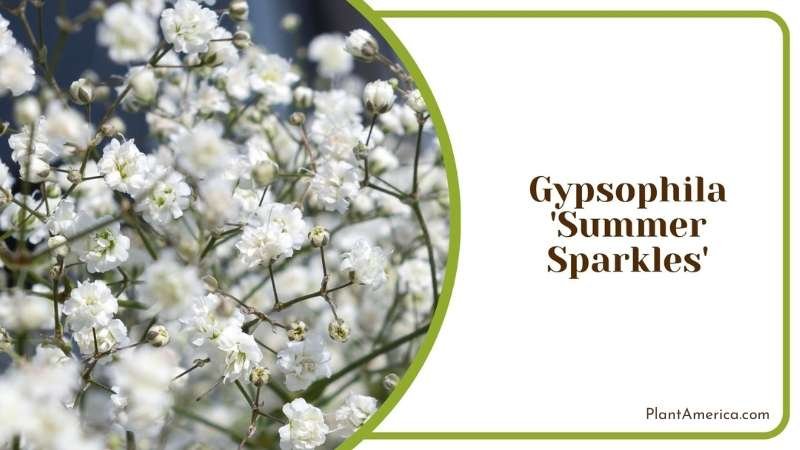
17. Gypsophila ‘Summer Sparkles’
- Growing Season: Summer
- Leaf Type: Fine, feathery foliage
- Specific Needs: Well-draining soil, Full sun
- Common Pests: Powdery mildew
Gypsophila ‘Summer Sparkles’ doubles the delight of baby’s breath with its frilly double blooms. Reaching two to three feet tall, airy stems bear clustered pom-poms of tiny doubled flowers. Up close, the double petals of each miniature bloom are lacy and ruffled – resembling puffs of cotton candy or tiny clouds. This ethereal quality sets ‘Summer Sparkles’ apart from typical single-flowered types.
To flourish, ‘Summer Sparkles’ prefers sunny, well-drained conditions where baby’s breath thrives. Deadhead regularly to prolong an extended bloom time. Watch for powdery mildew and address it promptly.
Used as an accent, its double blooms appear particularly fluffy piled on beds and borders. Scattered through meadow plantings, distant ‘Summer Sparkles’ drifts resemble cotton drifts dancing on the breeze. Its unique blooms also lend texture to hand-tied bouquets.
18. Arrost’s Baby’s Breath

- Growing Season: Summer
- Leaf Type: Fine, fern-like foliage
- Specific Needs: Well-draining soil, Full sun
- Common Pests: Powdery mildew
Arrost’s Baby’s Breath is a unique variety that adds subtle color to the typical white blooms of this genus. Its airy stems bear clusters of pom-pom flowers flushed with soft apricot hues. A closer look reveals each bloom to be tinted with warm, rosy amber pigments rather than stark white.
Arrost’s thrives under the classic cultural care preferred by baby’s breath. It requires well-draining soil and full sun exposure to bring out its rosy hue. Regular deadheading is also important to prolong the blooming period deep into summer. Special attention should be paid to monitoring foliage, as powdery mildew can take hold in overly moist patches and discolored leaves.
Arrost’s airy blooms delight in gardens when scattered amid bouquets to lend a breath of peach charm. For a more naturalized look, mass planting drifting clouds against a backdrop of ornamental grasses or perennials. Its pale blooms also complement bolder neighbors like purple salvias or orange daylilies.
19. Turkish Baby’s Breath
- Growing Season: Summer
- Leaf Type: Fine, lacy foliage
- Specific Needs: Well-draining soil, Full sun
- Common Pests: Powdery mildew
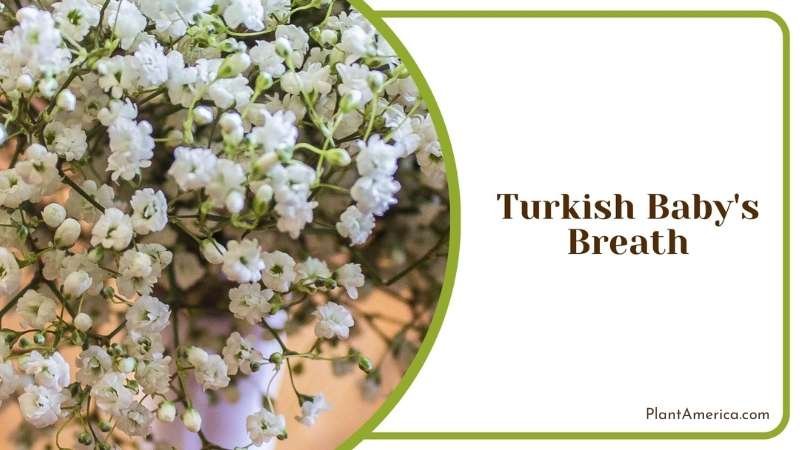
A unique member of the baby’s breath family, Turkish Baby’s Breath introduces frilly blooms and unusual pubescent stems. What truly distinguishes Turkish Baby’s Breath are its softly hairy stems and flowers with fuzzy, ruffled petals. Up close, each miniature bloom resembles a cotton ball, adding visual interest unseen in other varieties.
Whether mingling with neighbor flora or highlighting solitary drifts, Turkish Baby’s fairylike frills transport the imagination to fanciful realms. Don’t let its unassuming stature fool you.
This single enchanting trait makes Turkish Baby’s Breath worthy of any garden wishing to sprinkle magic through its domains. With proper care, its light, fluffy blooms float forth delightful discoveries all season.
20. Common Baby’s Breath
- Growing Season: Early summer, Late summer
- Leaf Type: Linear, Narrow
- Specific Needs: Full sun, Well-drained soil
- Common Pests: Aphids
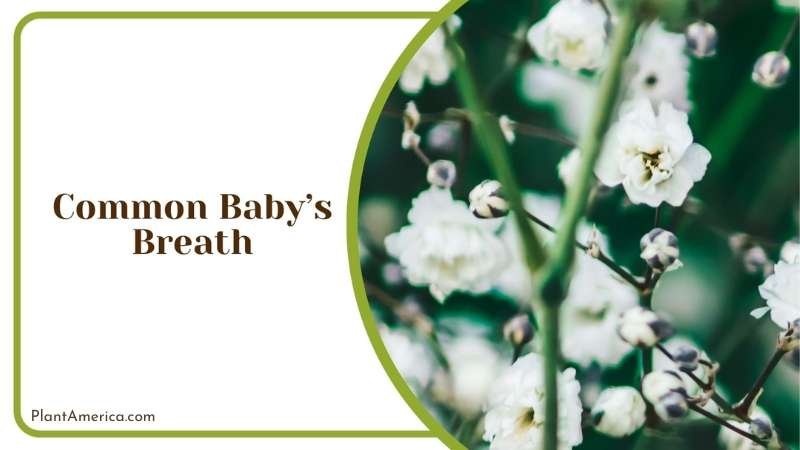
The humble blooms of common baby breath provide gardeners with an easy-to-grow, adaptable plant for filling spaces with an airy texture. The small star-shaped white, pink, or blue flowers appear above fine foliage on softly arching stems.
The delicate, small blooms add volume and layers of texture. Remove fading blooms regularly to promote new growth and repeat bloom throughout summer.
The delicacy and a generous profusion of common baby breath imbue summer gardens with an invaluable gift — an easy texture filler that performs reliably year after year. You can grow this adaptable baby breath species for its petite blooms in classic shades, fine-textured leaves, and ability to swell the garden with sheer breathy volume.
Conclusion
The baby’s breath varieties listed below offer lush texture, dramatic color, and worry-free abundance, bringing months of enjoyment to any garden:
- Burgundy Baby’s Breath will add luxurious depth and dimension to your landscape with its velvety burgundy blooms and arching stems.
- Heavenly Baby’s Breath produces star-shaped flowers in ethereal hues that impart an uplifted, airy atmosphere to your outdoor spaces.
- Live Forever Baby’s Breath lives up to its name with a vigorous habit and tendency to self-sow, providing blooms that reappear season after season.
- Snowflake Baby’s Breath resembles tiny snowflakes with petite blooms, delicately softening and beautifying the landscape.
No matter which baby’s breath variety you choose, experimenting and tending to their needs will be richly rewarded with months of delicate blossoms that will lift your spirits. The petite starry blooms of baby’s breath shine brightly, even in humble abundance, so set to work nurturing them and enjoy the delightful results!