
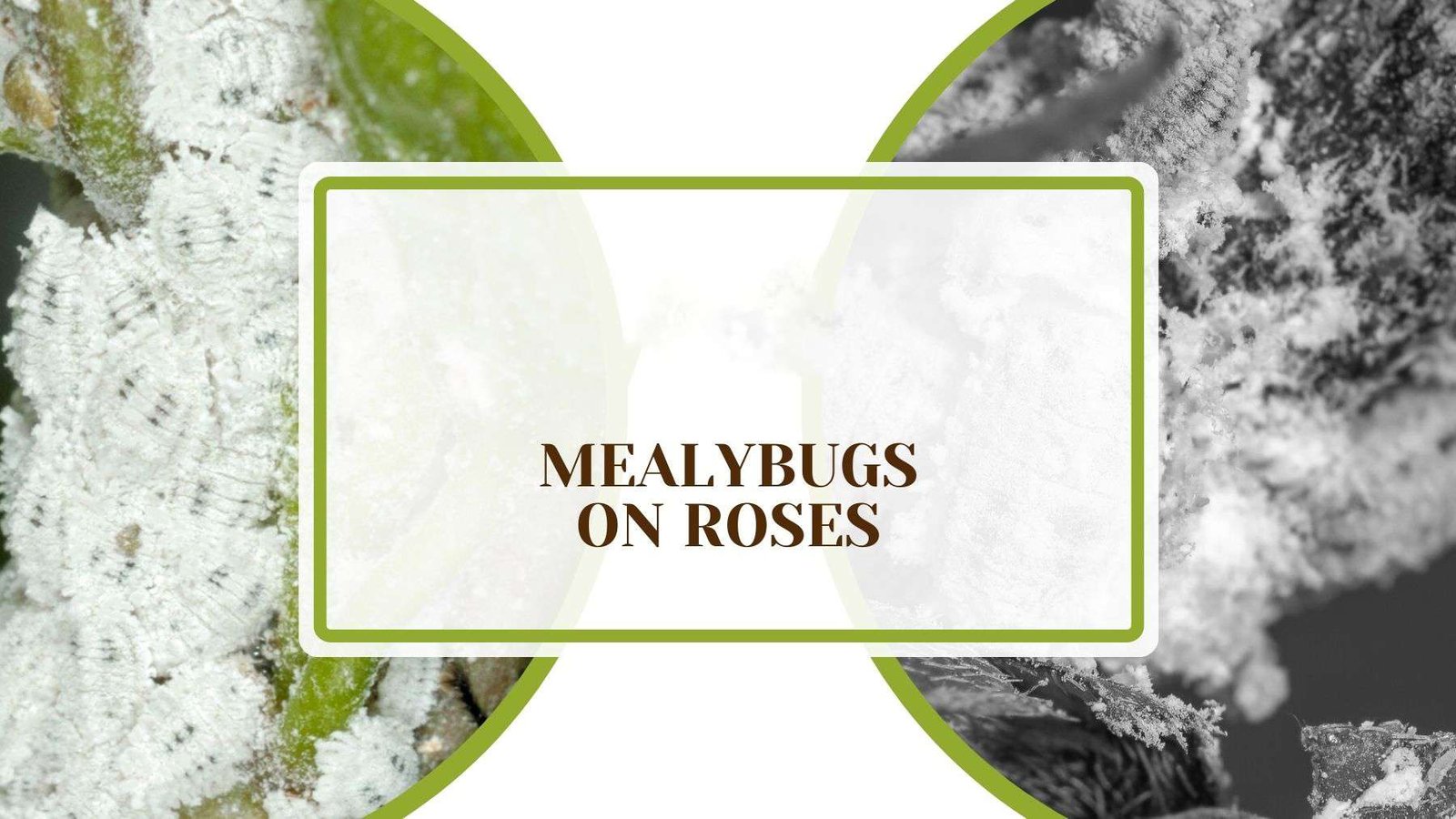
Mealybugs on roses can turn the joy of gardening into a frustrating challenge. These tiny insects might seem harmless, but they can make your plants fragile in a blink. So, are you looking to protect your roses from this common but underestimated pest?
Then, read on as we explore easy techniques to keep your rose garden thriving without unnecessary jargon or complexity.
What Causes Mealybugs on Roses? Main Reasons!
Mealybugs on roses are caused by overwatering, poor air circulation, or high humidity. These humid conditions create a favorable environment for mealybugs to breed and multiply. Moreover, infested plants or contaminated soil can also introduce mealybugs to your rose garden.
– Favorable Conditions for Mealybugs
Mealybugs are pretty sneaky little creatures, and if you’ve ever wondered where do mealy bugs come from, you’re not alone. The weather plays a big part in the life of mealybugs on roses. If your garden has a humid, warm spot, it might become a favorite place for these bugs.
– Poor Maintenance Practices: Another Reason
Sometimes, the problem isn’t the bugs but how the garden is maintained. Overwatering, improper pruning, or failing to check plants regularly can lead to a thriving mealybug population.

– Impact of Nearby Infestations
If your neighbors have a mealybug problem, these insects also enter your garden. They don’t understand property lines; they go where the food is. If your garden is close to an infested area, it can be a natural destination for them.
– Imported Plants and Soil
Mealybugs don’t just appear out of thin air. They travel from plant to plant. If you bring in new plants or soil from an outside source, you might unintentionally bring these bugs. Always check new additions to your garden thoroughly.
– Interaction with Other Insects and Animals: Unusual Relationship
Mealybugs can also ride on the insects and animals visiting your garden. Ants, for example, are known to protect and farm mealybugs for the sweet honeydew they produce. Luckily, removing mealybugs from your roses is not difficult at all.
What to Do When Mealybugs Infest Roses
When mealybugs infest roses, isolating the affected plant and manually removing the bugs is essential. Using rubbing alcohol on a cotton swab helps in this process. Drying the potting soil can prevent further infestation. Applying soaps or essential oils can also eliminate mealybugs from roses.
– Isolate and Manually Remove the Bugs
One of the first steps is to isolate the affected plants. However, it is better to confirm the infestation first. Look for signs of infestation, such as a cotton-like substance on the leaves or stems. If you spot them on a plant, pick the plant up and shift it to a new space.
Next, you’ll want to remove the bugs manually. A mixture of rubbing or isopropyl alcohol and water in equal parts can be applied directly to the infested areas. The alcohol breaks down the bugs’ protective coating. It makes removing them more effortless with a soft brush or cloth.
Newbies get scared when they see mealybugs on plants. Many people ask us, “Are mealybugs harmful to humans,” and the answer is no. You can safely pick these insects with your fingers or dab them off with a cotton swab.
– Dry the Potting Soil
Drying the potting soil is the second important step in dealing with mealybugs. These insects thrive in damp environments, so reducing the moisture levels creates a less hospitable home for them. However, you must dehydrate plants without harming them.
First, understand your roses’ specific moisture needs; not all roses are identical. By reducing the water you provide, you can strike the right balance between keeping the roses healthy and drying out the mealybugs.
Sometimes, the potting mix might be the problem, retaining too much moisture. In that case, switching to a mix with better drainage can be the solution. Regularly monitoring the soil’s moisture levels will help you keep track of the situation. That’s all about how to prevent mealybugs.
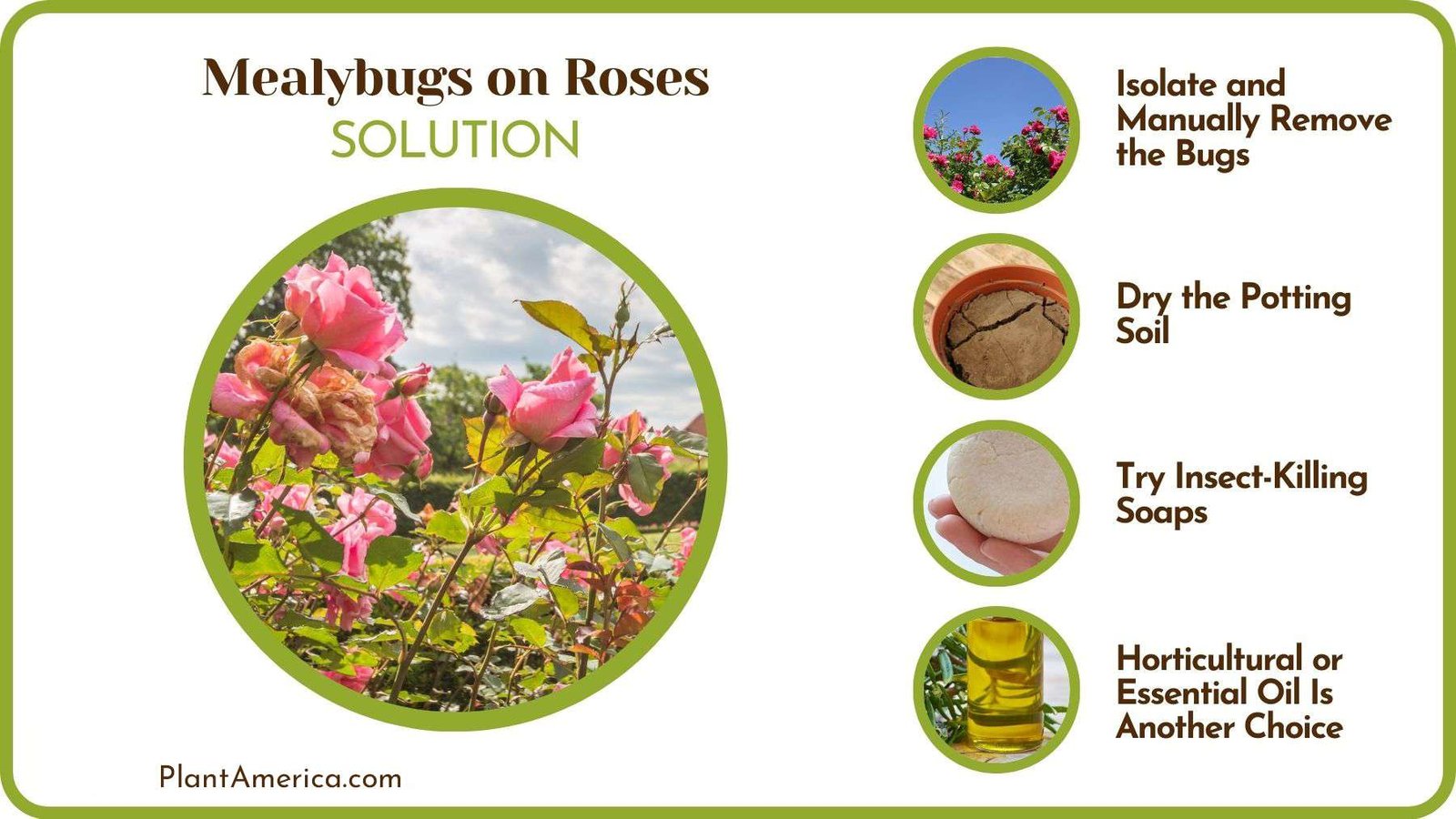
– Try Insect-Killing Soaps
When facing a mealybug infestation on your roses, you must act quickly. You might even be wondering, what kills mealybugs instantly? That’s where insecticidal soaps come into play.
But how do you use insect-killing soaps correctly? First, you’ll need to select a soap specifically designed for insect control. Don’t mistake this for your everyday dish soap. These specialized soaps contain ingredients that target bugs directly.
Next, you’ll mix the soap with water. Once mixed, you’ll apply the soap using a spray bottle, carefully coating the affected areas of the plants. You should repeat the process a few times to eradicate all the mealybugs. Note that spraying during the early morning or late afternoon can help avoid harming these helpful insects.
– Horticultural or Essential Oil Is Another Choice
A common question gardeners might have is, does neem oil kill mealybugs? The answer is yes, it does. In fact, it’s a favored choice among many gardeners. You’ll want to use a similar process to insecticidal soaps. First, select a product designed for pest control, then mix it with water as directed.
When spraying your plants, coat all surfaces, including the undersides of leaves. The oil should cover the insects and their eggs, so thorough coverage is critical. Horticultural oils are typically considered a safe option, not just for the plants but for the surrounding environment as well. They don’t leave harmful residues and break down naturally over time.
However, you should use them with care. Applying oils in the day’s heat can cause leaf burn, so aim for cooler times. Also, some rose species can be sensitive to oils. So, it’s wise to test a small area first and wait a day or two to see if there are any adverse reactions.
– Hydrogen Peroxide: Another Easy Solution
We know Hydrogen peroxide is not associated with gardening. Luckily, it still has some remarkable applications in the fight against pests:
- Mealybugs
- Spider mites
- Gnats
Here’s how you can utilize hydrogen peroxide in your garden:
- Concentration Matters: Most household hydrogen peroxide solutions are at a 3 percent concentration, suitable for dealing with insect pests. However, it must be diluted before plant use to avoid potential damage. A standard mixture might include one part of hydrogen peroxide to ten parts of water.
- Application: A spray bottle is a perfect tool for applying the hydrogen peroxide solution to the affected areas of the plants.
- Timing: Like other treatments, the time of day matters. Early morning or late afternoon is best to avoid potential harm to beneficial insects.
- Monitoring: Keep an eye on your plants after treatment. Remember- excessive use can damage plants, so moderation is key.
– Go For Diatomaceous Earth
If you’ve experienced mealybug infestations, you know how challenging they can manage. That’s where Diatomaceous Earth (DE) comes into play. DE is a non-toxic powder with microscopic sharp edges. When they touch the bugs, they penetrate the exoskeleton, causing them to dehydrate and die.
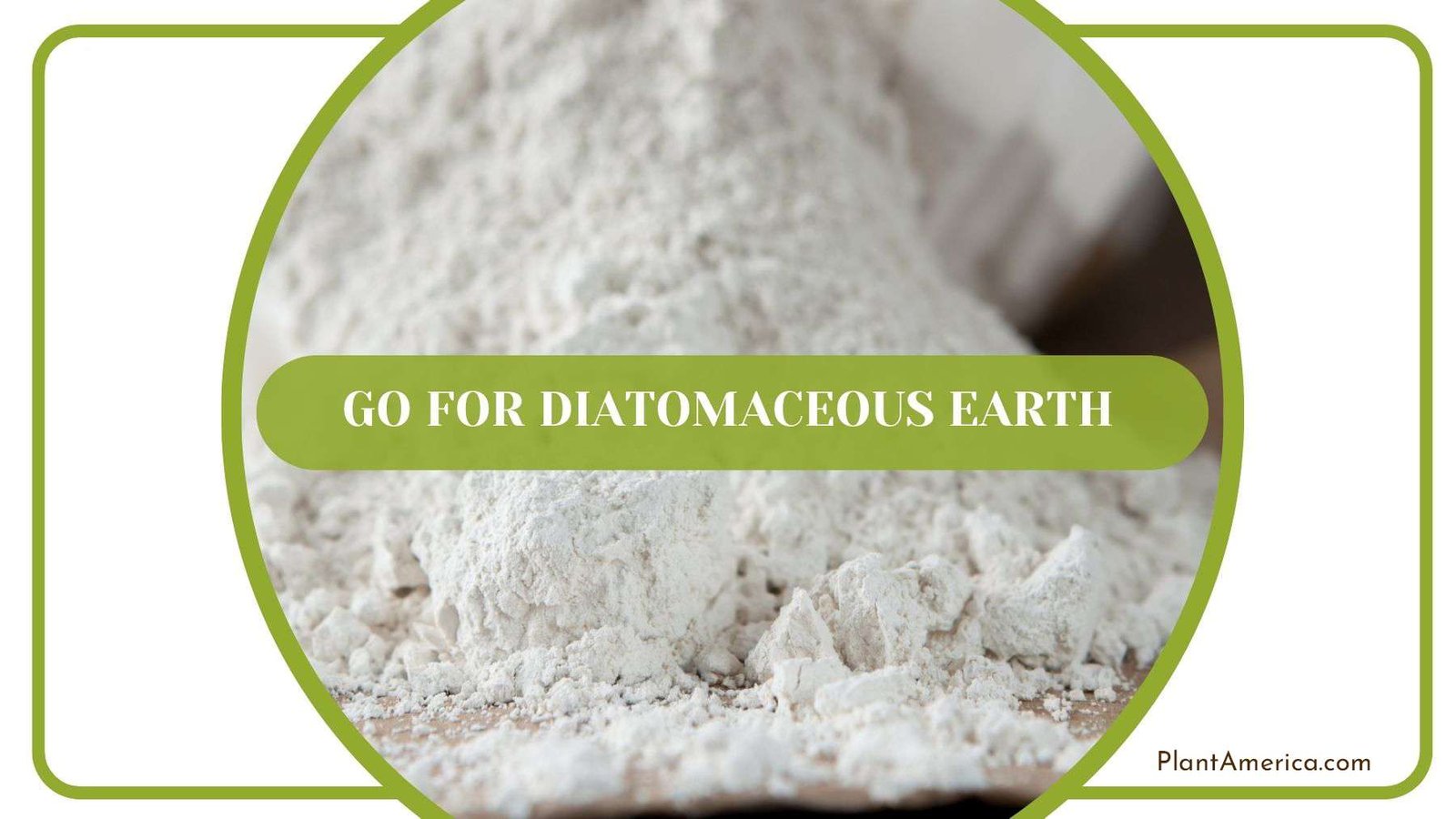
Here’s how to use DE effectively in your garden:
- Choosing the Right Product: Make sure to purchase food-grade Diatomaceous Earth (DE), as it is safe for plants and humans.
- Application: Wearing a mask (since the powder can be irritating if inhaled), apply DE to the affected areas of the plants, ensuring thorough coverage.
- Reapplication: DE loses its effectiveness when wet, so you must reapply after rain or watering your plants.
- Other Uses: While highly effective against mealybugs, DE is also helpful against other crawling insects like ants and slugs.
- Environmental Considerations: DE is environmentally friendly and won’t harm beneficial insects like bees if applied correctly. Like other treatments, timing the application to avoid the peak activity of these helpful insects is critical.
– Controlling Ants: An Important Mealybug Control Measure
If you notice mealybugs on your roses, likely, ants are also present. Understanding the connection between ants and mealybugs might seem unusual, but it’s common.
Ants and mealybugs help each other. Ants keep bugs away from mealybugs, and mealybugs give ants a sweet treat to eat. Both win from this deal.
Therefore, effective ant control means breaking the connection between ants and mealybugs. This can include using ant traps, barriers like sticky substances around plant stems, or natural repellents like cinnamon and vinegar. We also suggest looking at your plants daily for ants and mealybugs. It will help you spot problems early and keep damage low.
– Use a DIY Spray
Sometimes, homemade solutions work best. If you’re wondering how to get rid of mealybugs naturally, a DIY spray can be an exciting and eco-friendly alternative to traditional chemical pesticide treatments.
Common ingredients for a DIY spray include dish soap (choose a gentle, natural brand), vegetable oil, and water. Some people mix in mint or neem oil to make sprays work even better.
Combine a few teaspoons of soap and vegetable oil with a quart of water. If using essential oils, a few drops are usually sufficient. Apply the mixture to the affected areas of your plants (ensure complete coverage).
Be mindful to spray early or late afternoon to avoid harming beneficial insects. Unlike chemical insecticides, natural sprays require more frequent applications.
Monitoring your plants and reapplying as needed ensures continued protection. DIY sprays allow you to get rid of mealybugs naturally and provide more control over what goes into your garden.
– Sticky Barriers: Old and Tested Strategy
Most gardeners prefer sticky traps to control bugs because they act like barriers. They catch mealybugs with their glue before reaching the plant stems and branches. These barriers can be store-bought or made at home using readily available materials like sticky tape or glue.
The key is to place these barriers at the right spots, mainly where you notice the mealybugs are most active. It requires careful observation, but once you get it right, sticky barriers can be a highly effective tool in breaking the life cycle of the mealybugs and keeping them from spreading.
While simple in concept, using sticky barriers effectively requires some understanding of the plants and the pests you are dealing with.

– Doing Appropriate Gardening Practices
You can also get help from mealybugs’ natural enemies to protect your roses. That’s right; there are natural predators out there that can be part of your biological control strategy.
Beneficial insects can be purchased from any reputable gardening store. You can also encourage these beneficial predators to live in your garden. But for this, you should do appropriate gardening practices.
First, plant flowers that are attractive to them. Avoid using harsh chemicals that might drive them away. Please provide them with shelter and water.
Remember- it’s a win-win. You get a more resistant garden to mealybugs and will enjoy seeing these beautiful predators. This is a gentle, easy way to solve a problem all gardeners face.
Conclusion
All in all, don’t worry too much about mealybugs on roses. You’ve got lots of ways to beat them. Here’s a simple way to remember what to do:
- Catch Them with Sticky Stuff: Put up sticky barriers that trap the mealybugs.
- Make Friends with Helpful Bugs: There are good bugs, like ladybugs, that eat mealybugs. Let them help you!
- Use Safe Sprays and Tricks: You don’t have to use anything harsh. You can try safe things like soap and oil on the bugs.
- Watch Out for Ants: Ants and mealybugs work together, so keep an eye on them too.
- Garden the Right Way: Water, feed, and trim your plants the right way, and they’ll be strong enough to fight off mealybugs on their own.
Just like that, your roses can be free of mealybugs, and your garden can be a happy place for you and all the good bugs that live there.