
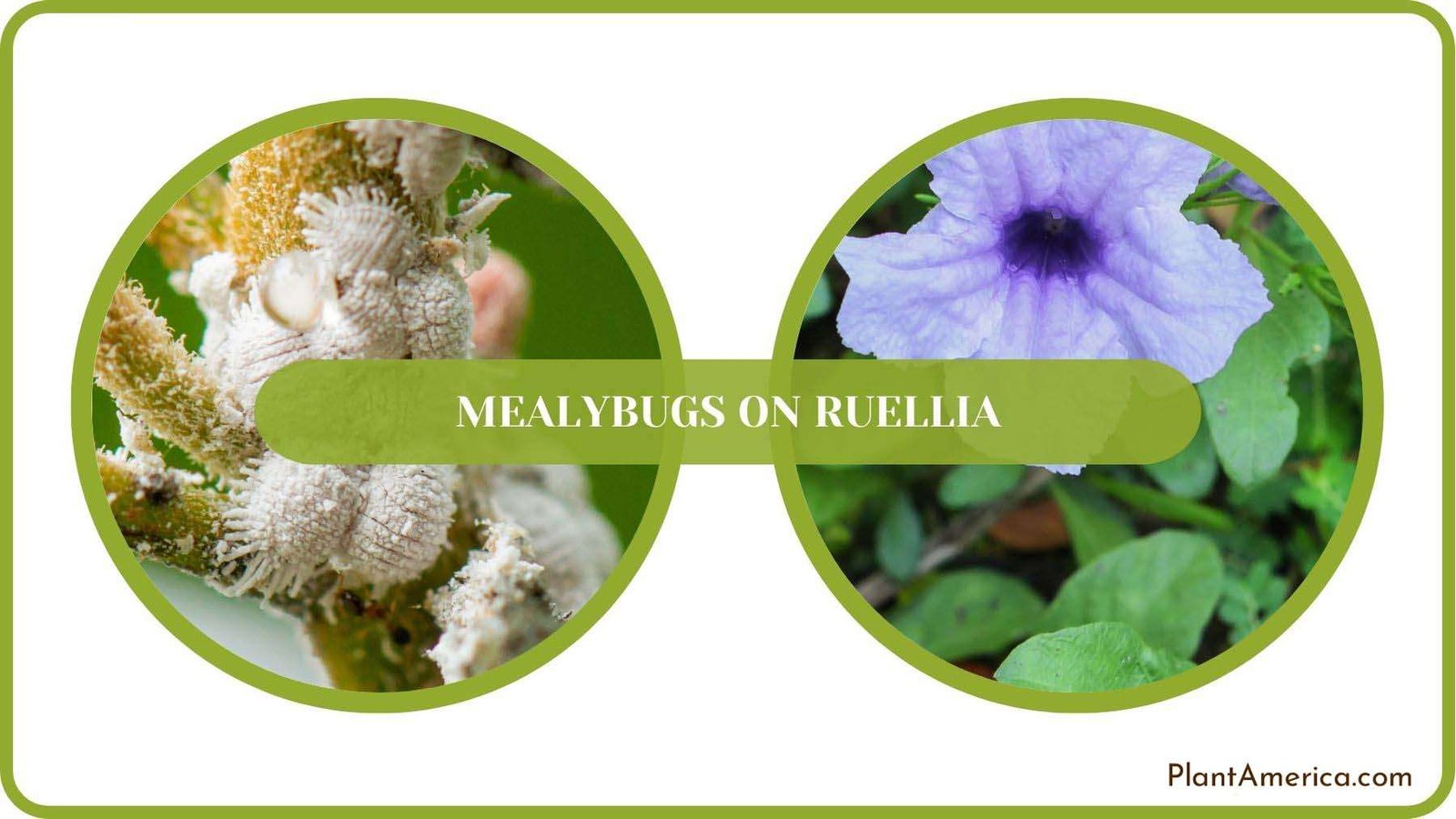
Mealybugs on ruellia can turn your beautiful ruellia plants into a wilting mess in no time. Therefore, getting rid of them the straight way is critical.
So, stay with us, and we’ll dive into reclaiming your garden with easy methods. Trust us; your ruellia will thank you.
Why Are There Mealybugs on Your Ruellia?
There are mealybugs on your ruellia because they are attracted to their foliage. Their infestation is also often caused by overwatering, poor ventilation, and high humidity, which are ideal for the mealybugs to reproduce. Additionally, plants weakened by improper nutrition are more susceptible to mealybug infestations.
– The Attractiveness of Ruellia to Mealybugs
Also known as Mexican petunia, ruellia is a hardy plant highly attractive to mealybugs. These persistent pests love to feed on the sap of various plants, and the ruellia is no exception. Their priority is the lush green leaves, but the colorful blossoms, stems, and roots are neither safe.
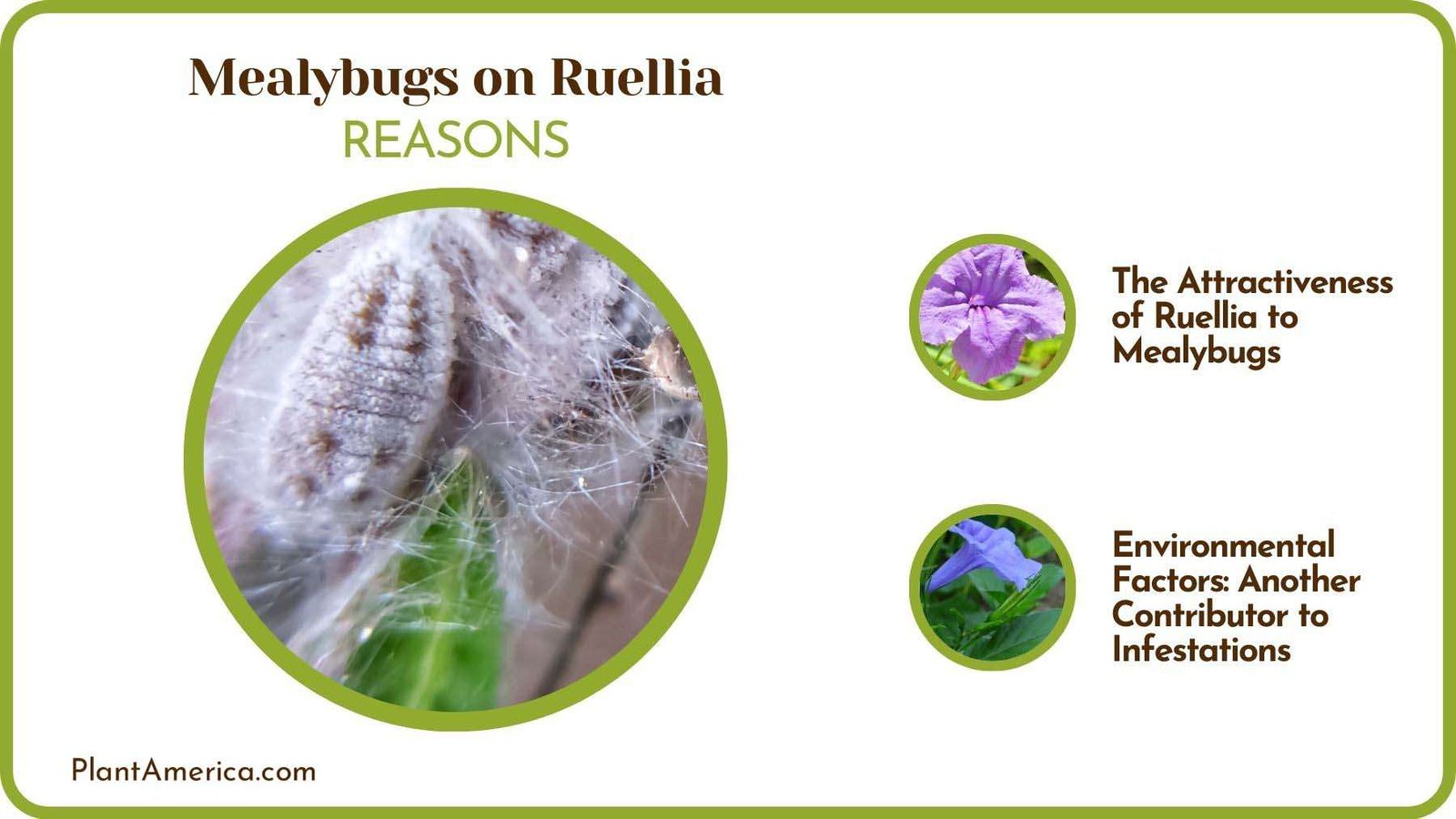
The Ruellia brittoniana, a popular variant of ruellia, isn’t immune to mealybugs. You might notice leaf yellowing and wilting. In extreme cases, plant death also occurs.
It happens because of mealybugs’ ferocious sap-sucking. The sap/juice has vital nutrients which are critical for growth. As a result, nutrient deficiency (malnutrition) occurs.
– Environmental Factors: Another Contributor to Infestations
While these pests can appear in any garden, certain environmental conditions make your ruellia plants more susceptible. Overwatering and high humidity are two significant factors that can attract mealy bugs. Similarly, a lack of natural predators in your garden can lead to a boom in the mealybug population.
How To Eradicate Mealybugs From Ruellia? (10 Simple Ways)
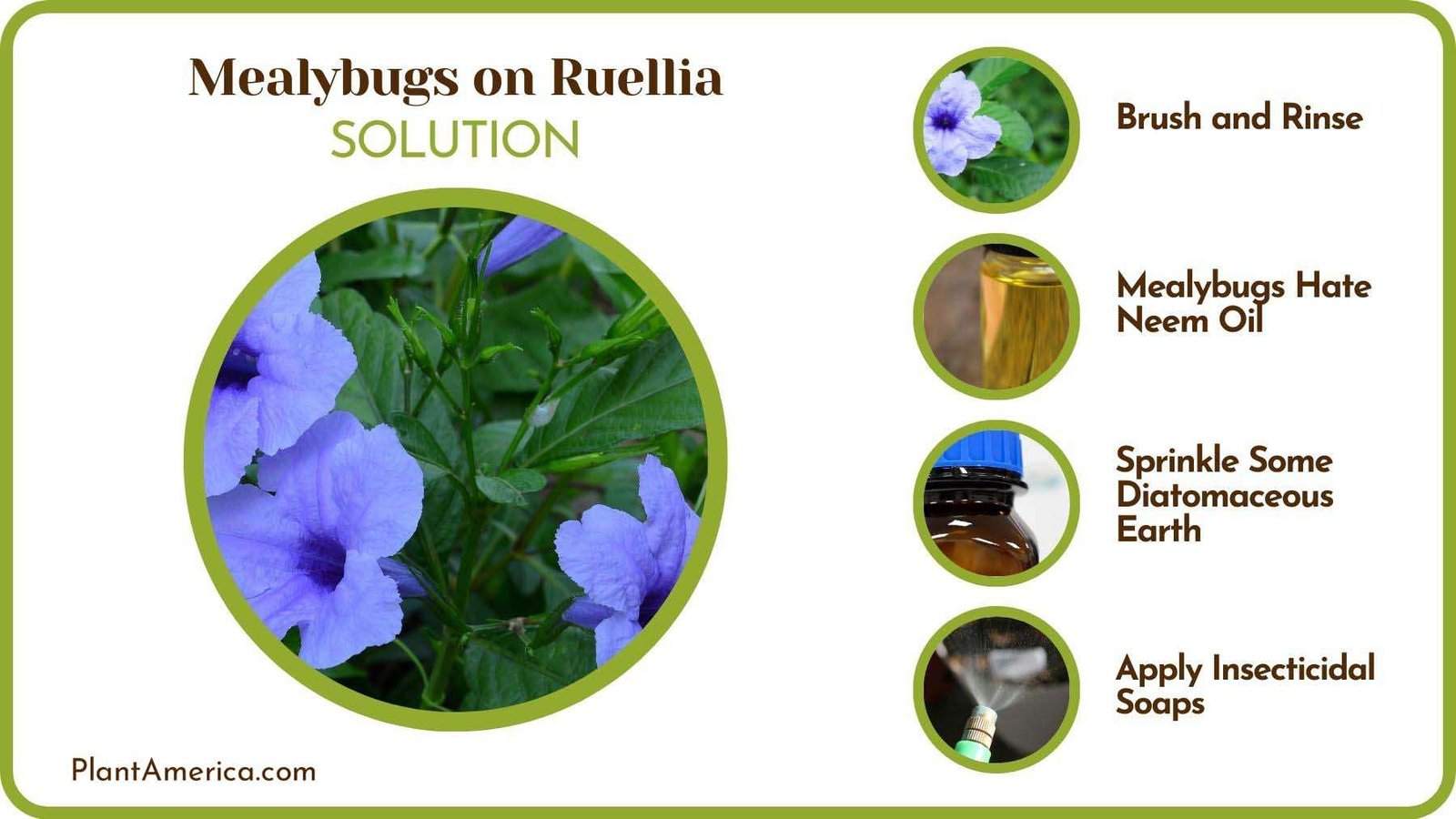
To eradicate mealybugs from ruellia, remove visible bugs manually using the “Brush and rinse” method. Diatomaceous earth (DE), soap, and oil spray are also recommended to deter pests. If you see mealybugs everywhere, take more aggressive measures, like baking soda, bleach, and copper-based fungicides or chemical pesticides.
– Brush and Rinse: First Plant Defense
The first step to getting rid of mealybugs is a thorough rinse. Spraying water can knock those annoying pests right off your ruellia plants the moment the water hits them. Now, you don’t want to blast your plants with water. Instead, use a gentle shower on your hose or even a water-filled spray bottle.
But hold on. Before you get the water out, grab a soft brush to remove any visible mealybugs from your plants. The brush will dislodge those pests that they’re clinging to the ruellia. You can then rinse off these bugs with water. It’s crucial we point out here that you must allow the soil to get dry after watering. If your plants and soils stay moist for long, chances of fungal attacks will go way high.
Also, remember brushing and rinsing might not get rid of all insects. It is also recommended for smaller infestations, as you can’t manually remove hundreds of pests with a brush and water. So, it’s best used as a first step in a larger mealybug control plan.
– Mealybugs Hate Neem Oil
As a gardener, there’s a powerful weapon you should always have in your arsenal: neem oil. Renowned for its natural insecticidal properties, neem oil can effectively deter mealybugs and other pesky pests.
The magic lies in the active component – azadirachtin. This compound immediately disrupts the life cycle of mealybugs. It interferes with their feeding and growth. When this happens, their egg-laying capabilities get compromised. As a result, you will start seeing a decline in the mealybug population.
Applying neem oil is simple. You’ll typically find it in a concentrated form, but we suggest diluting it with water to make it more acceptable to plants. Once mixed, spray the solution generously on all parts of your Ruellia plant, ensuring you don’t miss the undersides of leaves where mealybugs love to hide.
Besides deterring mealybugs, neem oil doubles as a fungicide, reducing the risk of sooty mold from mealybug infestations (so it’s a win-win for your plants).
– Sprinkle Some Diatomaceous Earth
Next up, consider using diatomaceous earth- a naturally occurring sand made from fossilized aquatic organisms called diatoms. The sharp edges can act like a blade, slicing and killing many common garden pests, such as mealybugs and spider mites.
To use diatomaceous earth, you’ll want to sprinkle it around the base of your ruellia plants. You can also dust it onto the leaves and stems where you’ve seen mealybugs. The tiny particles will attach to the pests, cutting into their bodies and causing them to die.
But remember, Acalitus simplex might also be present in your garden. Fortunately, diatomaceous earth can help control these mites as well.
However, remember that the diatomaceous earth must be dry to work. If it rains or you water your plants, you must reapply it. Also, you should wear a mask when sprinkling to avoid inhaling the dust.
– Apply Insecticidal Soaps (But in a Right Way)
Insect-killing soaps are an excellent option for dealing with mealybugs on your ruellia plants.
Insecticidal soaps work by breaking down the waxy outer layer of pests like mealybugs. Once this protective layer is gone, the bugs dehydrate and die.
But don’t forget about the Mexican petunia gall mites. They’re a menace, too, as they can also wreak havoc on your plants (similar to bugs). Don’t worry; insecticidal soaps can also be effective against these pests.
It’s important to note that insecticidal soaps should be used correctly. You’ll want to cover all plant surfaces, including the undersides of leaves. And remember, these soaps are only effective while they’re wet. Once they dry, they no longer kill pests. So, you may need to reapply for complete control.
– Vinegar and Essential Oil Spray Works Too
Next, we have an all-natural solution – vinegar and essential oil spray. Vinegar, a common household item, can be helpful in your mealybug eradication plan. It’s acidic, which can kill mealybugs upon contact.
Now, let’s discuss essential oil, another pest repellent. You can try peppermint or rosemary oil (depending on your preference). They all have two advantages- they eliminate pests and add a pleasant scent to gardens.
We suggest an all-seasons oil spray recipe, which you can use whenever possible.
You can blend vinegar and essential oil in equal parts (quantity is mentioned on their bottles) and then pour the mixture into a liter of water. However, be careful when applying the solution, as vinegar is potent, and too much can harm your plants.
So, test the spray on a small part of your plant first. Wait for 24 hours and see how your plant reacts. If you see no damage signs, mist the solution on the whole plant.
– Baking Soda Solution – Potent Weapon Against Bugs
Let’s talk about a simple and safe eriophyid mites treatment- the baking soda solution.
Do these steps:
- Fill a spray bottle with lukewarm to warm water.
- Add a few teaspoons of baking soda.
- Shake it well to ensure it’s mixed properly. Spray this solution on the affected areas. Keep repeating this process for a few days until your garden becomes mealybug-free.
This method works because baking soda creates an alkaline environment on the plant’s surface, which is unfriendly to the bugs. However, be cautious not to overdo it, as too much baking soda can harm your plant.
– Defend the Plants With Bleach Solution
Sometimes, we need a more potent solution )(especially in the case of stubborn mealybugs). In desperate times, a diluted bleach solution can serve as a helpful method for bugs and mites treatment.
Mix bleach in water. The ratio should be around 1:10 to ensure it doesn’t harm your plants. Then, use a spray bottle to mist the affected areas lightly.
The bleach solution takes care of the pests by killing them as soon as it touches them. But keep in mind bleach is pretty strong stuff, so you’ll want to be careful when you’re using it. Please keep it away from your eyes and skin. We also suggest using it sparingly on your plants, as too much might cause leaf and root burn.
Remember, these methods will only work slowly. So, continue the treatment until you see a noticeable reduction in the infestation. It is also better if you combine other methods too. The results will be much faster!
– Do the Cold Treatment
When you deal with Mexican petunia problems like mealybugs, it’s good to know there are non-chemical options available. Cold treatment is one such method!
While discussing cold treatment, it is time to answer one of your frequently asked questions, “How to treat acalitus ruelliae?” We recommend cold therapy. Mealybugs and acalitus do not fare well under cold conditions, which can be used to our advantage.
By exposing the infested plant to a cold environment, the mealybugs will naturally start to die off. But be mindful of the plant’s health during the treatment, as cold temperatures can damage ruellia. Use this method judiciously.
– Try Soaps and Copper-Based Fungicides
Both the soaps and copper-based fungicides are lethal against mealybugs.
They aren’t picky – they target all stages of the mealybug life cycle, from eggs to adults. For maximum impact, spray it on the undersides of the leaves and other hiding spots.
And the best part? You can easily find insecticidal soaps and fungicides in garden stores or online, or make your own at home by mixing dish soap with water.
If you’re dealing with the erineum on Mexican petunia, copper fungicides alone can be an effective tool.
But remember, even though insecticidal soaps and fungicides are safe, you should always test them on a small part of the plant first. After a day or two, you can treat the entire plant without adverse reactions.
– Apply Chemical Pesticides for Quicker Results
Sometimes, despite our best efforts, the mealybug infestation persists. In this situation, chemical pesticides become necessary. The decision to resort to chemical pesticides should not be taken lightly. They are costlier than other methods, so it is better to try affordable ones first.
When choosing a chemical pesticide, ensure it is designed to combat mealybugs and is safe for your Mexican petunia. Various options are available, from contact pesticides that kill the bugs on contact to systemic pesticides that work from inside the plant.
Always follow the bottle’s printed instructions, wear protective clothing, and keep children away from treated areas.
We don’t suggest chemical pesticides to you if you are an indoor gardener. Using them inside a building can cause a potential health hazard for you and other living beings. You should only apply chemical pesticides where there is proper ventilation.
So, keep these things in mind when you go for chemical treatment.
Conclusion
To sum up, mealybugs on ruellia can lead to severe damage, and in extreme instances, they might even result in the death of the plant. Fortunately, you can try several methods to eliminate these troublesome pests promptly. Here are vital steps to remember:
- Regularly examine your plants for early signs of infestation, which include sticky residue or a white cottony substance on the leaves and stems.
- Non-chemical methods such as manual removal, cold treatment, and natural sprays can effectively control mild to moderate infestations.
- It is better to use stronger measures like chemical pesticides for severe infestations.
- Always remember to use chemicals responsibly, adhering strictly to package instructions for the safety of your environment and the plant.
With consistent care and swift action at the first sign of mealybugs, your ruellia plants can remain vibrant and healthy, adding beauty to your garden or home.