
Philodendron plowmanii care is both simple and straightforward. It has all the same care needs that are characteristic of many Philodendron plants. This article serves to unleash all important information with regard to caring for and propagating Philodendron plowmanii.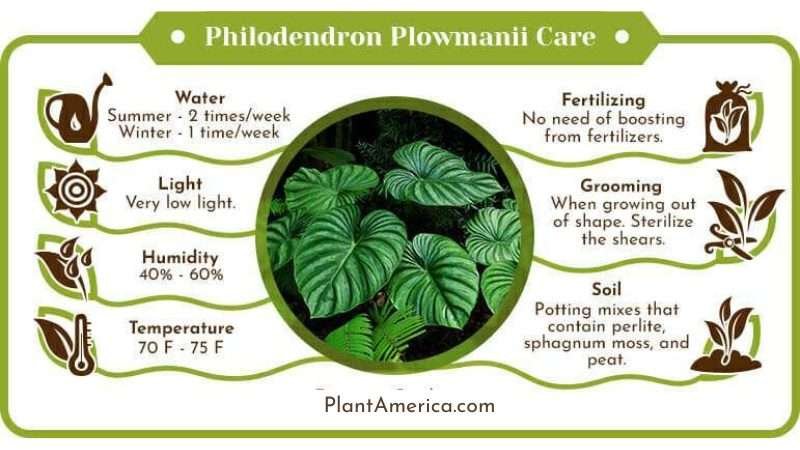
By the time you get to the end of this article, you will have attained the mindset of a pro as far as taking care of this dazzling plant is concerned.
Philodendron Plowmanii Care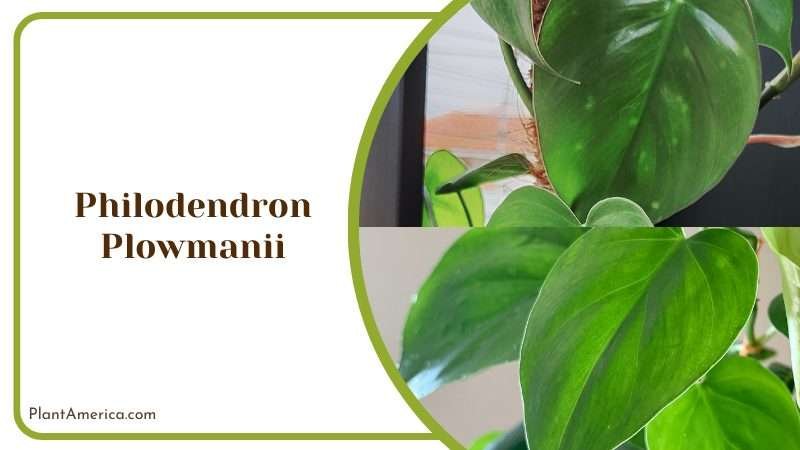
- Soil: It grows best in mediums without soil.
- Watering: Once a week during the winter, twice a week during summer.
- Light: Thrives in low light, but prefers filtered light or partial shade.
- Temperature: Thrives in temperatures ranging between 55°F and 85°F.
- Humidity: Between 40 and 60 percent.
- Fertilizer: It does fine without fertilizers, occasional fertilizing can boost growth.
- Repotting: Thrives with free roots, but repot if rootbound to avoid slow growth.
- Grooming: Trim for shape, but don’t over-prune to ensure proper growth.
 Light Requirements
Unlike most houseplants, Philodendron plowmanii can survive under very low light conditions. However, filtered light or partial shade is even more conducive to the growth of the plant.
Philodendron plowmanii does not tolerate bright, direct sunlight. The direct light during the hot afternoons can scorch the leaves of your plant. The younger, immature leaves are more susceptible to being burned by direct sunlight than the mature ones.

Be conscious of where you place your Philodendron plowmanii, especially when you are growing it outdoors.
 Water Requirements
It is easy to assume that Philodendron plowmanii can do well even in waterlogged conditions, considering the plant’s natural habitat in the tropical rainforests. However, this plant is not happy in extremely wet conditions when it is potted.
We recommend that you water your Plowmanii when its topsoil is dry. Ideally, the watering frequency should amount to twice a week during summer. Reduce the watering to once a week during the winter, when the growth rate of the plant is relatively lower as compared to summer.
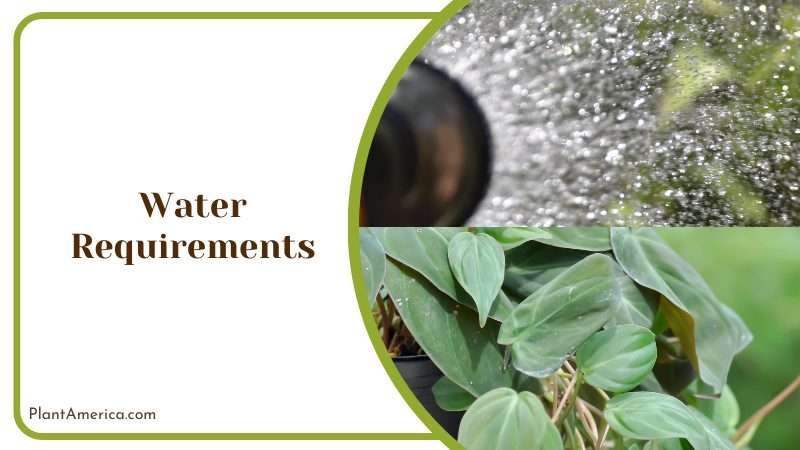
Water uptake by your plant highly depends on the available environmental conditions. Therefore, the most reliable method for determining the moisture requirements of your Philodendron plowmanii is by assessing the soil’s moisture content.
 Temperature Requirements
Philodendron plowmanii is happy when it is grown under temperature ranges between 55 F and 85 F. This plant is not tolerant to frost and may die if it is exposed to cold temperatures.
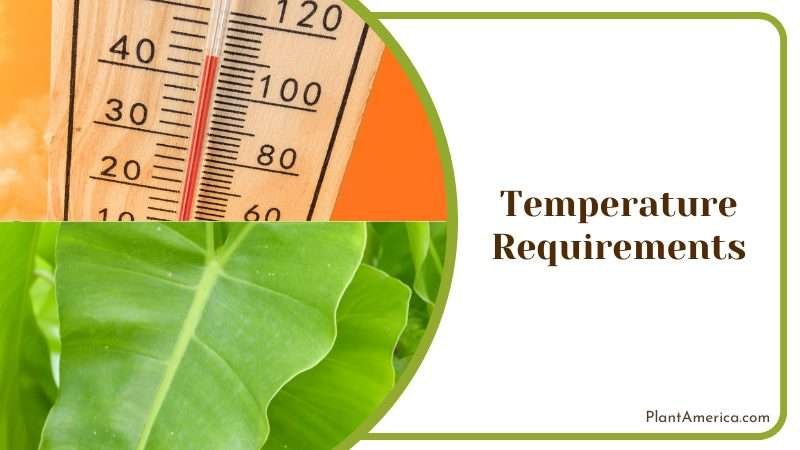
In regions where winters get frosty, you should grow your Plowmanii indoors, where temperatures are warmer. You could grow it outside during the warmer summers and take it inside the house as soon as the temperatures approach 60 F.
 Humidity Requirements
Philodendron plowmanii does well when the humidity levels are between 40 and 60 percent. Heat sources, such as heaters, and cold draft sources, such as fans and air conditioners, can dry up the air. It is difficult to maintain the humidity requirements of Philodendron plowmanii if you place your plant in a room where heating or air conditioning systems are present.

If the humidity conditions in your home are too low, consider using a humidifier. Misting your Philodendron plowmanii is another viable option for increasing humidity levels. Grouping plants together also assists in increasing humidity levels and maintaining them.
You can also use a shallow pebble tray filled with water. Place your plant on the pebble tray and the air around your plant will become more humid. Make sure the pot does not come into direct contact with the water in the pebble tray to avoid creating waterlogged conditions for the roots.
 Soil Requirements
Philodendron plowmanii thrives best in soilless mediums. Potting mixes that contain perlite, sphagnum moss, and peat will create characteristics that encourage the healthy growth of your plant.
Perlite helps to improve aeration and drainage abilities by loosening the soil structure. Peat increases the water-retaining properties of the soil medium so that the plant will not be deprived of the moisture that it requires.
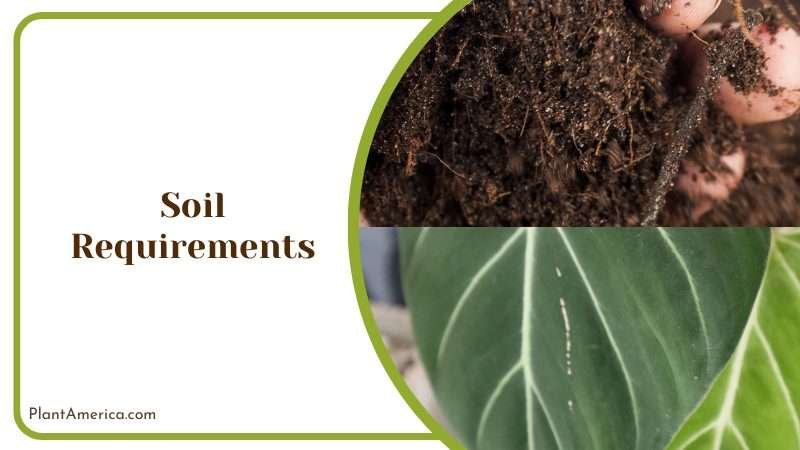
A mixture of sand, peat, and loam also makes a good growth medium for your Philodendron plowmanii. You can also add some compost to create a nutrient-rich soil medium that does not hold on to excessive moisture. Do not use sandy soils that drain too much and clay soils that cause waterlogged conditions. Soils that do not drain well promote root rot, especially if the plant is accidentally overwatered.
Philodendron plowmanii prefers a growth medium that is slightly acidic. pH ranges from 4.5 to 6 are supportive of the growth of the plant.
 Fertilizer Requirements
Philodendron plowmanii does relatively well without any boosting from fertilizers. However, there is no harm in adding a little fertilizer once in a while to further enhance the growth rate of your plant.
If you decide to add fertilizers to your Plowmanii, do so during the plant’s growing season, that is, in summer or spring. Apply the fertilizer once every month or in three months, depending on the type of fertilizer that you use.
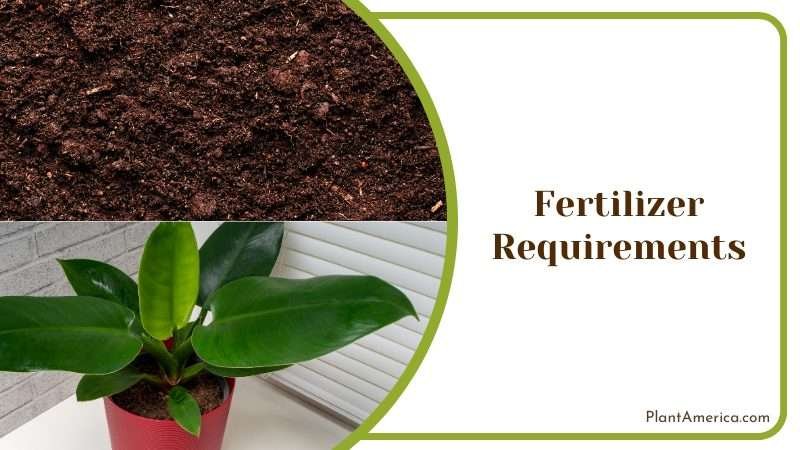
Organic time-release fertilizers are good for Philodendron plowmanii. Liquid fertilizers with organic formulations are also available and they are a good option, too. For liquid fertilizer use the instructions on the packaging to dilute appropriately. Be sure to place your fertilizer about 6 inches away from the stem of the plant so that you don’t burn it.
Avoid using fertilizers of low quality. These will damage the roots of your plant as time goes on.
Repotting
Philodendron plowmanii does well when its roots are free inside the pot. The moment it becomes rootbound, you need to repot it to avoid retarded growth.
Another good reason for repotting Philodendron plowmanii is when the foliage of your plant becomes too big and heavy so that you avoid having it tip over. The size of your plant’s foliage should match the size of the pot.
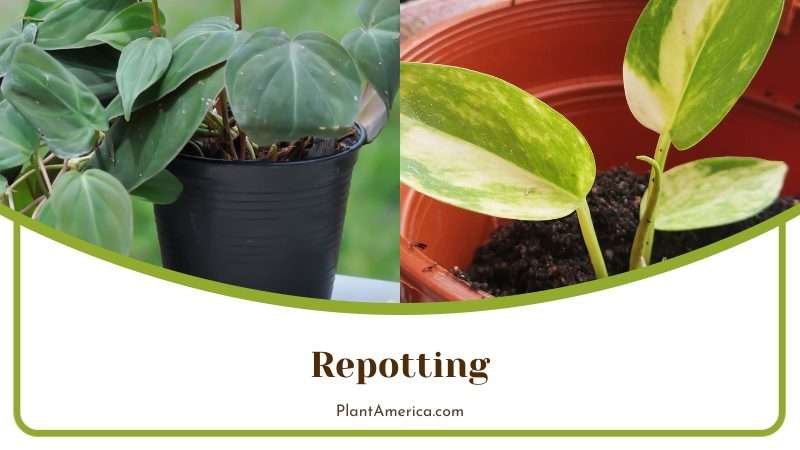
Choose a good pot for repotting. We would recommend terracotta pots as compared to plastic ones. Make sure your pot has enough drainage holes to avoid waterlogged conditions after watering.
Uproot your plant from the current pot slowly to avoid damaging the roots. Remove any diseased or damaged roots, if any, before repotting. Place the Philodendron plowmanii into your new pot, with the same potting mix as the one that was in the current pot. Water and care for it the same way you did when it was in the original pot.
 Grooming
There is no harm in grooming your plants when it appears to be growing out of shape. However, please note that overdoing the pruning process can disrupt the proper growth of the plant. Be sure to sterilize the shears that you use for pruning and wear gloves to reduce the chance of microbial infection on your plant.
Propagation
Once you know how to take care of Philodendron plowmanii, you might need to multiply your plants. Propagating Philodendron plants on separate plants is both cost-effective and fascinating.
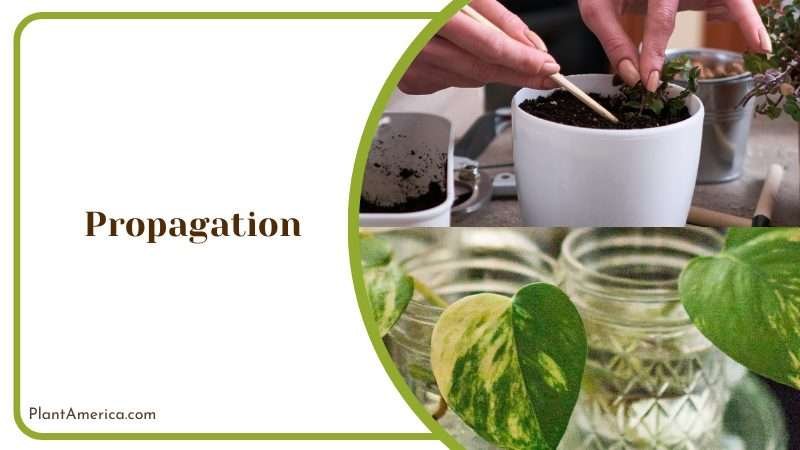
Here is a step-by-step guide on water propagation:
- Your cutting should be about 4 inches long and should have a couple of leaf nodes. Remove the leaves that are at the lower part of the stem cutting before dipping the cut end in a jar that is filled with water. We recommend that you leave the water to stand overnight before beginning the propagation procedure.
- When you place the stem cutting into the water, make sure that all the bare nodes are covered with water, while about three leaves remain outside the water.
- Place the jar in a warm environment for rooting and keep it away from direct sunlight to prevent the growth of algae.
- Change the water regularly, too. When the roots grow to about 2 inches, you can transplant your Philodendron into the pot of your choice.
Here is how to do soil propagation:
- Dip then cut the end of the stem. Then, place the cutting in a rooting hormone to expedite the rooting process.
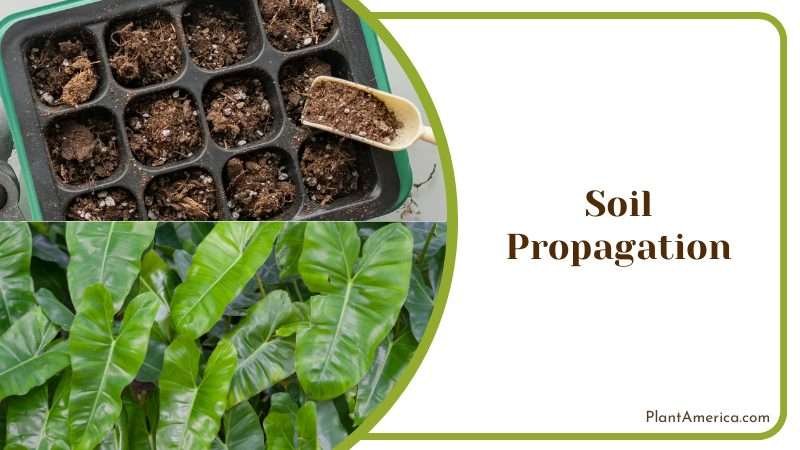 Place your stem cutting into the soil in a pot and water it. Use a clear plastic bag to cover the plant to maintain the required moisture levels. Remember to remove the plastic regularly to reduce the chances of microbial infection.
- Maintain warm temperatures between 70 and 75 degrees Fahrenheit and keep the soil moist, not soggy.
- Usually, the stem cutting will begin to develop roots after about two to four weeks. Gently tug the plant to find out if it has developed strong roots. Once you feel some resistance, this means that the roots have developed, so you can transplant the plant to the pot that you allocated for it.
Problems
If proper care is not taken, Philodendron plowmanii can easily be affected by pests and diseases. In this section, we will look at some of the problems that you can expect as you take care of your plant.
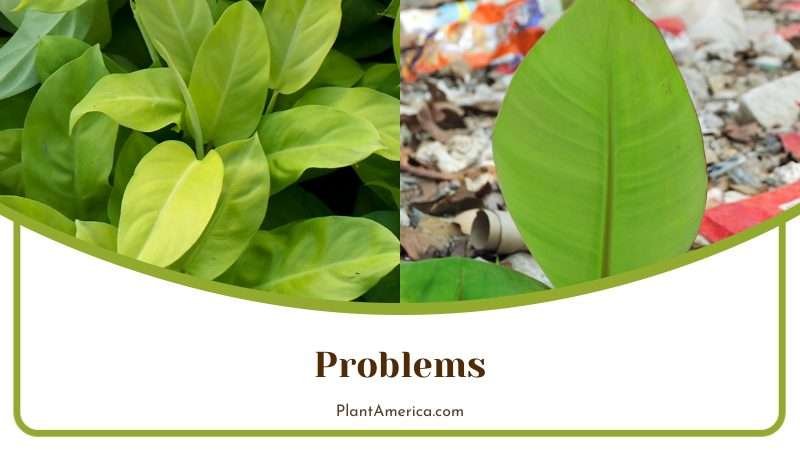
When your plant is attacked by the pests and diseases that are described in this section, be sure to isolate your plant and prune off all the diseased parts. You can then carry out corrective measures in the plant’s environment and care procedures, in addition to chemical treatment.
– Diseases
Pseudomonas leaf spot, Erwinia blight, and Xanthomonas leaf spot are some of the diseases that commonly affect Philodendron plowmanii. The most common among these diseases is Erwinia blight. When your plant is attacked by this disease, it will appear yellow, pale, less vigorous, and, later, it will stop growing. Erwinia blight affects plants that live in waterlogged conditions.
The Pseudomonas leaf spot results when your plant is attacked by the bacteria that is known as Pseudomonas. To diagnose this disease on your Philodendron plowmanii, check for yellow lesions whose centers are dark. Your plant is more susceptible to attack by Pseudomonas when you grow it under high temperatures and if you mist the plant frequently.
The Xanthomonas leaf spot is caused by the Xanthomonas bacteria. This bacteria attacks plants whose leaves are wounded. When your Philodendron plowmanii is affected by the Xanthomonas bacteria, it gradually turns yellow and wilts over time. The factors that put your plant at risk with these bacteria are excessively high temperature and humidity levels.
– Pests
Mealybugs and aphids are the most common pests when you take care of Philodendron plowmanii. Both of these pests are suckers that depend on drawing your plant’s sap, thereby compromising its vitality.
Always check your plant for these plants so that you can identify them earlier before they cause much damage. Besides, the earlier you can identify these pests, the easier it is to treat them before their infestation is high.
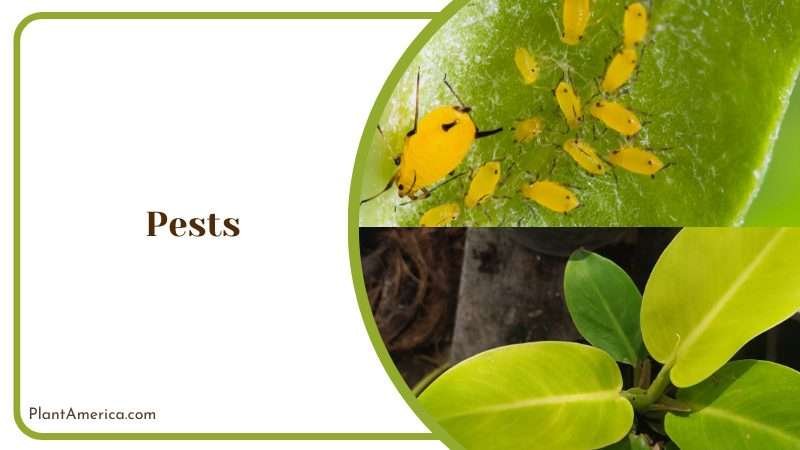
Regularly wipe your plant with 70 percent alcohol, especially in the hidden parts such as on the nodes and under the leaves. You can also use insecticides, especially organic ones such as Neem oil. Don’t forget to put on protective clothing, including gloves, as you treat your plant.
It is also possible to make a homemade spray to combat the attack by mealybugs and aphids on your plant. To do this, get one tablespoon of vegetable oil, one tablespoon of mild dishwashing soap, and one cup of water and mix them in a container. Put this in a spray bottle and use it to deal with mild infestations. You can also prepare another spray using onion, garlic, and cayenne pepper.
– Toxicity
Mealybugs and aphids contain calcium oxalate crystals. This makes this plant toxic and unsafe for digestion by both humans and pets. Please keep your plant in areas of the house where access by your pets and children is limited or highly monitored.
Plants that contain calcium oxalate crystals can irritate your skin if there is contact. Oxalate crystals can also cause inflammation and great pain if you chew them. The crystals stab the sensitive tissue on the gums, tongue, and throat, causing irritation that may lead to difficulty in swallowing.
Poisoning rarely takes place due to swallowing this plant because the pain that is caused by eating it usually triggers kids and pets to spit it out and refrain from eating more.
In the event that your child eats parts of Philodendron plowmanii, quickly wipe off the remaining residue from their mouth, otherwise, they will continue to feel the pain and irritation. Give the child a snack like yogurt, popsicle, or applesauce. A cool drink will also help. If the situation is bad to the extent that the child cannot eat anything or if they find it difficult to breathe, immediately take them to the emergency department that is nearest to you.
Philodendron plowmanii was named after the botanist who discovered it, Timothy Plowman. This plant belongs to the Araceae family and is native to Ecuador and Peru.