
Types of Cacti varieties feature striking succulents that offer gorgeous forms, vivid colors, and low-maintenance care that appeal to gardeners of all stripes. In this guide, we’ll explore must-have cacti for your collection, from tiny bunny ear cacti perfect for bookcases or windowsills to majestic cholla bushes that give large landscapes a southwestern feel.

Whether you seek cacti with showy flowers, fanciful shapes, or year-round green appeal, we’ve got diverse recommendations that might have a needle-sharp place in your heart. Let’s find the ideal prickly pals to complement your garden style and spice up your cactus collection.
Types of Cacti Varieties That Thrive in Low Moisture Spaces
1. Golden Barrel Cactus

- Growing season: Year round
- Leaf shape: Spiny, Leaves absent
- Specific needs: Full sun, Well draining soil
- Common pests: Aphids, Mealybugs, Cactus bug
The Golden Barrel cactus is iconic and renowned for its barrel shape and bright golden-yellow coloration when grown in full sun. This hardy desert native from Mexico requires minimal care once established but repays with effortless color, texture, and form in the landscape.
The Golden Barrel cactus forms clusters of tubular stem segments that begin vertically, gradually swell, and elongate into horizontal cylinders as they age. These cylindrical stem segments can grow up to three feet long and six to eight inches in diameter, turning a vivid golden hue from intense sunlight exposure. Golden Barrel cacti often flower profusely in spring, producing bright yellow blooms.
Golden Barrel cacti thrive in gravelly, extremely well-draining soils and full sun. In the scorching desert climates they originate from, they receive little to no supplemental water for most of the year.
Once established, irrigation should be limited and preferably applied at the root zone to avoid moisture-loving diseases. Although extremely drought tolerant, Golden Barrel cacti should still receive enough water for new segments to plump to their full size.
Insects like mealybugs, aphids, and cactus bugs may infest Golden Barrel cacti from time to time, congregating on new growth and flowers. Infested plants should be sprayed with a block of gentle insecticidal soap and monitored regularly for re-infestations. Severely infested or stressed plants may benefit from an application of a systemic insecticide.
Overall, the Golden Barrel cactus is an excellent low-maintenance succulent addition for its dramatic stems in an iconic barrel shape that turn an eye-catching golden hue when grown in full sun, especially in gravel gardens, xeriscapes, and hot, arid landscapes.
2. Christmas Cactus
- Growing season: Fall, spring
- Leaf shape: Flat, succulent leaves
- Specific needs: Indirect light, humus soil
- Common pests: Spider mites, mealybugs
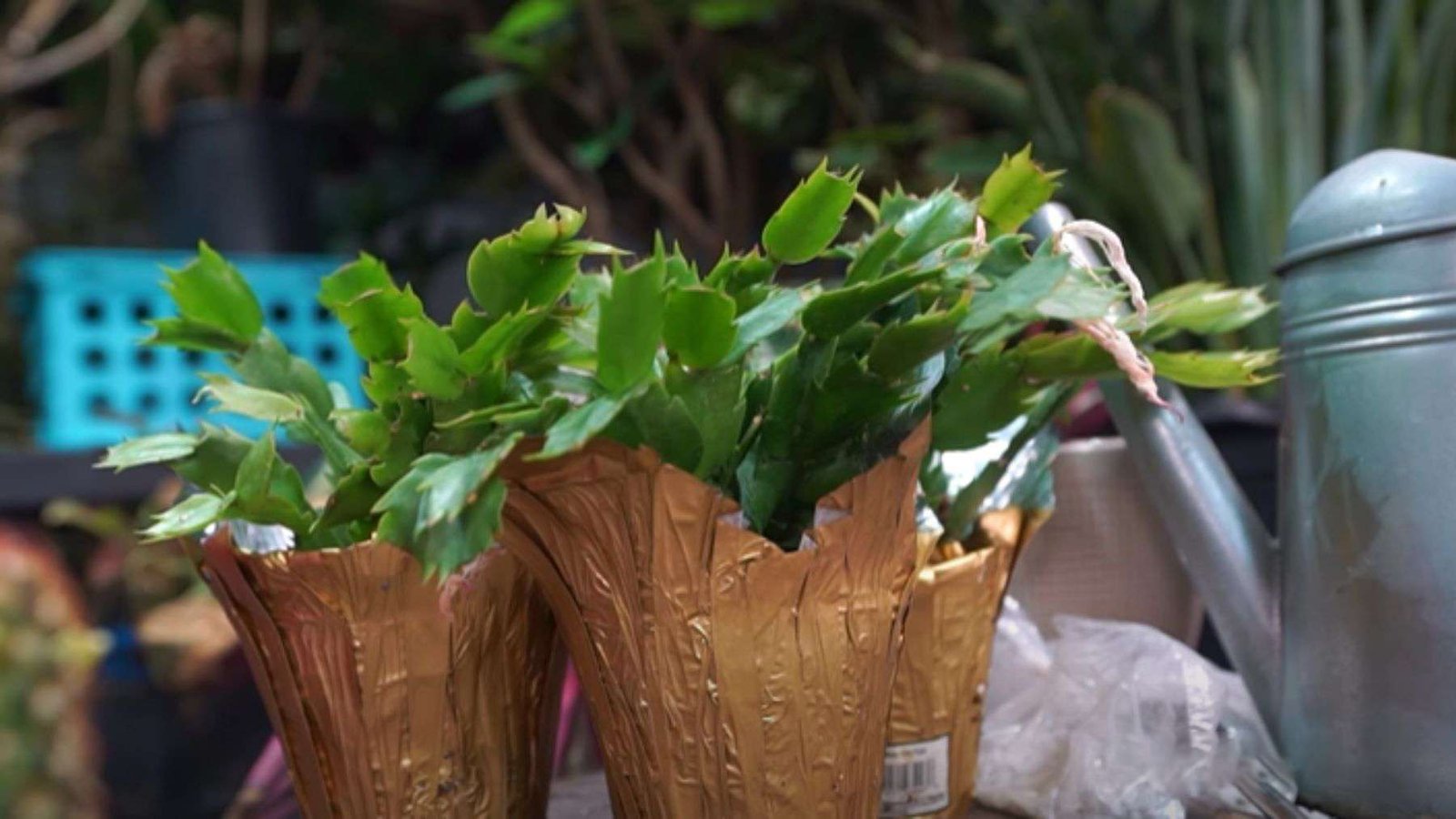
The Christmas cactus is a favorite houseplant grown for its vivid blooms around the holiday season. This epiphytic cactus develops flat, succulent leaves along jointed stems. When provided with the right conditions, Christmas cacti produce red, pink, orange, or white flower clusters in fall or winter.
Christmas cacti grow best with bright, indirect light and soil that drains well but retains moisture like a mix with humus or perlite. They require consistent moisture when blooming and infrequent watering during rest periods in summer.
Mealybugs and spider mites occasionally infest Christmas cacti, so watch for webbing or small white insects congregating on leaves and stems.
Thoroughly rinse the plant in the shower to remove pests and spray with insecticidal soap if the infestation persists.
3. Bunny Ears Cactus
- Growing season: Year round,
- Leaf shape: Long,
- Leaves absent: N/A,
- Specific needs: Bright light, Well draining soil,
- Common pests: Aphids, Mealybugs.
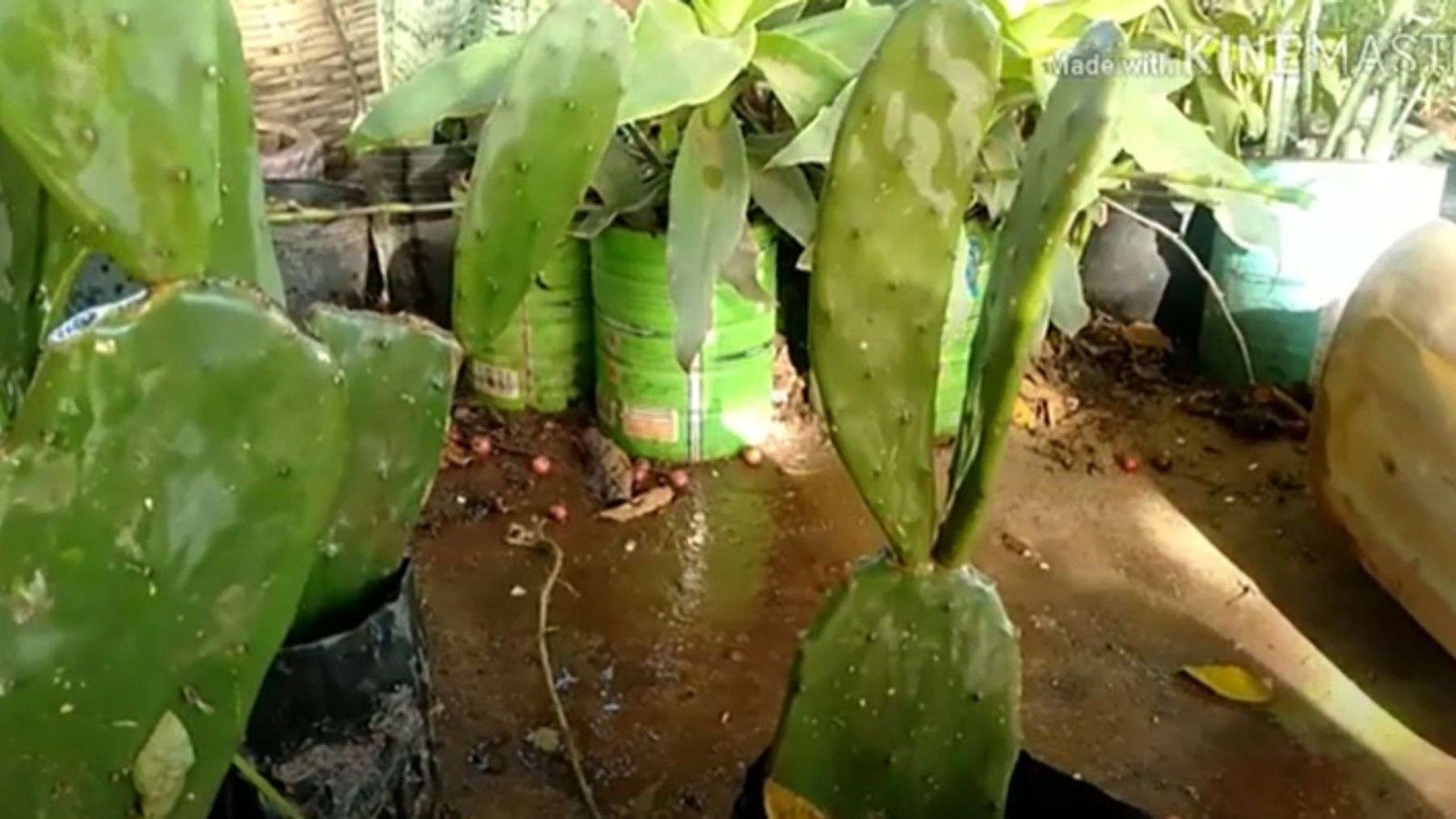
The Bunny Ears cactus gets its name from its long, flat, hairless gray-green stems that resemble rabbit ears.
This type of opuntia cactus forms a cluster of jointed, flattened stems that can reach up to two feet long. Bunny Ears cacti sometimes produce yellow flowers in spring and summer.
These cacti require bright, indirect light and extremely well-draining soil. Once established, they are quite drought tolerant, though young plants should be watered regularly until the stems plump out.
Mealybugs and aphids sometimes congregate on new growth of Bunny Ears cactus. Look for fluffy white masses of insects and sooty mold, then thoroughly rinse plants and spray with insecticidal soap to control infestations.
4. Prickly Pear Cactus
- Growing season: Year round
- Leaf shape: Flattened, Pad like
- Specific needs: Full sun, Well-draining soil
- Common pests: Aphids, Mealybugs
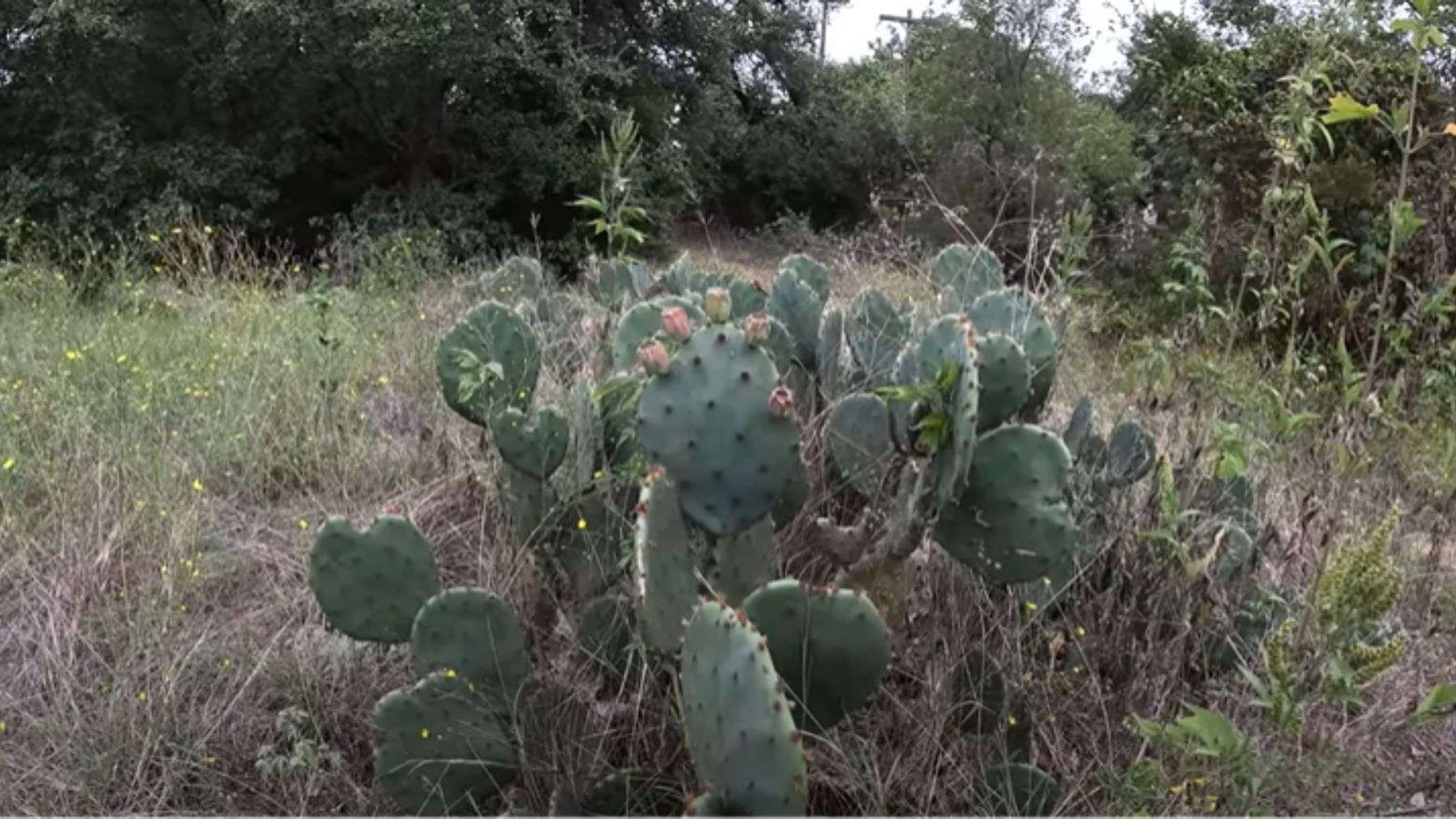
The prickly pear cactus gets its name from its broad, flat stem segments that look like green paddle-shaped fruits. These pads, or “tunas” as they are also called, are covered in clusters of sharp, stiff gray or white spines that can prick you like a pear’s seeds.
Prickly pear pads come in many sizes, from a few inches across to over a foot wide. They have notches around the edge and grow cascading, piling from a central pad. In summer, prickly pear produces bright flowers in shades of red, orange, or yellow.
After flowering, edible fruits called “prickly pears” grow in places of the blooms. The fruits come in different colors, like reddish-purple or yellow, and have spines that must be cooked off before eating them. The cool fruits inside can be made into jams, juice, or eaten plain.
Prickly pear grows well outdoors year-round in hot, sunny climates from zone eight-11. It likes very well-draining soil. Provide only occasional water and let the soil dry out between waterings. Trim away any rotten or spiny pads with gloves on to shape the cactus.
Over time, prickly pear will multiply by growths at the outer pads or “pups” that can be replanted. Some varieties have pads that detach easily to spread the plant around. Their ability to adapt to drought makes them great for xeriscaping.
This rewarding cactus adds an exotic desert texture to landscaping, along with colorful flowers and edible fruits. Its spiny pads served traditional uses, too like building material and livestock forage. Today, it’s prized as an edible, versatile, and beautiful succulent.
5. Mammillaria Cactus
- Growing season: Year round
- Leaf shape: Tubercles present, Leaves absent
- Specific needs: Full sun, Well-draining soil
- Common pests: Aphids, Mealybugs
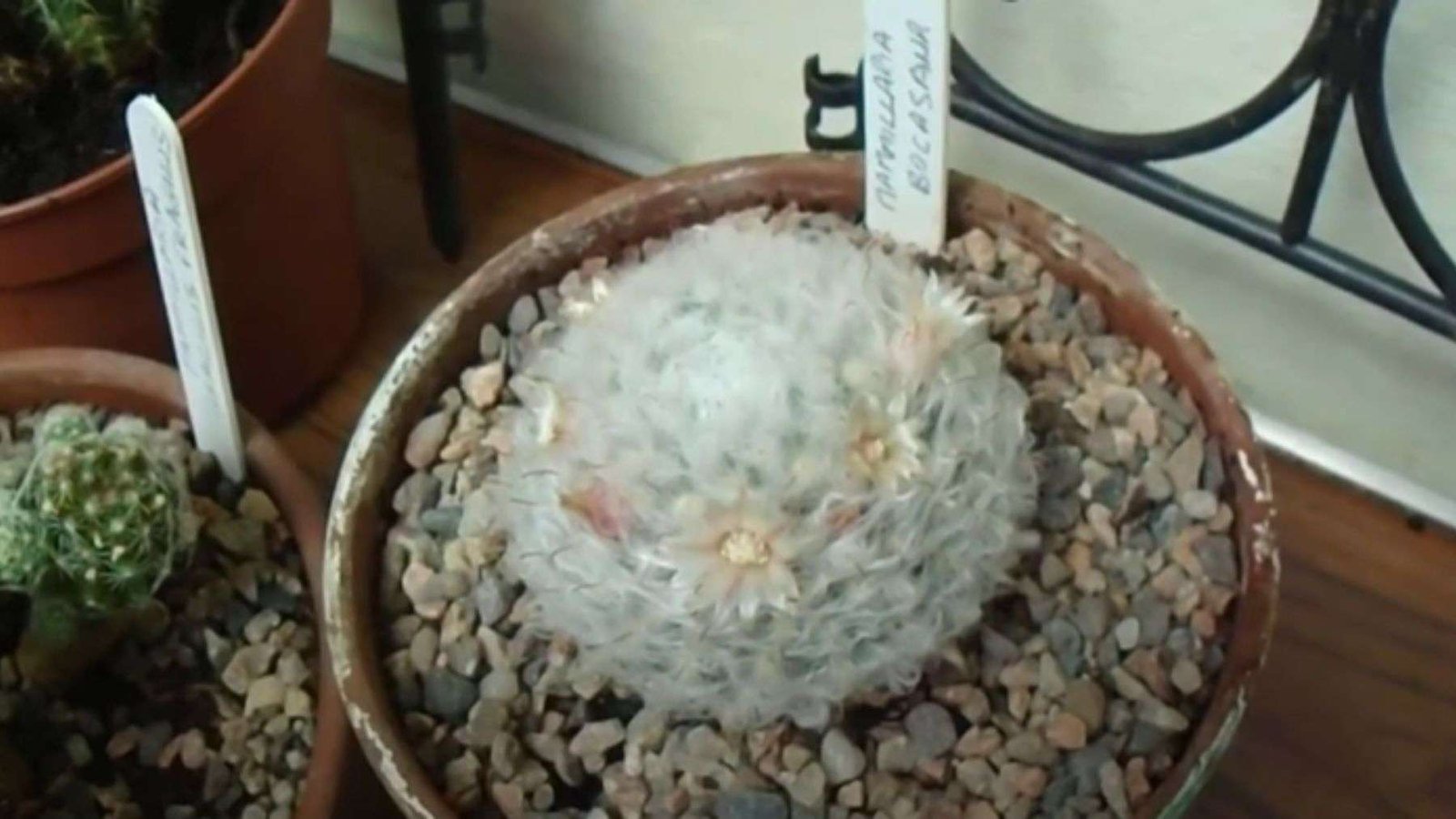
Mammillaria cacti are named for their breast-like shape formed by tubercles – rounded, knob-like stem segments. These cacti form low globe-shaped mounds of cylindrical tubercles. Short spines cover the tubercles, ranging from soft hairlike to stiff, bristle-like spines.
Mammillaria cacti produce radial or cylindrical clusters of showy flowers in shades of red, pink, yellow, and white. Some varieties of mammillaria bear edible red fruits. They require hot, very well-draining soil and full sun to grow well. Though drought tolerant, mammillaria cacti need regular water to plump out their tubercles when young.
Mealybugs and aphids sometimes congregate on the tubercles, especially where they join. Look for white insect masses and blackish fungus, then thoroughly rinse plants and spray with insecticidal soap.
6. Hedgehog Cactus
- Growing season: Year round
- Leaf shape: Tubercles present, Leaves absent
- Specific needs: Full sun, Well draining soil
- Common pests: Aphids, Mealybugs
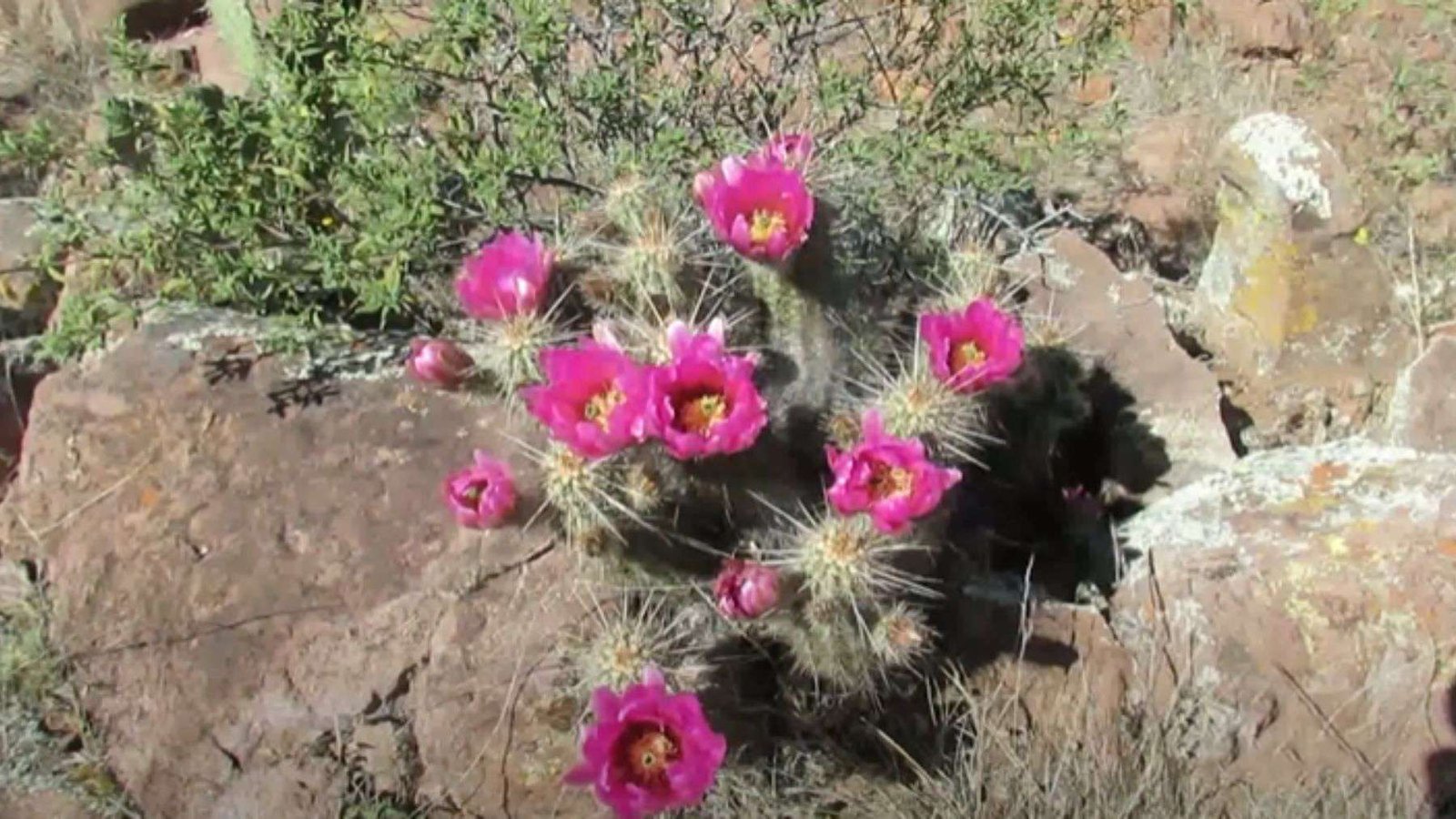
The hedgehog cactus gets its name from its unique spiny stem that looks just like a hedgehog’s prickly fur. Its stems are greenish-gray and covered in thousands of very small, soft spines that stick straight out in all directions.
These spines grow so densely that the stems have a hairy, fuzzy appearance. When touched, the spines feel more like velcro than sharp needles. Hedgehog cactus stems grow singularly or sometimes branch off into multiple stems that can reach up to 1-2 feet tall.
In spring or summer, the stems shoot out clusters of tubular flowers in shades of yellow, orange, or red at the tips. After blooming, small fuzzy seeds form inside dry seed pods. The whole plant has a wild, untamed look to it compared to other cacti.
Native to dry, sunny places from Mexico to Texas, hedgehog cactus prefers well-draining soil and full sun. Water infrequently when the soil is dry. It can’t tolerate soggy soil at all. In fall, cut stems back to keep a bushy shape if desired. Over time it will spread by offshoots and seeds dropped by birds. Seeds can be collected and grown as new plants.
This cactus makes a statement with its very fuzzy spiny texture. Its dense fur-like spines are soft for a cactus yet eye-catching. Come spring it explodes with bloom colors that stand out against the silver-gray stems.
An oddball among cacti, hedgehog cactus is a unique addition for any desert garden, wall art, or container. Even without blooms its dramatic spines alone grab attention and imaginations.
7. Saguaro Cactus

- Growing season: Year round
- Leaf shape: Vertical steam, Leaves absent
- Specific needs: Full sun, Well-draining soil
- Common pests: Cactus weevils, Mealybugs
The saguaro cactus is an iconic giant of the Sonoran Desert, known for its massive size and distinctive branching arms. This cactus resembles a tall, thick vertical stem that branches into multiple thick arms as it matures.
Saguaros eventually form a distinctive canopy shape reaching up to 40 feet tall. In late spring, Saguaro cacti produce white to pink flowers at the ends of their arms.
These cacti require hot, arid conditions with full sun and well-draining soil. They are adapted to periods of extreme drought interspersed with brief torrential downpours.
Mealybugs and cactus weevils occasionally infest saguaro cacti, targeting their flowers and new growth. Look for white, wooly insect masses or holes in the cactus. Thoroughly rinse infested plants and apply insecticidal soap or Neem oil.
8. Fishhook Barrel Cactus
- Growing season: Year round
- Leaf shape: Vertical barrel, Leaves absent
- Specific needs: Full sun, Well draining soil
- Common pests: Aphids, Mealybugs
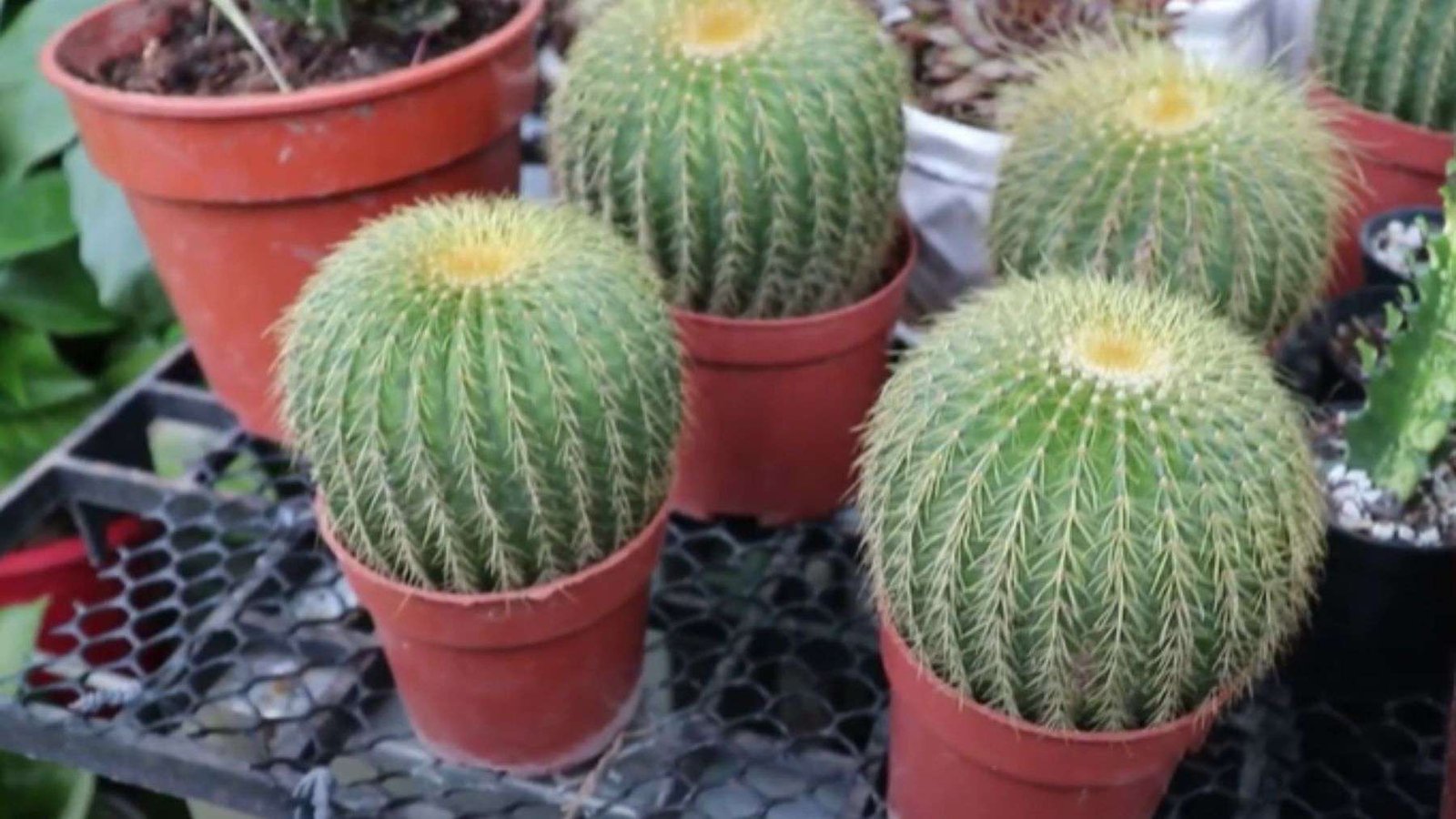
The fishhook barrel cactus gets its name from the numerous hooked barbs that cover its stem, resembling fish hooks. This type forms a single thick stem with nine to 13 ribs running vertically down its length. The hooked barbs are concentrated along the ribs, measuring up to two inches long.
Fishhook barrel cacti produce pale yellow flowers that line the ribs in spring and summer. The flowers give way to red fruit that persists through winter. These cacti require hot, very well-draining soil and full sun. Although drought tolerant, young plants should be watered when the soil is dry to help the stems swell out.
Mealybugs and aphids sometimes infest new stem growth. Look for white, cottony insect masses and dark sooty mold, then spray the plant thoroughly with water and apply insecticidal soap.
9. Cholla Cactus
- Growing season: Year round
- Leaf shape: Segmented stem, Leaves absent
- Specific needs: Full sun, Well draining soil
- Common pests: None significant
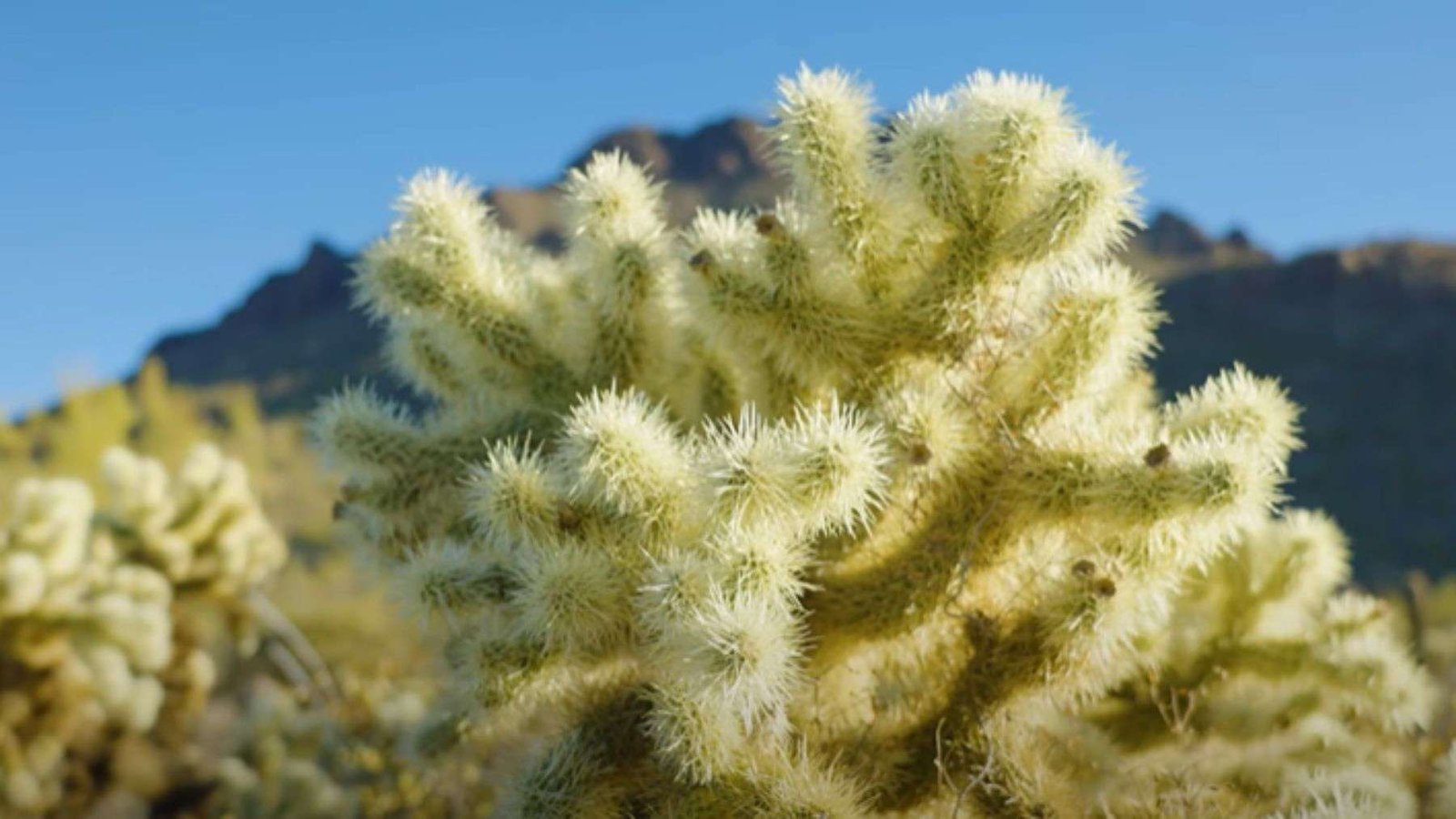
The cholla cactus is known for its segmented stems covered in ferocious, easily detached barbed spines. This cactus forms medium-sized shrubs of branching segmented stems up to ten feet tall.
The cylindrical segments are covered in clusters of easily detached, sharply barbed spines up to two inches long. Cholla cacti produce yellow or cream-colored flowers along the stem segments in spring or summer. The segments can also readily detach and spread the plant via tumbleweeds.
These cacti thrive in hot, very well-draining soil and full sun. Though drought tolerant, the young cholla need regular water until their stems are hardened and segmented. Cholla cacti generally have few pest problems due to the density of their vicious barbed spines, which serve as a natural deterrent against most insects and predators.
10. Mother of Hundreds
- Growing season: Year round
- Leaf shape: Flattened stem, Leaves absent
- Specific needs: Full sun, Well draining soil
- Common pests: None significant
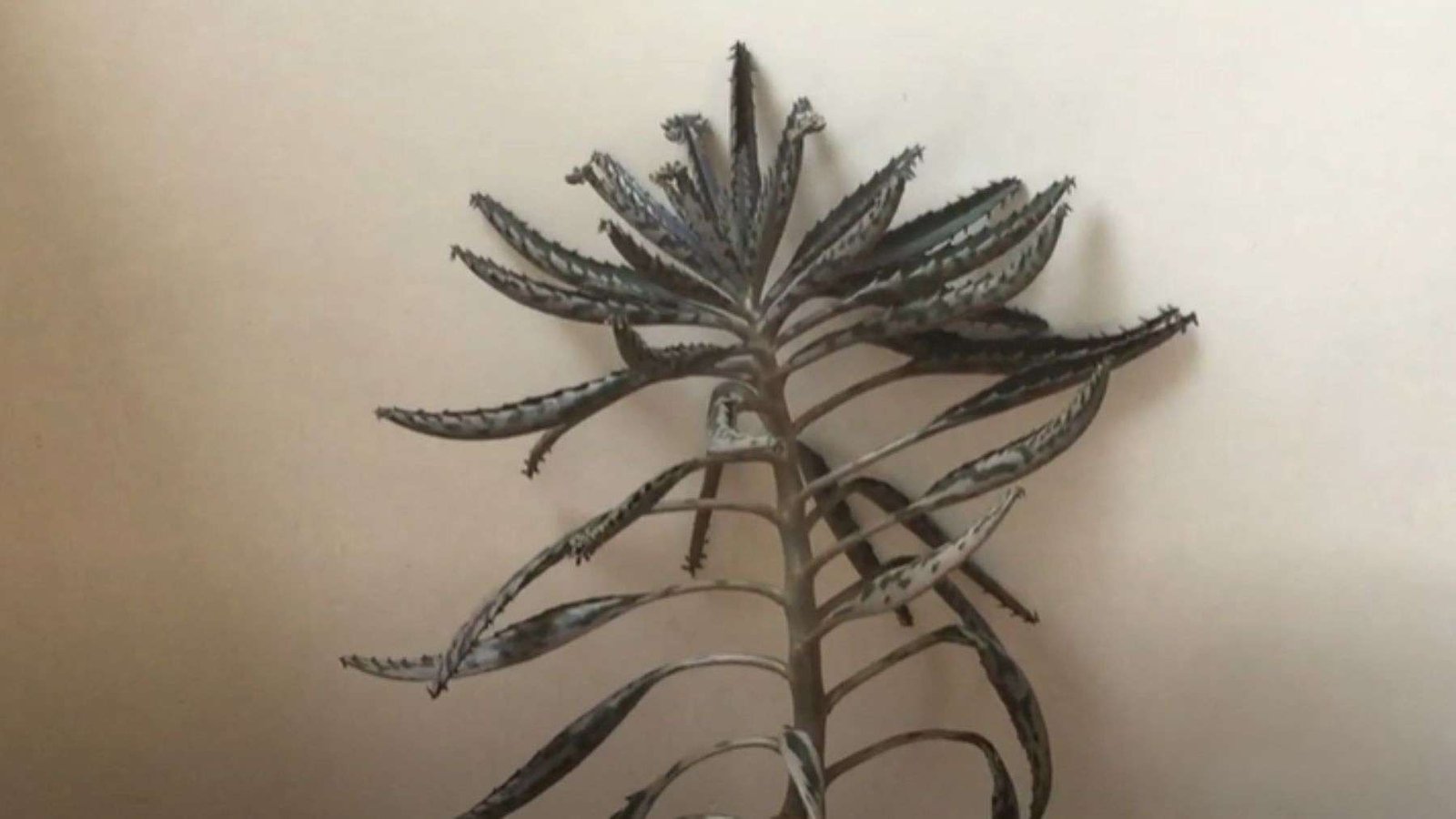
The Mother of Hundreds cactus earns its name from its ability to produce countless stem offsets that root and grow into new plants.
This cactus forms mats and clumps of flattened, wedge-shaped gray-green stems with prominent ribs and notches. The flattened stems readily break apart, and each piece can grow roots and new stems.
The Mother of Hundreds produces yellow or reddish flowers in spring and summer. After flowering, small red fruits develop and sprout plantlets when they touch the soil. This cactus thrives in hot, dry, well-draining conditions and full sun. Although drought tolerant, young plants benefit from consistent moisture until the stems become hard and mature.
The Mother of Hundreds has few pest problems and generally spreads quickly without the aid of animals due to the ease with which its segmented stems break apart. The glossy, waxy leaves may also deter chewing insect pests.
11. Strawberry Hedgehog Cactus
- Growing season: Year round
- Leaf shape: Tubercles present, Leaves absent
- Specific needs: Full sun, Well draining soil
- Common pests: None significant
The Strawberry hedgehog cactus,, also called the strawberry cactus, forms clusters of plump tubercles covered in soft straw-colored spines.
This cactus forms low mounds consisting of numerous tubercles covered in dense, strawberry-colored spines up to one point five inches long. New tubercles develop next to old ones, adding to the clump.
Strawberry hedgehog cacti produce yellow or orange tubular flowers in spring and summer. The flowers give way to round red fruits that hang on through winter. They require hot, very well-draining soil and full sun. Though drought tolerant, young plants need consistent moisture until their tubercles fully harden and swell.
The dense cover of straw-colored spines deters most pest problems for the Strawberry hedgehog cactus. Occasional tubercle scale may form but is very localized and easily removed by hand.
12. Lophophora Cactus
- Growing season: Year round
- Leaf shape: Small disc like, Leaves absent
- Specific needs: Full sun, Well-draining soil
- Common pests: None significant
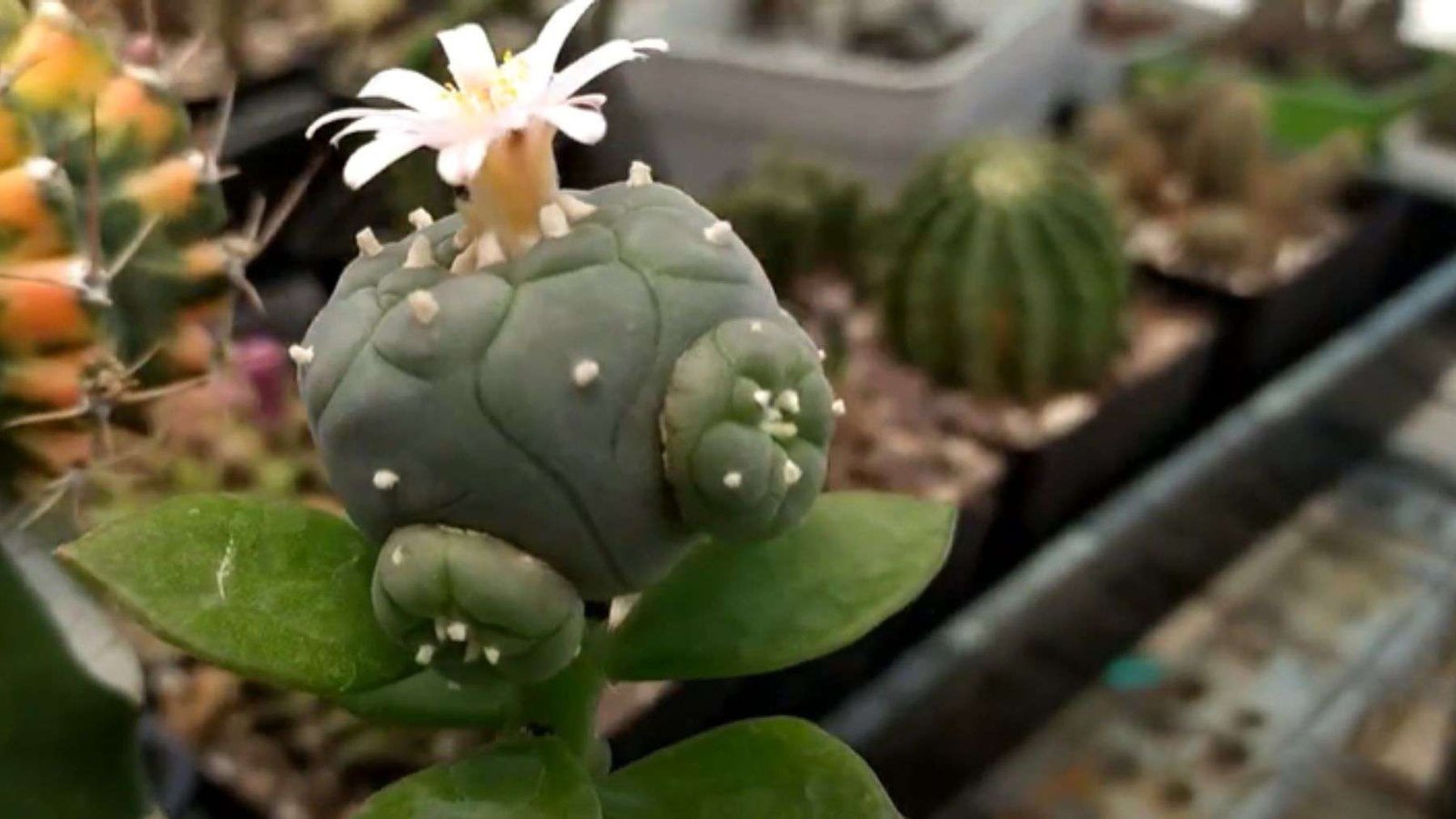
The Lophophora cactus, also called the Peyote or Mescal button cactus, forms small rounded discs that resemble mushroom buttons.
This cactus forms low rosettes consisting of disc-shaped stem segments that have 13 to 21 ribs running their length. The ribs are covered in dense, glossy spines that point upward. Lophophora cacti produce yellow, white, or reddish funnel-shaped flowers in spring and summer. After flowering, small edible pink fruits may sometimes develop.
This slow-growing cactus thrives in hot, very well-draining soil and full sun. Though drought tolerant, young plants benefit from regular water to help the stems become rounded and hardened.
The Lophophora cactus usually has few pest problems due to the high wax content of its stems, which deters infestations. Occasional tubercle scales may appear but can be easily removed by hand.
13. Night Blooming Cereus
- Growing season: Summer
- Leaf shape: Joint stem, Leaves absent
- Specific needs: Bright light, Indirect light
- Common pests: Aphids, Thrips
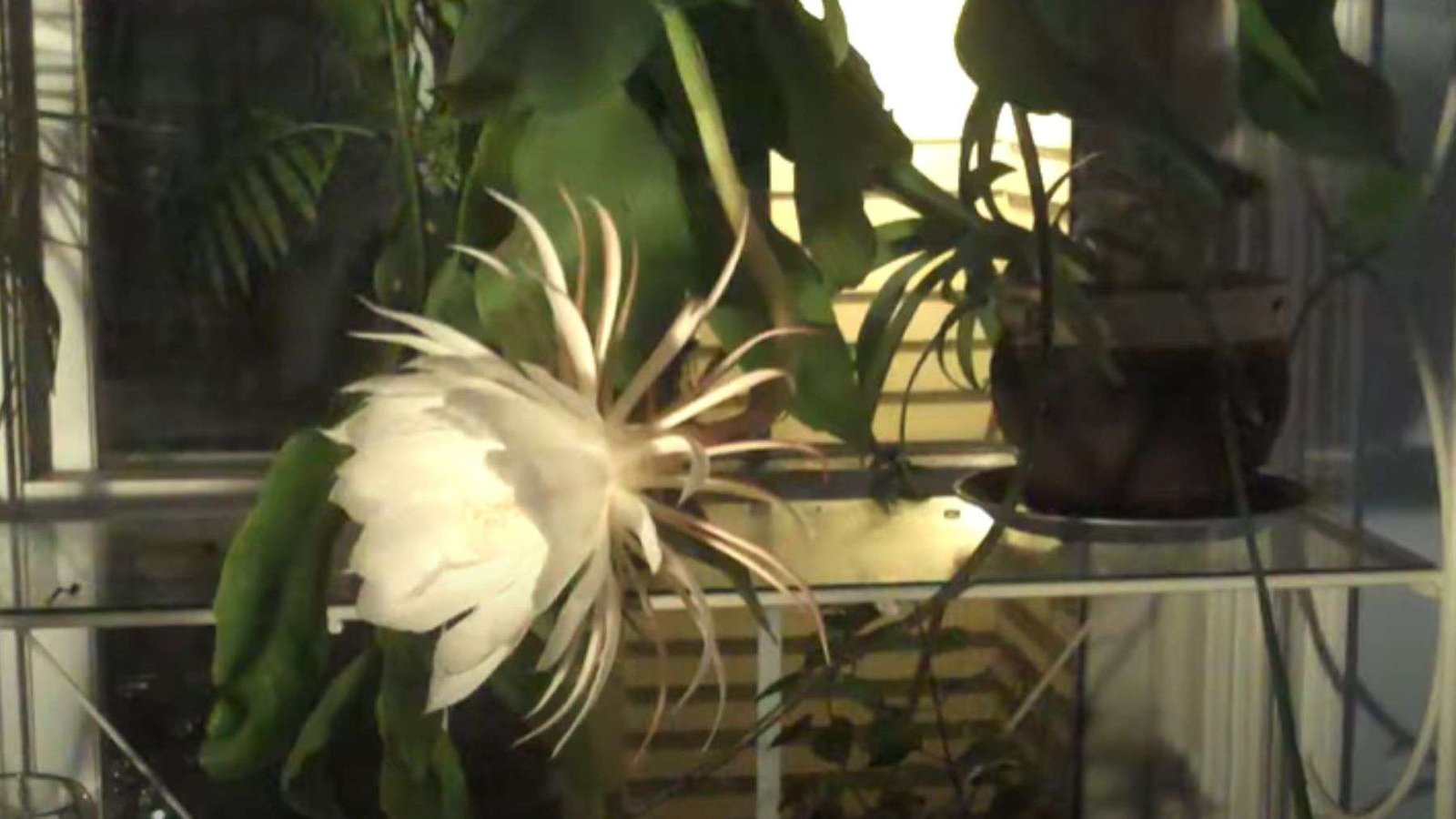
The night-blooming cereus cactus produces fragrant white flowers that only open at night and whither by dawn.
This epiphytic cactus climbs by means of jointed stems that attach themselves to support via aerial roots. The flattened, jointed stems are green and fleshy with sparse spines.
Cereus cacti bear their large, waxy white blooms only after dusk, typically remaining open through the night for just one day. The flowers produce a sweet, heady fragrance after dark to attract pollinators like bats and moths.
These cacti grow best with bright, indirect light and consistently moist, well-draining soil. Once established, night-blooming cereus needs regular watering.
Thrips occasionally infest the flowers of cereus cacti. Look for tiny black insects and silver spots on the flowers. Spray plants thoroughly with water and apply insecticidal soap, repeating every three days until thrips are eliminated.
14. Rat Tail Cactus
- Growing season: Year round
- Leaf shape: Rat like, Leaves absent
- Specific needs: Full sun, Well draining soil
- Common pests: None significant
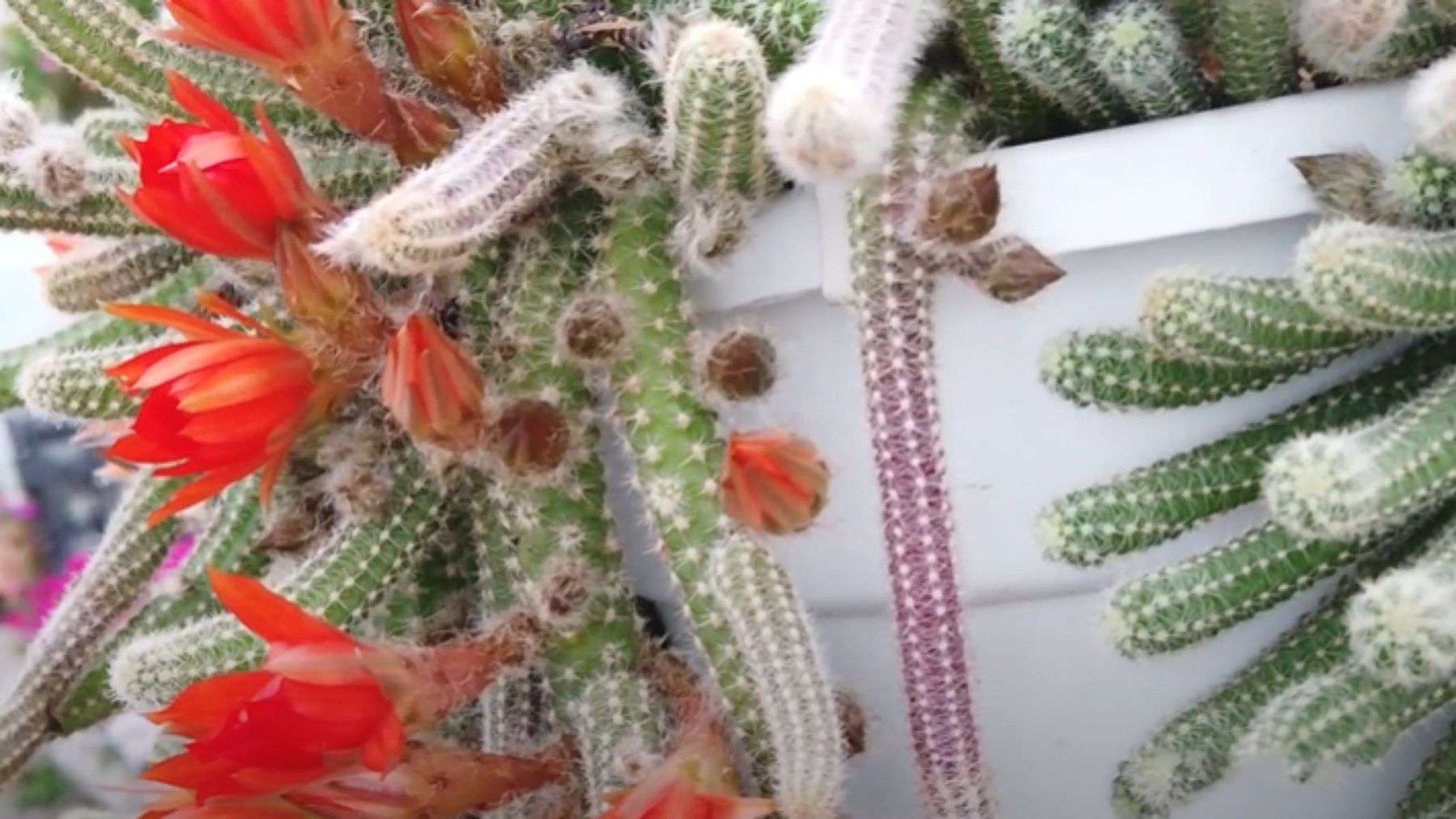
The rat tail cactus gets its name from its fuzzy tail-like stem. It grows upright like a thin rope that rats its tail behind it as it walks. Over time, the rat tail cactus stem elongates into a long rope that can stretch 3 feet or more.
The stem is green but very fuzzy and thin, about as thick as a pencil. Short, fuzzy spines stick out all along it, making the stem feel soft rather than prickly. At the top is a cluster of spiny spikes where new growth happens. As it ages, the spiny top may branch off into multiple thin fuzzy stems.
In spring or summer, tiny yellow or white flowers may bloom briefly along the stem. After flowering, small fuzzy seeds form. If conditions are right, brand new plant babies may even grow right from the fuzzy stem.
Rat tail cactus likes warm, sunny spots with well-draining soil. It’s a desert plant used to getting very little water. Water only when the stem starts to look a bit wrinkly. In winter reduce water and keep it somewhere cool if nights are cold.
Over many years, the stem gets longer and longer, stretching out in wavy ropes. Pieces that break off can also re-root and grow into new ropes. Some have stems over 6 feet long!
This unique-looking cactus adds an interesting texture to gardens or containers. The stems are thin enough to use decoratively too, shaping them into wreaths or arrangements.
Rat tail cactus ropes show how nature has adapted plants to thrive in the toughest of conditions. Their fuzzy hair-like stems help them survive with very little water in harsh, sunny deserts. They are a special find that connects people to distant, hot landscapes.
15. Peruvian Apple Cactus
- Growing season: Year round
- Leaf shape: Cylindrical stem, Leaves absent
- Specific needs: Full sun, Well-draining soil
- Common pests: None significant
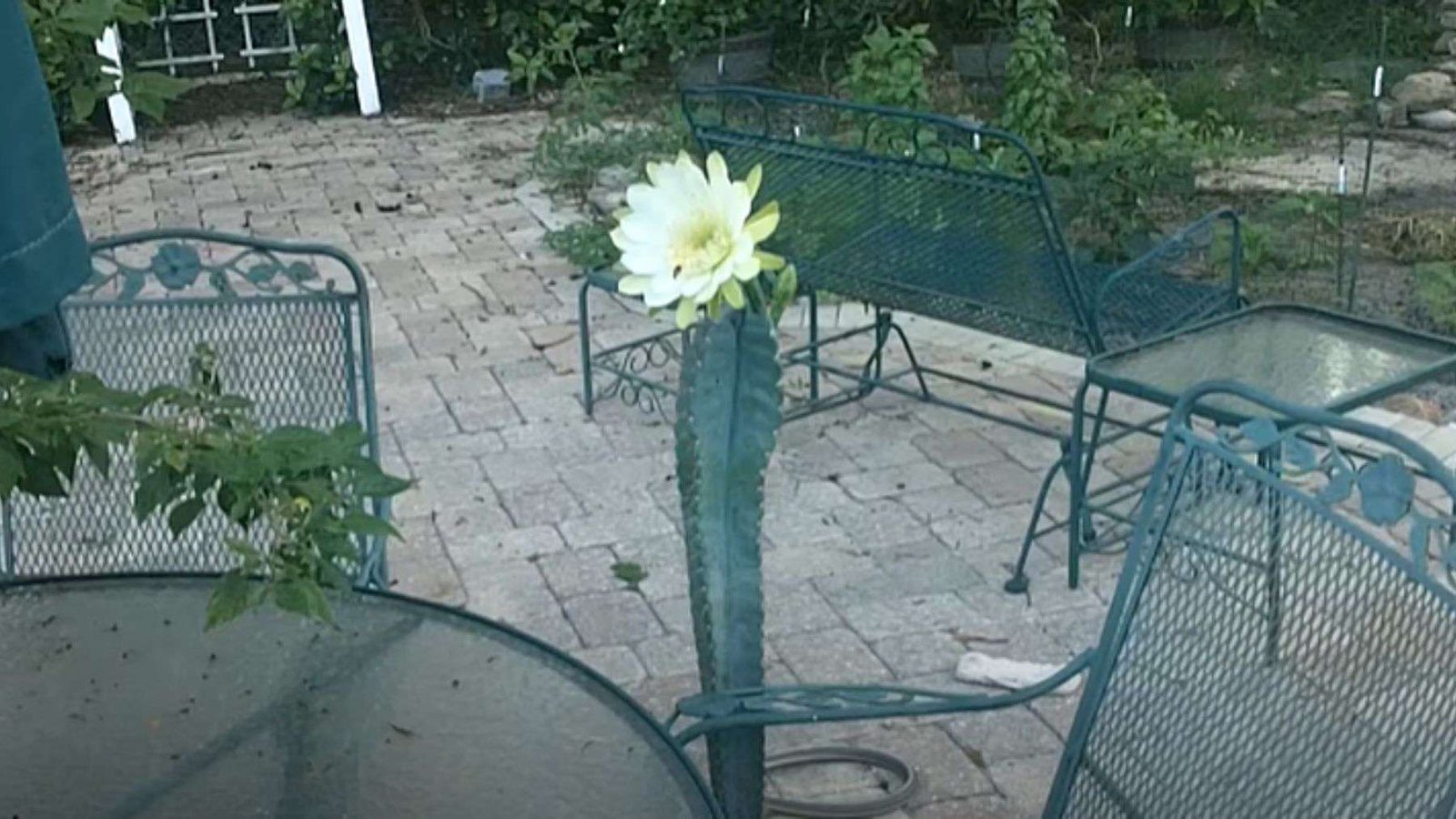
The Peruvian apple cactus produces edible red fruits that taste like tart apples. This cactus forms branching shrubs of thick cylindrical stem segments covered in dense yellow or white spines. As the plant ages, older stem segments often decay at the base.
Peruvian apple cactus produce bright red apple-like fruits in late summer and fall. The fruits have pulp that tastes tart like green apples when fully ripe. These cacti require hot, very well-draining soil and full sun.
Though drought tolerant, young Peruvian apple cactus need consistent moisture until stems harden and thicken. The Peruvian apple cactus typically faces few pest problems.
The dense spikes deter most insect infestations while the fruits are poisonous when unripe, protecting them from animals. Occasional tubercle scale may form but is easily removed by hand.
16. Peniocereus Striatus
- Growing season: Year round
- Leaf shape: Jointed stems, Leaves absent
- Specific needs: Bright light, Indirect light
- Common pests: None significant
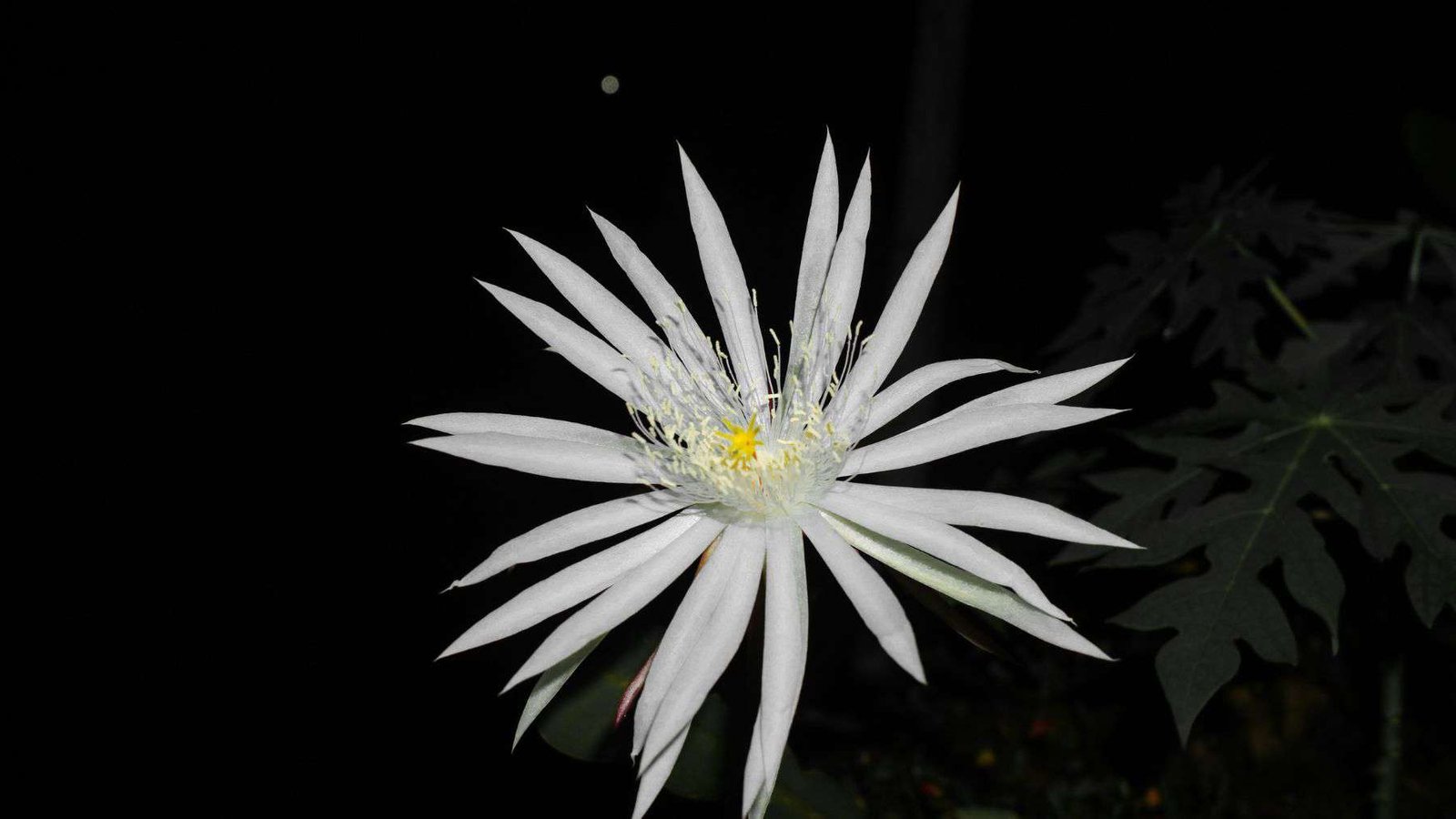
Peniocereus striatus produces fragrant white flowers that open only at night and whither by dawn. This epiphytic cactus climbs trees and structures using jointed stems with aerial roots that attach themselves to surfaces. The flattened stems are green, fleshy, and sparsely spun.
Peniocereus striatus bears large, waxy white flowers that open only after dusk and typically remain open through the night for one day before fading. The blooms emit a sweet, heavy nocturnal fragrance to attract moth and bat pollinators.
This climbing cactus thrives with consistent moisture, bright indirect light, and well-draining soil. Established queen of the night cacti need regular watering during their growing season.
The Peniocereus striatus cactus typically faces few pest problems due to chemical compounds in its stems that deter insects. Occasional thrips infestations may affect flowers but can be managed with frequent applications of insecticidal soap.
17. Moon Cactus
- Growing season: Year round
- Leaf shape: Globular form, Leaves absent
- Specific needs: Bright light, Indirect light
- Common pests: None significant
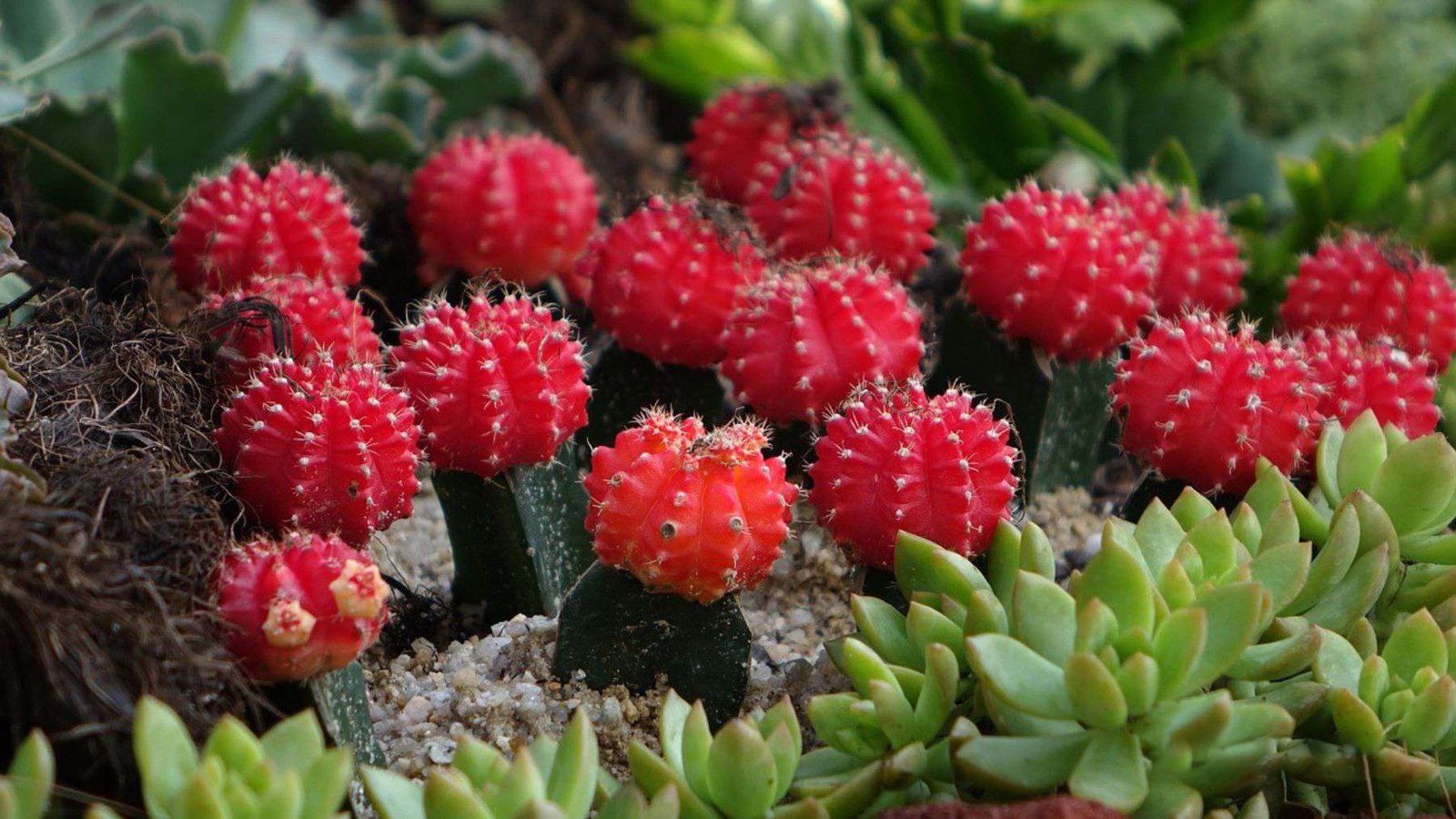
The moon cactus has curved stem segments that look like smiling faces. These funny face patterns are what it’s known for. As the round or oval pieces grow on top of each other, pale green skin shows light ridges forming smile or circle shapes that seem to grin up from the plant.
Underneath the fun face art, moon cactus stems form strong yet separate sections stacked three to six inches tall. This makes a tall vase-like shape. In spring and summertime, pink, yellow, or white tiny flowers may pop up in clusters along the curvy ridges. Berry-like red fruits sometimes follow after the blooms.
Moon cactuses need lots of sunshine to glow. The soil should drain water well so it doesn’t get soggy. During growth times, water regularly but cut back water in winter. Moon cactuses do fine outside year-round in warm areas. You can also keep them inside as a sunny window plant.
Moon cactus collections bring smiles. Their friendly faces seem to look up and greet you each day. Even after years pass, they keep amusing people with smiles stuck forever on their stems.
Whether in the ground outside or as a bright houseplant, their fun artwork adds light wherever they live. The moon cactus is a one-of-a-kind succulent that brings daily joy just by being itself.
18. Mexican Fencepost Cactus
- Growing season: Year round
- Leaf shape: Jointed stems, Leaves absent
- Specific needs: Full sun, well draining soil
- Common pests: None significant
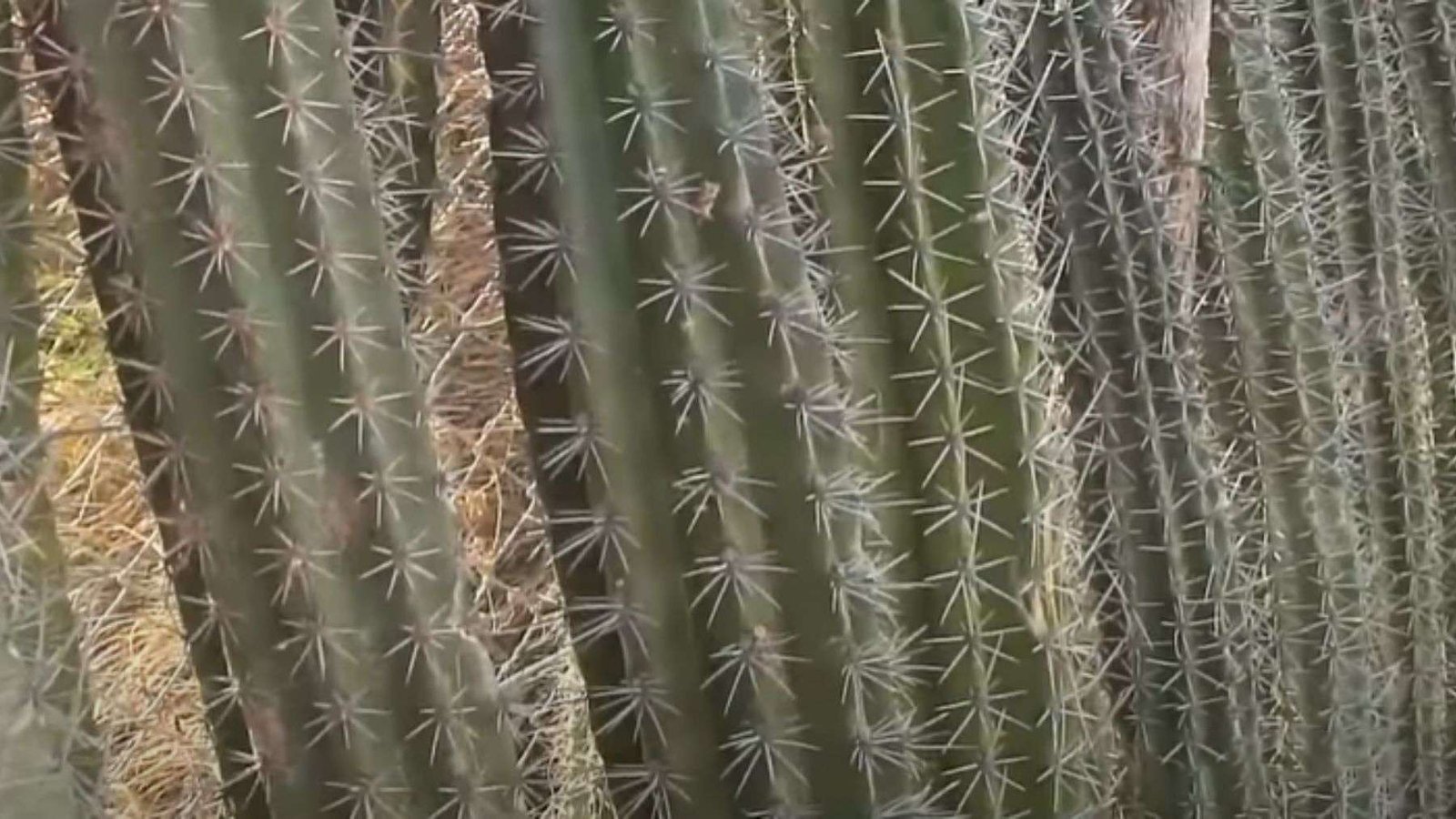
The Mexican fencepost cactus gets its name from its jointed, ribbed stems that can grow straight and tall like posts in a fence.
This cactus forms upright clusters consisting of jointed stems divided into ribbed segments. The stems grow from a basal rosette, gradually becoming more ribbed and angular with age.
Mexican fencepost cactus produce funnel-shaped yellow flowers in spring and summer along the stem areoles. Some varieties have few spines, while others have dense clusters. They thrive with very well-draining, gritty soil and full sun. Though drought tolerant once established, young plants need regular water for stems to harden and ribbing to develop.
The Mexican fencepost cactus typically faces few significant pest problems. The jointed stems and pronounced ribbing deter insect infestations, while the spines defend against herbivores. The occasional scale may form but is easily removed by hand.
19. Cactus
- Growing season: Year round
- Leaf shape: Jointed stems, Leaves absent
- Specific needs: Full sun, well draining soil
- Common pests: None significant
The Micromeria cactus forms clusters of short cylindrical stem segments covered in dense hairline spines. This cactus grows in low clumps consisting of numerous short cylindrical stem segments. The segments measure only one to two inches long and about half an inch wide.
The stems of the micromeria cactus are densely spined with fine hairlike spines that can be yellow, white, or reddish brown in color. This cactus typically does not produce flowers.
This dwarf cactus thrives in hot, very well-draining soil and full sun. Though drought tolerant, young micromeria cacti need regular water for their short cylindrical stems to plump out.
The Micromeria cactus typically faces few significant pest problems. The dense cover of fine spines deters most insects, while chemical wax on stems repels microbes and prevents humidity-loving diseases. The occasional scale may form but is hand-removable.
20. Japanese Cactus
- Growing season: Year round
- Leaf shape: Cylindrical segment, Leaves absent
- Specific needs: Bright light, Indirect light
- Common pests: None significant
This cactus does best in zones 9-11. Place it in a sunny spot with well-draining soil. It can handle some shade but will be leggy without good light. Water infrequently when the soil is dry. In winter, reduce water and keep it somewhere cool like a garage if nighttime temps drop below freezing.
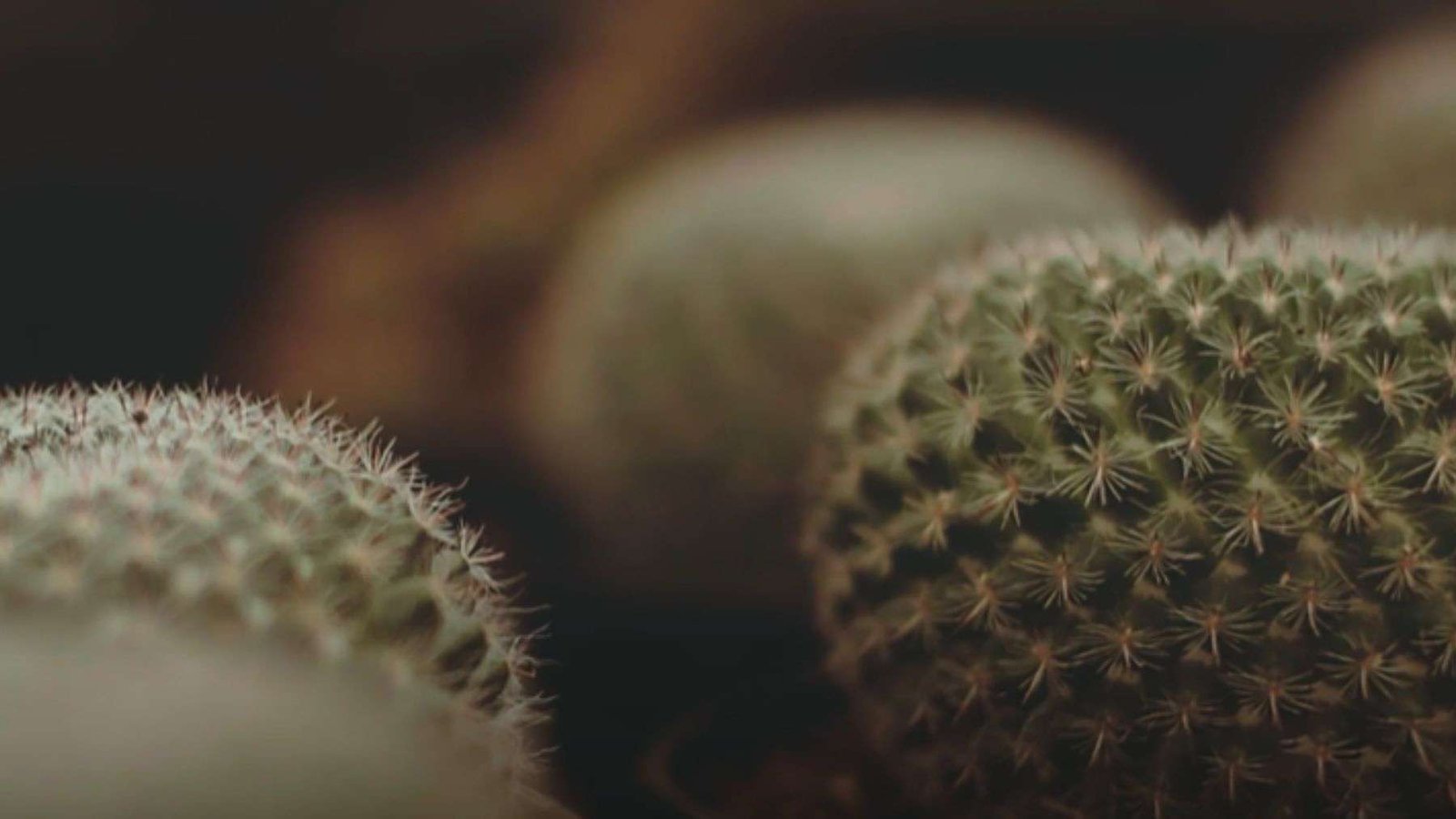
Over time it will multiply by growing new stems from the base. Segments may also fall off and root on their own. This makes it easy to share with other plant lovers. The fuzzy white spines and unusual segmented shape set this cactus apart from others. It adds unique texture and interest to succulent or rock gardens with its dusted icicle appearance.
Through plant exploration, Japanese gardeners brought this special cactus species back from South America. It remains a memorable find that connects Japanese and South American desert landscapes.
21. Parodia Cactus
- Growing season: Year round
- Leaf shape: Globular stems, Leaves absent
- Specific needs: Full sun, Well draining soil
- Common pests: None significant
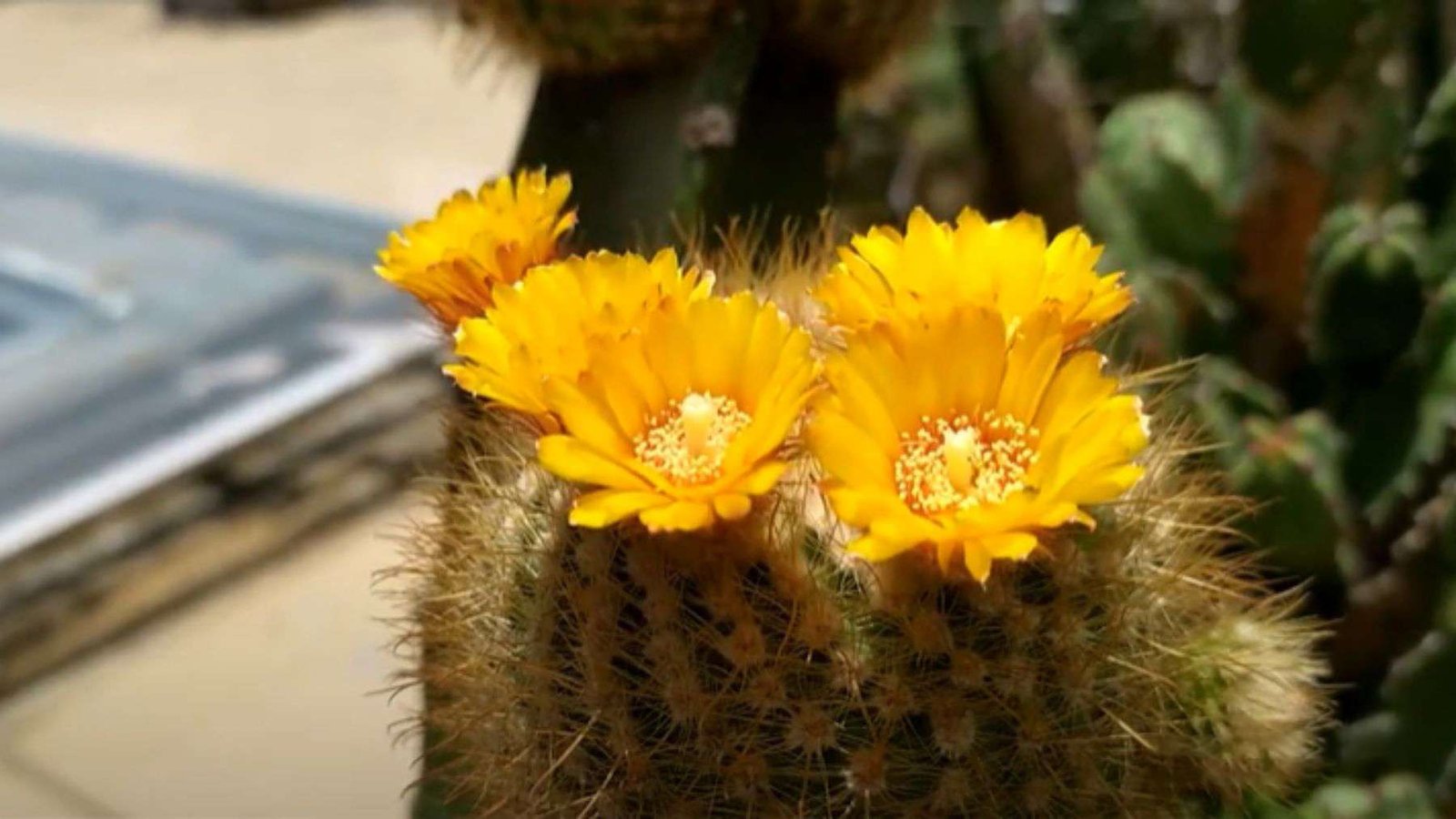
The Parodia cactus is a small, ball-shaped cactus known for its clusters of green spiny segments covered in short gray hairs. Native to rocky areas of South America, it is well adapted to arid conditions through its porous, water-storing tissue and fuzzy coating that protects it from drying out.
Growing slowly over many years, Parodia forms clusters that resemble piles of spiky green bowling balls, each segment typically measuring two to four inches wide. Short spines cover the rounded form, their color varying from straw-colored to darker brown depending on the variety. Underneath the spines grows a layer of fine gray hairs that comprise the cactus’s signature fuzzy appearance.
In spring or summer, after rainfall, vivid yellow or gold flowers emerge from the crown of each spiny segment. Ranging from one to two inches wide, the blooms sport 10-15 bright petals that attract pollinating insects. A few types may produce orange or reddish flowers instead. Once pollinated, the plants form small white-wooled areoles holding seeds for future propagation.
Suited to well-draining sandy soils with good drainage, Parodia cacti thrive when potted in a fast-draining cactus mix and given abundant sunlight. They can tolerate some shade but flower best with at least 6 hours of direct rays daily. Water infrequently when the soil is dry, allowing it to dry out completely between waterings.
During winter months, when conditions might drop below 30 degrees Fahrenheit, individuals grown outdoors can be moved to a frost-free area with low light and kept barely moist. Left in their usual spot, they may survive colder zones 9-11 with protection.
Slow-growing yet with an intriguing fuzzy appearance, Parodia makes an attractive addition to any succulent or cactus collection. Its cheery blooms bursting from the crown in different hues attract garden visitors throughout spring and summer. New offsets gradually form along the spiny segments as the clusters multiply over many patient years.
Conclusion
In collecting cacti, there exists a surprisingly diverse array of shapes, forms, and flower colors beyond the stereotypical prickly pear.
- The paddle cactus gets its name from its distinctive flattened, oval-shaped stems that resemble paddles or oars.
- The Mexican fencepost cactus gets its name from its jointed, ribbed stems that can grow straight and tall like posts in a fence.
- The Micromeria cactus forms clusters of short cylindrical stem segments covered in dense hairline spines.
Cacti collecting allows you to experience the awe-inspiring diversity of shapes, textures, and blooms nature provides. Begin small with a few dependable kinds, treat your new plants with care, and you’ll be delighted by the wonders your growing collection will bring you for years to come. With patience and observant nurturing, your cacti will reward you with years of joy.