
Clivia yellow leaves can worry any gardener because the discoloration happens when the plant faces water stress, root issues, or other issues that can potentially kill the plant. But fear not; it’s easy to keep the Clivia plants flourishing.

Keep reading to learn what causes the yellowing and how to keep green leaves on the plant.
What are the Top Reasons Behind Clivia’s Yellow Leaves?
The top reasons behind Clivia’s yellow leaves are overwatering and root issues. In some cases, nutrient deficiencies can also stress out the plant and force the leaves to turn yellow. Furthermore, discoloration will occur if you’ve placed Clivia in a spot where it can’t get the needed light.
– Pouring More Water than Needed: Overwatering
One of the most common causes of Clivia yellow leaves is overwatering. A Clivia miniata plant does enjoy some moisture, but its roots don’t appreciate being constantly soaked. So, when you overwater, you’ll face problems like yellow Clivia leaves.
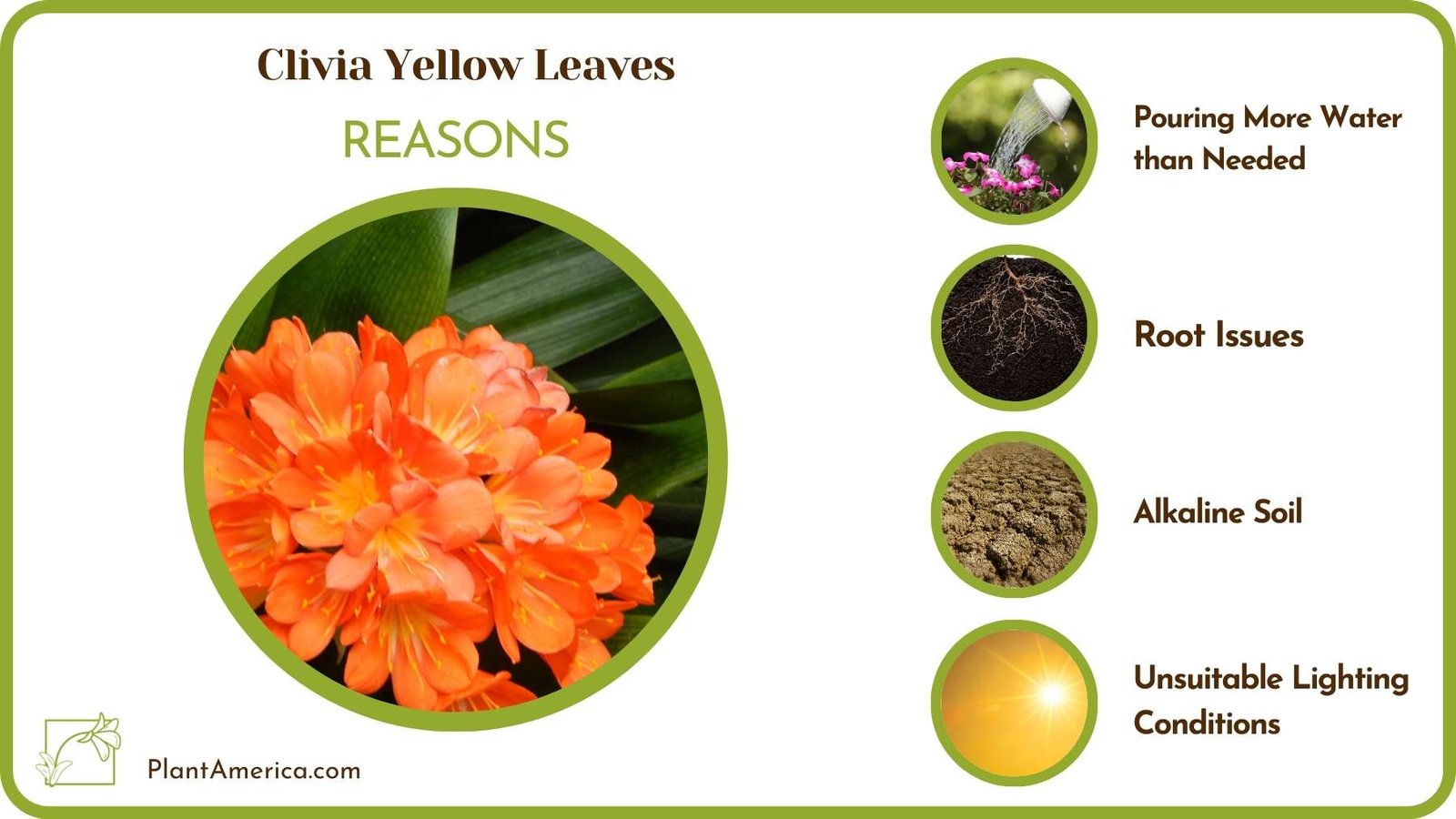
The reason is that excess water near the roots allows fungi to settle in. This causes root rot (a condition in which a plant’s root system decays). When this happens, water and mineral absorption will slow down or stop. As a result, you’ll notice Clivia rotting leaves.
– Root Issues: Leaves Discolor When Roots Can’t Perform
We often get this question, “Why are my Clivia leaves turning brown and yellow?” The answer, in most cases, is root problems. You’ve already read about how overwatering causes the roots to rot. But that’s not it. Clivia roots can face a lot more challenges if you don’t do gardening properly.
The roots can also struggle if the pot is too small or if the soil is compacted. Note that Clivia roots need room to breathe and spread their roots. When they don’t get this space, they start throwing a “leafy tantrum.”
Moreover, many root pests, like root aphids, mealybugs, termites, etc., can also feed on the root system. This feeding can also weaken the roots in a few days. When this happens, the nutrient and water absorption won’t take place, leading to Clivia leaves drooping and yellowing.
– Alkaline Soil: One of Leading Reasons Behind Nutrient Deficiency
Now, let’s discuss another potential culprit behind your Clivia’s yellowing leaves – alkaline soil. Clivias prefer slightly acidic to neutral soil. So, the leaves will lose their green color when the soil tips more towards the alkaline side.

The soil usually becomes alkaline due to the fertilizers or amendments you add. If they contain basic elements (those with a pH above 7), the soil will also turn alkaline. When this happens, nutrient absorption can occur. As a result, the processes that need nitrogen, iron, potassium, etc., slow down. This forces the Clivia leaves to turn yellow.
You can use pH-testing stripes or a pH meter to determine whether the soil is alkaline. Moreover, if you see Clivia yellow leaves turning yellow, it’s also an indication of poor soil health.
– Unsuitable Lighting Conditions: More or Low Light
When your Clivia doesn’t get enough light, it can’t perform its photosynthesis magic effectively. When this happens, the plant struggles to produce the food it needs. This can lead to browning and yellowing of leaves.
But that’s not all. Conversely, direct sunlight can also cause issues. If your Clivia is exposed to intense, direct sunlight for prolonged periods, the leaves can show signs of sunburn, often as yellowing or browning.
What are the Solutions to the Yellowing of Clivia Leaves?
– Start Watering Correctly: The First Thing to Do
When leaves turn yellow, the first thing to do is to ensure your plant stays appropriately hydrated (no over or underwatering). This will ensure the leaf cells remain turgid and immune to stresses that cause discoloration.
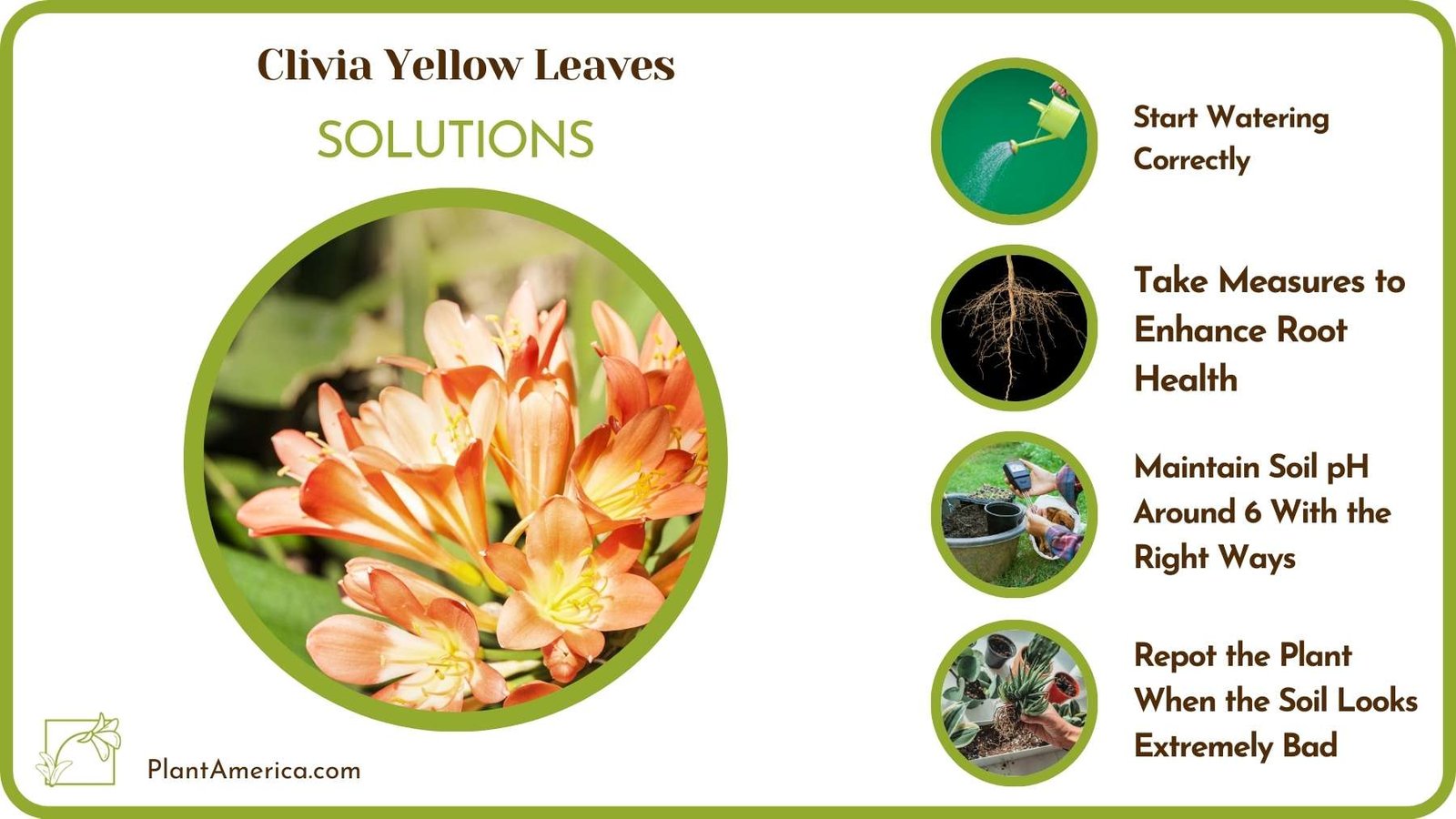
Here’s how to water Clivia:
- Water When the Time Is Right: Instead of sticking to a strict schedule, check the top inch of the soil. If it’s dry to the touch, it’s time to water. If not, hold off for a bit.
- Go For Soak and Drain Method: This method involves thoroughly saturating the soil until water starts to drain from the bottom of the pot. It ensures the roots get a good drink, but you’re not leaving them to soak in a soggy mess. This technique prevents overwatering, one of the primary causes of Clivia leaf problems.
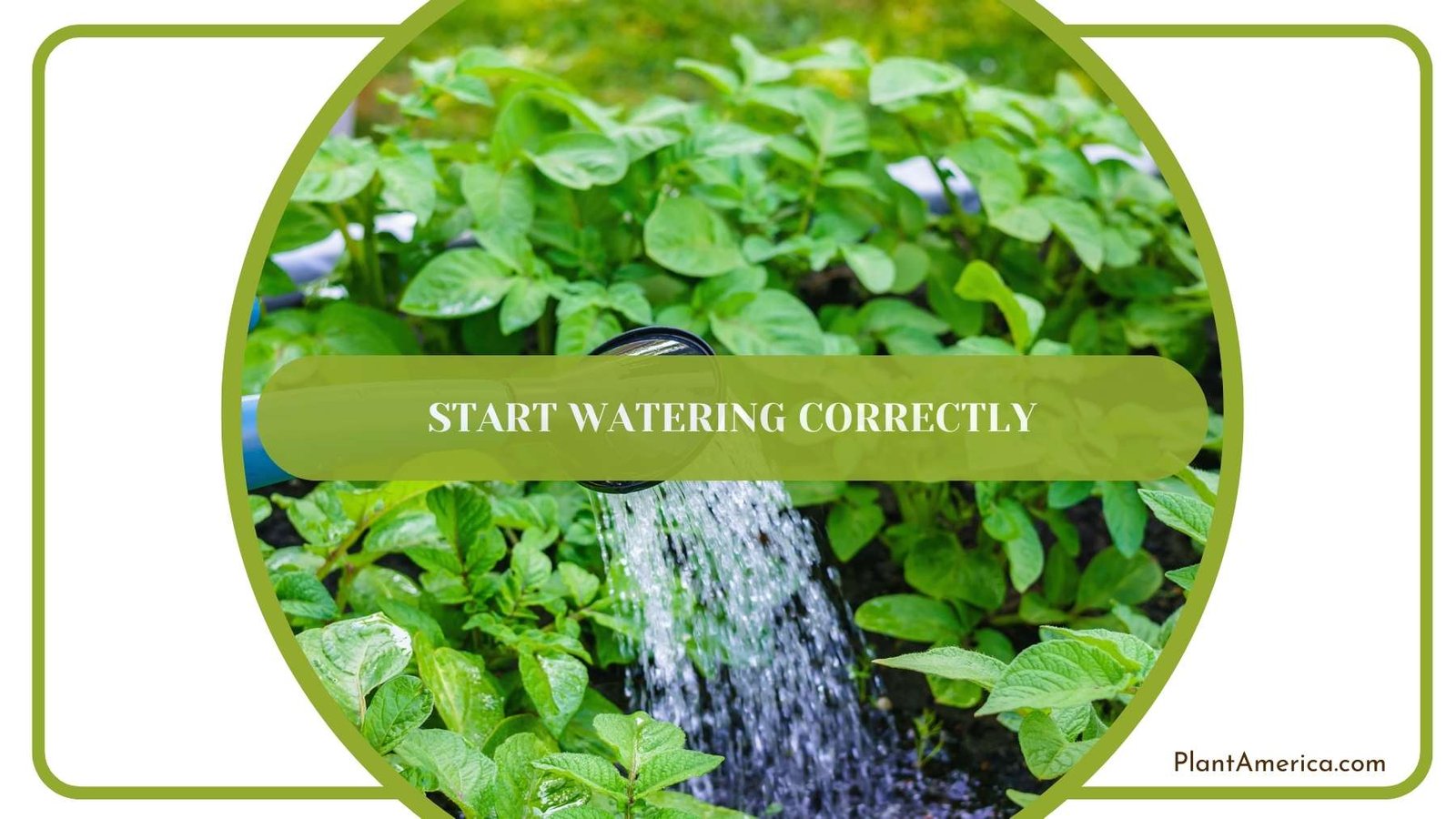
– Take Measures to Enhance Root Health
To combat the yellowing of your beloved Clivia leaves, focusing on enhancing root health is crucial. After all, healthy roots are the foundation for a thriving plant.
Here are the best ways to achieve this:
- Root Pruning: Root pruning can work wonders for older Clivias with congested roots. Gently unpot the plant and trim away the circling or dead roots. This encourages the growth of new, healthy roots.
- Adequate Drainage: Ensure your pot has drainage holes, allowing excess water to escape. Waterlogged soil can lead to root rot, one of the main reasons for Clivia leaf yellowing.
- Fertilize Sparingly: While nutrients are essential, over-fertilizing can harm the roots. Wondering what is the best fertilizer for Clivias? Use a balanced, diluted fertilizer and apply it sparingly during the growing season.
- Check for Pests: Regularly inspect the root system and treat infestations with neem oil soaking.
Doing these things will keep the roots happy, preventing the yellowing of leaves.
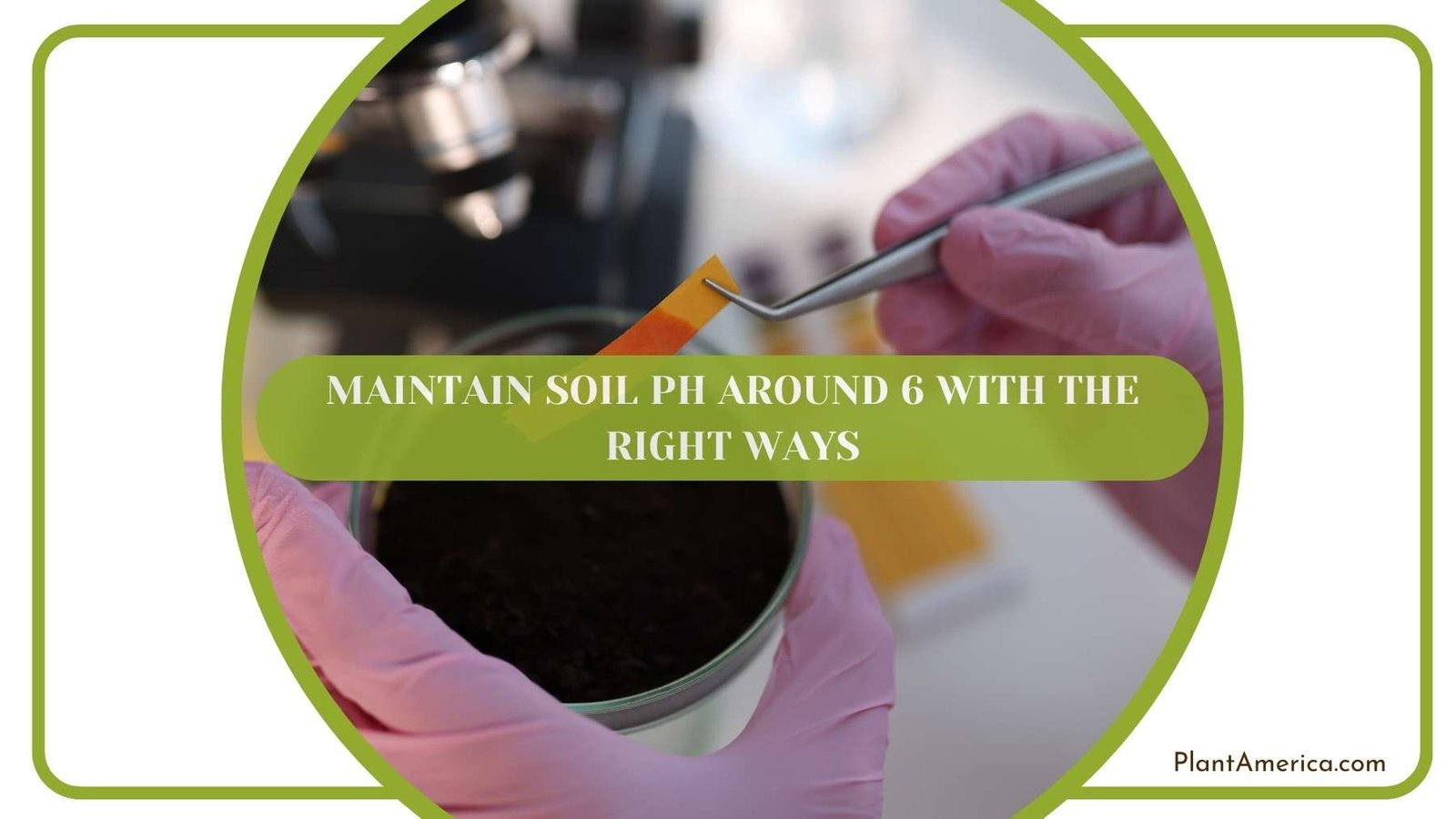
– Maintain Soil pH Around 6 With the Right Ways
Maintaining the correct soil pH around six is critical in preventing Clivia leaves from becoming yellow.
Here are some effective ways to achieve and maintain the optimal pH for your Clivia:
- Choose the Right Potting Mix: Select a potting mix for Clivias or acid-loving plants. These mixes are formulated to maintain the appropriate pH level. Using the right mix from the start can save you a lot of pH-related troubles.
- Use pH-Adjusting Amendments: If your soil pH is too high or too low, you can make targeted amendments to bring it closer to 6. For lowering pH (if it’s too high), consider adding elements like sulfur or peat moss. Use lime or crushed eggshells to raise the pH (if it’s too low).
- Regular pH Monitoring: Make pH monitoring a routine part of your Clivia care. Check the pH level periodically, especially when repotting or changing the potting mix. This helps you catch and correct pH imbalances early.
- Water with pH-Adjusted Water: In some cases, tap water can be slightly alkaline, affecting soil pH over time. If necessary, adjust the pH of your water using products like pH-adjusting drops to ensure it’s suitable for your Clivia’s needs.
It’s that easy to fix the soil pH!
– Repot the Plant When the Soil Looks Extremely Bad
When the soil in your Clivia’s pot begins to look extremely deteriorated, it’s time to consider repotting to ensure the health and vitality of your plant. If you don’t, you’ll not get rid of the “yellowing leaves” problem.
Here are the steps to follow:
- Prepare the New Pot: Select a slightly larger pot with drainage holes and dill the bottom with fresh potting mix to provide a new foundation for your Clivia.
- Gently Remove the Clivia: Carefully remove the Clivia from its current pot. To do this, gently tilt the pot and slide the plant out while supporting the base of the plant and the soil.
- Inspect the Roots: Examine the roots of the Clivia. Trim away any damaged, rotting, or excessively tangled roots with clean, sharp scissors or pruning shears. Healthy roots should be firm and white.
- Repot the Clivia: Place the Clivia in the new pot, then add some more fresh potting mix around the plant to keep it erect.
- Water Thoroughly: Give your newly potted Clivia a good drink of water to settle the soil and hydrate the roots.
- Resume Normal Care: Continue to care for your Clivia as usual, adjusting your watering schedule as needed. Be patient, as the plant may take some time to acclimate to its new home.
It may seem too much work, but it will keep the Clivia leaves green!
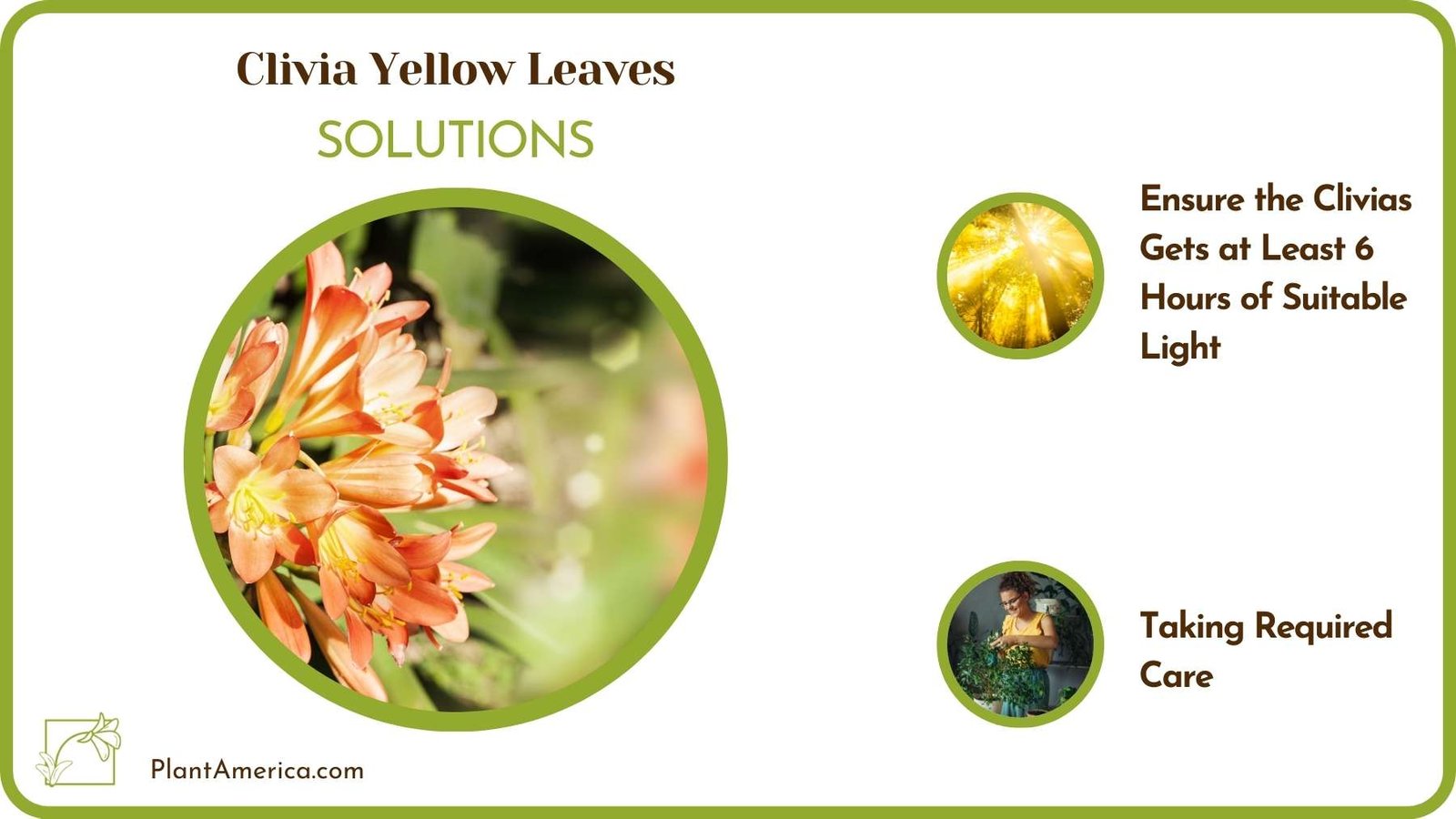
– Ensure the Clivias Gets at Least 6 Hours of Suitable Light
Proper lighting is essential for keeping the leaves vibrant and green. It lets photosynthesis and many other processes continue, which provides energy to the plant. Therefore, providing suitable lighting conditions is one of the best things you can do for your Clivia.
We suggest you do the following:
- Assess Your Space: Evaluate the location where you have your Clivia. Is it near a window? Does it receive any direct sunlight during the day? Determine if the current spot meets the plant’s lighting requirements.
- Rotate the Plant: If your Clivia is placed near a window, rotate the pot occasionally. Doing this will prevent one-sided growth and potential yellowing of leaves.
- Use a Light Meter: Consider using a light meter to measure the light levels your Clivia receives. This can provide precise data on whether the plant gets at least 6 hours of suitable light daily.
- Go For Artificial Lights: If your Clivia isn’t getting enough natural light, you can supplement it with artificial sources, such as LED Grow lights. These can provide the right spectrum of light for your plant’s needs.
– Taking Required Care
In addition, here are some other Clivia yellow leaves care points you should keep in mind:
- Monitor Light Duration: Keep track of the hours of light your Clivia is receiving. Ideally, it should get at least 6 hours of bright, indirect light daily. Adjust the placement or use of artificial lights to meet this requirement.
- Be Mindful of Seasons: Remember that the available natural light may vary with the seasons. Clivias might need more light during winter when daylight hours are shorter.
- Monitor: Keep an eye on your Clivia for signs of insufficient lighting, such as elongated or leggy growth, smaller leaves, or a lack of blooming. These can be indicators that it needs more light.
- Experiment: If you’re unsure about the lighting conditions, move the plant to different spots and observe how it responds. Adjust as needed to find the ideal location.
By following these steps, you’re promoting healthy green leaves and overall plant well-being. Remember, proper lighting is a critical element in Clivia care.

Conclusion
In summary, Clivia leaves can turn yellow due to various causes, including overwatering, poor soil conditions, unsuitable lighting, alkaline soil, and nutrient deficiencies. But you can keep leaves green and vibrant if you follow our recommended solutions, which are:
- Start watering correctly to avoid overwatering and underwatering.
- Enhance root health through repotting, root pruning, and proper drainage.
- Maintain soil pH around six using the right potting mix and adjusting soil conditions.
- Ensure the plant gets suitable light through natural or artificial sources.
Stick to these strategies, and your healthy Clivia will continue brightening your space with its beautiful green leaves and occasional stunning blooms. Happy gardening!