
Clivia miniata brown tips on leaves clearly indicate that something isn’t quite right in your plant’s environment. It can be a lack of water, low humidity levels, and exposure to the sun.
No matter the reason, it’s super important you help your Clivia start the growth again. Stick around to learn how to ensure the plant leaves stay green and stress-free.
What Usually Causes Clivia Miniata Brown Tips on Leaves?
The clivia miniata brown tips on leaves are usually caused by insufficient watering and low air humidity. If you’ve placed plants under the sun, the rays can also cause discoloration on the tips. Furthermore, cold stress and bacterial infection can also lead to browning in some cases.
– Lack of Water in the Soil
If you’ve noticed the tips of your Clivia miniata’s leaves turning brown, your watering habits can be the culprit. These lovely plants do need their fair share of hydration to thrive. When the potting soil becomes too dry, it can stress out your Clivia, leading to those unsightly brown tips.
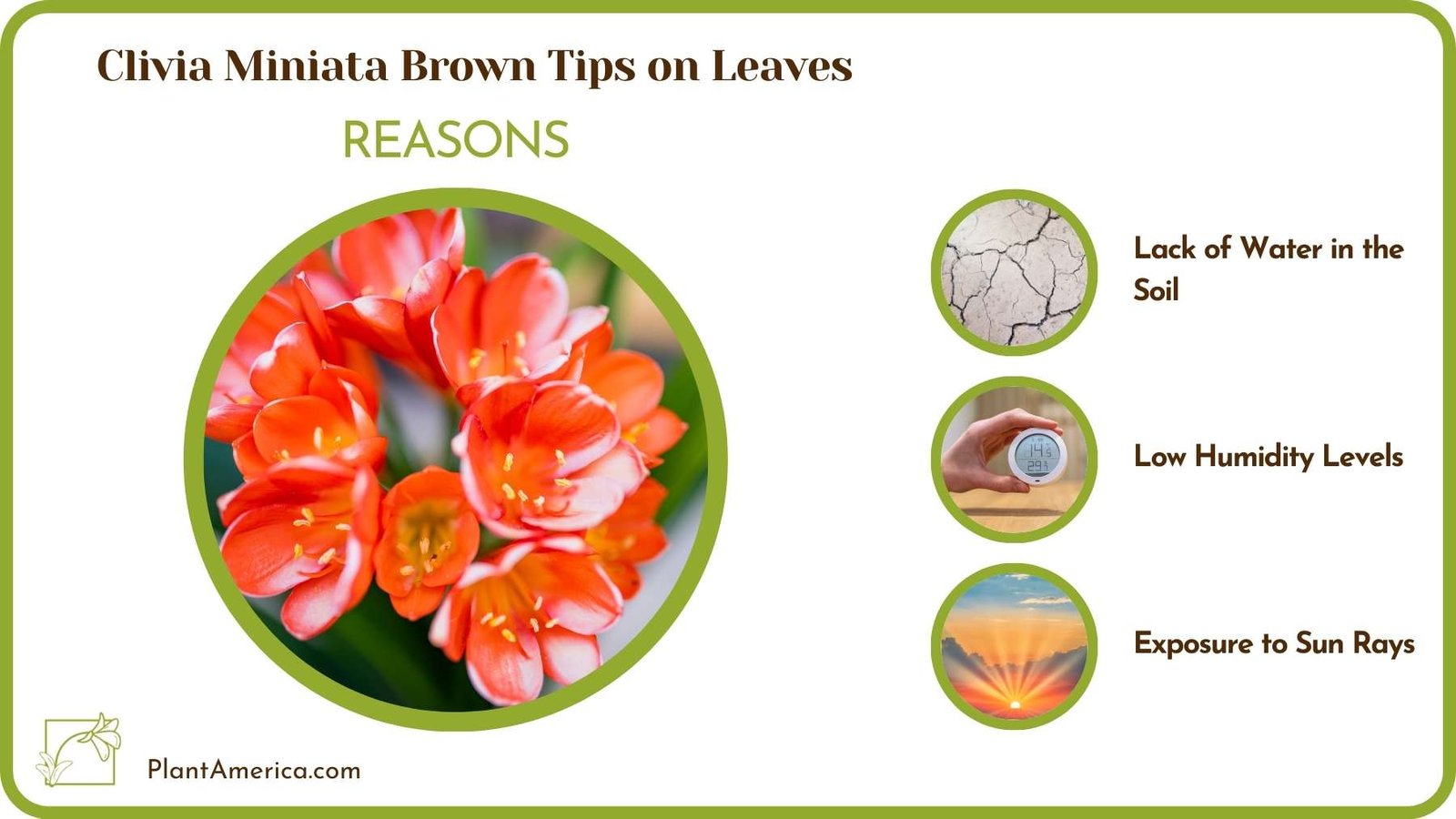
The reason is that nutrient uptake depends on the water absorption. So, when there’s no moisture in the soil, roots won’t be able to transport nutrients to the leaves. When this happens, browning starts at the tips and moves inward.
– Low Humidity Levels
Are you seeing Clivia miniata brown tips on leaves indoors? If yes, then chances are low humidity might be the reason. It’s because the air is dry in indoor conditions. Since Clivia plants are native to South Africa, they need air to be moderately humid. So, when it’s drier, the leaf cells release water.
After some time, plants become dehydrated and stressed. When this happens, browning starts at the tips.

You might wonder how to confirm if low humidity is the issue. Here’s a simple test: take a look around your home. Are you using a heating system that dries out the air during the colder months? Is your Clivia placed near radiators or air conditioning vents?
These factors can contribute to lower humidity levels. Another way to confirm this is using a hygrometer (humidity-measuring device). If it gives less than 40 percent reading, you now know the reason behind Clivia brown leaf tips.
– Exposure to Sun Rays
When you see Clivia miniata brown tips on leaves turning brown, check how much light your plant is getting. Clivia only appreciates bright, indirect light. If you place it under direct sun (especially during hot hours), the sun’s rays can burn the leaf tips.
Confirming if your Clivia is suffering from sun damage is relatively straightforward. Begin by examining its placement. Is it situated in a spot where it receives direct, harsh sunlight for extended periods, especially during the hottest part of the day? If so, this might be the cause.
Additionally, take a closer look at the affected leaves. Are the brown tips mainly on the side of the plant facing the window or light source? If the answer is yes, then sunburn is quite likely the issue.
– Cold Temperatures Can Also Cause Clivia Leaf Problems
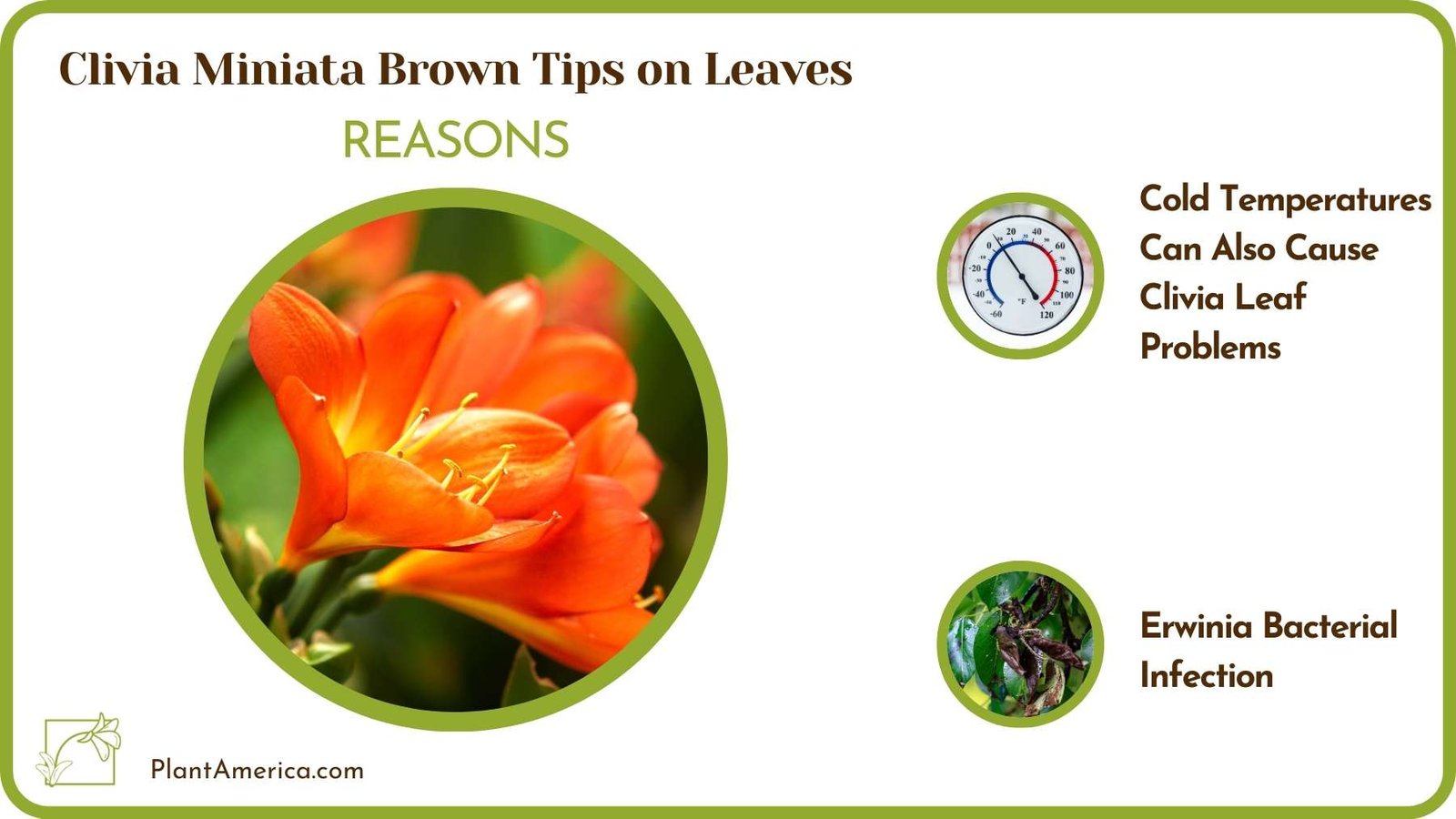
Another cause of brown tips on Clivia miniata leaves can be cold stress. These plants are not fans of chilly temperatures. So, exposure to drafts or cold weather conditions can lead to leaf discoloration.
Consider your plant’s location to confirm if cold stress is behind those brown tips. Is it placed near a drafty window (where it might be subjected to cold air)? Alternatively, was your Clivia exposed to low temperatures during transportation (or any other circumstances)? If you answered yes, cold stress has likely taken a toll on your plants.
– Erwinia Bacterial Infection
An Erwinia bacterial infection is a lesser-known but equally concerning cause of brown tips on Clivia miniata leaves. This infection can wreak havoc on your plant’s overall health and appearance. First, it causes the browning of the tips. Then, you’ll see yellow patches on the leaves. If you don’t do anything to cure it, the whole leaf will turn yellowish brown (discolor) and die.

Confirming an Erwinia bacterial infection may require a bit more attention. Start by closely inspecting the affected leaves. Are the clivia miniata brown tips on leaves turning yellow? If yes, the disease attack can be the cause. Sometimes, you’ll also see water-soaked spots that give off a foul odor.
Another telltale sign is the presence of slimy ooze on the affected areas. If you gently touch the discolored parts of the leaves and find a sticky, slimy substance, it’s a strong indication of a bacterial infection.
How to Treat the Brown Tips of Clivia Miniata
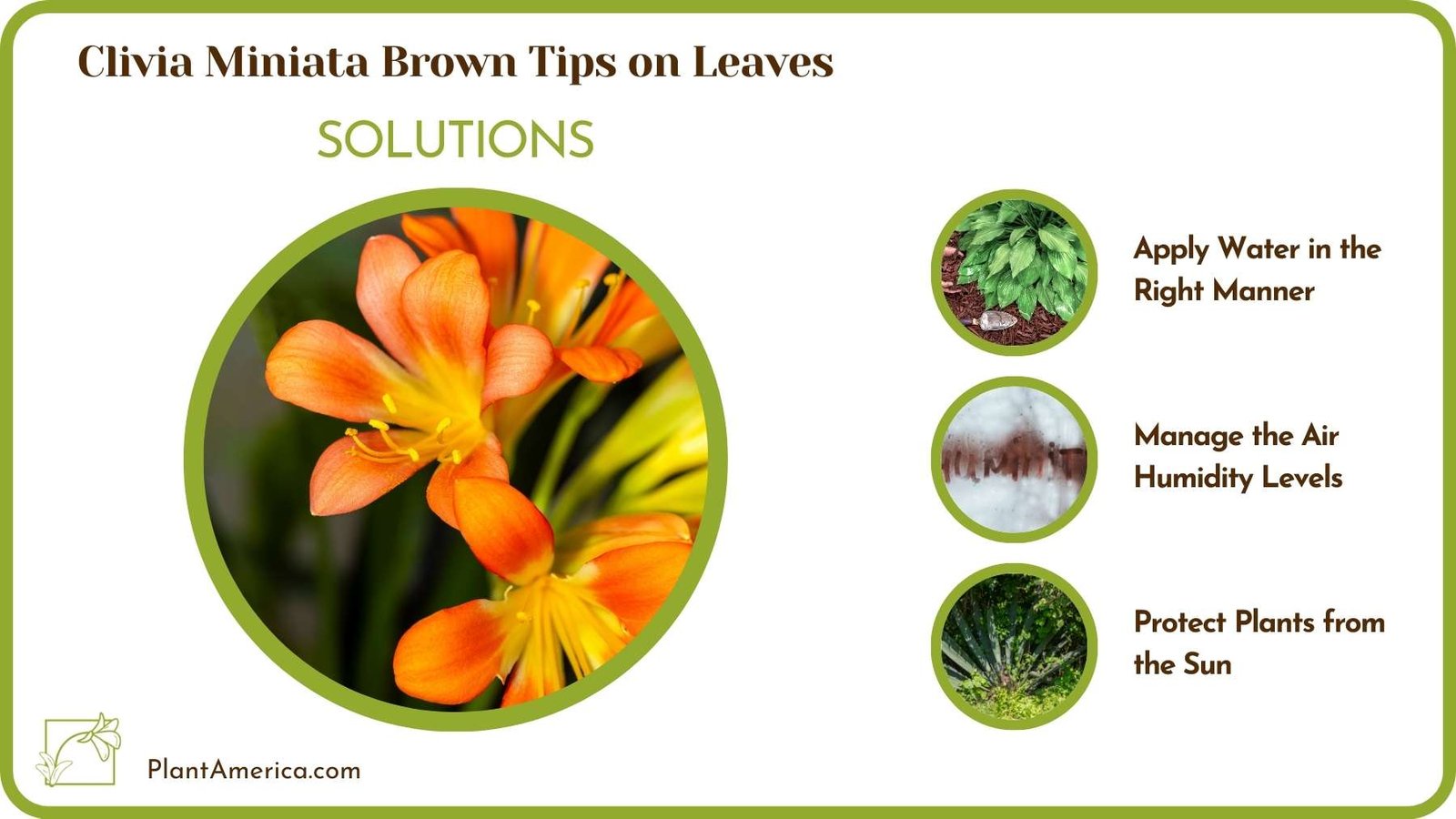
– Apply Water in the Right Manner
Watering can fix many Clivia plant problems, including the browning of tips. It keeps the plant hydrated, which helps it deal with stresses like bacterial infection, sunburn, etc.
Here are three watering-related points you should never forget:
- Deep Watering: To effectively address the issue of brown tips, it’s crucial to water your Clivia deeply. This means allowing water to penetrate the soil deeply around the root zone. A good practice is to water until you see excess water draining out from the bottom of the pot (to prevent root rot). This ensures that the roots receive adequate moisture and can help alleviate the stress that leads to brown tips.
- Consistent Moisture: Clivia miniata appreciates consistent moisture, but it’s equally important not to overwater. A handy technique is to check the moisture level in the soil regularly. Stick your finger or a pencil about an inch into the soil. If it feels dry at that depth, it’s time to water. By maintaining steady moisture levels, you can prevent the recurrence of brown tips.
- Avoid Wetting Foliage: Apply water towards the base of the plant (avoiding wetting the foliage). Wet leaves can be more susceptible to diseases, including fungal issues, which can exacerbate the problem of brown tips.
– Manage the Air Humidity Levels
Clivia does not prefer high humidity. But browning on the tips is common if the air gets too dry. So, we suggest you keep the humidity to around 45 percent (moderate levels). This will keep the leaves hydrated and green.
Here’s how to do it:
- Humidity Tray: Place a humidity tray near your Clivia. Fill a shallow tray with water and put pebbles or stones in it. Set your plant pot on top of the pebbles. The water evaporation will increase the humidity around your Clivia.
- Room Humidifier: Using a room humidifier is a convenient way to maintain consistent humidity levels. Set the humidifier near your Clivia miniata to ensure the air around it remains adequately moist.
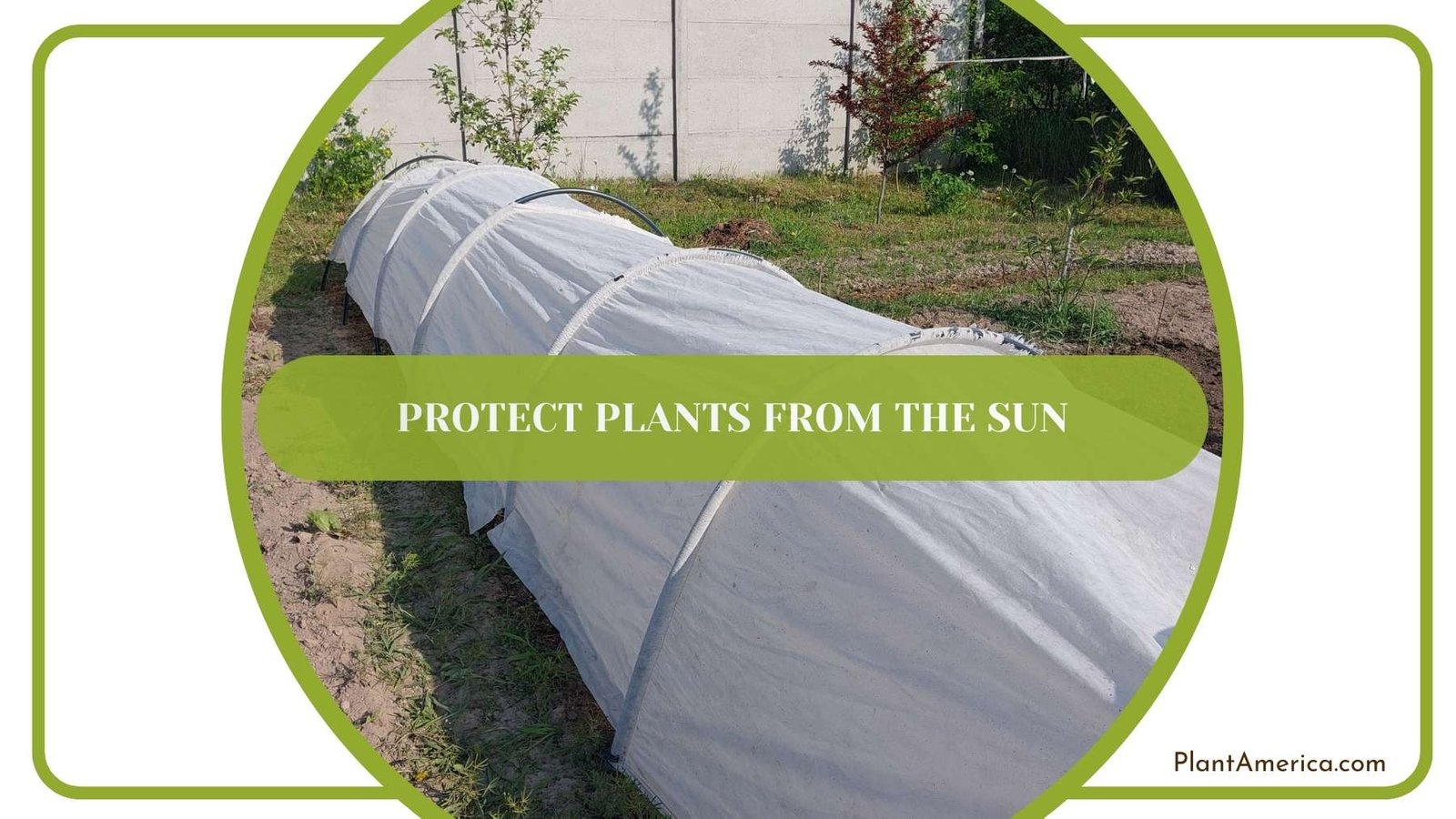
– Protect Plants from the Sun
Shielding your Clivia miniata from excessive sunlight is crucial to stopping and preventing brown tips on its leaves.
Here are four effective ways to protect your plant from the sun:
- Adjust Placement: Move your Clivia away from direct sunlight. Please place it in a spot where it receives bright, indirect light. Filtered sunlight through a sheer curtain or placing it a few feet away from a sunny window can help provide the right amount of light without the harshness of direct sun.
- Rotate the Pot: Regularly rotate your Clivia’s pot. Doing this ensures that all sides of the plant receive even light exposure. This prevents any single side from getting too much sun, which can lead to brown tips.
- Use Sheer Curtains: If your Clivia is near a window with intense sunlight, consider using sheer curtains. These can diffuse the sunlight, reducing its intensity while allowing your plant to enjoy sufficient brightness.
By following these methods, you can help your Clivia miniata thrive by protecting it from excessive sun exposure, ultimately preventing those unwanted brown tips on its leaves.
– Don’t Let Winter Hurt Your Plants
Winter can be a stressful time for your plants. The chilly winds and cold temperatures can force the leaf’s tips to turn brown. But you can help Clivia thrive through the winter with these simple strategies:
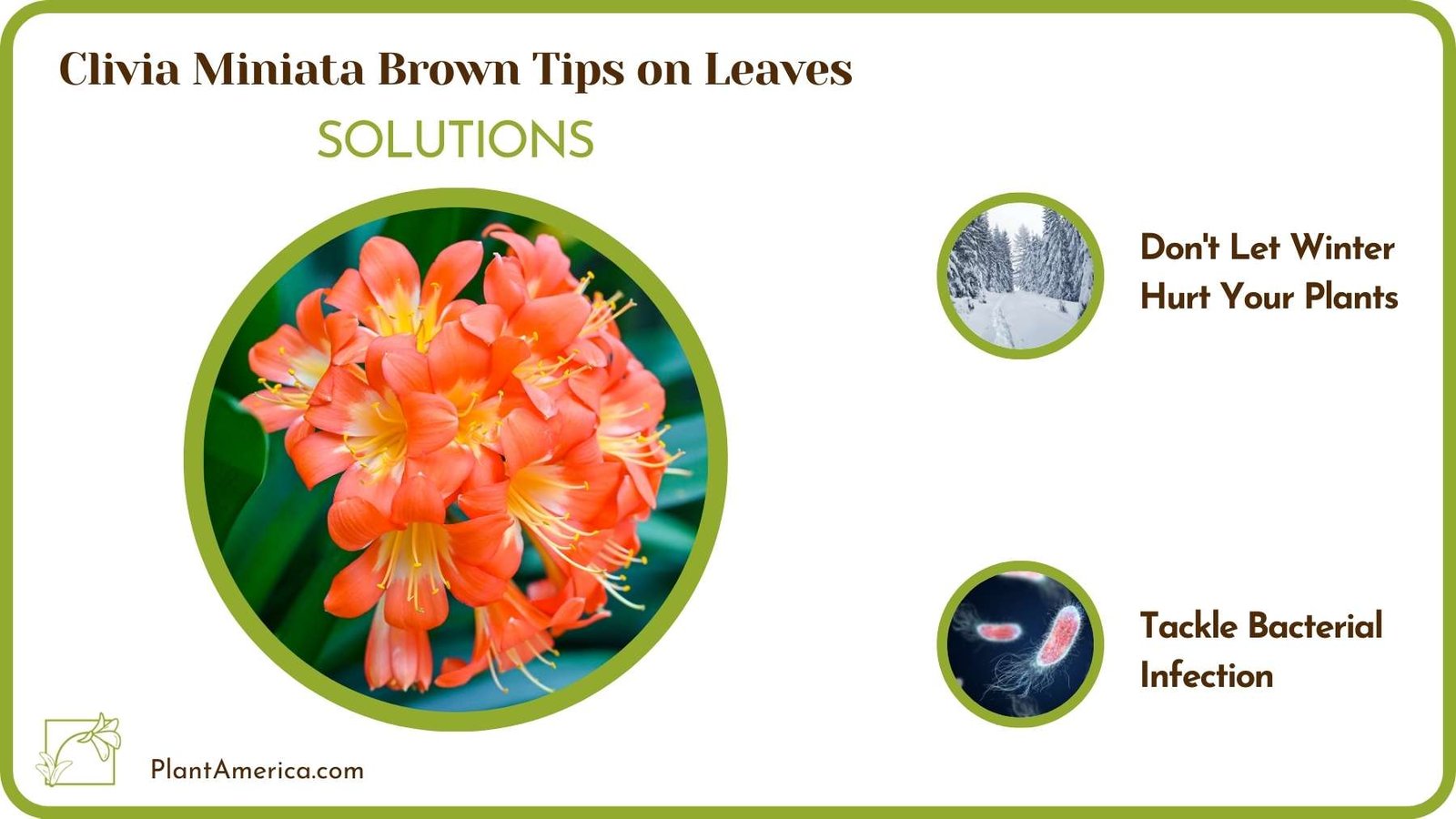
- Provide Adequate Indoor Light: As the days get shorter, indoor plants may not receive enough natural light. To prevent winter stress, consider using artificial grow lights. This ensures they get the light they need for healthy growth.
- Avoid Drafts and Cold Spots: Cold drafts from windows and doors can harm your plants. Ensure they are positioned away from these areas to prevent exposure to chilly air. Also, avoid placing plants near radiators or heating vents, as these spots can stress them out.
- Reduce Fertilization: Plants naturally slow their growth in winter, requiring less fertilizer. Cut back on fertilizing frequency to avoid overfeeding your plants. A light application of a balanced, diluted fertilizer every 6-8 weeks should suffice during winter.
So, if you’re facing browning problems in winter, do these three things to help your Clivia stay green!
– Tackle Bacterial Infection
Dealing with a bacterial infection in your plants can be challenging. But it’s crucial to address it promptly, or else every leaf on the plant will turn brown. Here’s how to tackle a bacterial infection effectively:
- Isolation: If you suspect a bacterial infection in one of your plants, the first step is to isolate the infected plant from healthy ones. This prevents the bacteria from spreading and infecting others.
- Pruning: Trim away the affected parts of the plant using sterilized pruning shears. Make sure to cut a bit beyond the infected area to ensure you remove all traces of the bacteria.
- Disinfect Tools: It’s vital to disinfect your pruning tools with rubbing/isopropyl alcohol after each use. This prevents cross-contamination between plants.
- Soil Treatment: Remove the top layer of soil around the infected plant and dispose of it. Replace it with fresh, sterile soil. This reduces the chances of the bacteria lingering in the soil.
- Reduce Moisture: Bacterial infections thrive in moist conditions, so adjust your watering routine and allow the soil to partially dry out between the waterings.
- Apply Copper-Based Fungicide: If the bacterial infection persists, consider using a copper-based fungicide, which can help control bacterial diseases.
Remember, tackling a bacterial infection requires patience and persistence. But with these steps, you can increase your plant’s chances of recovery and prevent the spread of the bacteria to other plants. Your Clivia plants will thank you for staying green and vibrant!
Conclusion
Here, we explained why your Clivia miniata’s leaves develop those pesky brown tips and how to fix them in detail. Common causes of this issue include inadequate watering, low humidity levels, excessive sun exposure, cold stress, and bacterial infections. Luckily, you can keep your Clivia miniata thriving if you follow our suggestions:
- Correctly apply water, ensuring deep watering, consistent moisture, and avoiding wetting foliage.
- Manage air humidity levels using humidity trays or a room humidifier.
- Protect your plant from excessive sun exposure by adjusting its placement, using sheer curtains, and rotating the pot.
- Tackle bacterial infections with pruning, soil treatment, and copper-based fungicides.
By following these steps, you can ensure your Clivia miniata recovers from brown tips on its leaves and thrives in a healthier and happier state.