
Mealybugs on desert rose shrubs are not the most welcome guests and with good reason!
While we can always treat and kill them, we must first understand how they got there in the first place so we know how to prevent them from visiting again in the future. Let’s dive in, shall we?
Why Are There Mealybugs on Your Desert Rose Plant?
There are mealybugs on your desert rose plant due to the environment, lack of natural predators, stressed plants, overcrowded plants, poor plant care, or from nearby infestations. Most of the time, it’s not just one factor, but a combination, so let’s take a look at each of them.
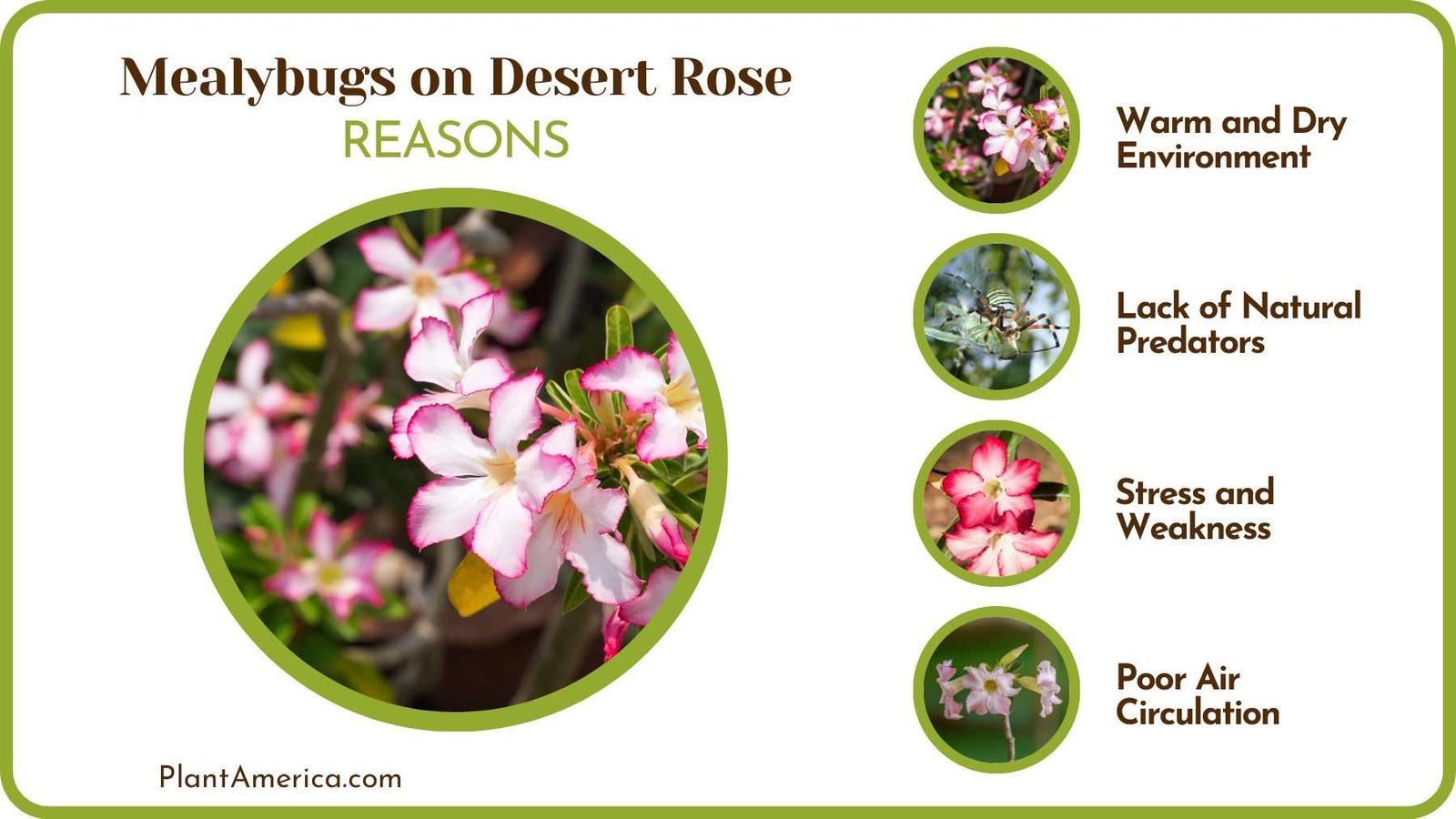
– Warm and Dry Environment
The desert rose, also known as Adenium obesum, thrives in arid conditions with minimal moisture, which inadvertently creates an environment conducive to mealybug proliferation. The chances of common pests like mealybugs and spider mites flourishing due to dampness can increase. Mealybugs find these conditions ideal for quick multiplication.
Adeniums, built to save water and withstand high temperatures, offer mealybugs a tempting feast with their juicy, nutrient-packed tissues. The warmth further speeds up the mealybugs’ breeding process, enabling them to spread rapidly and take hold on the plants.
– Lack of Natural Predators
The presence of mealybugs on desert rose plants can often be exacerbated by the lack of natural predators in the environment. In the places where Adeniums originally grow, they may not have developed alongside the particular insects that normally keep mealybug numbers balanced.
While some ecosystems benefit from insects or animals that naturally control mealybug populations, these built-in mechanisms might be absent in the Adenium’s surroundings. Consequently, mealybugs can reproduce unchecked, leading to infestations that ultimately harm and undermine the plants’ health.
– Stress and Weakness
The desert rose can become stressed and weakened due to factors, such as inadequate water supply, poor soil conditions, or insufficient sunlight. When a plant is under stress, it directs fewer resources toward its innate defense mechanisms.
This leaves it more vulnerable to pests, such as mealybugs. Stressed plants often show shifts in their growth patterns, resulting in the development of softer and more tender tissues, precisely what these pests are drawn to.
Mealybugs zero in on these delicate areas, exploiting them to feed on the plant’s sap. Plus, when a plant is stressed, it might not have the strength required to repel initial infestations effectively, providing mealybugs with a better opportunity to take hold.
– Overcrowding and Poor Air Circulation
Overcrowding and poor air circulation can exacerbate mealybug infestations on Adeniums. When plants are crowded closely, they limit the airflow, forming a small environment that promotes the rapid growth of pests.

Mealybugs particularly enjoy these conditions because they can move between plants effortlessly. The limited airflow makes it hard for beneficial predators to reach the plants affected by the infestation.
– Inadequate Plant Care and Maintenance
Neglecting proper care and maintenance for Adeniums can inadvertently invite mealybug infestations. If you don’t keep a close eye on your plants and take care of them regularly, they can get stressed out from things like not getting enough water, having bad soil, or not getting enough sunlight.
Stressed plants are like magnets for pests, especially mealybugs, which love to go after plants that are already weak. If you forget to trim away dead or infested parts of your plants, don’t give them enough space to breathe, or neglect their overall health, you might unknowingly create the perfect conditions for mealybugs to move in and start a family.
– Transportation and Infestation Spread
These pests can be inadvertently introduced to new areas by contaminated soil, infested gardening tools, or through the transfer of infested plants. When you bring in new plants, especially from various sources, carefully examine them before adding them to your garden.
Even your clothes, hands, or pets might unintentionally transfer mealybugs from one plant to another. To avoid this, simple hygiene measures like washing your hands and changing your clothes before moving on to different plants can significantly reduce the chances of mealybug infestations spreading.
How To Get Rid of Mealybugs on Your Desert Rose
You can get rid of mealybugs on your desert rose by isolating them, pruning infested parts, introducing beneficial insects, using neem or insecticidal sprays, applying systemic insecticides, and improving plant health. Let’s look at how each works to see if it works for you.

– Isolate New Plants
When introducing new plants to your Adenium collection, it’s crucial to prioritize their isolation. This technique requires you to keep newly acquired plants separate from your established ones for a few weeks.
This approach lets you closely watch the new plants for any signs of mealybugs or other pests before adding them to your current collection. While the plants are in isolation, make sure to regularly check for any white cottony masses or other indications of mealybug presence.
If you find any infestation, deal with it promptly to stop the pests from spreading. Once you’re certain the new plants are free of pests, you can merge them into your main collection. This minimizes the risk of introducing mealybugs to your other Adeniums.
– Pruning Infested Parts
Carefully examine the plant for areas with visible mealybug colonies, which often appear as white, cottony masses. With clean and sharp pruning shears, create precise cuts to eliminate any infested stems, leaves, or buds. Seal the pruned material in a bag or container to stop any further spreading.
Keep an eye on the plant after pruning for any mealybug reappearance, and maintain regular care to support its healthy growth. Don’t forget to clean your pruning tools after each use to avoid introducing pests to other plants. Pruning is a proactive measure to halt mealybug spread and enhance the overall health of your Adenium.
– Use of Beneficial Insects
Introducing beneficial insects, such as ladybugs and lacewings, to your garden can effectively control mealybug populations on your Adeniums. These natural enemies have a hearty appetite for mealybugs, assisting in maintaining their population.

Ladybugs have a taste for both adult mealybugs and their eggs. Similarly, lacewing larvae are eager hunters of soft-bodied nuisances, such as mealybugs. To harness the power of these helpful bugs, buy them from trustworthy suppliers and set them free on your plants in the evening or early morning when pests tend to be active.
To encourage them to stick around, offer sources of food and water. Keep a watchful eye on their effectiveness, as it might take some time for natural balance to form. For optimal management, think about combining this approach with other treatments.
– Neem Sprays
Neem oil is a natural insecticide derived from the seeds of the neem tree. This natural remedy can disrupt the growth, feeding, and reproduction of mealybugs and other pests. To apply neem sprays, simply dilute the oil as directed by the manufacturer.
Cover your Adenium with the mixture, including its upper and lower leaves, stems, and any affected areas. The oil works by suffocating pests and messing with their hormones. To avoid sunburn, it’s smart to use it in the early morning or late afternoon.
Apply it every seven to fourteen days, or as the product label suggests, until the mealybug issue is under control. To ensure your Adenium doesn’t react negatively, do a patch test on a small part of the plant before applying the spray more widely.
– Insecticidal Soap
This soap is a specially formulated soap that works by suffocating the pests and disrupting their cell membranes. To use this soap as your mealybugs on desert rose treatment, dilute the product as directed by the manufacturer. After doing so, apply it directly onto the parts of your plant that are affected.

Make sure to cover both the upper and lower surfaces of the leaves. Leave the soap on the plant for the suggested time, usually a few hours. After that, give the plant a gentle rinse with water. For continued effectiveness, apply the soap every seven to ten days.
This helps target newly hatched mealybugs and any that might have survived the first treatment. Remember, this soap works on contact, so it’s important to cover the plant thoroughly. Before you treat the whole plant, test a small area first to ensure it won’t cause any negative reactions.
– Systemic Insecticides
Systemic insecticides are chemical treatments that are absorbed by the plant and circulated throughout its vascular system. When tackling mealybugs on your treated plant, these pests ingest the insecticide while feeding, leading to their elimination.
What sets these insecticides apart is their internal pest-targeting capability, providing a longer-lasting solution. To apply a systemic insecticide to your Adenium, mix the recommended amount with water and saturate the soil around the plant’s base.
As the plant absorbs water, it takes in the insecticide, ensuring comprehensive coverage, even in hidden areas. Stick to the manufacturer’s instructions for application and safety.
– Improve Plant Health
By maintaining a strong and vibrant plant, you create an environment less conducive to mealybug colonization. Start off by giving your plants the ideal conditions they need to thrive: ample sunlight, soil that drains well, and proper watering to avoid root rot.
Don’t go overboard with fertilizers, though. Too many nutrients can result in weak, soft growth that mealybugs find appealing. Keep the air flowing by regularly getting rid of any dead or sickly plant parts. This not only improves air circulation but also reduces hiding spots for pests.
Keep a close eye on your plant’s overall health. If you notice any signs of stress like drooping or yellowing leaves, take action promptly. Remember, if a mealybug infestation does happen, strong and healthy plants are better at resisting and recovering from the damage.
FAQs
– Can Mealybugs Affect the Growth and Flowering of Your Desert Rose?
Yes, mealybugs can affect the growth and flowering of your desert rose. Mealybugs feed on the plant’s sap, which can lead to stunted growth, yellowing leaves, and reduced flower production. The stress caused by the infestation can also make the plant more susceptible to diseases.
– Can Mealybugs Cause Any Long-Term Damage to Your Desert Rose?
Yes, if left untreated, mealybug infestations can long-term damage to your desert rose. They feed on plant sap, weakening the plant and causing stunted growth, yellowing leaves, and even death in severe cases. These infestations are best treated early to prevent this.

Conclusion
With the details out of the way, let’s take a quick look at the most important points of our discussion:
- Regularly inspect your plants for signs of mealybugs to catch infestations early.
- Maintain plant health through proper care to prevent mealybugs from targeting weakened plants.
- Use natural predators like ladybugs and parasitic wasps to control mealybug populations.
- Employ treatments like neem oil, insecticidal soap, and systemic insecticides when needed.
- Isolate new plants, practice good hygiene, and be cautious with plant transportation to prevent infestations from spreading.
With these tips and techniques, you’re sure to keep those mealybugs away from your desert rose plant!